1/1

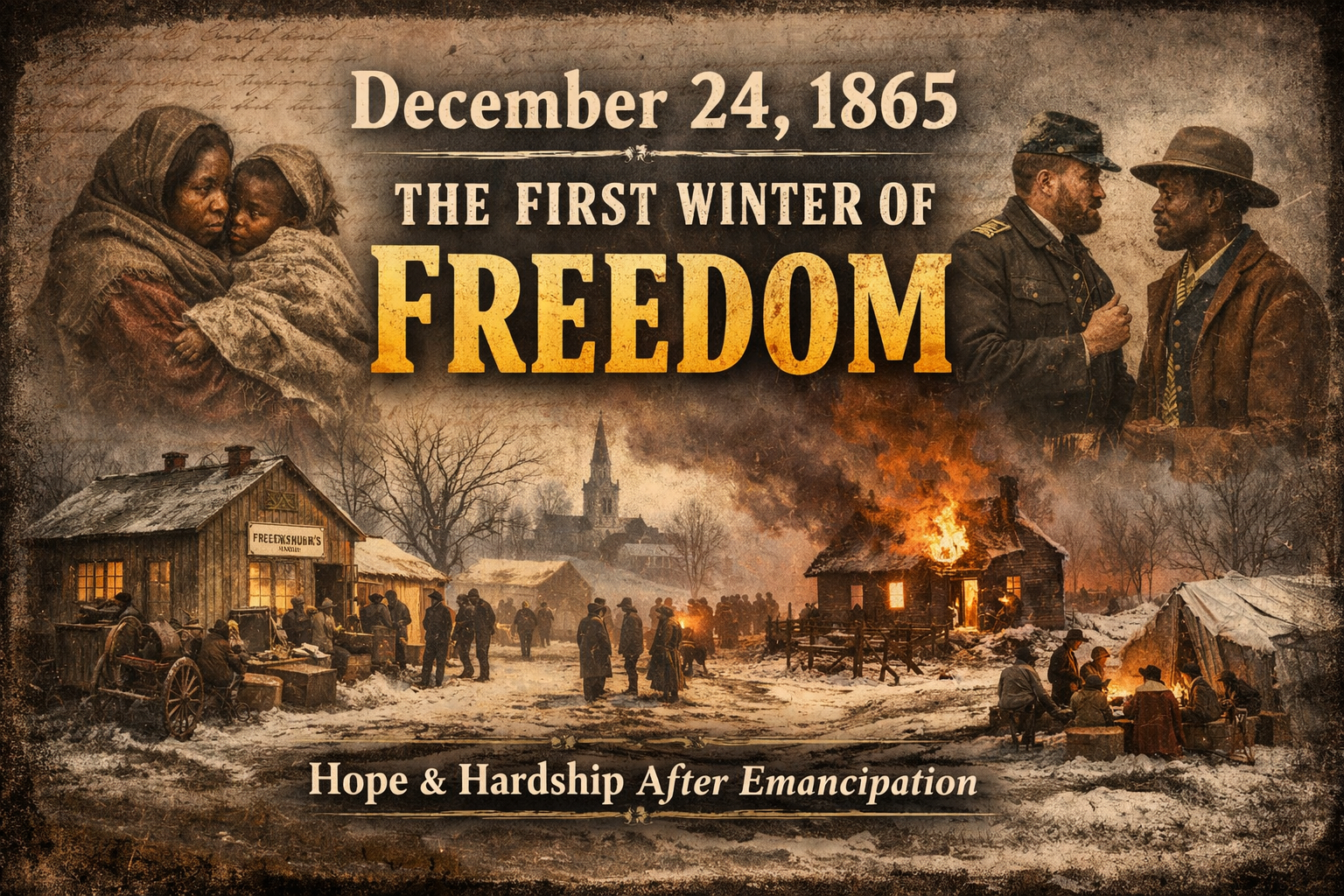
During the first winter of freedom, the Freedmen’s Bureau was actively operating across the South. Food and clothing were being distributed. Families separated by slavery were searching for one another. Schools were being established. Labor contracts were being negotiated. Protection was promised, though rarely guaranteed. Christmas Eve arrived at a moment where freedom existed in law but not in safety. For many formerly enslaved families, December 24 was not about celebration. It was about survival. Parents were learning how to live without ownership hanging over their heads. Children were navigating a world that still treated them as disposable. Communities were trying to understand what freedom meant when violence, intimidation, and economic control remained constant threats. Freedom was real, but fragile. White resistance to Black autonomy was already organizing across the South. Violence and exploitation followed emancipation almost immediately. While the Freedmen’s Bureau worked to stabilize daily life, its authority was limited and often undermined. Protection depended on location, timing, and luck. December 24, 1865 sits inside that uncertainty. It reminds us that emancipation did not come with peace or security. Freedom had to be learned, defended, and negotiated in real time. For many families that Christmas Eve, hope existed quietly, alongside hunger, fear, and unanswered questions. History does not always announce itself loudly. Sometimes it lives in moments of transition, where survival came before celebration and freedom was still being defined. #OnThisDay #December24 #ReconstructionEra #FreedmensBureau #AmericanHistory #HiddenHistory #WinterOfFreedom #HistoricalTruth #LataraSpeaksTruth
2025-12-24

Eunice Schrand
England
12-26
Albuquerque, NM
Reply
More comments ...
write a comment...