Tag Page AmericanHistory

#AmericanHistory
LataraSpeaksTruth

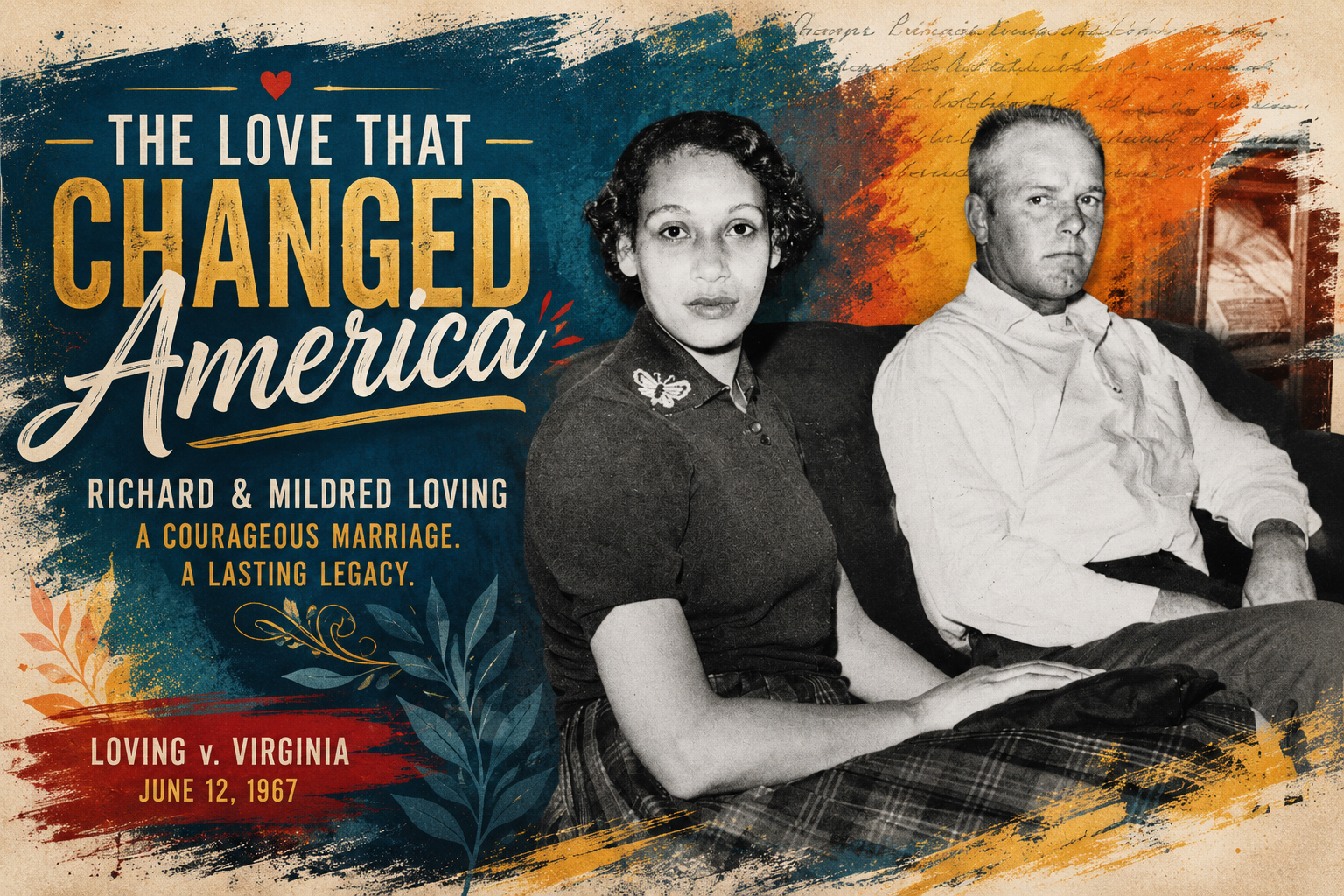
On June 2, 1958, Richard Loving and Mildred Jeter traveled to Washington, D.C., to get married because Virginia law did not allow interracial marriage. When they returned home to Caroline County, Virginia, their marriage was treated as a crime. Nine days later, they were arrested in their home and charged under Virginia’s anti-miscegenation laws. Their case eventually reached the U.S. Supreme Court. On June 12, 1967, the Court ruled unanimously in Loving v. Virginia that laws banning interracial marriage violated the Fourteenth Amendment. Their story was not loud or dramatic. It was simply two people who wanted to live as husband and wife in the place they called home. But their love challenged a law built to keep people apart, and the Court’s decision changed marriage rights across the United States. The ruling not only overturned Virginia’s law but also struck down similar bans that still existed in several other states. Today, the names Richard and Mildred Loving remain connected to one of the most significant legal victories in American history… a case that affirmed the freedom to marry regardless of race. Their journey serves as a reminder that sometimes ordinary people can help bring about extraordinary change. #OnThisDay #LovingvVirginia #AmericanHistory #CivilRightsHistory #LataraSpeaksTruth

LataraSpeaksTruth

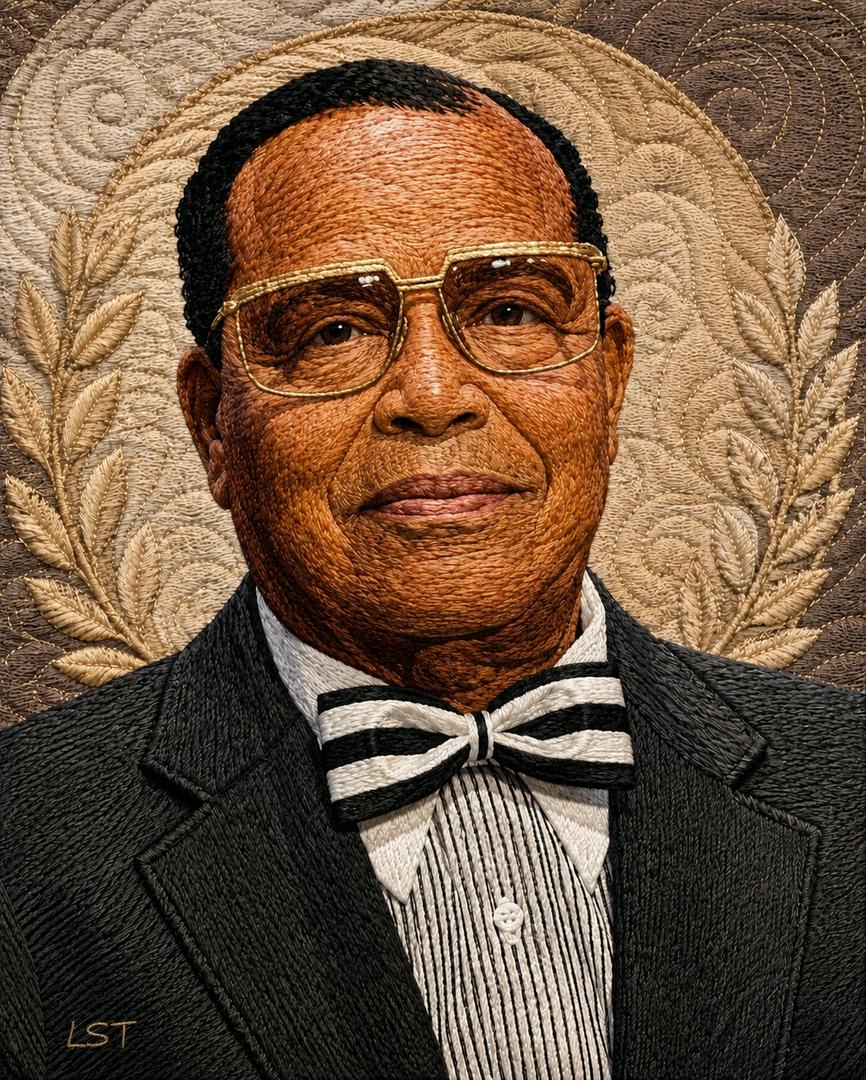
Louis Farrakhan was born Louis Eugene Walcott on May 11, 1933, in the Bronx, New York. He would become one of the most recognized and debated religious and political figures in modern American history. Raised in Boston, Farrakhan was known early for his musical talent before becoming connected to the Nation of Islam in the 1950s. Over time, he rose through the organization’s ranks and became one of its most visible voices. By the late 1970s and early 1980s, he helped rebuild the Nation of Islam after a major internal shift following the death of Elijah Muhammad. Farrakhan’s public influence has been significant, especially among people drawn to messages about self-discipline, economic independence, religious identity, and community responsibility. One of the most visible moments of his leadership came in 1995, when he helped organize the Million Man March in Washington, D.C., an event that brought hundreds of thousands of men together around themes of accountability, unity, and renewal. At the same time, Farrakhan’s legacy remains deeply controversial. Critics have condemned many of his public statements, especially comments viewed as antisemitic, anti-LGBTQ, or hostile toward other groups. Supporters, however, argue that his work should also be understood through his long-standing emphasis on Black self-reliance, faith, family structure, and social reform. That tension is why Farrakhan remains a complicated figure in American public life. His name is tied to religion, politics, nationalism, activism, controversy, and influence all at once. To tell his story honestly, it cannot be flattened into praise or dismissal. Louis Farrakhan’s life reflects how one public figure can inspire loyalty, criticism, debate, and division across generations. His impact is real. The debate around that impact is real too. #LouisFarrakhan #May11 #BlackHistory #AmericanHistory #NationOfIslam #ReligiousHistory #PoliticalHistory #HistoryMatters #OnThisDay

LataraSpeaksTruth

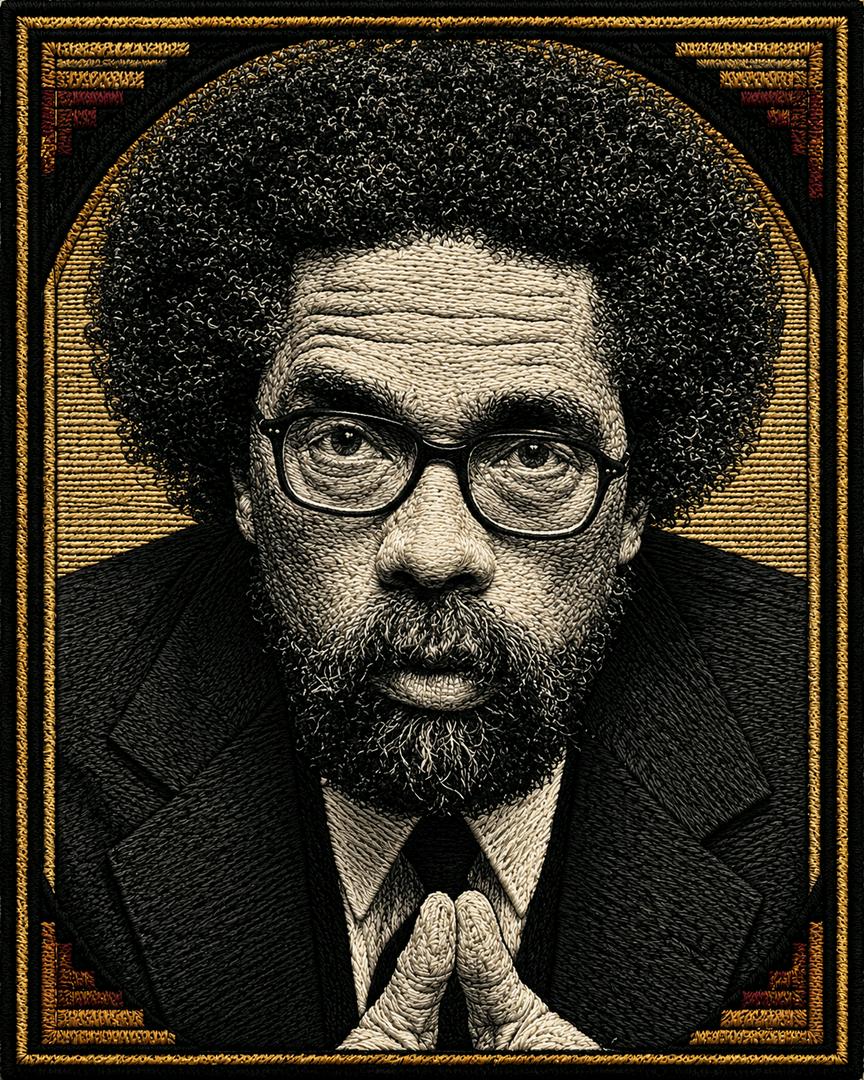
On June 2, 1953, Dr. Cornel West was born in Tulsa, Oklahoma. Over the years, he became one of America’s most recognized scholars, philosophers, authors, and public voices. His work has moved through classrooms, books, interviews, lectures, and public debate, always asking people to think deeper about truth, justice, faith, and democracy. West studied at Harvard University and later earned his doctorate in philosophy from Princeton University. He went on to teach at several major institutions, including Harvard, Princeton, Yale, and Union Theological Seminary. Many readers know him through his influential 1993 book Race Matters, which examined leadership, poverty, identity, and the moral challenges facing American society. The book helped place him among the most widely discussed public intellectuals of his generation. What has often made Dr. West stand out is his ability to connect scholarship with real life. He speaks in a way that blends philosophy, faith, history, culture, and social criticism without separating ideas from the people affected by them. For more than four decades, Dr. Cornel West has remained a bold and recognizable voice in American public life. Supporters and critics alike know him as a thinker willing to challenge institutions, question assumptions, and enter difficult conversations. Today, his birthday marks the life of a scholar whose voice has shaped discussions on philosophy, faith, politics, and society for generations. #OnThisDay #CornelWest #BlackHistory #AmericanHistory #HistoryMatters
LataraSpeaksTruth

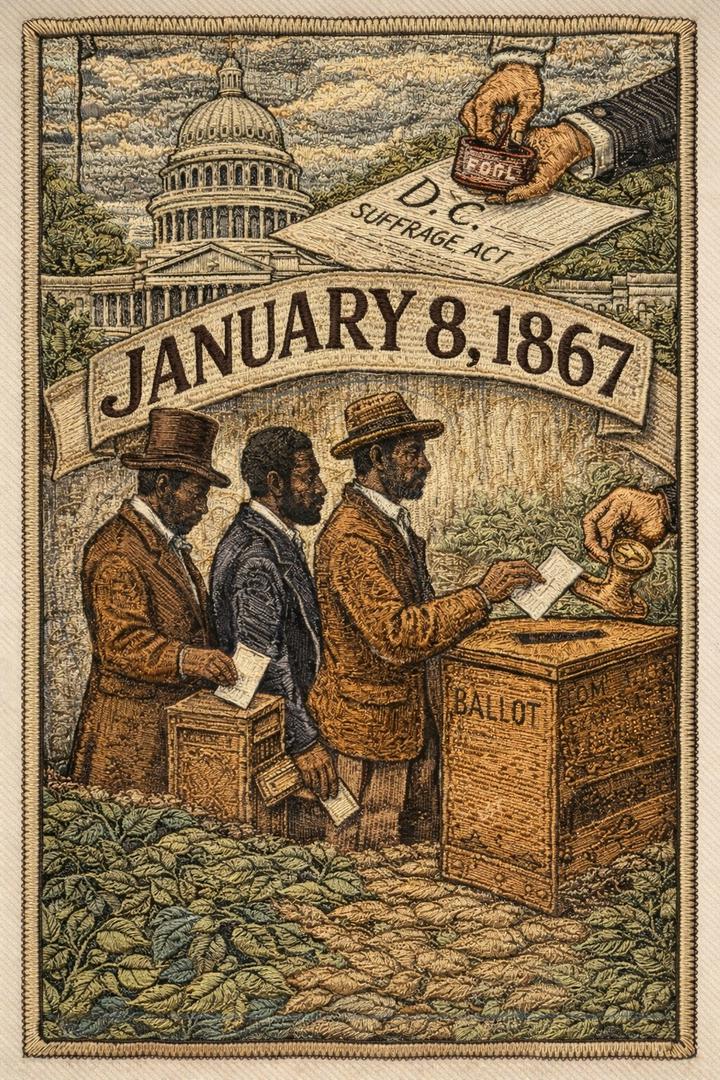
January 8, 1867 marks a turning point in American history that is rarely given the attention it deserves. On this day, Congress passed the District of Columbia Suffrage Act, granting Black men in Washington, D.C. the legal right to vote in municipal elections and public referenda. This happened three years before the 15th Amendment, at a time when most of the nation still viewed Black political participation as a danger rather than a right. This was not a promise for the future or a symbolic gesture. It was an immediate, enforceable change written directly into law. The decision did not come quietly or without resistance. President Andrew Johnson vetoed the act, arguing that extending voting rights to Black men was premature and would destabilize the country. Congress rejected that argument and overrode his veto the same day. That override mattered. It made clear that Reconstruction was not only about ending slavery on paper but about redistributing political power in real time. Washington, D.C. became a proving ground, showing that Black civic participation could exist and function despite fierce opposition. The importance of January 8, 1867 is often overlooked because it does not fit neatly into the simplified version of history many are taught. Voting rights did not suddenly appear with the 15th Amendment. They were demanded, tested, expanded, restricted, and attacked repeatedly. This moment captures Black men exercising political agency while the nation was still debating whether they deserved it. It reminds us that progress has never required national comfort or unanimous approval. Rights have always moved forward through pressure, confrontation, and refusal to wait. January 8 stands as proof that access was forced open long before the country was ready to admit it. #January8 #OnThisDay #BlackHistory #ReconstructionEra #VotingRights #DistrictOfColumbia #AmericanHistory #HiddenHistory #CivilRights

LataraSpeaksTruth

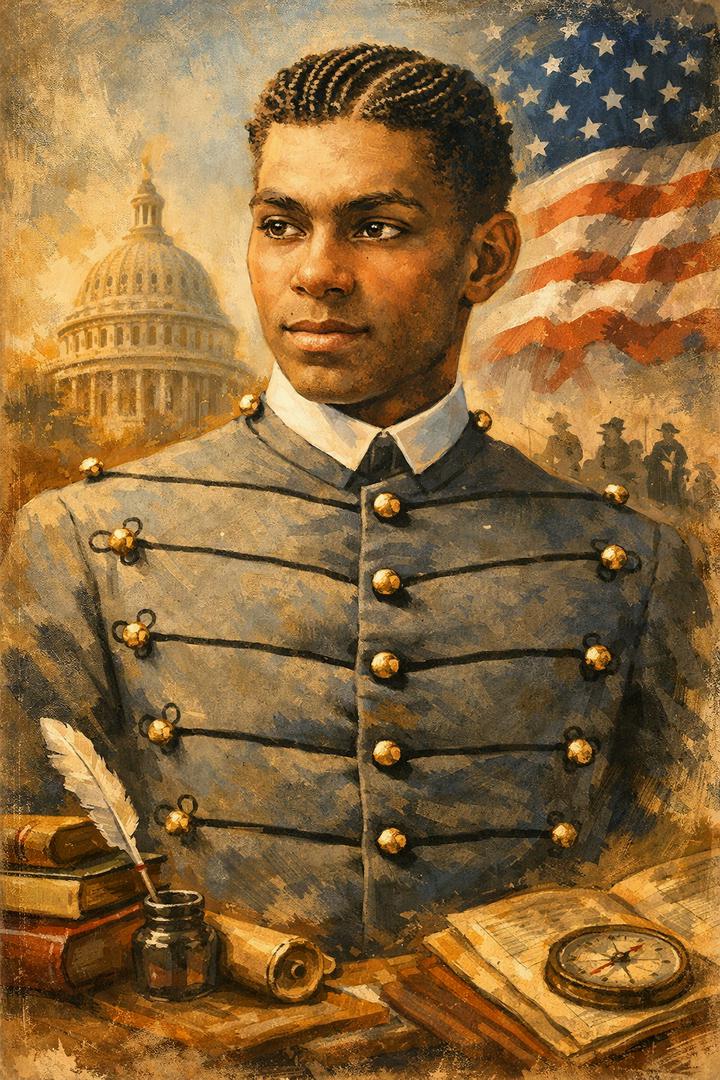
March 21, 1856 - Henry Ossian Flipper was born in Thomasville, Georgia, into slavery. His life began in a nation that had already decided how far Black people were supposed to go, and how firmly they were supposed to stay in their place. Flipper had other plans. He came of age during Reconstruction and, in 1873, was appointed to the U.S. Military Academy at West Point, one of the most elite institutions in the country. Getting in was one battle. Surviving it was another. He faced harassment, isolation, and open hostility, yet refused to be broken by any of it. In 1877, Henry Ossian Flipper became the first Black graduate of West Point and the first Black commissioned officer in the regular U.S. Army. That was no small ceremonial first. It was a direct blow against a system built to exclude Black Americans from military leadership, prestige, and power. His success proved what had always been true: the barrier was never ability, it was racism. After graduation, Flipper served with the 10th Cavalry, one of the famed Buffalo Soldier regiments. His career reflected discipline, endurance, and service, even as injustice continued to follow him. Still, history remembers what matters most: Henry Ossian Flipper crossed a line this country never intended for a Black man to cross… and he did it in uniform. His name deserves to be spoken with respect, not tucked away like a footnote. Sources: National Archives, U.S. Army #OnThisDay #BlackHistory #HenryOssianFlipper #WestPoint #BuffaloSoldiers #MilitaryHistory #BlackExcellence #HiddenHistory #AmericanHistory #BlackPioneers

LataraSpeaksTruth

January 1, 1931 marks a quiet but serious turning point in American history. Charles Hamilton Houston becomes vice-dean of Howard University School of Law and almost immediately reshapes it into something more than a classroom. He builds a legal training ground with a single purpose: strategy. Houston understood that segregation would not fall simply because it was unjust. It would fall only if it could be proven unconstitutional. So he trained lawyers to work with discipline and precision, to identify weaknesses in the law, document inequality in detail, and build cases strong enough to force the courts to act. This was not protest law. It was methodical law. Students were sent into the South to gather evidence, photograph conditions, interview communities, and expose how “separate but equal” failed in practice. Houston demanded excellence because he knew the stakes. Courts move slowly and only when the record leaves them no alternative. That strategy later became the legal foundation for cases like Brown v. Board of Education. Lawyers such as Thurgood Marshall did not emerge by chance. They were shaped by years of deliberate training and long-term planning. January 1, 1931 reminds us that some of the most important changes in history do not arrive with noise. They begin quietly, in classrooms, with patience, discipline, and a clear understanding of how power actually works. #January1 #OnThisDay #AmericanHistory #LegalHistory #HowardUniversity #CivilRightsHistory #BlackHistory #LongGame #QuietPower

LataraSpeaksTruth

Jan Ernst Matzeliger was an inventor whose work transformed the shoe industry during the late nineteenth century. He was born on September 15, 1852, in Paramaribo, Suriname, which was then called Dutch Guiana. His father was a Dutch engineer, and his mother was a Black Surinamese woman. As a young man, Matzeliger developed mechanical skills while working around machinery and ships before later immigrating to the United States. In the 1870s, Matzeliger settled in Lynn, Massachusetts, a city known at the time as a major center of shoe manufacturing. During this period, one of the most difficult and expensive steps in making a shoe was the process called lasting. Lasting is the step where the upper part of a shoe is pulled and shaped around a form called a last and then attached to the sole. Before Matzeliger’s invention, this step had to be done by hand by skilled craftsmen known as lasters, making the process slow and costly. Matzeliger studied the problem carefully and began developing a machine that could perform this task automatically. After years of experimentation, he successfully created the shoe lasting machine, which could attach the upper part of a shoe to the sole far faster than hand labor. He received a patent for the lasting machine in 1883. His invention greatly increased production in shoe factories and helped make footwear more affordable for ordinary people. Matzeliger’s work became widely used in the shoe manufacturing industry and played a major role in the growth of mass shoe production in the United States. Although his invention had a major impact, he did not live long after his success. He died on August 24, 1889, at the age of 36. His contribution to industrial manufacturing remains an important part of American history, Black history, and the development of modern footwear production. #JanErnstMatzeliger #Inventors #AmericanHistory #IndustrialHistory #BlackHistory #Innovation #ShoeIndustry #HistoryMatters #LataraSpeaksTruth

LataraSpeaksTruth

On March 9, 1895, between 300 and 500 armed white men in New Orleans targeted Black dockworkers by attacking the Morris Public Bathhouse, where equipment used by Black laborers was stored. About half of their tools were seized and thrown into the river. This was not random violence. It was organized intimidation meant to punish Black workers for becoming too visible, too independent, and too competitive on the waterfront. Two days later, the violence escalated even further, as white mobs attacked Black dockworkers directly and killed six men on the levee. What happened in New Orleans showed how racial terror could be used to break labor power before it had the chance to grow. After the Panic of 1893, some shipping companies turned to lower-paid Black labor to weaken white unions, and employers benefited from the racial division that followed. Violence did what negotiation would not: it crippled livelihoods, deepened distrust, and helped destroy the fragile possibility of sustained worker unity across racial lines. This history matters because attacks on Black workers were never only about prejudice. They were also about control—control of wages, control of jobs, control of who could rise, and control of who had to remain vulnerable. The dockworkers conflict was not just about the waterfront. It was about crushing Black economic strength before it could take root. #BlackHistory #LaborHistory #NewOrleansHistory #BlackWorkers #Dockworkers #AfricanAmericanHistory #RacialViolence #EconomicJustice #HiddenHistory #AmericanHistory

LataraSpeaksTruth

On December 11, 1917, before sunrise, the U.S. Army carried out one of the harshest mass executions in its history. Thirteen Black soldiers of the 3rd Battalion, 24th Infantry Regiment were hanged at Fort Sam Houston after the first court martial linked to the Houston Riot of August 1917. The men had been stationed at Camp Logan in segregated Houston, where Black soldiers faced constant harassment from police and white residents. Tension boiled over after a Black soldier was assaulted and arrested, and confusion inside the camp led many to believe that an armed white mob was on the way. Fear clashed with hostility, violence broke out, and several people were killed. When the trials began, more than one hundred Black soldiers faced charges in what became the largest court martial in U.S. Army history. Legal counsel was limited, testimony often conflicted, and the system allowed almost no room for appeal. Before dawn on December 11, thirteen men were executed in secret. Their families were not notified, and they had no chance to seek clemency. Their names were James Wheatley, Charles Baltimore, William Brackenridge, Thomas C. Hawkins, Carlos J. Rivers, Jesse Moore, Albert D. Wright, Nels P. Christensen, William C. Nesbit, James Divine, Clyde Sneed, Frank Johnson, and Pat MacWhorter. Two more court martials followed, bringing the total number of executed soldiers to nineteen. For decades the full story was reduced or distorted, but historians and communities kept pressing for truth. In 2023, the Army finally vacated all the convictions and acknowledged that the trials had been unjust and shaped by racial discrimination. Remembering this date means facing the reality of what happened and honoring the men whose service was met with unequal justice at home. #BlackHistory #OnThisDay #HoustonRiot #24thInfantry #MilitaryHistory #AmericanHistory #NewsBreakCommunity

LataraSpeaksTruth

Cathay Williams was born in September 1844 in Independence, Missouri, to an enslaved mother and a free father. Because her mother was enslaved, Cathay was also born into slavery. As a young woman, she was forced into labor for Union troops during the Civil War, working as a cook and washerwoman and traveling with the army through parts of the South. That experience brought her close to military life long before she officially entered it. After the war, Williams chose a path few women of her time could even imagine. On November 15, 1866, she enlisted in the United States Army in St. Louis under the name William Cathay. Since women were barred from military service, disguising herself as a man was the only way she could join. She served in Company A of the 38th U.S. Infantry, one of the African American regiments created after the Civil War and later tied to the legacy of the Buffalo Soldiers. For nearly two years, she performed the duties expected of any soldier. Her secret remained hidden until repeated illness and hospital visits led army doctors to discover she was a woman. She was discharged on October 14, 1868. Years later, Williams applied for a military disability pension, describing her service and failing health, but her claim was denied. Much of her later life remains unclear, but her place in history does not. Today, Cathay Williams is remembered as the only documented woman known to have served as a Buffalo Soldier and one of the most remarkable women in American military history. #OurHistory #CathayWilliams #BuffaloSoldiers #MilitaryHistory #BlackHistory #WomensHistory #AfricanAmericanHistory #HiddenFigures #AmericanHistory #LataraSpeaksTruth

Tag: AmericanHistory | LocalAll