1/1

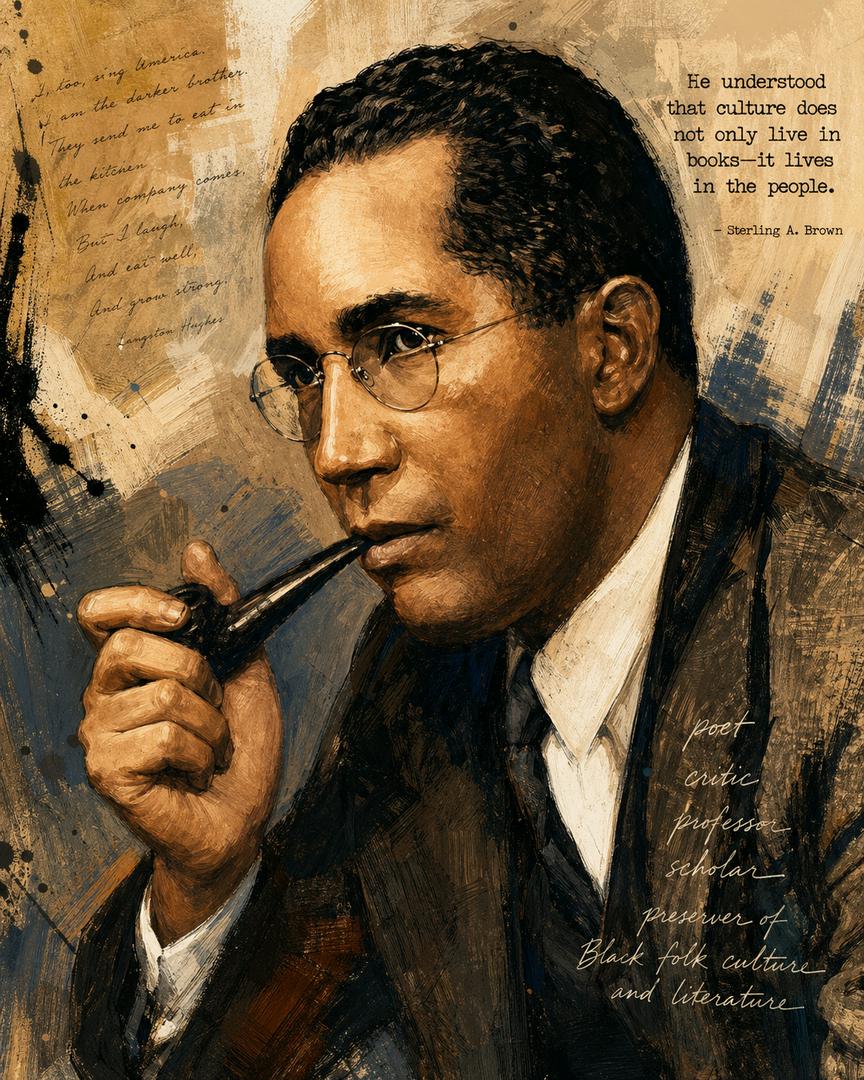
May 1, 1901: Sterling A. Brown was born in Washington, D.C. Brown became one of the most important literary voices connected to Black folk culture, poetry, criticism, and education. He was not just writing about Black life from a distance. He studied its sound, rhythm, humor, pain, wisdom, and everyday language with serious respect. A poet, professor, critic, and folklorist, Brown taught at Howard University for decades and helped shape generations of students and writers. His work pushed against narrow portrayals of Black people in literature. Instead of treating folk speech as something inferior, Brown recognized it as art, history, and cultural memory. His 1932 poetry collection “Southern Road” became one of his best-known works. Through poems rooted in blues, work songs, oral tradition, and Southern Black life, Brown showed that the voices of ordinary people carried depth, intelligence, and beauty. Brown also wrote major critical studies, including “The Negro in American Fiction” and “Negro Poetry and Drama.” His scholarship challenged stereotypes and examined how Black people were represented in American writing. He also helped edit “The Negro Caravan,” an important anthology of African American literature. His legacy matters because he preserved more than poems. He preserved voice. He understood that culture does not only live in formal books, classrooms, or museums. It lives in sayings, songs, stories, jokes, grief, survival, and the way people speak when the world is not listening. Sterling A. Brown helped make sure those voices were heard. #BlackHistory #SterlingABrown #BlackLiterature #PoetryHistory #HowardUniversity
Washington, District Of Columbia • 2026-05-01

Richard Drain
I’ve always been amazed @ how we go about our daily lives with natural grace & dialect crossing many natural tongues; spoken via “get that jawn” to itching for a licking both sent messages to the listener to obey; our eyes & hands speak without a stare or touch; the onlooker knew; knew what not to do; Thanks Dr Sterling for “damn if they know”
30d
Philadelphia, PA
Reply
More comments ...
write a comment...