1/1
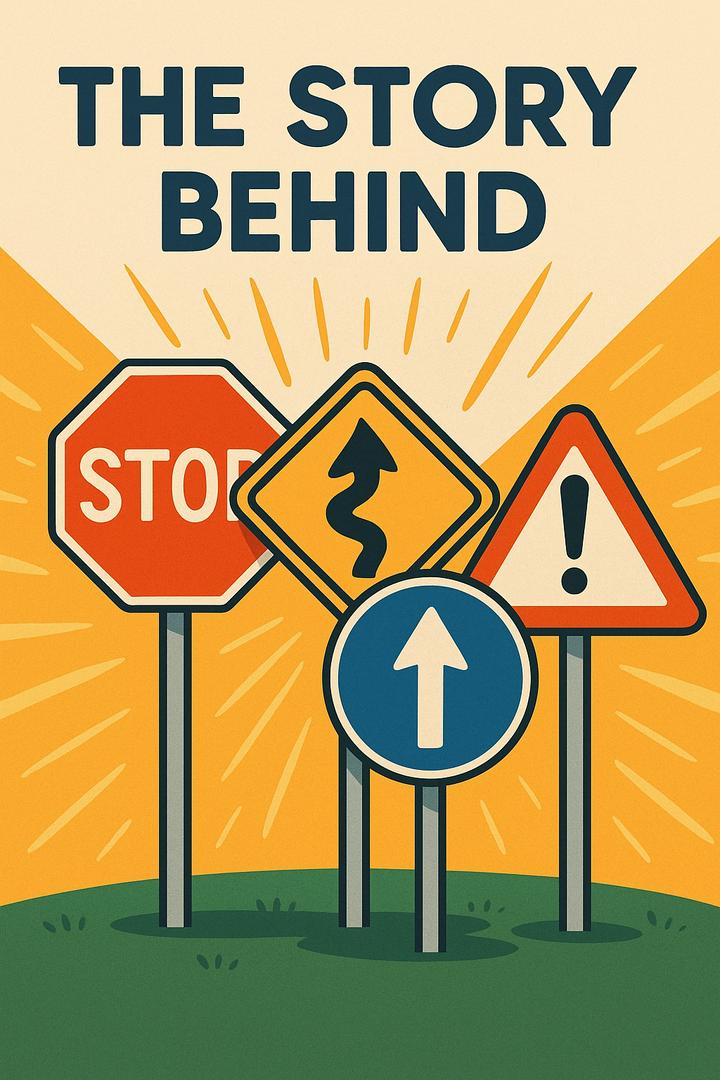
Road signs look simple, but they’re one of the smartest inventions humans ever came up with to keep each other alive. Before cars, people didn’t need traffic rules because nobody was flying down roads at 60 miles an hour. Travel was slow, messy, and local. The first “road signs” were basically carved stones in ancient Rome telling travelers how far they were from the next city. No warnings, no symbols… just distance. Everything changed when cars showed up in the late 1800s and early 1900s. People were driving faster than their brains could process the road, and chaos broke out. Crashes, confusion, and cities that had no idea how to control traffic. So cyclists—yes, cyclists—created the first real warning signs. They marked sharp turns, steep hills, and dangerous paths because they were the ones getting wiped out first. As cars took over, countries realized they needed a universal language that worked no matter what someone spoke. That’s when symbols replaced words. A red triangle meant danger. A circle meant rules. A diamond meant warnings. Colors started carrying meaning: red for stop, yellow for caution, blue for information, green for direction. By the 1960s, most of the world agreed on standardized icons through international conventions, which is why a stop sign looks like a stop sign no matter where you are. The shape makes it recognizable from the back, at night, or in bad weather. The bold symbols are designed so your brain can read them in less than a second while moving. Today, road signs are basically silent safety officers. They predict danger before you see it. They tell strangers how to share space without speaking the same language. And they work because humans agreed to follow them together. They’re ordinary, but they’re world-saving. They’re the reason massive highways don’t run like the Wild West. #TheStoryBehind #RoadSigns #EverydayHistory #WhyThingsAreTheWayTheyAre #TrafficHistory #CommunityFeed #DesignHistory
1 days ago
write a comment...