Tag Page EverydayHistory

#EverydayHistory
The Story Behind...

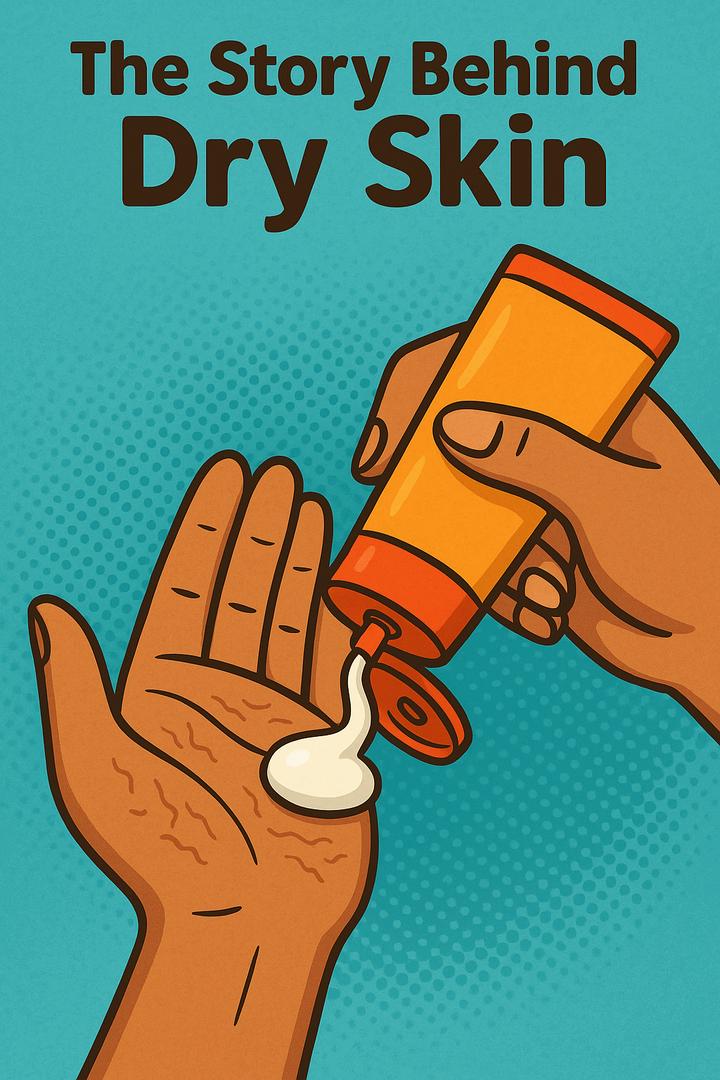
Dry skin has been around as long as humans have. The moment early people stepped out into the sun, wind, cold, and dusty air… boom, their skin was fighting for moisture. But the real story starts with how the skin is built. The top layer of your skin, the stratum corneum, is basically a wall made of dead cells stacked like bricks, with natural oils acting as the “mortar.” When that oil disappears? The wall cracks. And that’s what we call dryness. Ancient civilizations were battling dry skin way before lotions existed. Egyptians used olive oil, honey, milk, and animal fats to keep their skin soft in the desert heat. Greeks used beeswax balms. Romans soaked in baths with oils afterward so the skin wouldn’t flake. Even in early African cultures, people used shea butter long before the beauty industry “discovered” it. But why do we get dry today? Modern life makes it worse. Hot showers strip oils. Winter air steals humidity. Indoor heating dries the skin out faster. Soap (especially cheap soap) rips away protective oils. Even genetics can decide if you stay moisturized or look like you’ve been rolling in flour. By the 1900s, scientists finally figured out that skin needs both water AND oil to stay healthy. That’s when commercial lotions started showing up, using things like glycerin, lanolin, petroleum jelly, and plant butters. Today, the skincare industry is worth billions… all because humans never stopped trying to fix the same simple problem our ancestors faced: staying moisturized. Dry skin isn’t just about looks… it’s a window into how our bodies try to protect us. And the solutions we use now? They’re all rooted in what people were trying thousands of years ago. The ancient problem that turned into a billion-dollar industry. #TheStoryBehind #DrySkin #SkinFacts #EverydayHistory #HealthFacts #DidYouKnow #ScienceFacts #SkincareHistory #LearnOnNewsBreak

The Story Behind...

Sidewalks weren’t created for decoration. They were built out of necessity. In the earliest cities thousands of years ago, people, animals, carts, trash, and vendors all crowded the same dirt roads. Walking was dangerous. Streets were muddy, messy, and filled with everything from waste to livestock. Ancient Greece and Rome were the first to try solving the problem by raising stone walkways slightly above street level so people could move safely without stepping through the chaos. In medieval Europe, sidewalks disappeared when cities became crowded again and streets narrowed. People walked anywhere they could, and traffic mixed together. It wasn’t until the 1700s and 1800s, during the rise of bigger cities, that sidewalks made a comeback. As horse-drawn carriages, wagons, and eventually cars filled the roads, pedestrians needed safe spaces again. Cities began building raised stone and brick sidewalks to separate walkers from vehicles. By the early 1900s, sidewalks became standard in modern urban planning. Concrete replaced stone, and new rules required sidewalks near homes, schools, and businesses. Sidewalks weren’t just safer — they created cleaner neighborhoods, easier travel, and better community spaces. They helped children walk to school, protected shoppers, and made cities easier to navigate. Today, sidewalks still serve the same purpose: safety, order, and access. They separate foot traffic from busy roads and give people a place to walk, run, push strollers, or simply move through their city without danger. From ancient stone paths to today’s concrete walkways, sidewalks have always been about one thing — giving people a safe path forward. #TheStoryBehindIt #Sidewalks #EverydayHistory #LearnSomethingNew #HistoryMadeSimple #UrbanFacts

The Story Behind...

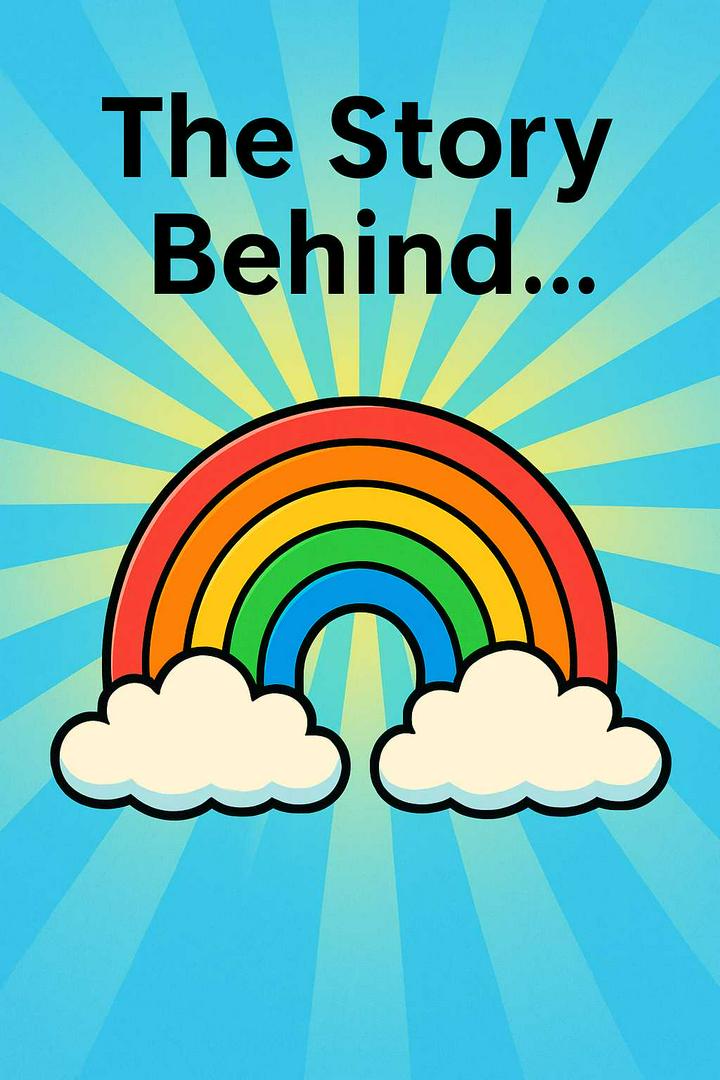
Rainbows have been a symbol of hope, mystery, and magic for thousands of years. Long before scientists understood how light worked, ancient people created stories to explain the colorful arc in the sky. Some believed rainbows were bridges between worlds. Others said they were messages from the gods, signs of peace after storms, or pathways to good fortune. But the real story behind rainbows comes down to sunlight and raindrops working together. When sunlight enters a raindrop, the light bends, bounces inside the drop, and spreads out into different colors. Each color bends at a slightly different angle, and when millions of drops do this at the same time, the sky paints the familiar arc — red at the top, violet at the bottom. You can only see a rainbow if the sun is behind you and rain is in front of you. That’s why they appear after storms or when sunlight cuts through mist. And no matter how fast you run, you can never reach the end of a rainbow — it’s a circle of light that moves with you. From ancient legends to modern science, rainbows have always been reminders that even after the darkest weather, something beautiful can appear. #TheStoryBehindIt #Rainbows #EverydayHistory #LearnSomethingNew #ScienceFacts #HistoryMadeSimple

The Story Behind...

Swear words didn’t just appear out of nowhere. They came from the old world, where language was tied to power, class, religion, and control. In medieval Europe, “bad words” were usually tied to the body, the bathroom, or the bedroom, and anything considered too earthy or too honest got labeled as impolite. The church played a huge role in this too. Words that took holy names in vain were treated as the worst offense, and people could actually be punished for saying them. So cursing wasn’t just rude. It was criminal. Over time, society changed, but the taboo stayed. Swear words became emotional shortcuts… verbal pressure valves people used when something hurt, shocked them, or pushed them past their limit. The strange part is that every culture has them, but what counts as a “bad word” changes from place to place. Some languages use insults tied to family. Others target luck or misfortune. Some cultures don’t even flinch at the words Americans treat like nuclear bombs, while American cursing sounds tame to them. Today, swear words sit in a weird limbo. They’re not illegal anymore, but they carry weight. They can show anger, humor, rebellion, honesty, stress, or solidarity depending on who says them and why. People use them to release tension, to emphasize a point, or to say the thing polite language won’t cover. The truth is, swear words stick around because humans need them. They’re emotional punctuation marks… messy, powerful, honest, and universal. #TheStoryBehind #LanguageHistory #WhyWeCuss #CulturalOrigins #EverydayHistory #CommunityFeed
The Story Behind...

Yawning has been around longer than humans. Animals yawn. Babies yawn in the womb. Even ancient fossils of early humans show jaw structures built for big, wide yawns. But why we yawn has been one of the longest-running mysteries in science and culture. Ancient people believed yawning meant the soul was leaving the body, so covering your mouth became a habit meant to protect yourself. Some cultures thought yawning released tired energy, let spirits escape, or even showed boredom or disrespect. But science says yawning is way more practical. One theory says yawning helps cool the brain—like opening a window to let fresh air in. Another theory says yawning wakes the body up by stretching the jaw, increasing blood flow, and giving a small burst of alertness. And of course, there’s the contagious yawn… when seeing someone yawn makes you yawn too. Scientists think that comes from empathy. When people connect or mirror each other, their bodies sync up in little ways. Today, yawning is still partly a mystery, but we know this much: it’s natural, it happens in almost every species with a backbone, and it’s one of the body’s oldest ways of saying, “I need a reset.” #TheStoryBehindIt #Yawning #EverydayHistory #LearnSomethingNew #FunFacts #HistoryMadeSimple

The Story Behind...

Belts started long before fashion, outfits, or matching colors. The very first belts were created for survival. Early humans made strips of leather from animal hides and wrapped them around their waists to hold tools, knives, and small pouches while hunting or traveling. They weren’t meant to look good… they were meant to help people stay alive. As civilizations grew, belts became symbols. In ancient Egypt and Mesopotamia, belts showed rank — the more decorated the belt, the higher the status. In ancient Rome, soldiers wore heavy leather belts lined with metal studs to protect their stomachs during battle. People in Europe during the Middle Ages used belts to carry bags, money, keys, and even weapons because clothing didn’t have pockets yet. By the 1800s and early 1900s, belts changed again. Clothes were being designed differently, and belts were used mostly to hold up pants. Then fashion stepped in. Designers realized belts could shape the waist, show personality, or add structure to an outfit. That’s when buckles, colors, stitching, and styles exploded. Belts turned from tools… to accessories… to full fashion statements. Today, belts still do both jobs. Some are made for practicality — work belts, uniform belts, utility belts. Others are made purely for style, evolving into everything from sleek leather to decorated chains to bold statement pieces. From survival gear to a fashion staple, belts have always been about one main thing: holding things together, whether it’s your tools, your clothes, or your look. #TheStoryBehindIt #Belts #EverydayHistory #LearnSomethingNew #HistoryMadeSimple #FunFacts

The Story Behind...

During the 1900s, cigarette sales exploded. But behind the scenes, scientists were discovering that smoking caused cancer, heart disease, and lung damage. Companies knew the risks early, but hid the evidence to protect profits. It wasn’t until the 1960s and 70s that governments began warning the public. Labels, restrictions, and research exposed the truth: cigarettes were engineered to be addictive. Today, smoking rates have dropped, especially among younger generations, but the legacy remains. Cigarettes transformed from a sacred plant to one of the largest and most harmful industries in history — a story driven by culture, colonization, marketing, and money. From ancient traditions to modern health warnings, the story of cigarettes is a reminder of how something meaningful can be turned into something dangerous once profit gets involved. #TheStoryBehindIt #Cigarettes #EverydayHistory #LearnSomethingNew #HistoryMadeSimple #TruthBehindIt

The Story Behind...

It’s wild to think about it… the thing holding Amazon boxes, cereal, shoe boxes, moving boxes… all that everyday stuff? Cardboard is one of the most important inventions of the modern world, and its story starts long before two-day shipping. The earliest version showed up in China over 1,500 years ago, back when paper itself was still new. People used thick, layered paper to protect goods, kind of like a baby version of cardboard. But the real transformation came in the 1800s. In 1856, two Englishmen patented “corrugated paper,” but it wasn’t for boxes… it was for lining men’s tall hats so the hats wouldn’t collapse. Yep… cardboard started as hat support. In 1871, an American named Albert Jones figured out that this wavy “corrugated” paper was perfect for wrapping delicate items like glass. A few years later, Oliver Long added flat sheets to both sides, creating the sandwich-style corrugated cardboard we use today. That changed everything. Suddenly, goods could be shipped farther, cheaper, and safer than ever before. By the early 1900s, cardboard boxes replaced wooden crates. Companies could ship faster, businesses could expand, and entire industries took off. It’s one of those inventions that hides in plain sight but built the modern world from behind the scenes. Thin… light… recyclable… and tough enough to move a whole house. Cardboard might look boring, but it’s an innovation that literally holds life together. The everyday invention that quietly changed the world. #TheStoryBehind #Cardboard #HistoryFacts #EverydayHistory #FunFacts #Packaging #Innovation #DidYouKnow #LearnOnNewsBreak

The Story Behind...

Birthdays didn’t start as candles, cake, and people yelling “make a wish.” The earliest birthday celebrations came from ancient Egypt, but they weren’t celebrating a person’s birth… they were celebrating the moment a Pharaoh was crowned and “became a god.” That’s the first record of marking a life-changing moment and calling it a “birth.” The idea shifted in ancient Greece, where people honored Artemis, the goddess of the moon, with round cakes that symbolized her glowing light. They added candles to make the cake shine… and that became the ancestor of today’s birthday candles. So every candle we blow out today is tied to an old ritual of light, power, and wishes. But birthdays still weren’t for everyday people. In ancient Rome, only men had their birthdays officially celebrated. Women weren’t recognized at all. Romans were also the first to throw public birthday parties and give gifts, especially to leaders or soldiers. Over time, the idea spread into everyday homes. It wasn’t until the 1800s that modern birthdays took shape. Germany introduced the “kinderfest,” a celebration for children with cake, candles, and one special tradition… letting the child make a wish before blowing them out. When the U.S. caught on, businesses jumped in, creating decorations, songs, and party items. That’s how birthdays became a global tradition instead of a ritual for the powerful. Today, birthdays are personal holidays that mark survival, growth, aging, and everything you learned along the way. It’s one of the few traditions that every culture touches, even if they celebrate it differently. Behind the candles and cake is a long history of human beings trying to mark the moment they entered the world and the life they’ve built since. A simple celebration with a very old story behind it. #TheStoryBehind #Birthdays #HistoryFacts #EverydayHistory #Traditions #DidYouKnow #LearnOnNewsBreak

The Story Behind...

Road signs look simple, but they’re one of the smartest inventions humans ever came up with to keep each other alive. Before cars, people didn’t need traffic rules because nobody was flying down roads at 60 miles an hour. Travel was slow, messy, and local. The first “road signs” were basically carved stones in ancient Rome telling travelers how far they were from the next city. No warnings, no symbols… just distance. Everything changed when cars showed up in the late 1800s and early 1900s. People were driving faster than their brains could process the road, and chaos broke out. Crashes, confusion, and cities that had no idea how to control traffic. So cyclists—yes, cyclists—created the first real warning signs. They marked sharp turns, steep hills, and dangerous paths because they were the ones getting wiped out first. As cars took over, countries realized they needed a universal language that worked no matter what someone spoke. That’s when symbols replaced words. A red triangle meant danger. A circle meant rules. A diamond meant warnings. Colors started carrying meaning: red for stop, yellow for caution, blue for information, green for direction. By the 1960s, most of the world agreed on standardized icons through international conventions, which is why a stop sign looks like a stop sign no matter where you are. The shape makes it recognizable from the back, at night, or in bad weather. The bold symbols are designed so your brain can read them in less than a second while moving. Today, road signs are basically silent safety officers. They predict danger before you see it. They tell strangers how to share space without speaking the same language. And they work because humans agreed to follow them together. They’re ordinary, but they’re world-saving. They’re the reason massive highways don’t run like the Wild West. #TheStoryBehind #RoadSigns #EverydayHistory #WhyThingsAreTheWayTheyAre #TrafficHistory #CommunityFeed #DesignHistory