Tag Page hiddenhistory

#hiddenhistory
LataraSpeaksTruth

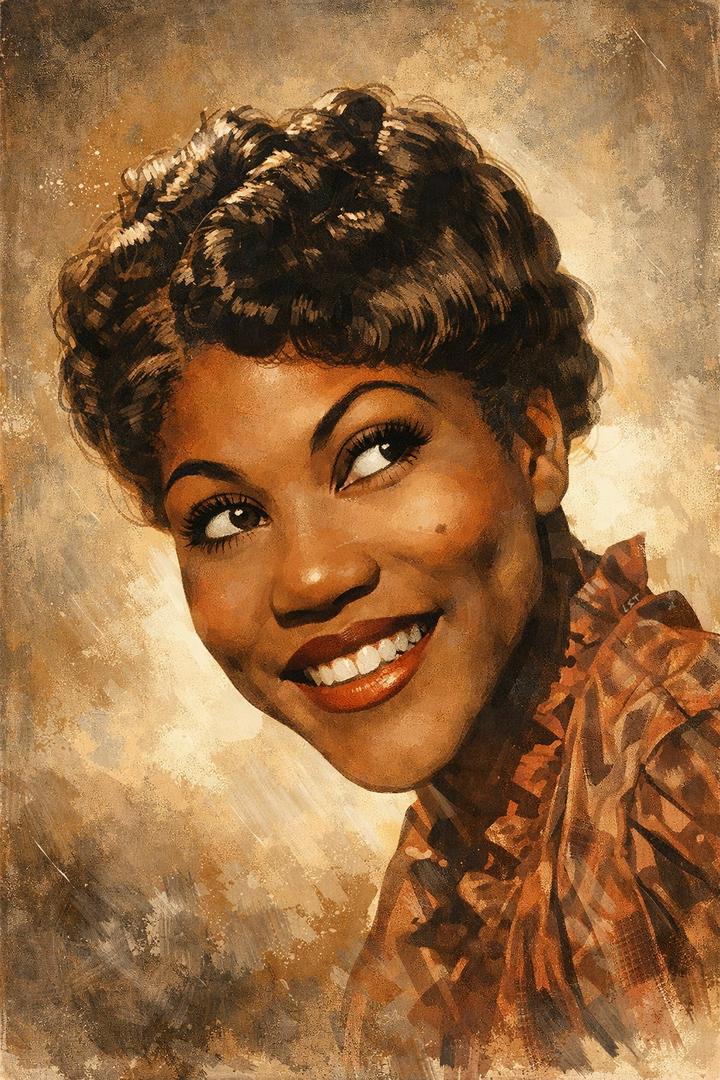
Sister Rosetta Tharpe was never meant to fit neatly into a box, and history still hasn’t figured out what to do with her. She stood at the crossroads of sacred and electric, church pews and nightclub stages, scripture and distortion. Long before rock and roll had a name, she was already bending it into shape with a guitar strapped across her chest and absolute conviction in her voice. Born on December 25, 1915, Sister Rosetta Tharpe entered the world on a day heavy with symbolism, but she didn’t grow into something quiet or ceremonial. She grew loud. She grew bold. She took gospel music, plugged it into an amplifier, and let it shake rooms that weren’t built for that kind of sound or freedom. Her guitar style was aggressive, joyful, and unapologetic. The DNA of rock and roll runs straight through her hands, even if the genre tried to deny it for decades. What made her dangerous, in the best way, was that she didn’t ask permission. She performed gospel in secular spaces and used electric techniques inside sacred songs. That made people uncomfortable. Good. Progress usually does. While later artists were credited as pioneers, she was already living the sound…touring relentlessly, commanding mixed audiences, and crossing boundaries in an era that actively resisted it. Sister Rosetta Tharpe wasn’t chasing legacy. She was chasing truth, sound, and spirit at the same time. The fact that her birthday falls on December 25 feels less like coincidence and more like a quiet reminder that history often hides its revolutionaries in plain sight…then acts surprised when the echoes never stop. #SisterRosettaTharpe #MusicHistory #RockAndRollRoots #GospelMusic #December25 #HiddenHistory #AmericanMusic #WomenInMusic #SoundAndSpirit #CulturalHistory

LataraSpeaksTruth

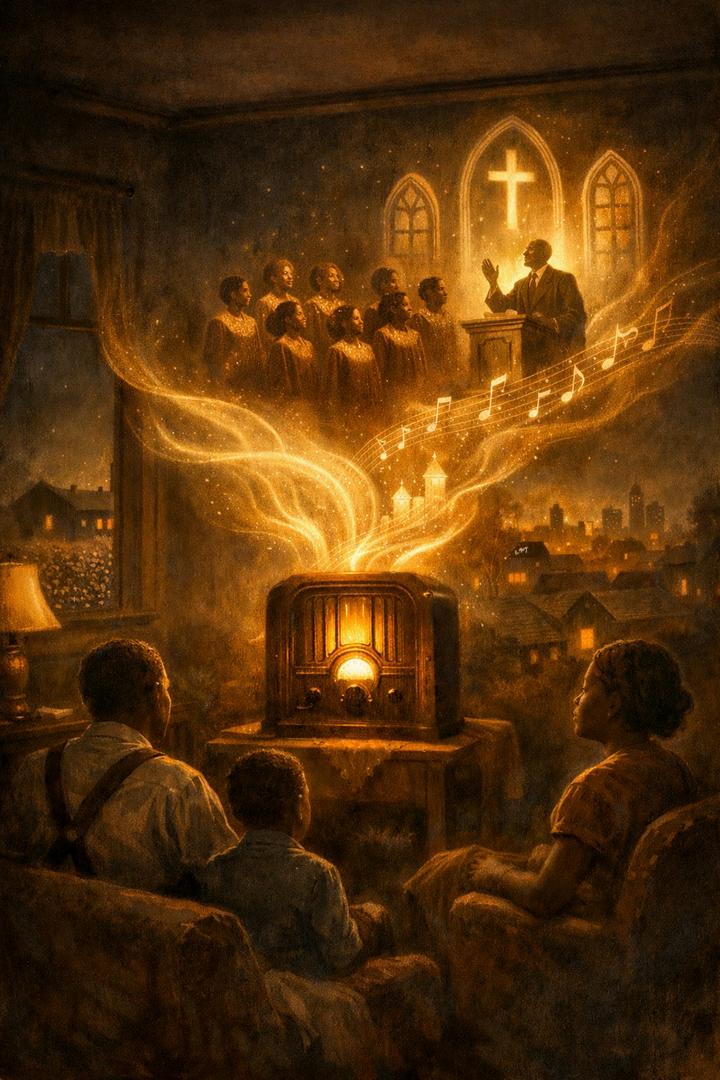
December 25 in the 1930s and 1940s quietly became one of the most important days for Black radio. While churches, concert halls, and public venues remained restricted or segregated, Christmas Day radio broadcasts allowed Black gospel music to move freely across the country. On this day, spirituals, choirs, sermons, and holiday messages reached households far beyond local communities, turning the airwaves into a sanctuary when physical space was denied. Radio mattered because it crossed boundaries people could not. Families who might never step inside a Black church still heard the music. Listeners encountered voices shaped by faith, survival, and tradition without seeing faces first. Gospel did not arrive as protest, but its presence challenged exclusion simply by existing in national soundspace. Christmas amplified that reach, giving Black spiritual expression a moment of visibility during a holiday associated with reflection and hope. These broadcasts also helped standardize and spread gospel as a national musical form. Regional styles traveled coast to coast, influencing future performers, choirs, and composers. What began as sacred music rooted in specific communities expanded through radio into a shared cultural language. Christmas programming made room for that expansion when few other platforms would. By the 1940s, Black gospel on Christmas radio was more than seasonal programming. It was infrastructure. It preserved tradition, strengthened cultural memory, and reminded listeners that faith, like sound, could not be segregated forever. December 25 became proof that even when doors were closed, voices still traveled. #BlackHistory #GospelMusic #RadioHistory #ChristmasDay #CulturalHistory #AmericanMusic #FaithAndCulture #HiddenHistory #BlackExcellence #MediaHistory

LataraSpeaksTruth

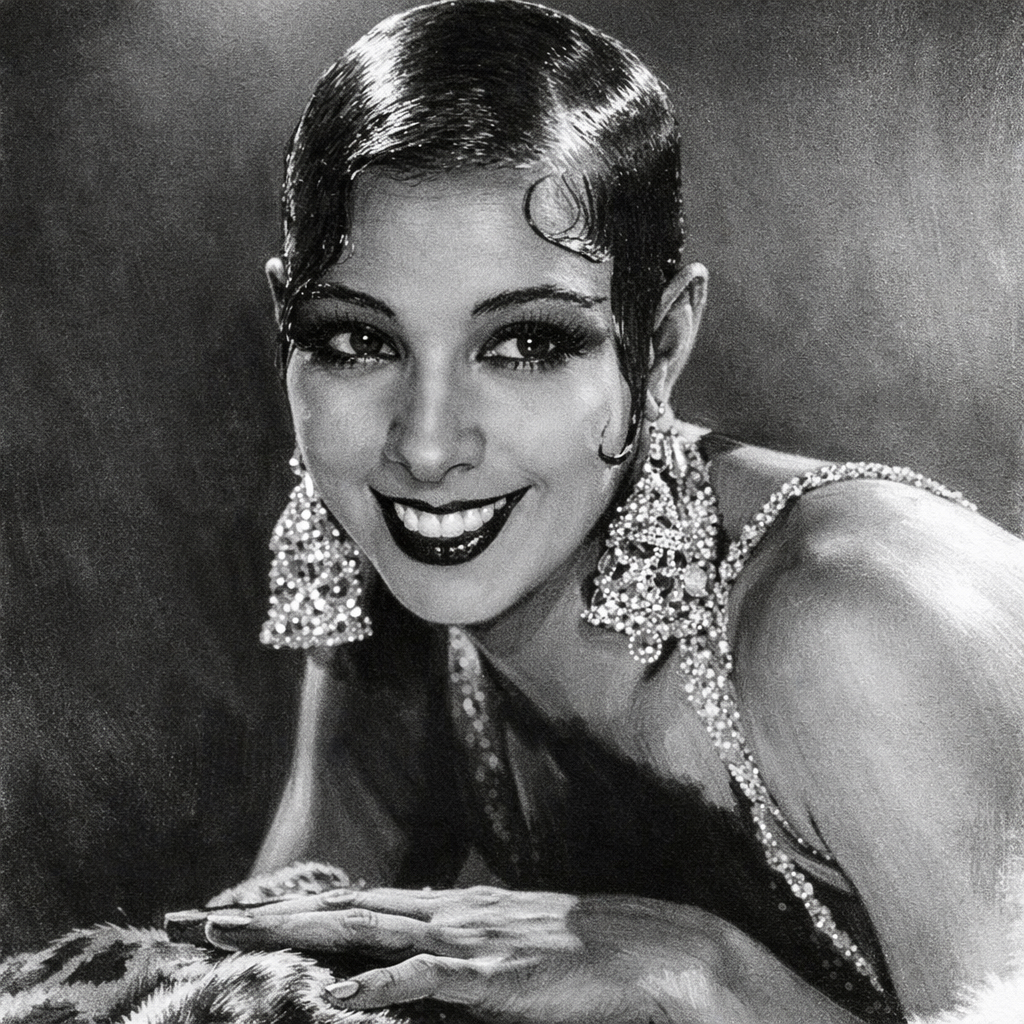
December 24, 1906. On this day, Josephine Baker was born, and history quietly underestimated her. Born into poverty in St. Louis, she came of age in a nation that craved her talent but denied her dignity. America wanted her onstage smiling, dancing, entertaining but not respected, protected, or treated as fully human. So she made a radical choice. She left. In France, Baker found what the United States refused to offer her at the time: freedom alongside fame. She became one of the most recognizable performers in the world, commanding European stages and redefining what it meant to be a Black woman in the spotlight. But sequins were never the whole story. During World War II, Baker served as an agent for the French Resistance, using her celebrity as cover to gather intelligence, conceal messages in sheet music, and transport information across borders. She risked her life fighting fascism. No costume patriotism. Real resistance. What stings is not only what she achieved, but what she had to leave behind to do it. Baker did not abandon America out of spite. She outgrew a country unwilling to grow with her. Even after global success, she confronted racism head on, refused to perform for segregated audiences, and later stood alongside civil rights leaders, including speaking at the March on Washington. December 24 marks more than a birthday. It marks the arrival of a woman who proved that talent does not need permission, dignity is not negotiable, and sometimes the loudest protest is choosing a life that refuses to shrink. She did not just escape limitations. She exposed them. #OnThisDay #December24 #JosephineBaker #HiddenHistory #WorldWarIIHistory #CulturalHistory #Resistance #Legacy #BlackExcellence #AmericanHistory #HistoryThatMatters

LataraSpeaksTruth

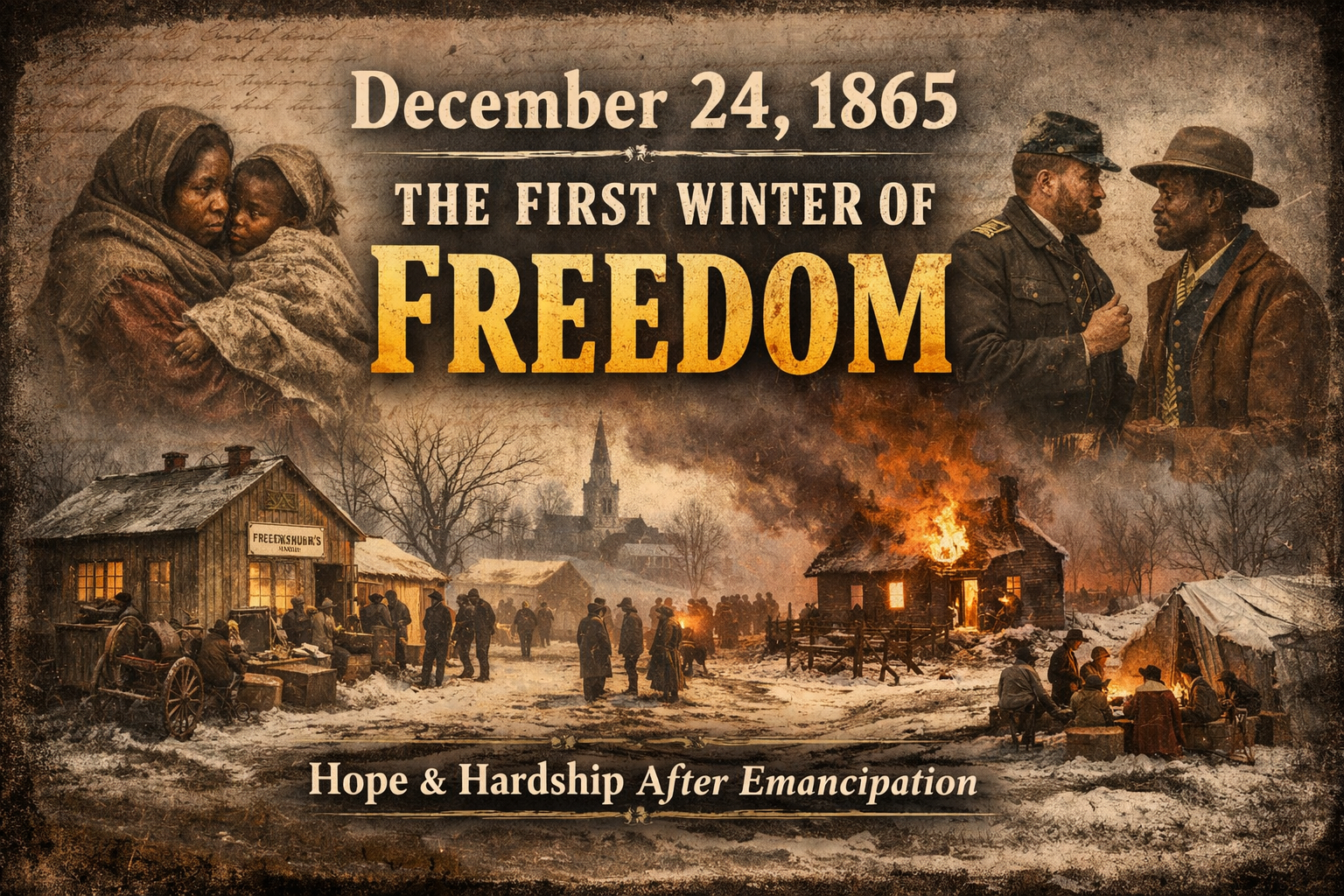
During the first winter of freedom, the Freedmen’s Bureau was actively operating across the South. Food and clothing were being distributed. Families separated by slavery were searching for one another. Schools were being established. Labor contracts were being negotiated. Protection was promised, though rarely guaranteed. Christmas Eve arrived at a moment where freedom existed in law but not in safety. For many formerly enslaved families, December 24 was not about celebration. It was about survival. Parents were learning how to live without ownership hanging over their heads. Children were navigating a world that still treated them as disposable. Communities were trying to understand what freedom meant when violence, intimidation, and economic control remained constant threats. Freedom was real, but fragile. White resistance to Black autonomy was already organizing across the South. Violence and exploitation followed emancipation almost immediately. While the Freedmen’s Bureau worked to stabilize daily life, its authority was limited and often undermined. Protection depended on location, timing, and luck. December 24, 1865 sits inside that uncertainty. It reminds us that emancipation did not come with peace or security. Freedom had to be learned, defended, and negotiated in real time. For many families that Christmas Eve, hope existed quietly, alongside hunger, fear, and unanswered questions. History does not always announce itself loudly. Sometimes it lives in moments of transition, where survival came before celebration and freedom was still being defined. #OnThisDay #December24 #ReconstructionEra #FreedmensBureau #AmericanHistory #HiddenHistory #WinterOfFreedom #HistoricalTruth #LataraSpeaksTruth

LataraSpeaksTruth

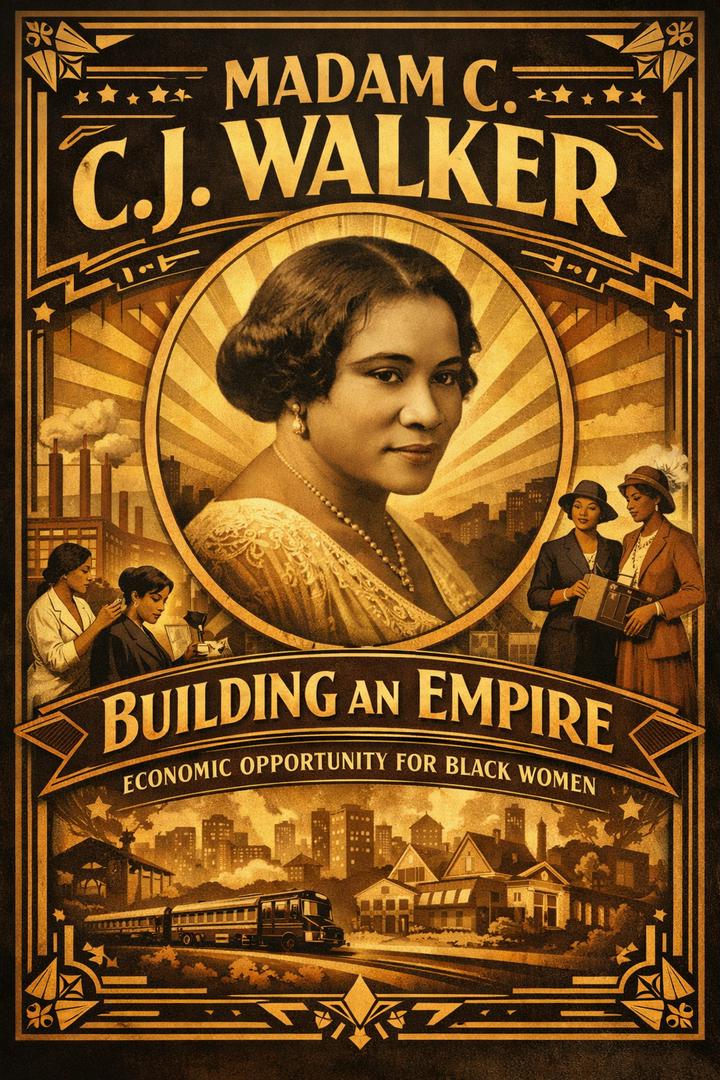
During the 1920s, the business empire built by Madam C. J. Walker was still expanding, even after her death in 1919. This mattered. At a time when economic opportunity for Black women was deliberately restricted, Walker’s company continued to operate, grow, and employ thousands. Her vision did not end with her life. It outlived her. Walker had built more than a beauty brand. She created a national system of training, sales, and ownership that allowed Black women to earn steady income, travel, and gain financial independence in an era that offered few legitimate paths to either. By the 1920s, her sales agents, often called Walker Agents, were operating across the country, supporting families and funding communities. This was not charity. It was structure. Walker believed economic power was a form of protection and dignity. Her company provided wages, business education, and leadership opportunities long before corporate America was willing to do the same. Many of the women employed through her system went on to buy homes, send children to school, and support civil rights organizations quietly and consistently. What made Walker’s legacy radical was its practicality. She did not argue theory. She built systems. In a decade defined by segregation, limited labor access, and social barriers, her company functioned as proof that economic independence was achievable when ownership and opportunity were placed directly in the hands of those excluded from both. The 1920s did not slow her impact. They revealed it. Long after her passing, Madam C. J. Walker’s business remained a working model of what happens when vision meets execution. #BlackHistory #BusinessLegacy #EconomicPower #WomensHistory #HiddenHistory

LataraSpeaksTruth

December 13, 1951 sits right in the middle of a quiet but dangerous shift in American history. During the early Cold War, civil rights organizations, including the NAACP, came under intensified federal scrutiny and state level attack. Under the banner of fighting communism, activism for equal rights began to be framed as a national security threat rather than a constitutional right. By this period, the NAACP was facing loyalty investigations, demands for membership lists, and legal pressure in multiple states. Southern legislatures moved to restrict or ban its operations outright, arguing that civil rights organizing was “subversive” or foreign influenced. These accusations were not supported by evidence, but they were effective. They chilled participation, endangered members, and slowed organizing efforts through fear and intimidation. This moment matters because it helped normalize surveillance as a tool against Black political organizing. The logic was simple and deeply flawed. If you challenge inequality, you must be dangerous. That mindset did not end in the 1950s. It laid groundwork for later monitoring of activists, community leaders, and movements well into the late twentieth century and beyond. December 1951 is not remembered for a single headline grabbing event, but for a pattern taking shape. Civil rights work was being recast as suspicious, unpatriotic, and worthy of government oversight. That reframing shaped how activism would be treated for generations and explains why many organizers learned to move carefully, document everything, and expect resistance not just from mobs, but from institutions. History is not only about what happened loudly. Sometimes the most lasting damage is done quietly, through paperwork, court orders, and labels that follow people long after the moment has passed. #HistoryMatters #ColdWarEra #CivilRightsHistory #NAACP #AmericanHistory #HiddenHistory #GovernmentSurveillance #BlackHistory
LataraSpeaksTruth

December 13, 1967 marks one of those quiet moments in American history that reshaped higher education without ever getting a plaque. During the late 1960s protest wave, Black student organizations were formally recognized at several predominantly white universities, often in December after months of sustained campus pressure. These recognitions did not come from goodwill or sudden awareness. They followed walkouts, sit ins, building occupations, canceled classes, and students risking suspension or arrest to force institutions to acknowledge their presence and demands. What universities later labeled as “administrative recognition” was the result of organized resistance and strategic disruption. Black students understood that being admitted to a campus did not equal inclusion within it. Recognition of Black student organizations created formal pathways for advocacy, funding, and accountability, while also fueling demands for Black Studies programs, Black faculty hiring, culturally relevant curricula, and support systems that reflected students’ lived realities. Until this moment, most campuses taught history and social sciences through narrow frameworks that excluded or distorted Black experiences. The impact of these movements extended far beyond 1967, laying the groundwork for Black Studies departments nationwide and exposing a recurring truth in American institutions. Change is often framed as progress granted from above, when it is more often forced from below. December 13, 1967 reminds us that history also moves through students who refused silence and made institutions confront realities they preferred to ignore. #BlackHistory #BlackStudentMovement #BlackStudies #CampusProtests #StudentActivism #AmericanHistory #EducationHistory #HiddenHistory

LataraSpeaksTruth

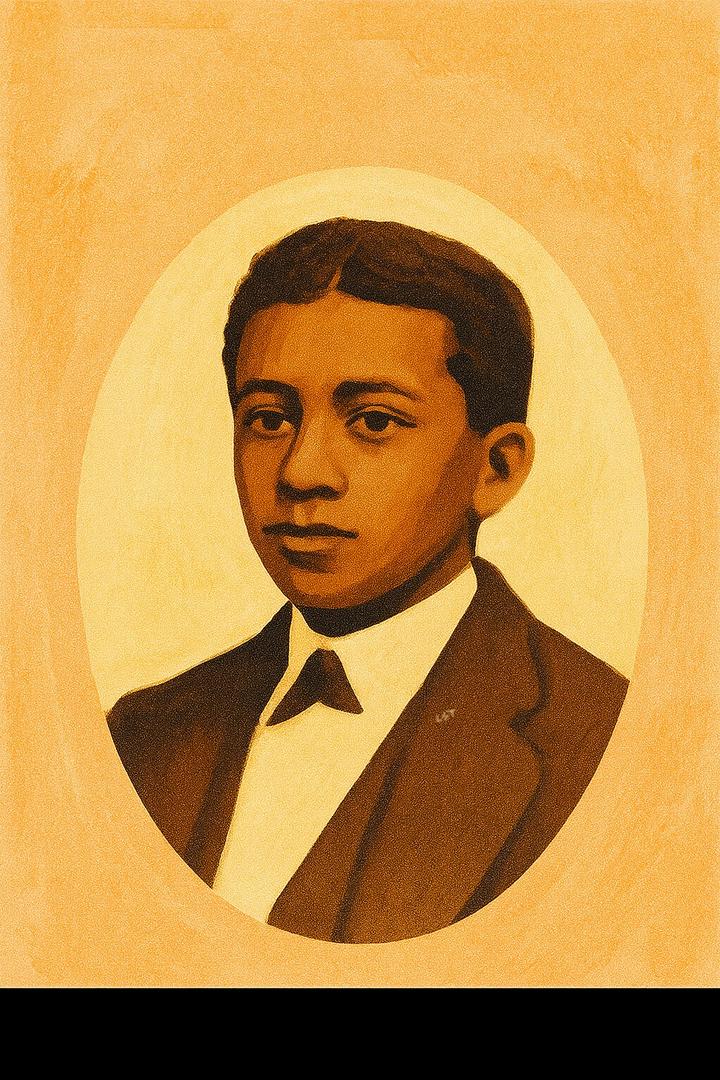
December 12, 1899 marks a quiet moment in history that barely registered at the time but went on to change an entire sport. On this date, Dr. George Franklin Grant was awarded a U.S. patent for an early version of the golf tee. Before this invention, golfers shaped small mounds of sand by hand for each drive, an inconsistent and time-consuming practice that defined the early game. Grant was not a professional golfer. He was a Harvard-educated dentist, a professor, and an inventor with a practical eye for everyday problems. His design used a wooden peg topped with a rubber cup, allowing the ball to be elevated at a consistent height. While simple, the idea made tee shots cleaner and more predictable. Although Grant held the patent, he never actively marketed the invention. He shared the tees informally with friends and fellow golfers, which meant the design never saw widespread commercial use during his lifetime. More than twenty years later, similar tees would be mass-produced and adopted worldwide, often without recognition of Grant’s earlier work. Today, the golf tee is so common that its origins are rarely considered. Grant’s 1899 patent is a reminder that meaningful change does not always arrive loudly, and that some innovations quietly reshape the way things are done. #ThisDayInHistory #December12 #GeorgeFranklinGrant #QuietInventions #HiddenHistory #AmericanInventors #GolfHistory #SportsInnovation #UnsungGenius #HistoryMatters

LataraSpeaksTruth

The Opelousas Massacre… The Story They Tried to Erase

On September 28, 1868, the town of Opelousas, Louisiana showed the world exactly how far white supremacy was willing to go to silence Black voices. One Black newspaper editor, Emile Deslondes, challenged the violence and intimidation Black voters were facing. Instead of answering with truth, local white Democrats answered with guns. What followed wasn’t a “riot.” It was a wave. White mobs spread across Opelousas and nearby parishes, dragging Black men out of their homes, hunting down schoolteachers, community leaders, and anyone connected to the Republican Party. It became open-season on Black life. Historians estimate that 200 to 300 Black people were murdered in just a few days… and that’s only what was documented. Many families were never counted. Records vanished. Testimonies disappeared. Louisiana buried this story the same way it buried the bodies… fast, deep, and quiet. The message was loud: “Vote if you want to… but you won’t live to see the next sunrise.” That was the blueprint for voter suppression in the Deep South. Not laws… violence. Not debates… massacres. Opelousas wasn’t a moment. It was a warning. And every time we tell the truth about it, we undo one more piece of the silence they tried to build. History isn’t just dates… it’s accountability. And this one deserves to be spoken out loud. #OpelousasMassacre #LouisianaHistory #HiddenHistory #ReconstructionEra #BlackHistoryMatters #ReclaimTheRecord #HistoryTheyDidntTeachUs #TruthOverSilence #LataraSpeaksTruth

The Opelousas Massacre… The Story They Tried to Erase
LataraSpeaksTruth

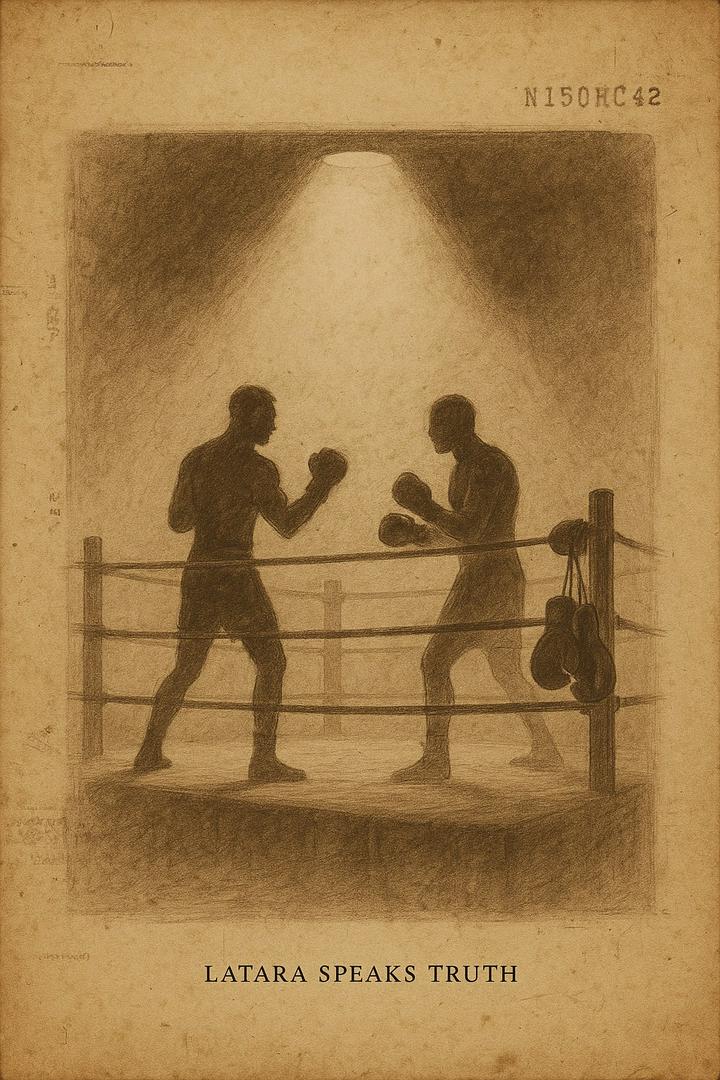
1958… The Day Louisiana’s “Anti-Mixing” Sports Law Finally Fell

On November 28, 1958, a federal three-judge court ruled against Louisiana’s attempt to keep sports segregated forever. The case was called Dorsey v. State Athletic Commission, and it targeted the state’s “anti-mixing” law… a rule that tried to stop Black and white athletes from competing against each other. Louisiana used this law to block integrated boxing matches. Promoters were threatened with jail. Black fighters were refused licenses. White fighters were told to stay in their own lane. The whole thing was designed to protect the old order… and punish anyone who dared to break it. The court struck it down. They called it unconstitutional, discriminatory, and flat-out incompatible with the country’s direction. It was one of the quiet wins that chipped away at segregation’s foundation. Not loud. Not flashy. But necessary. This wasn’t just about sports. It was about the state trying to control who could stand toe-to-toe in public. And the court said no… not anymore. #LataraSpeaksTruth #HistoryMatters #AmericanHistory #HiddenHistory #UntoldStories #OnThisDay #CivilRightsEra

1958… The Day Louisiana’s “Anti-Mixing” Sports Law Finally Fell
Tag: hiddenhistory - Page 5 | LocalAll