1/1

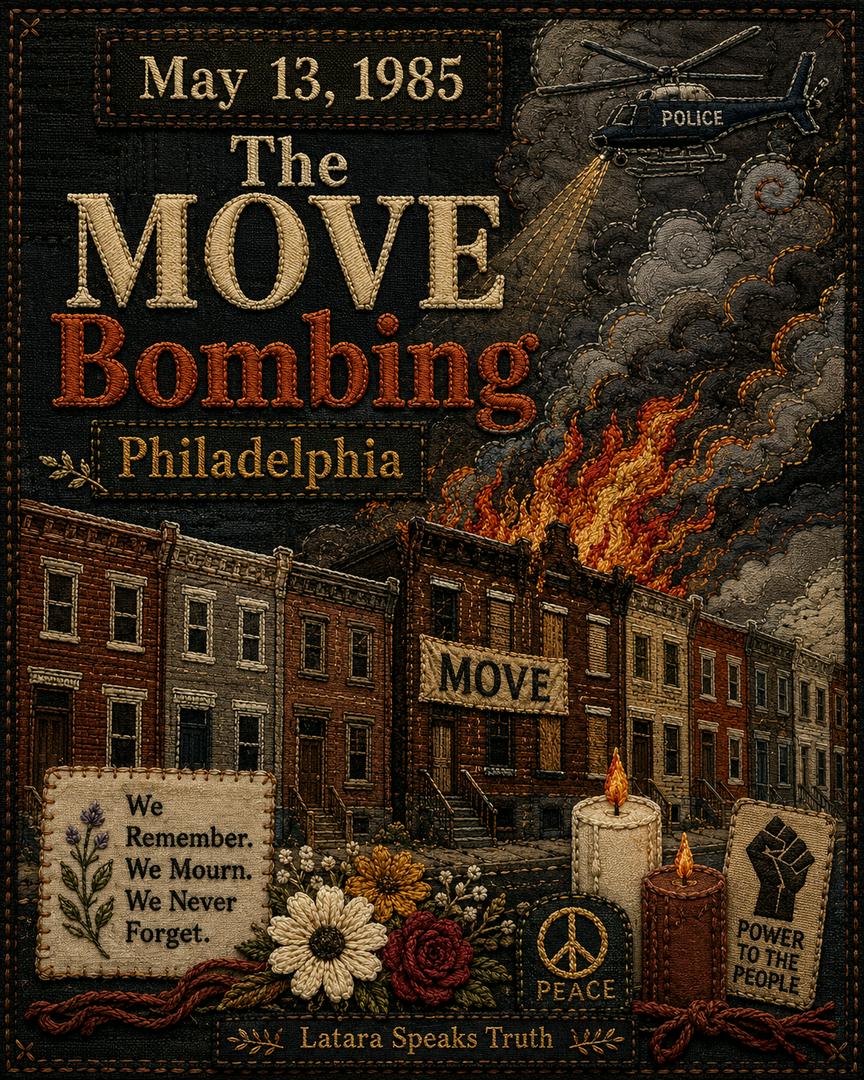
May 13, 1985, remains one of the darkest days in Philadelphia history. That morning, police moved in on the MOVE organization’s rowhouse at 6221 Osage Avenue after years of conflict between the city, neighbors, and the group. What followed was not just a police operation. It became a catastrophe that scarred an entire neighborhood. Police fired thousands of rounds during the confrontation. Later that day, from a helicopter, authorities dropped an explosive device onto the roof of the home. The blast started a fire. Instead of being put out immediately, the fire was allowed to burn. By the time it was over, 11 people were dead, including five children. Dozens of nearby homes were destroyed. Sixty-one houses burned, and about 250 people were left homeless. The names of the children killed should not be pushed to the side of history: Tree Africa, Delisha Africa, Netta Africa, Tomaso Africa, and Little Phil Africa. The MOVE bombing was not something that happened in another country or during some distant war. It happened in an American city, on a residential block, with families living nearby. It showed how quickly force, fear, and failed leadership can turn a neighborhood into ashes. A city commission later called the decision to drop a bomb on an occupied rowhouse “unconscionable.” Yet no city official was criminally charged. That is why May 13 matters. It is not just a date. It is a reminder of what happens when power is used without restraint, when accountability comes too late, and when the people most harmed are expected to carry the memory alone. Philadelphia rebuilt the block, but history does not rebuild that easily. Some stories are painful to tell, but silence does not honor the dead. Remembering does. #MOVEBombing #PhiladelphiaHistory #May131985 #AmericanHistory #LataraSpeaksTruth
Philadelphia, Pennsylvania • 20 days ago
write a comment...