1/1

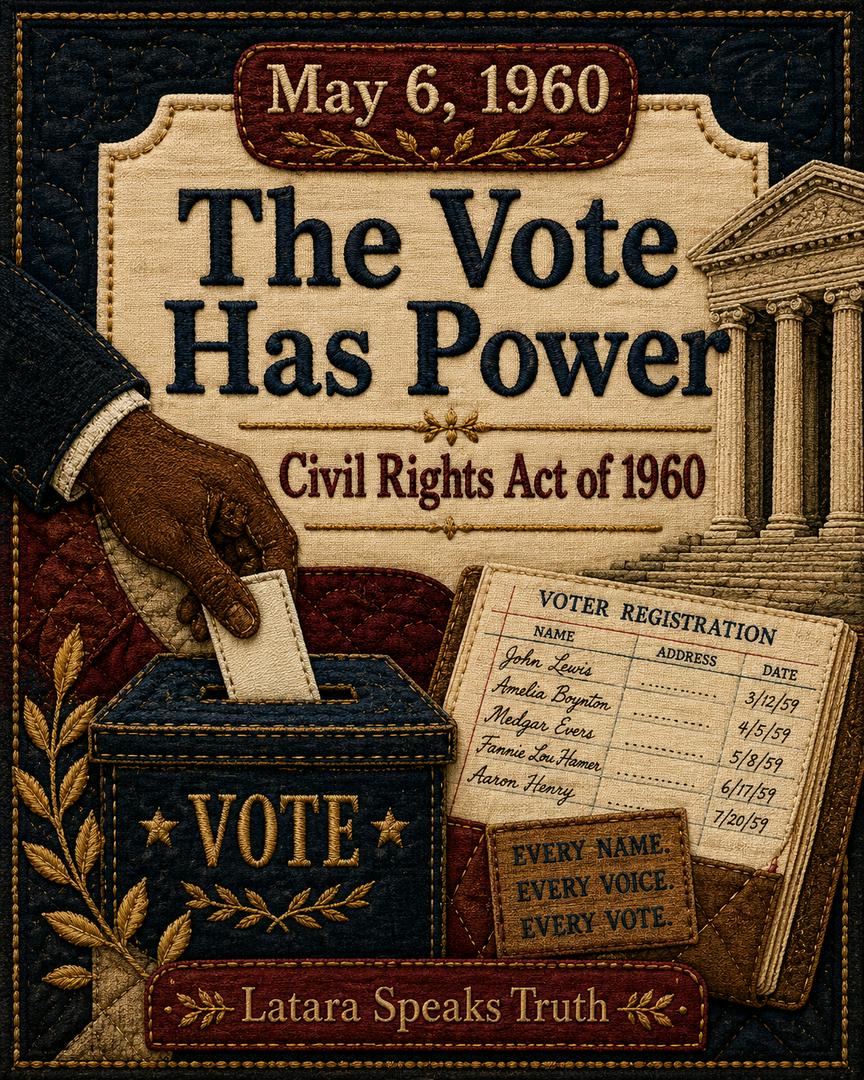
On May 6, 1960, President Dwight D. Eisenhower signed the Civil Rights Act of 1960 into law. The law did not end the fight for voting rights, but it exposed something this country already knew. Voter suppression was not random. Black citizens were being blocked, threatened, delayed, rejected, and intimidated when they tried to register and vote. The act gave the federal government more power to inspect local voter registration records. It required certain voting records to be preserved. It also allowed federal judges to appoint voting referees in places where people were being denied access to the ballot because of race. That detail matters. Voting rights did not become an issue yesterday. The struggle did not begin with today’s headlines. Long before modern debates over voter rolls, polling access, district lines, ID laws, and election rules, Black citizens were already fighting systems designed to keep their power contained. They knew exactly where Black power lived. It lived in the ballot box. It lived in registration lines. It lived in the simple but dangerous act of a person saying, I have a right to be counted here. The Civil Rights Act of 1960 was one step on a much longer road. It came after the Civil Rights Act of 1957 and before the Voting Rights Act of 1965. Each law tells the same truth in a different chapter: rights written on paper still have to be defended in real life. May 6 is not just a date in history. It is a reminder that the fight over voting rights has never really disappeared. It changes language. It changes paperwork. It changes courtrooms. But at the center of the fight, it is still the same. Who gets counted? Who gets heard? And who gets power? When people fight this hard to control who votes, they are admitting something without saying it out loud. The vote has power. And they have always known it. #BlackHistory #VotingRights #CivilRightsHistory #OnThisDay
27 days ago

John Die
Let’s vote all these Trump endorsed candidates out, every single one of them
26d
San Benito, TX
Reply
6

Patricia Edwards
This is the same thing going on today. Trump and his lame excuse for his followers is trying to turn back the hands of time. They are trying to erase our history. Do they not know, "You Can't Erase, What You Did Not Create." God uniquely designed each and every one of us. Trump really thinks he is The King, Jesus, God and invincible. He is not any of these. Trump and his followers will someday soon meet his maker Sooner than they think. They will all surely know who the real God is.
🙏🙏🙏
22d
North Charleston, SC
Reply
1
More comments ...
write a comment...