Tag Page CivilRightsHistory

#CivilRightsHistory
LataraSpeaksTruth

Born enslaved on September 22, 1853 near Rembert in Sumter County, South Carolina, George Washington Murray rose from bondage to the halls of Congress during one of the most hostile eras in American history. After the Civil War, Murray pursued education with purpose and urgency. He attended the University of South Carolina during the brief Reconstruction period when the school was open to Black students, a rare and fragile window of opportunity that would soon slam shut. Education was not just personal advancement for Murray, it was strategy, survival, and resistance. He became a teacher and agricultural expert, believing knowledge was power in a society designed to deny it to Black Americans. From there, he stepped into Republican politics, back when the party still carried the legacy of Reconstruction. In the 1890s, Murray served in the U.S. House of Representatives, representing South Carolina at a time when Black political power was being violently dismantled across the South. Murray was one of the last Black members of Congress in the nineteenth century and during parts of his service, the only one. He spoke openly and unapologetically about lynching, racial terror, and voter suppression while Jim Crow laws tightened their grip. He introduced federal proposals to protect Black voting rights and civil rights, fully aware that Congress was growing less willing to listen and more committed to exclusion. George Washington Murray did not win every fight, but he put injustice on the congressional record and refused silence. In an era demanding submission, he chose courage. That choice still echoes. #GeorgeWashingtonMurray #BlackHistory #ReconstructionEra #BlackCongressmen #AfricanAmericanHistory #CivilRightsHistory #JimCrow #PoliticalCourage #HistoryMatters

LataraSpeaksTruth

January 24, 1956 marked one of the most disturbing chapters in American history, not because justice was served, but because the truth was openly confessed without consequence. On this date, Look magazine published the paid confessions of the men who kidnapped, tortured, and murdered 14 year old Emmett Till after they had already been acquitted by an all white jury in Mississippi. Protected by double jeopardy, they spoke freely, detailing violence the courtroom had refused to name. The confessions confirmed what many already understood…the verdict was never about evidence, innocence, or law. It was about power. The legal system had functioned exactly as it was designed to, shielding brutality while pretending to uphold justice. Emmett Till’s killing exposed the machinery of Jim Crow justice in its rawest form, where cruelty could operate in daylight and accountability simply did not exist. His death was not treated as a tragedy by the courts, but as an inconvenience quickly brushed aside. Yet the story does not end with the killers. It continues with Mamie Till Mobley, a mother who refused silence, who chose an open casket so the world would see what hatred had done to her child. Those images traveled far beyond Mississippi, cutting through denial and forcing a nation to confront itself. Emmett Till did not set out to change history, but his death became a turning point, galvanizing resistance and awakening consciences that could no longer pretend ignorance. This was not a moment of closure, but of exposure. A reminder that sometimes the most painful truths arrive not through justice, but through the courage to tell what the system tried to bury. #EmmettTill #January24 #AmericanHistory #HistoricalRecord #JimCrowEra #CivilRightsHistory #TruthMatters #NeverForgotten #HistoryYouNeedToKnow

LataraSpeaksTruth

In December 1971, Rev. Jesse Jackson founded Operation PUSH (People United to Save Humanity), an organization that became a major force in promoting economic empowerment and corporate accountability in Black communities across the United States. The name later evolved to People United to Serve Humanity, reflecting a broader mission of long-term social and economic advancement. Operation PUSH was established after Jackson departed from Operation Breadbasket, the economic development arm of the Southern Christian Leadership Conference. While Breadbasket focused on negotiating fair hiring practices with major corporations, disagreements over leadership structure and direction led Jackson to pursue an independent path. This move marked a significant shift in post–civil rights era organizing, placing economic power and access at the center of the movement. Based in Chicago, Operation PUSH concentrated on expanding employment opportunities, increasing minority participation in corporate contracts, and strengthening Black-owned businesses. The organization used negotiations, boycotts, and public pressure campaigns to push companies toward more inclusive hiring and investment practices, producing measurable changes in several major industries. Operation PUSH also emphasized education as a pathway to economic progress. In later years, programs such as PUSH Excel supported student achievement and encouraged long-term success beyond high school. The founding of Operation PUSH reflected a broader transition in the civil rights movement during the early 1970s, as activists increasingly focused on economic equity and structural opportunity. In 1996, Operation PUSH merged with the Rainbow Coalition to form the Rainbow PUSH Coalition, which continues its work today. #OperationPUSH #JesseJackson #EconomicJustice #CivilRightsHistory #BlackEconomicPower #ChicagoHistory #SocialChange #HistoryMatters

LataraSpeaksTruth

December 13, 1951 sits right in the middle of a quiet but dangerous shift in American history. During the early Cold War, civil rights organizations, including the NAACP, came under intensified federal scrutiny and state level attack. Under the banner of fighting communism, activism for equal rights began to be framed as a national security threat rather than a constitutional right. By this period, the NAACP was facing loyalty investigations, demands for membership lists, and legal pressure in multiple states. Southern legislatures moved to restrict or ban its operations outright, arguing that civil rights organizing was “subversive” or foreign influenced. These accusations were not supported by evidence, but they were effective. They chilled participation, endangered members, and slowed organizing efforts through fear and intimidation. This moment matters because it helped normalize surveillance as a tool against Black political organizing. The logic was simple and deeply flawed. If you challenge inequality, you must be dangerous. That mindset did not end in the 1950s. It laid groundwork for later monitoring of activists, community leaders, and movements well into the late twentieth century and beyond. December 1951 is not remembered for a single headline grabbing event, but for a pattern taking shape. Civil rights work was being recast as suspicious, unpatriotic, and worthy of government oversight. That reframing shaped how activism would be treated for generations and explains why many organizers learned to move carefully, document everything, and expect resistance not just from mobs, but from institutions. History is not only about what happened loudly. Sometimes the most lasting damage is done quietly, through paperwork, court orders, and labels that follow people long after the moment has passed. #HistoryMatters #ColdWarEra #CivilRightsHistory #NAACP #AmericanHistory #HiddenHistory #GovernmentSurveillance #BlackHistory

LataraSpeaksTruth

Ella Baker was born on December 13, 1903, and she died on December 13, 1986. Eighty three years, same date. That alone tells you this is someone worth pausing for. But her real legacy is not about dates. It is about how movements are built, and who actually holds them up. Ella Baker was a strategist, organizer, and political thinker who believed real change comes from ordinary people, not charismatic figureheads. She worked with the NAACP, helped launch the Southern Christian Leadership Conference, and later played a critical role in the formation of the Student Nonviolent Coordinating Committee. While others gave speeches, she built systems. While others stood at podiums, she stood in community meetings, kitchens, and church basements. She openly challenged the idea that movements need a single leader. Her philosophy was simple but radical. Strong people do not need strong leaders. They need tools, knowledge, and space to organize themselves. That belief shaped student activism across the South and helped fuel voter registration drives, grassroots education, and long term organizing that rarely made headlines but changed lives. Ella Baker was not interested in fame. She was interested in results. She pushed back when voices were ignored. She insisted women be taken seriously in organizing spaces. She believed young people were not the future of movements but the present. Many of the freedoms later generations benefited from were protected and expanded by work she helped guide, often without credit. Her story reminds us that history is not only made by the loudest voice in the room. Sometimes it is made by the one making sure everyone else is heard. December 13 is her day. And remembering her means remembering how change actually happens. #EllaBaker #OnThisDay #December13 #HiddenFigures #HistoryMatters #GrassrootsOrganizing #SNCC #NAACP #CivilRightsHistory #Leadership #WomenInHistory #OurHistory

LataraSpeaksTruth

December 9, 1952 marked a turning point in American history, even though most people at the time didn’t realize how much the moment would reshape the nation. On this day, the U.S. Supreme Court began hearing arguments in Brown v. Board of Education and several related cases challenging school segregation. Families from Kansas, South Carolina, Virginia, Delaware, and the District of Columbia all stepped forward, insisting that separate classrooms created unequal futures for their children. Their voices carried a message that had been ignored for decades, and this was the first time the highest court in the country had to confront it head-on. The arguments unfolded over several days, exposing a truth that had long been clear to the families living it. Segregated schools were not just separate, they were deeply unequal in funding, safety, resources, and opportunity. Attorneys including Thurgood Marshall pushed the Court to acknowledge the harm being done to children who were told, by law, that they were worth less. It challenged the very idea of fairness in public education and forced the nation to face its contradictions. Though the Court would not reach a final decision until 1954, December 9 was the spark that set everything in motion. The justices’ willingness to reopen arguments multiple times showed how heavy the moment truly was. They knew the outcome would transform every district, every classroom, and every child’s understanding of what equality should look like in America. The eventual ruling, declaring school segregation unconstitutional, did more than change policy, it changed the nation’s direction. And it all began with the courage of families who refused to let inequality be the last word. #LataraSpeaksTruth #NewsBreak #HistoryMatters #AskLemon8 #BlackHistory #AmericanHistory #BrownvBoard #OnThisDay #CivilRightsHistory

LataraSpeaksTruth

On January 6, 1941, A. Philip Randolph made a move that rarely gets credited the way it should. He formally escalated plans for what became the March on Washington Movement, not as a ceremony, not as a speech tour, but as a direct threat. One hundred thousand Black workers would descend on Washington, D.C., during wartime, to expose racial discrimination inside the very defense industries claiming to protect democracy. This was not a symbolic march. It was an economic pressure campaign. Randolph understood leverage. Defense factories were booming as the U.S. prepared for World War II, yet Black workers were routinely excluded from skilled positions and union membership. Randolph made it clear that the government could not preach freedom abroad while enforcing exclusion at home. The threat worked. Faced with the possibility of a mass protest that would embarrass the administration on a global stage, President Franklin D. Roosevelt acted. Later that year, he issued Executive Order 8802, banning racial discrimination in defense industries and federal contracts and establishing the Fair Employment Practices Committee to enforce it. There was no televised showdown. No viral slogan. No sudden moral awakening. This change happened because Randolph was willing to apply pressure where it hurt…labor, production, and international reputation. The march itself was ultimately called off, but the goal had already been achieved. This is one of those moments in history that later gets softened. The policy change is remembered. The discomfort that forced it is not. But make no mistake, this didn’t “just happen.” It happened because Randolph was prepared to embarrass the federal government during wartime and understood that quiet leverage often moves the needle faster than loud applause. That is how power actually shifts. #BlackHistory #January6 #APhilipRandolph #MarchOnWashingtonMovement #LaborHistory #AmericanHistory #HiddenHistory #CivilRightsHistory #EconomicPressure

LataraSpeaksTruth

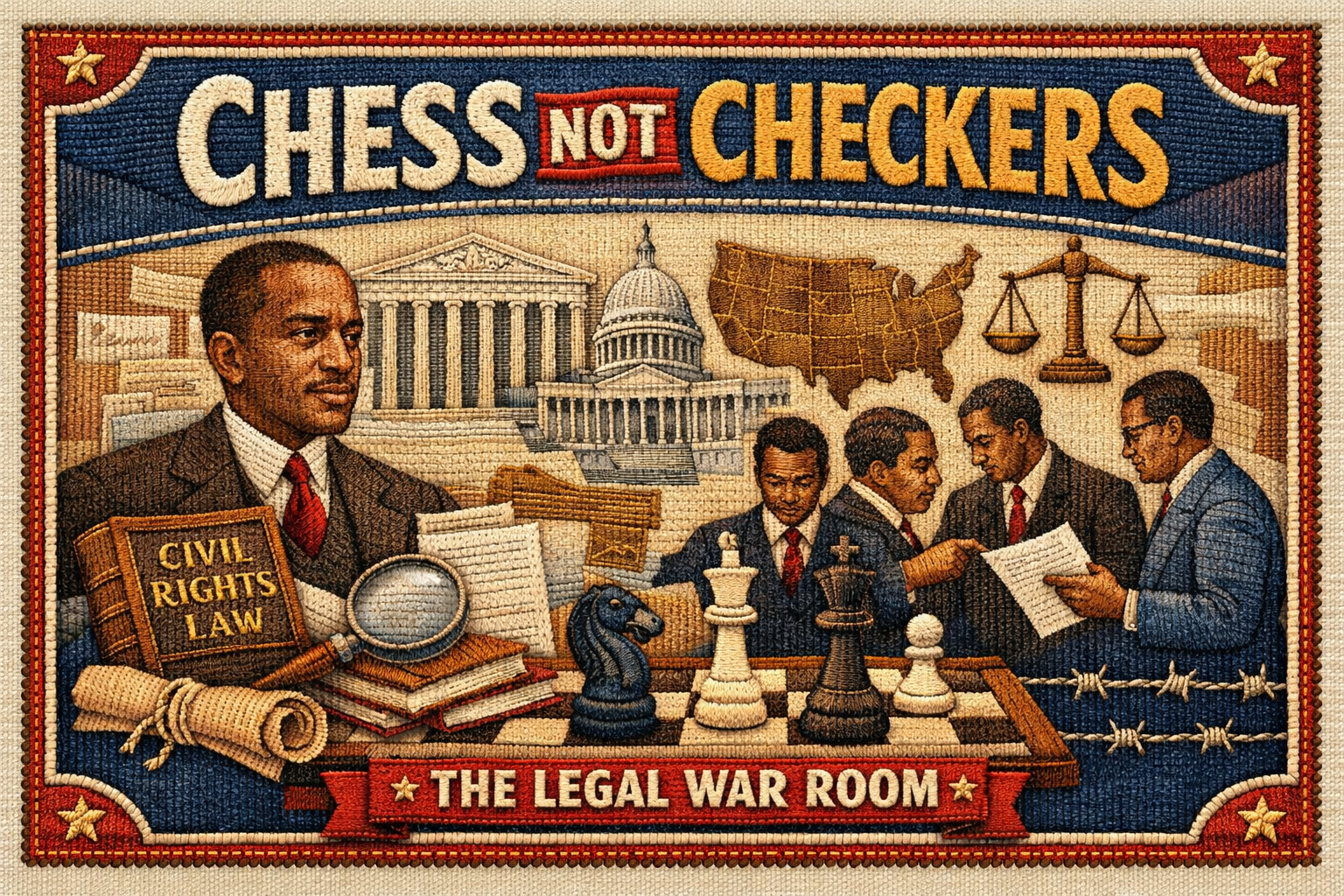
January 1, 1931 marks a quiet but serious turning point in American history. Charles Hamilton Houston becomes vice-dean of Howard University School of Law and almost immediately reshapes it into something more than a classroom. He builds a legal training ground with a single purpose: strategy. Houston understood that segregation would not fall simply because it was unjust. It would fall only if it could be proven unconstitutional. So he trained lawyers to work with discipline and precision, to identify weaknesses in the law, document inequality in detail, and build cases strong enough to force the courts to act. This was not protest law. It was methodical law. Students were sent into the South to gather evidence, photograph conditions, interview communities, and expose how “separate but equal” failed in practice. Houston demanded excellence because he knew the stakes. Courts move slowly and only when the record leaves them no alternative. That strategy later became the legal foundation for cases like Brown v. Board of Education. Lawyers such as Thurgood Marshall did not emerge by chance. They were shaped by years of deliberate training and long-term planning. January 1, 1931 reminds us that some of the most important changes in history do not arrive with noise. They begin quietly, in classrooms, with patience, discipline, and a clear understanding of how power actually works. #January1 #OnThisDay #AmericanHistory #LegalHistory #HowardUniversity #CivilRightsHistory #BlackHistory #LongGame #QuietPower

LataraSpeaksTruth

On January 23, 1964, a quiet legislative vote in South Dakota echoed across the entire United States. By becoming the 38th state to ratify the 24th Amendment, South Dakota provided the final “yes” needed to cement a fundamental change in American democracy…the official end of the poll tax in federal elections. For decades, the poll tax had operated as a so-called legal barrier to the ballot box. Framed as a simple administrative fee, it was anything but neutral in practice. In many Southern states, voters were required to pay not only the current tax but accumulated fees for every year they had not voted. This system disproportionately blocked Black Americans and poor white citizens from participating in elections. Combined with literacy tests, intimidation, and economic retaliation, the poll tax ensured political power remained tightly controlled. The road to the 24th Amendment was long and deliberate. Proposed by Congress in 1962, it required approval from three-fourths of the states. As 1964 began, the nation watched the count inch closer to the threshold. When South Dakota’s legislature ratified the amendment on January 23, it crossed the constitutional finish line, making the amendment law. The amendment marked a major victory for voting access by declaring that the right to vote in federal elections could not be conditioned on payment. Still, the work was unfinished. Some states continued to impose poll taxes in state and local elections until the Supreme Court struck them down entirely in 1966. Today, the anniversary of South Dakota’s ratification stands as a reminder that voting rights have never been freely handed over. They have been argued for, organized for, and fought for…often quietly, often against resistance, but always with lasting impact. #OnThisDay #USHIstory #VotingRights #Democracy #24thAmendment #CivilRightsHistory #SouthDakota #HistoryMatters

LataraSpeaksTruth

December 21, 1956 is often remembered as the end of the Montgomery Bus Boycott, but more precisely, it marks the first day Montgomery’s city buses operated as integrated in daily life. The legal battle had already been won, yet this morning mattered because it was when the ruling became visible, physical, and unavoidable. After more than a year of walking, carpooling, and enduring harassment, Black residents of Montgomery boarded buses alongside white passengers under a new reality. The Supreme Court decision banning bus segregation had finally reached Alabama, and the city was required to comply. December 21 was the morning the mandate moved from paper to pavement. That day, community leaders and ordinary citizens rode together. Among them was Martin Luther King Jr, who boarded a bus quietly, without fanfare. There were no speeches, no celebrations, and no cameras chasing spectacle. What made the moment powerful was its calm. People simply sat where the law now said they could sit. The boycott itself officially ended when the legal order took effect, which is why some summaries list earlier dates. But December 21 endures in public memory because it represents the first lived experience of change. It was not just a court victory. It was a morning commute transformed by discipline, unity, and resolve. For 381 days, Montgomery’s Black community refused to accept injustice as routine. On December 21, 1956, routine finally changed. History did not announce itself loudly that morning. It showed up on time, paid its fare, and took a seat. #MontgomeryBusBoycott #CivilRightsHistory #December21 #AmericanHistory #BlackHistory