Category Page food

KIMBERLY& JIMMIE

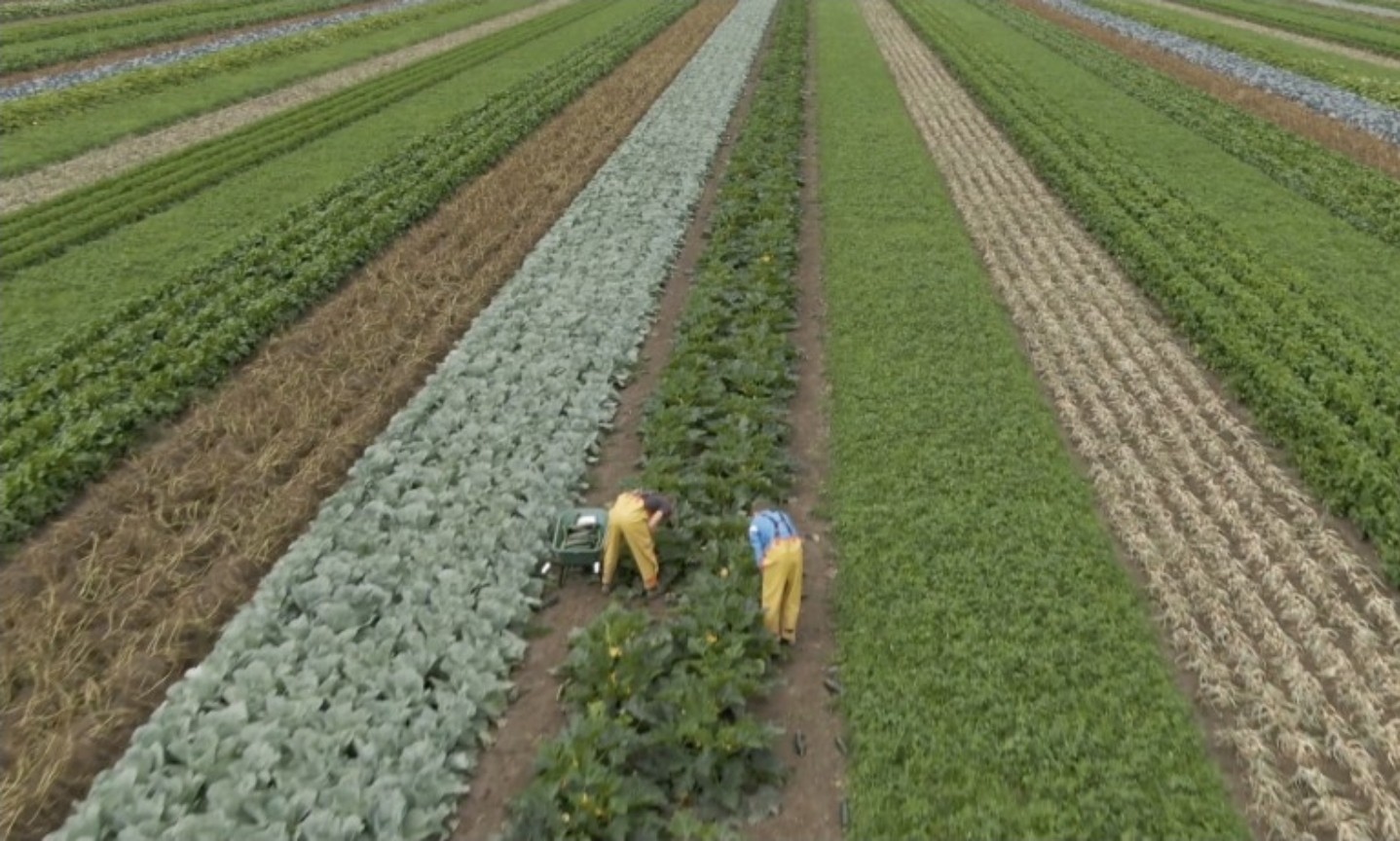
The Netherlands-a country smaller than the state of West Virginia-is the world's second-largest agricultural exporter by value. That productivitv, however, has come with environmental and social costs according to researchers at Wageningen University & Research (WUR). The current economic system prioritizes efficiency and growth over ecological and human well-being 'This efficiency, this focus on more, has come at an expense of animal welfare and human welfare' Evelien de Olde, Researcher at the Animal Production System Group, savs in the Food 2050 film, which premieres January 2026 in partnership with Media RED, the Rockefeller Foundation, and Food Tank. Together with Dr. Imke de Boer, Professor of Livestock and Sustainable Food Svstems at WUR, de Olde wrote Re-rooting the Dutch Food System, a blueprint for transforming Dutch agriculture by redesigning how food is produced, consumed, and valued. They were named a Top Food Svstem Visionary in 2020 by the Rockefeller Foundation. Their vision calls for a fundamental shift toward circular food svstems that work with natural processes rather than against them. 'A circular system to feed the soil, respecting the life of the animals, and creating more conscious consumers. This combination of elements makes more sustainable food systems,' says de Olde One key change involves how land is used n the Netherlands and globally, about 40 percent of arable land is used to arow feed for livestock instead of food for people.De Boer savs that this is an inefficient use of land and nutrients that circular food systems can help correct"When you produce plant-sourced food for our consumption, you also automatically produce all kinds of co-products that you can feed directly to the animals. You want to circulate nutrients into the system,' says de Boer. Protecting soil life is also critical to circulating nutrients.De Boer says a healthier, more sustainable food system uses intercropping, or planting multiple types of cr

Carpe Diem!

Food stamps should be a helping hand for the able bodied, not a forever crutch

I understand that many food stamp recipients are anxious, even angry, that the government shutdown could mean no food stamps in November. Perhaps longer if the government doesn't reopen. And they're also angry about the new work requirements. I also understand that there are many who feel food stamp recipients abuse the program and don't deserve the benefit. Years ago when food stamps looked like play money, I was a divorced mom of 3 and got food stamps. And I was ashamed. I was finishing the last 2 years of college and considering dropping out to get a full time job. My social worker advised me to get my degree. He said food stamps were for people like me who just needed a helping hand for a bit. He said once I graduated and got a job with my degree, my taxes would quickly pay back what I got in food stamps and help fund the program plus so much more. Much more than any job I could get without the degree I listened to him, graduated, and in a few years was making in the mid $80,000 range. I am grateful that food stamps were there when I needed them for those 2 years. But I wasn't having more children or lounging around. Food stamps should be time limited for able bodied persons. And if you can't find a job you should be assigned volunteer work.

Food stamps should be a helping hand for the able bodied, not a forever crutch
Mishelle

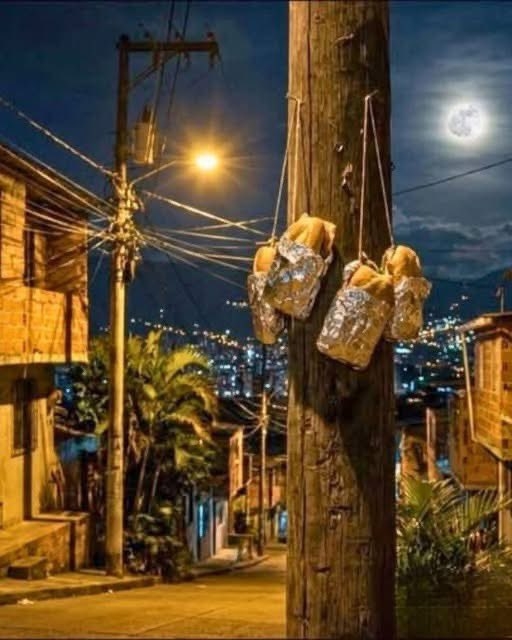
In Medellín, Colombia, there is a corner of the Manrique neighborhood where, every night at exactly 3 a.m., sandwiches used to appear. Always the same way: wrapped in aluminum foil, inside a plastic bag, hanging from a lamppost. No one knew who left them. The unhoused people in the area waited for them. If you arrived at 3:15, there were none left. It happened every single night. For six years. From 2016 to 2022. Never a single absence. Not in the rain. Not on Christmas. Not on New Year’s Eve. Then, in 2022, suddenly, the sandwiches stopped appearing. “What happened to the sandwich man?” people asked. A social worker named Carolina began to investigate. After weeks of asking around, a night security guard told her, “I saw him. He was an elderly man, came on a motorcycle. He hung up the bag and left. Without saying a word.” Carolina posted an appeal on Facebook, looking for the man who, for six years, had left sandwiches every night for those who had nothing. In two days, it was shared more than 8,000 times. Then a comment appeared: “I think it was my father. But he died five months ago.” The woman was named Lucía. Her father, Hernán, was 68 years old. He worked in construction. He didn’t have much money. But every night he prepared eight sandwiches. And he left them on that corner. Why? In 2015, Hernán lost his son, Sebastián, who died on the street, right there in Manrique. He was 19 years old. A fragile boy, struggling with addiction. Hernán had searched for him for years. But he hadn’t been able to save him. “If someone had given him food… maybe he’d still be alive today.” So, two weeks after the funeral, Hernán began. Every night. Without ever missing one. Sometimes with just bread and butter, when the money wasn’t enough. In six years, he made 17,520 sandwiches. He never wanted to know who ate them. He used to say, “If I know them, I’ll start choosing who to give them to. This way, they’re for anyone who needs them.” When the story went viral