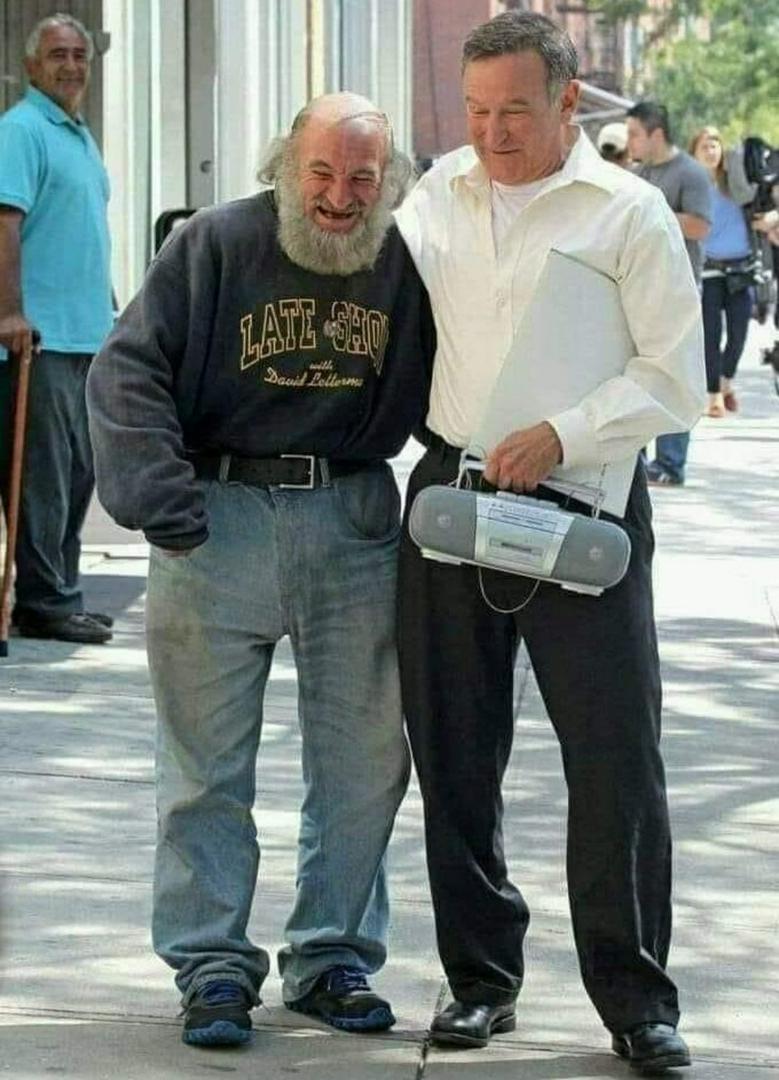
In the early 1990s, while filming Mrs. Doubtfire in San Francisco, Robin Williams made a quiet request.
He asked the crew to hire a few people from a nearby homeless shelter.
No press. No explanation. He didn’t want anyone to know why.
Later, an assistant director revealed that Robin did this on every film. He insisted that at least ten people from shelters be given jobs—catering, cleanup, production help. By the end of his life, nearly 1,500 people had worked because of him.
One man hired on Mrs. Doubtfire said, “He treated me like I’d been there forever. Joked with me every day like we were old friends.”
Robin never talked about it. Others did—after he was gone.
In the late 1980s, after a stand-up show in New York, Robin slipped into a shelter alone. No cameras. He brought pizza, sat on the floor, and listened. One man said later, “He didn’t ask about our mistakes. He asked what made us laugh as kids.”
During Good Will Hunting, he again asked the studio to hire from shelters. One man saved enough to rent an apartment. Robin bought him a suit for job interviews. “Everyone deserves a second act,” he said.
Shelters later discovered large anonymous donations. One Los Angeles shelter only learned the truth when a thank-you letter came back marked “no such address.” A worker recognized the handwriting.
Whoopi Goldberg once said, “He didn’t want applause for helping. He wanted action.”
While filming Patch Adams, Robin visited a shelter in West Virginia carrying boxes of socks, gloves, and coats. When asked why, he smiled and said, “The weather’s turning. Cold doesn’t care if you’re tired.”
Even on tour, he’d walk streets at dawn, handing out coffee and sandwiches. When a guard asked why, Robin replied, “Because this is where people are.”
Robin Williams didn’t perform kindness.
He practiced it—quietly, consistently, without witnesses.
And that may be the greatest role he ever played.
Credit to the rightful owner