Category Page entertainment

justme

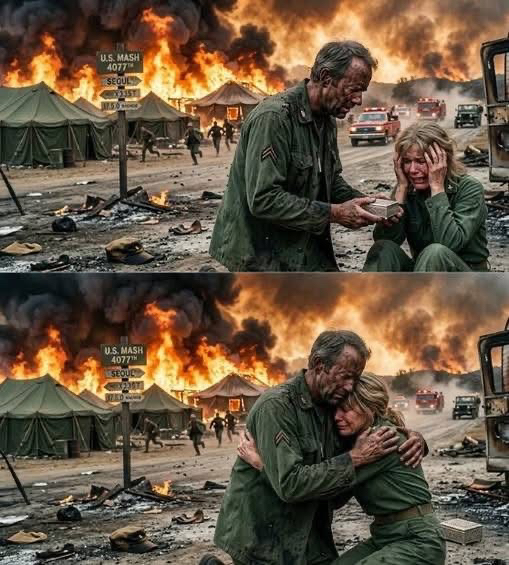
When the M*A*S*H Set Caught Fire, Everyone Ran. What Mike Farrell Risked His Life to Save for Loretta Swit Will Bring You to Tears In October 1982, a devastating, real-life wildfire swept through the Malibu mountains, heading straight for the outdoor set of M*A*S*H. The sky turned terrifyingly orange. Thick, choking black smoke filled the air, and emergency sirens wailed. The fire department issued a frantic, mandatory evacuation order: Drop everything and run for your lives. The cast and crew sprinted toward the evacuation vehicles. But in the middle of the chaos, Loretta Swit (Margaret Houlihan) suddenly stopped, bursting into panicked tears. Her dressing trailer was already being surrounded by a wall of thick smoke and creeping flames. And trapped inside was an irreplaceable, priceless keepsake that belonged to her late mother. The fire chief screamed that it was too late—the trailer was gone. Mike Farrell (B.J. Hunnicutt) heard her crying. He didn’t wait for permission. While everyone else was running away from the inferno, the tall, gentle actor grabbed a heavy production blanket, soaked it completely in a water cooler, threw it over his head, and sprinted directly into the smoke. The crew watched in absolute horror. Mike reached Loretta’s trailer, but the intense heat had warped the metal door frame. It was jammed shut. Without hesitating, Mike violently kicked the door open, vanished into the smoke-filled room, and grabbed the small keepsake box. Seconds later, he burst back out of the trailer, sprinting through the falling ash just moments before the structure was completely swallowed by the fire Coughing and covered in dark soot, Mike walked up to a sobbing Loretta Swit and gently placed her mother’s keepsake into her hands. He didn't say a word. He just hugged his terrified "little sister" while the 4077th burned to the ground behind them.

justme

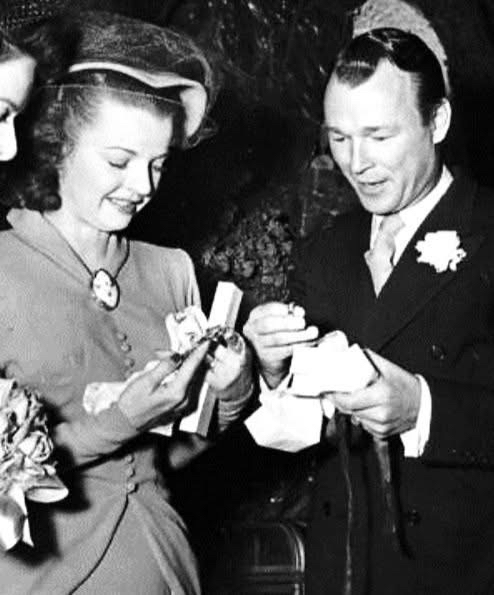
"On New Year's Eve 1947, during a snowy winter celebration that would become one of the most beloved moments in American entertainment history, Roy Rogers, the King of the Cowboys, married Dale Evans, the Queen of the West, at the Flying L Ranch near Davis, Oklahoma, creating a partnership that would last fifty-one years and inspire millions of fans around the world with their genuine love, shared faith, and unwavering commitment to family values and helping children in need. The intimate ceremony took place at the very same ranch where the couple had filmed their seventeenth movie together, Home in Oklahoma, just a few months earlier, and what made this wedding even more special was that it came after one of the most spontaneous and unforgettable proposals in show business history, which happened late in the fall of 1947 while Roy and Dale were performing at a rodeo at Chicago Stadium, waiting backstage on horseback for their grand entrance into the arena. In a moment that perfectly captured Roy's spontaneous cowboy spirit, while sitting atop his famous golden palomino Trigger just seconds before their performance, Roy turned to Dale and casually asked if she was doing anything on New Year's Eve, and when she replied that she hadn't made any plans, he suggested they get married that day, but before Dale could even process what had just happened or respond to his proposal, Roy heard his cue and he and Trigger went racing out into the arena, leaving Dale absolutely stunned and wondering if she had just imagined the whole thing, but when she rode out moments later to join him in the center of the arena, she smiled at him in a way that let him know her answer was yes, accepting the proposal that would change both of their lives forever and create one of Hollywood's most enduring love stories.

The Black Apple News Network

He Never Forgot Where He Came From”: A$AP Rocky Pays Rent for Harlem Tenants in Building He Once Called Home By SDWJR | TBA News Network In an era where celebrity philanthropy is often performative and fleeting, A$AP Rocky has delivered a powerful reminder of what it means to stay rooted in one’s beginnings. The Harlem-born rapper and fashion icon has stepped in to cover January 2026 rent for every tenant in the Harlem apartment building where he once lived — a gesture that blends gratitude, memory, and tangible community impact. According to REVOLT, the rent relief initiative is part of a broader partnership between A$AP Rocky and Bilt, the housing and rewards platform, and arrives just as he rolls out his highly anticipated album Don’t Be Dumb. Rather than centering the moment solely on sales or hype, Rocky chose to anchor the campaign in the very neighborhood that helped shape him — Harlem. This move resonates deeply at a time when housing insecurity continues to plague urban communities, particularly in historically Black neighborhoods facing aggressive gentrification. For tenants in the building, the relief is not symbolic — it’s real. One full month of rent paid means breathing room, dignity, and stability during uncertain economic times. Rocky’s collaboration with Bilt extends beyond rent relief. The campaign also includes a limited-edition vinyl release tied to Don’t Be Dumb, merging art, commerce, and community in a way that feels intentional rather than exploitative. It’s a model that suggests artists can leverage brand partnerships without disconnecting from the people who supported them before fame arrived. What makes this moment especially powerful is its personal nature. This wasn’t a random building selected for optics. This was home. Harlem raised A$AP Rocky, and now, at a point of global influence, he’s returning that investment — not with speeches, but with action. In a cultural landscape where wealth often creates distance, Rocky’s decision

Mishelle

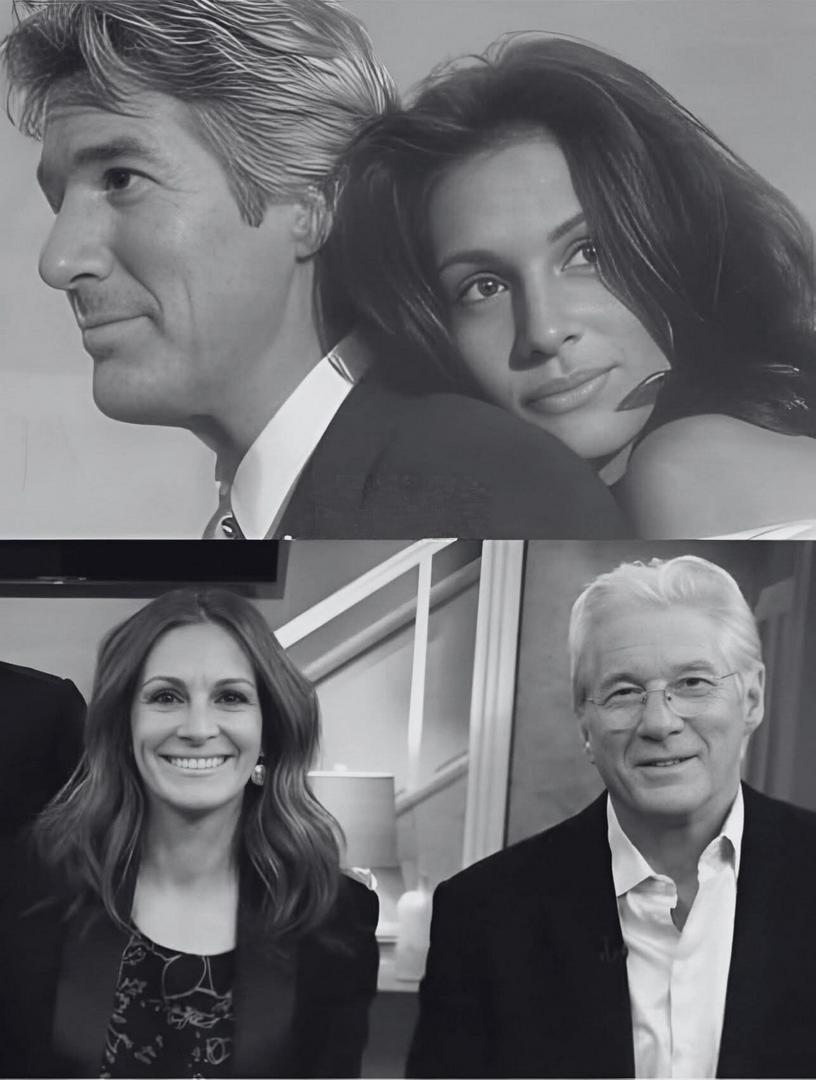
Julia Roberts and Richard Gere in Pretty Woman Interesting Facts Role Reversal: Initially, Richard Gere turned down the role of Edward Lewis multiple times. It wasn't until Julia Roberts convinced him during a meeting that he finally accepted the part. Title Change: The film was originally titled "3000," referencing the amount of money Vivian (Julia Roberts) was paid for the week. The title was changed to "Pretty Woman" after the Roy Orbison song, which became a defining element of the film. Improvised Scene: One of the most iconic scenes in the movie, where Edward snaps the jewelry box on Vivian’s fingers, making her laugh, was improvised. The reaction from Julia Roberts was genuine, and director Garry Marshall loved it so much that he decided to keep it in the film. Casting Julia Roberts: Julia Roberts was not the first choice for the role of Vivian Ward. Many actresses, including Molly Ringwald, Meg Ryan, and Daryl Hannah, turned down the part before Roberts was cast. This role ended up being her breakthrough, catapulting her to stardom. Shoe Scene: The scene where Edward places Vivian's shoe on her foot was Richard Gere’s idea. It was a spur-of-the-moment addition that became one of the film's many memorable moments. Real Chemistry: The chemistry between Roberts and Gere was so strong that it played a significant role in the film’s success. Their on-screen connection was palpable, making the romantic storyline more believable and endearing. Richard Gere’s Piano Performance: Richard Gere actually composed and played the piano piece featured in the hotel scene. This added a personal touch to his character’s portrayal and showcased Gere's musical talent. Iconic Red Dress: The famous red dress worn by Julia Roberts during the opera scene almost didn't happen. The dress was initially designed in black, but costume designer Marilyn Vance decided to change it to red at the last minute, creating one of the most iconic fashion moments in film history. Successful Collabo

justme

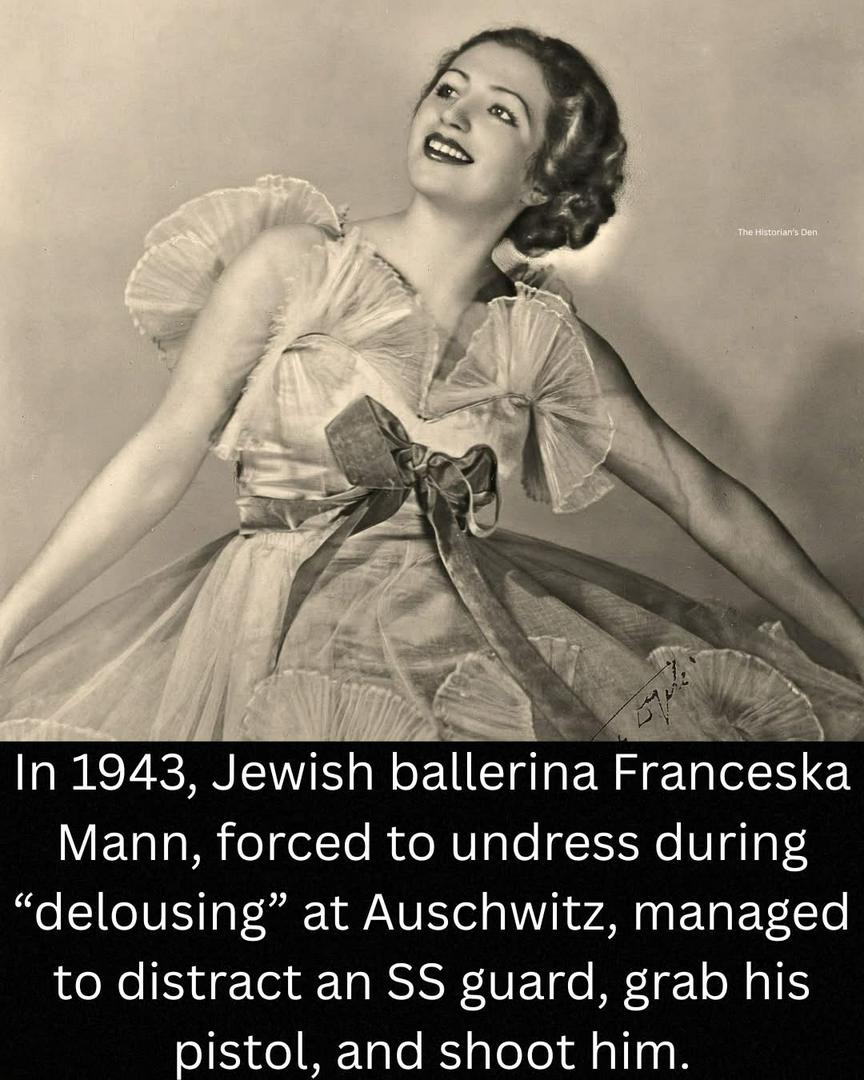
In October 1943, Jewish ballerina Franceska Mann, one of Warsaw’s most promising dancers, was among a transport of prisoners taken from the Hotel Polski roundup and sent to Auschwitz-Birkenau. Upon arrival, she and the others were ordered into a so‑called “delousing” room, a deception commonly used to disguise the gas chambers. Mann had been a rising star in pre‑war Warsaw, performing at the Melody Palace and training at the city’s top ballet schools. When the Warsaw Ghetto was liquidated earlier that year, she was swept up in the chaos and deported under the false promise of “resettlement” in Switzerland, one of the cruel tricks used by the Nazis to lure remaining Jews out of hiding. Inside the undressing room at Birkenau, Mann realized what was actually happening. Instead of surrendering to terror, she acted. According to survivor testimonies, she distracted an SS guard, seized his pistol, and shot him. The struggle triggered a brief uprising in the room, with several other women joining in. It was quickly suppressed, but it remains one of the very few documented acts of armed resistance inside Auschwitz itself. Her story endures because it challenges the myth that victims went passively. Even in the most controlled, brutal environment imaginable, people like Franceska Mann found moments of defiance, small flashes of humanity and courage that history should never forget. #legend #thehistoriansden