Tag Page thehistoriansden

#thehistoriansden
justme

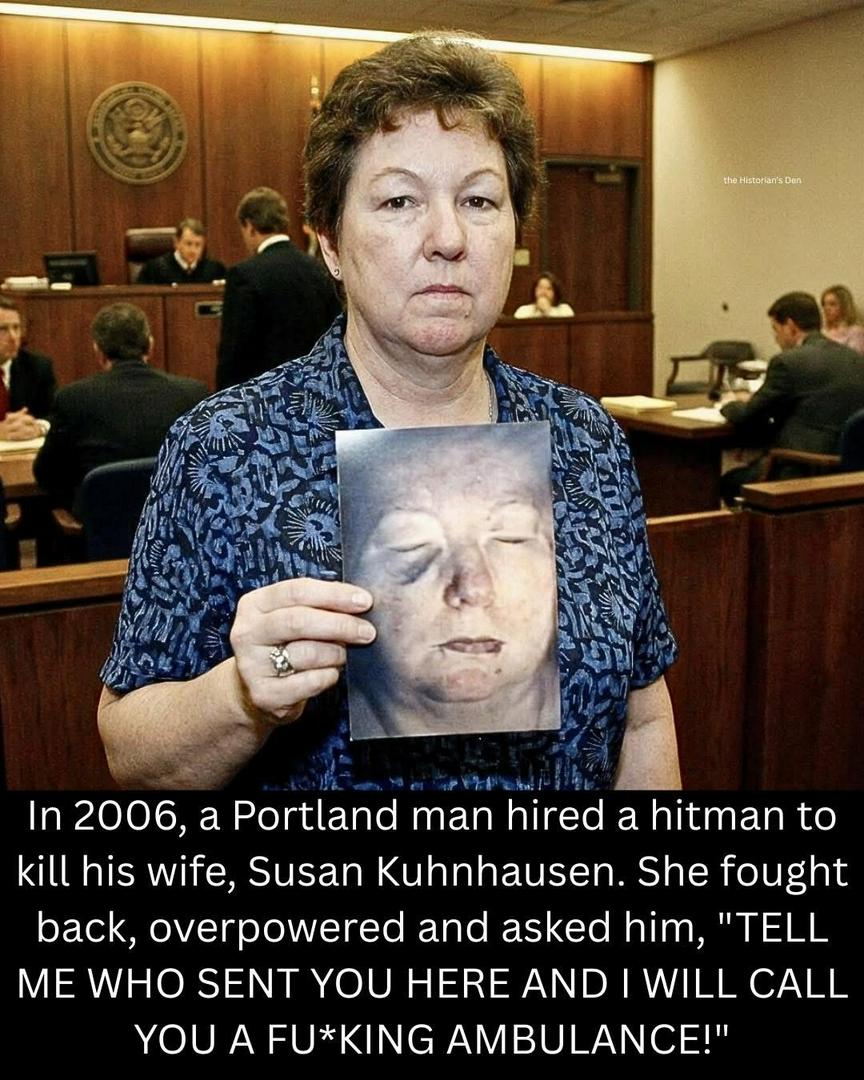
Susan Kuhnhausen was an emergency room nurse in Portland. In September 2006, after finishing a shift at the hospital, she returned home unaware that a man had broken into her house and was waiting to kill her. The intruder was Edward Haffey, a drug-addicted criminal who had been hired to murder her by her estranged husband, Michael Kuhnhausen. When Haffey attacked, Susan immediately fought back. Because of her medical training and quick thinking, she managed to overpower the larger attacker. During the struggle she pinned him down and choked him until he lost consciousness and died, effectively killing the hitman in self-defense. Afterward, Susan called police and calmly explained what had happened. Investigators soon uncovered that her husband Michael had paid about $7,000 to have her killed so he could avoid a costly divorce. The case went to court in Multnomah County, where prosecutors presented evidence that Michael had orchestrated the murder-for-hire plot. In 2008, he was convicted of conspiracy to commit murder and sentenced to 10 years in prison. Susan was never charged because the killing was ruled lawful self-defense. Her story later became widely known as an example of resilience and presence of mind under extreme danger. #selfdefense #thehistoriansden

justme

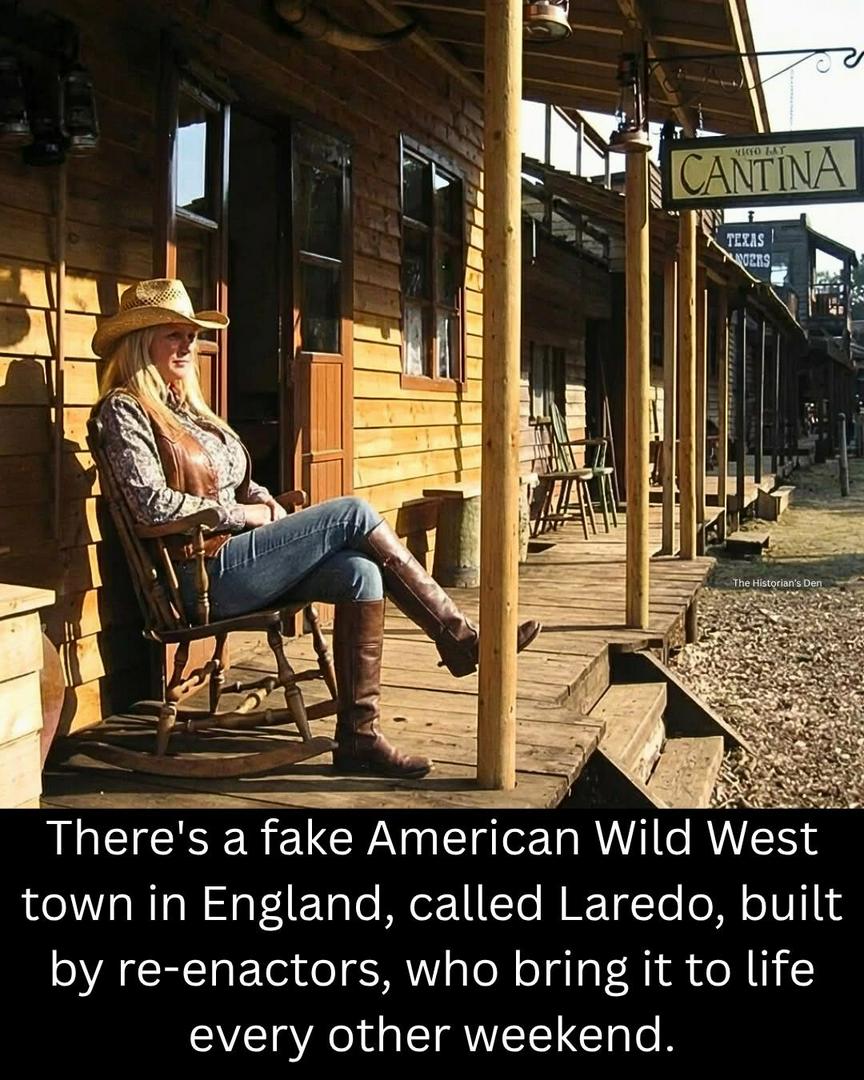
Laredo is one of the most unusual historical recreations in the UK, a fully built, meticulously detailed Wild West town hidden in the English countryside. Created by a dedicated community of re‑enactors, it features saloons, a sheriff’s office, a cantina, wooden boardwalks, and period‑accurate interiors that look like they were lifted straight out of an 1880s frontier settlement. Members dress in authentic clothing, adopt historical personas, and recreate everything from poker nights to staged shootouts, giving visitors a surprisingly immersive glimpse into the mythology of the American West. What makes Laredo fascinating is how it reflects Britain’s long‑standing cultural fascination with the Wild West, which dates back to the 19th century when Buffalo Bill’s touring shows captivated European audiences. Instead of being a tourist attraction, Laredo is a private passion project, built, maintained, and performed entirely by volunteers who gather every other weekend to “live” in the Old West for a few days. It’s a blend of craftsmanship, historical curiosity, and pure escapism, showing how powerful and enduring the frontier myth remains even thousands of miles from the real American West. #wildwest #thehistoriansden

justme

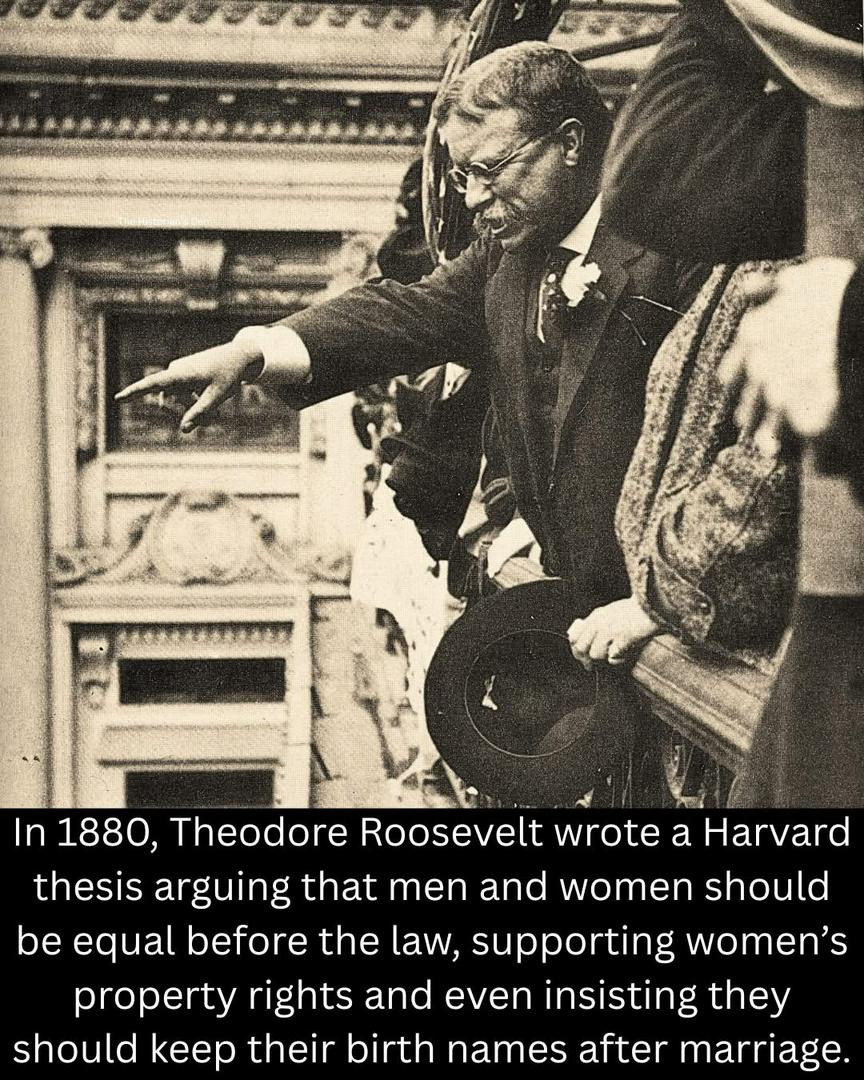
Theodore Roosevelt’s 1880 Harvard thesis, The Practicability of Equalizing Men and Women before the Law, is one of the earliest windows into his political philosophy. As a 21‑year‑old undergraduate, he argued that women should have the same legal rights as men, especially in property ownership and marital identity. This was unusually progressive for the era, when most U.S. states still restricted women’s economic autonomy and expected them to subsume their identities under their husbands. Roosevelt’s insistence that women should keep their birth names after marriage reflected a broader critique of the legal structures that treated women as dependents rather than full citizens. Although Roosevelt’s views later became more complicated, this early thesis foreshadowed the evolution of his public stance. Throughout his career, he periodically supported women’s rights, from speaking in favor of suffrage as early as 1880 to fully embracing the cause during his 1912 Progressive Party presidential campaign. Historians note that while he was not consistently radical, his advocacy helped legitimize women’s political participation at a time when national suffrage was still decades away. #thesis #thehistoriansden

Hatter Gone Mad

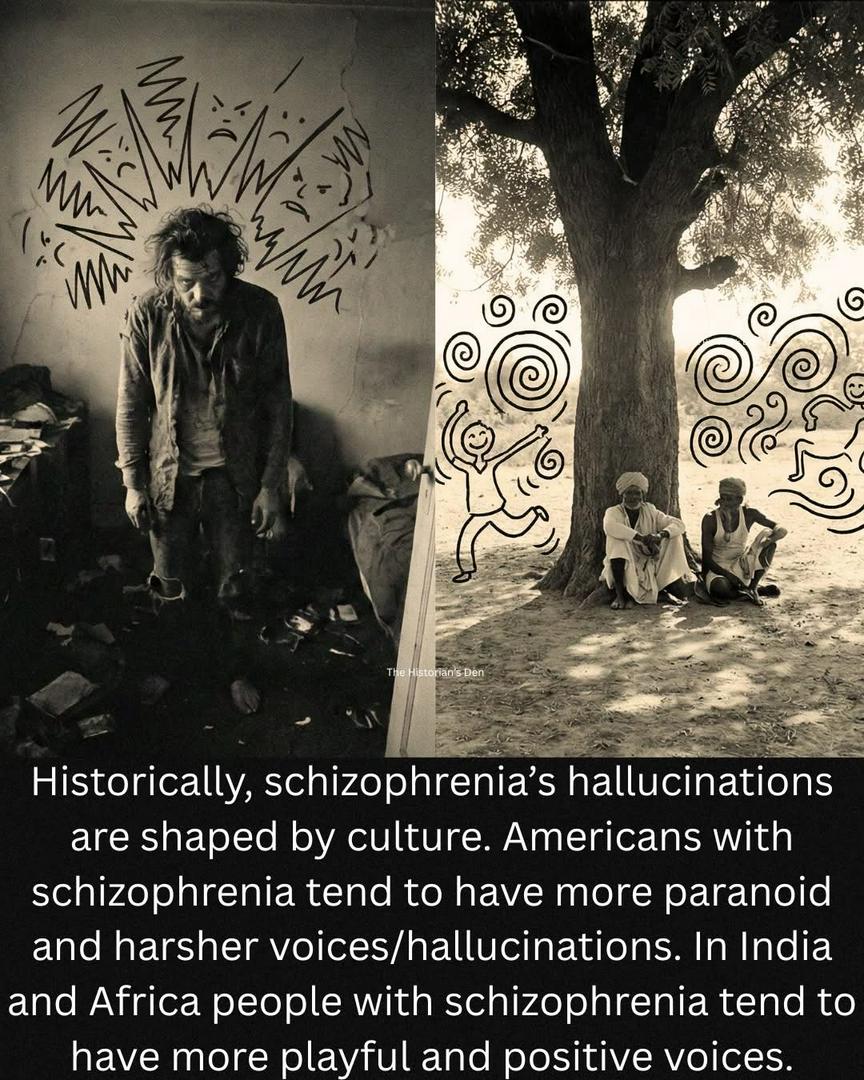
Schizophrenia is often thought of as a universal condition with consistent symptoms, but studies show that culture plays a powerful role in shaping how people experience it, especially auditory hallucinations. Anthropologist Tanya Luhrmann and her team interviewed individuals with schizophrenia in the U.S., India, and Ghana, and found striking differences in the tone and content of the voices they heard. In the U.S., voices were often harsh, threatening, and commanding, frequently invoking violence or paranoia. In contrast, patients in India and Ghana described voices that were more playful, benign, or even helpful, sometimes offering guidance or companionship. This difference isn’t just anecdotal, it reflects how cultural norms shape expectations around mental illness. In the West, schizophrenia is often medicalized and stigmatized, with an emphasis on pathology and danger. But in parts of India and Africa, spiritual or relational interpretations are more common. Voices may be seen as ancestral, divine, or part of everyday life, which can reduce fear and isolation. These cultural frames influence not only how symptoms are perceived, but how patients respond to them, and how communities support or reject them. Interestingly, this research has implications for treatment. If hallucinations are shaped by cultural context, then therapy and care models should be culturally adaptive. Western psychiatric approaches that focus solely on suppression or medication may miss opportunities for more empathetic, narrative-based interventions. Understanding the emotional tone of hallucinations and the cultural lens through which they’re filtered, could lead to more humane and effective care across the globe. #mentalhealth #thehistoriansden

justme

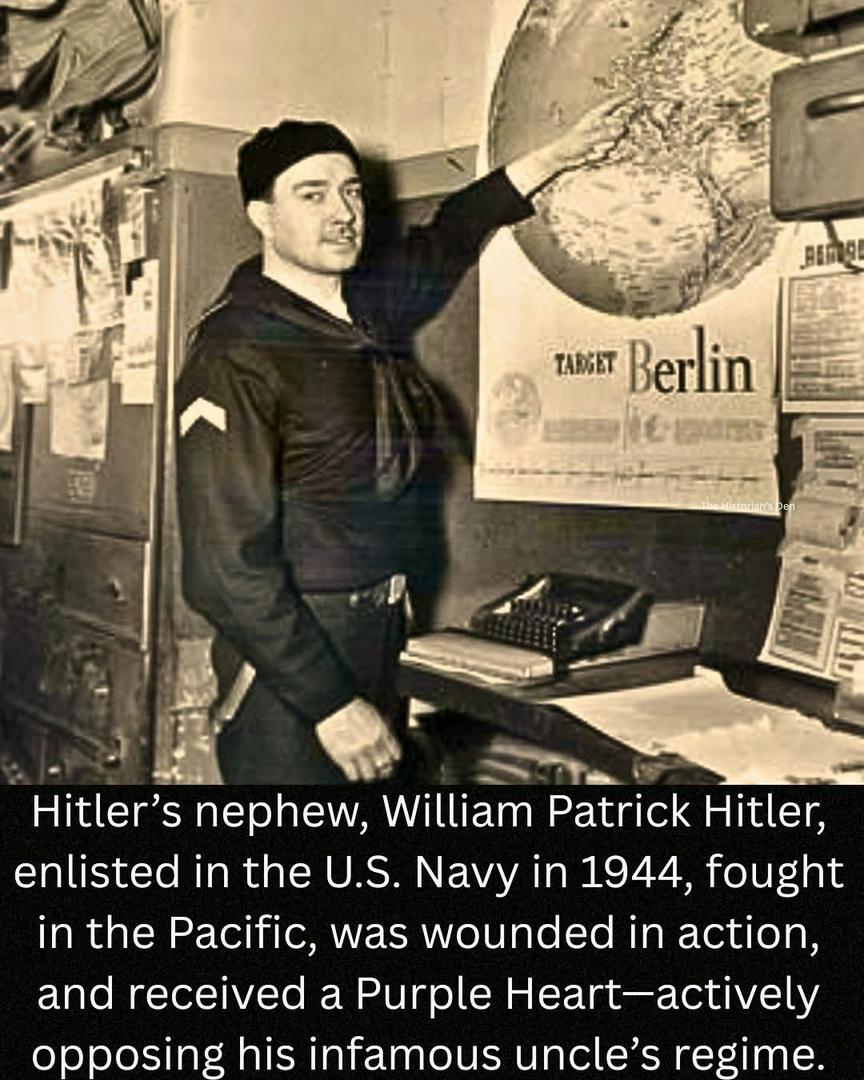
William Patrick Hitler’s story is one of the strangest footnotes in World War II history. Born in Liverpool to Adolf Hitler’s half-brother Alois, William spent much of his early life trying to capitalize on his infamous uncle’s name, writing articles, seeking business opportunities, and even visiting Nazi Germany in the 1930s. But after being rebuffed by Hitler himself and growing disillusioned with the regime, William returned to Britain and later emigrated to the United States. In 1944, after years of lobbying, he was granted special permission by President Franklin D. Roosevelt to enlist in the U.S. Navy. Despite the obvious complications of his surname, William served honorably in the Pacific theater, was wounded in action, and received a Purple Heart. His enlistment was both a personal rejection of his uncle’s ideology and a symbolic act of defiance, fighting for the Allies while carrying the name of the enemy. After the war, William changed his last name and lived a quiet life in Long Island, raising four sons and working as a medical technician. He rarely spoke publicly about his connection to Adolf Hitler, preferring anonymity over notoriety. His story remains a powerful example of how family ties do not dictate allegiance and how even the most paradoxical identities can find a place on the right side of history. #nephew #thehistoriansden

justme

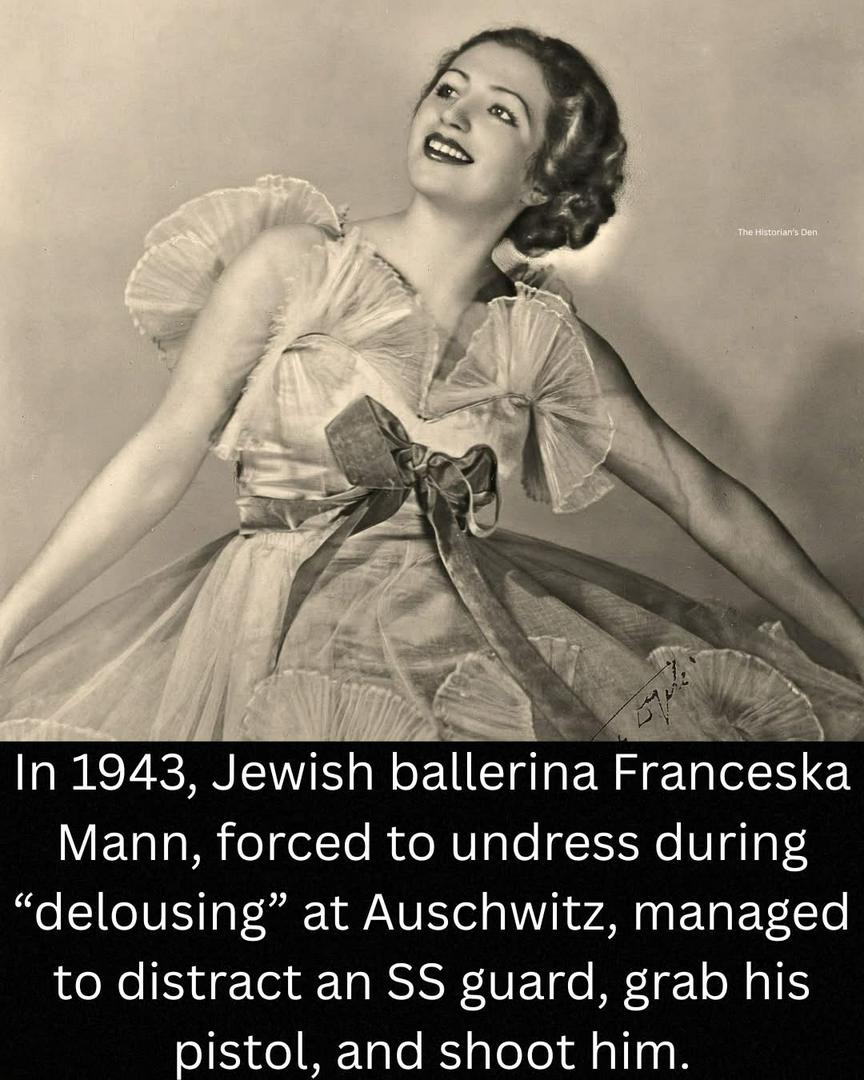
In October 1943, Jewish ballerina Franceska Mann, one of Warsaw’s most promising dancers, was among a transport of prisoners taken from the Hotel Polski roundup and sent to Auschwitz-Birkenau. Upon arrival, she and the others were ordered into a so‑called “delousing” room, a deception commonly used to disguise the gas chambers. Mann had been a rising star in pre‑war Warsaw, performing at the Melody Palace and training at the city’s top ballet schools. When the Warsaw Ghetto was liquidated earlier that year, she was swept up in the chaos and deported under the false promise of “resettlement” in Switzerland, one of the cruel tricks used by the Nazis to lure remaining Jews out of hiding. Inside the undressing room at Birkenau, Mann realized what was actually happening. Instead of surrendering to terror, she acted. According to survivor testimonies, she distracted an SS guard, seized his pistol, and shot him. The struggle triggered a brief uprising in the room, with several other women joining in. It was quickly suppressed, but it remains one of the very few documented acts of armed resistance inside Auschwitz itself. Her story endures because it challenges the myth that victims went passively. Even in the most controlled, brutal environment imaginable, people like Franceska Mann found moments of defiance, small flashes of humanity and courage that history should never forget. #legend #thehistoriansden

You've reached the end!
Tag: thehistoriansden | LocalAll