1/1

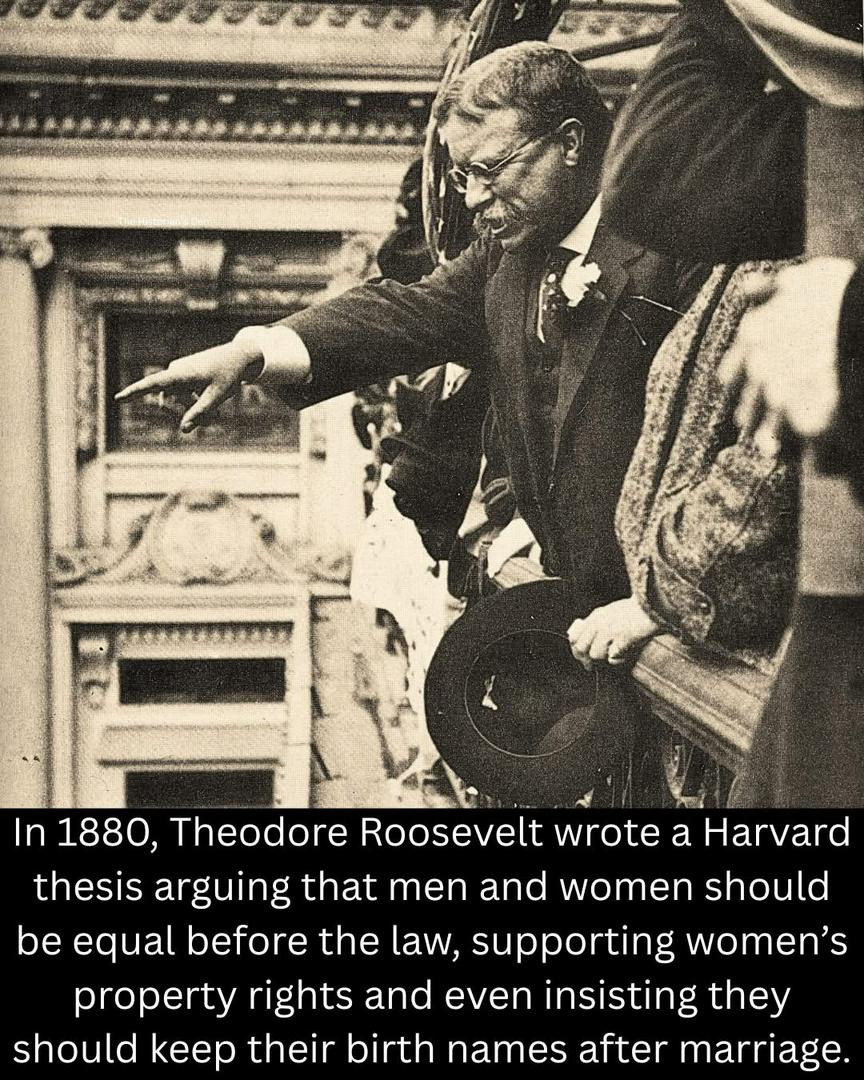
Theodore Roosevelt’s 1880 Harvard thesis, The Practicability of Equalizing Men and Women before the Law, is one of the earliest windows into his political philosophy. As a 21‑year‑old undergraduate, he argued that women should have the same legal rights as men, especially in property ownership and marital identity. This was unusually progressive for the era, when most U.S. states still restricted women’s economic autonomy and expected them to subsume their identities under their husbands. Roosevelt’s insistence that women should keep their birth names after marriage reflected a broader critique of the legal structures that treated women as dependents rather than full citizens. Although Roosevelt’s views later became more complicated, this early thesis foreshadowed the evolution of his public stance. Throughout his career, he periodically supported women’s rights, from speaking in favor of suffrage as early as 1880 to fully embracing the cause during his 1912 Progressive Party presidential campaign. Historians note that while he was not consistently radical, his advocacy helped legitimize women’s political participation at a time when national suffrage was still decades away. #thesis #thehistoriansden
2026-03-18
write a comment...