Tag Page news

#news
1776 Patriot

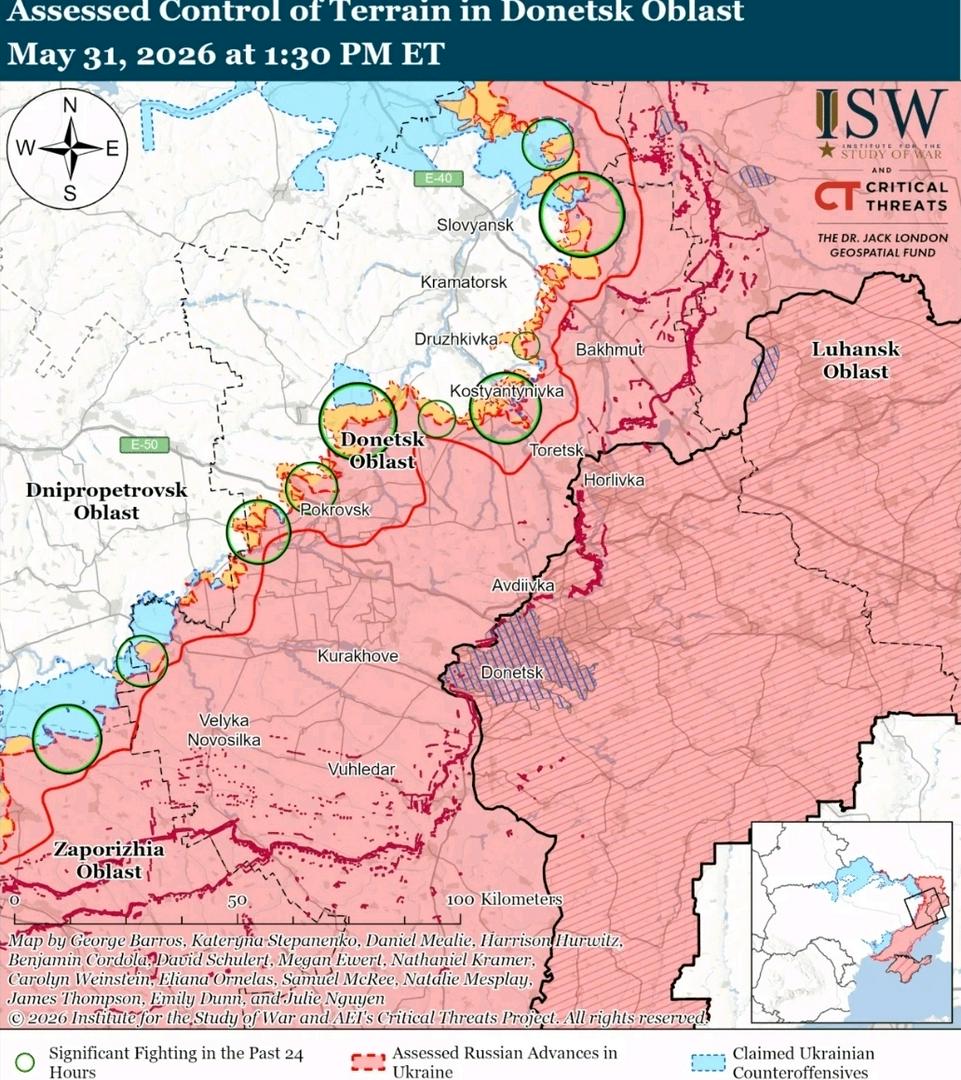
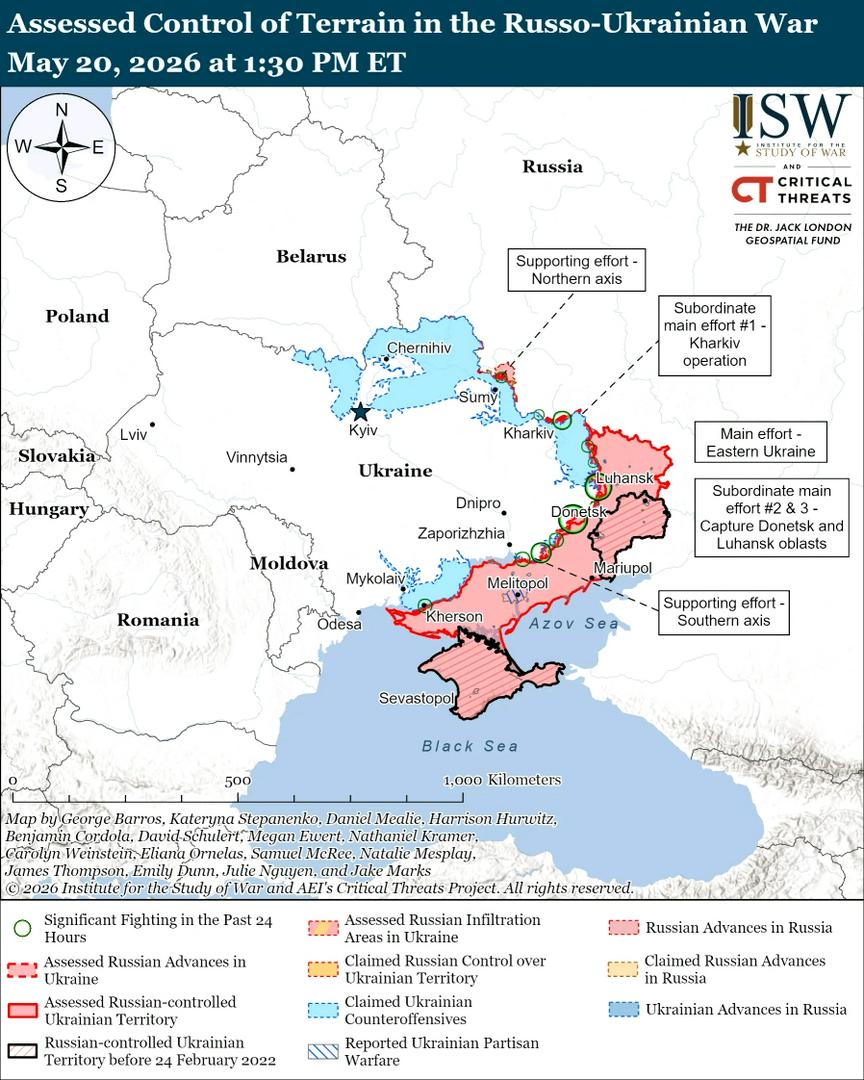
May 2026 Ukraine War Recap: The Month Russia Lost Ground May delivered one of the most surprising shifts in the Ukraine war since 2024. Despite continued attacks across the front, Russian forces ended the month with a net loss of territory for the first time since Ukraine's Kursk operation nearly two years ago. ISW assessments showed that Russian gains slowed sharply, while Ukrainian forces regained ground in several sectors. One of the least reported developments occurred around occupied Mariupol. Ukrainian forces struck transportation routes more than 65 miles behind the front line, disrupting the movement of troops and supplies. ISW noted that Ukraine's ability to hit targets deep in occupied territory is steadily growing, placing increasing pressure on Russian logistics. Russia attempted to project strength during its May 9 Victory Day celebrations. Yet ISW reported that Ukrainian drone threats forced Moscow to scale back parts of the event, highlighting a vulnerability rarely seen in the Russian capital during the war. Russian officials announced a three day ceasefire around the parade, but fighting continued in several areas. The month also brought massive aerial attacks. Russia launched waves of drones that repeatedly exceeded 100 aircraft in a single night. On some days the totals surpassed 200. Ukrainian defenses faced relentless pressure as strikes targeted cities across the country. Perhaps the most striking number came from battlefield maps. By late May, Russia had lost roughly 100 square miles of previously controlled territory over a four week period. That reversal marked the largest weekly territorial setback for Russian forces this year. As June begins, neither side appears close to a decisive breakthrough. Yet May demonstrated something many analysts considered unlikely only months ago. Russia continued to attack, but Ukraine repeatedly disrupted supply lines, regained ground, and forced Russia onto the defensive. #UkraineWar #NATO #News

NH.Unreleased.News

SWAT RAIDS TWO UNITS ON LOG STREET TODAY - DRUGS SEIZED AND ARREST MADE - during early morning hours, the Manchester Police Special Enforcement Division, And Manchester and Nashua SWAT teams simultaneously executed search warrants at 25 Log St. Apt. 1E and 45 Log St. Apt 1F. warrants were executed in the result of an investigation conducted by the Special Investigation Unit into the sale of illegal drugs in the city. At Log St , 33-year-old Brenton Smith of Manchester was arrested charging him with the Sale of a Controlled Drug. During the execution of the warrants, police seized quantities of controlled drugs . Manchester Police would also like to thank community members who reported concerns to city. Public assistance is greatly appreciated and can play an important role in ongoing investigations. #ManchesterNH #News #crime #ArrestMade

1776 Patriot

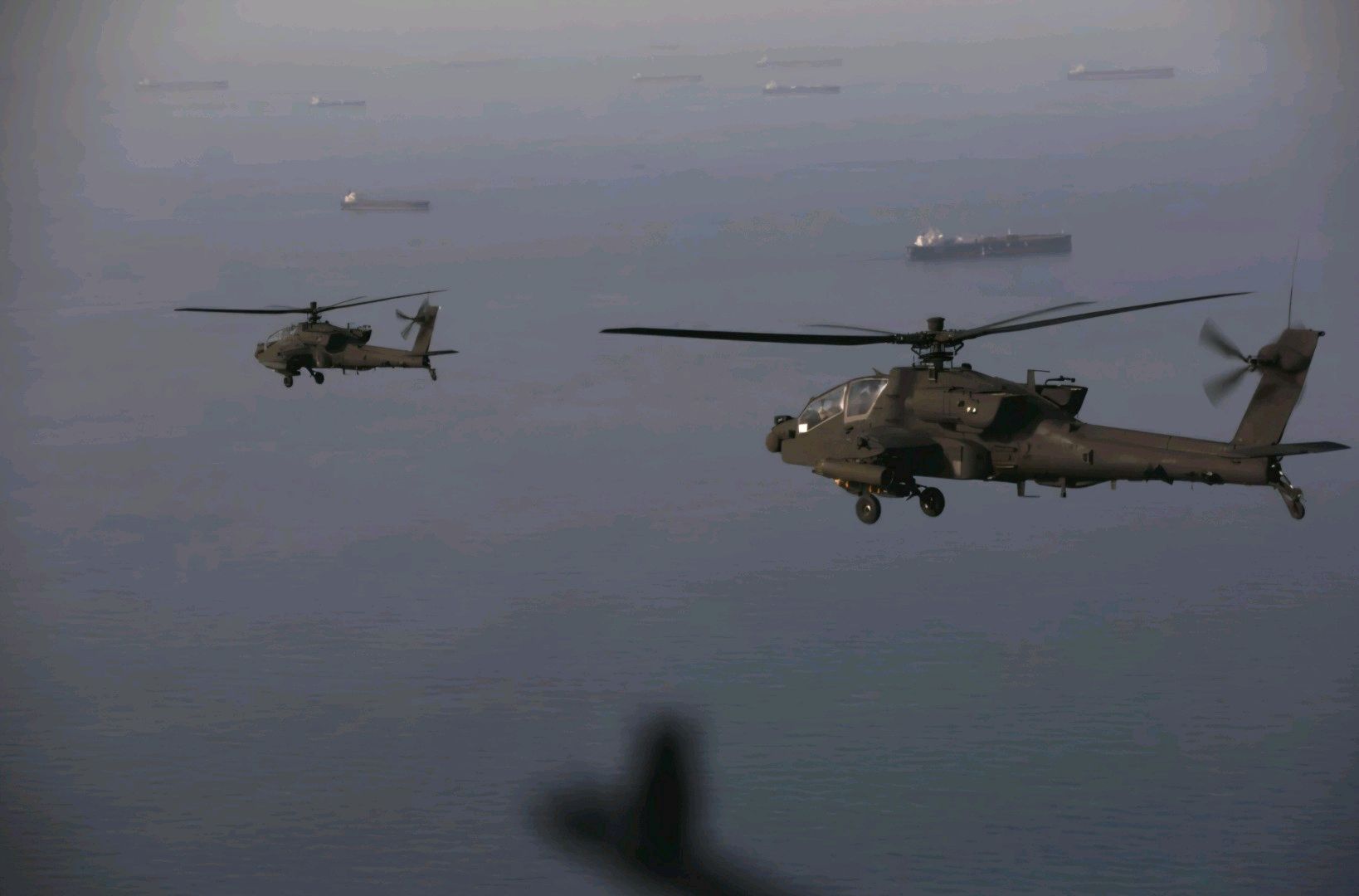
US Launches Project Freedom to Restore Navigation in Strait of Hormuz The United States began “Project Freedom” on May 4, 2026, a United States Central Command directed operation to restore navigation for commercial shipping through the Strait of Hormuz. Donald Trump announced the mission as a response to hundreds of neutral merchant vessels stranded during the 2026 Iran conflict. The strait, handling roughly a quarter of global seaborne oil trade along with fuel and fertilizer shipments, has been a flashpoint since February. Project Freedom uses a layered defense approach rather than simple escorts. Assets include guided missile destroyers, more than 100 aircraft, multi domain unmanned systems, and about 15,000 personnel. A U.S. led Joint Maritime Information Center established an enhanced security area near Oman, coordinating with regional authorities and providing real time routing guidance through a combined diplomatic and military framework. On its first day, two U.S. flagged merchant ships successfully transited under Navy protection. CENTCOM reported destroying several Iranian small boats and intercepting missiles and drones targeting shipping. Iran denied the claims, warned U.S. naval presence risks violating a fragile ceasefire, and asserted strikes on American warships, claims the Pentagon rejected, confirming no vessels were hit. The operation aims to ease pressure on global markets and assist stranded crews while maintaining the blockade on Iranian ports. Analysts note Iran retains fast attack boats and missile capabilities despite earlier losses. As of May 5, Project Freedom remains in early stages, with full reopening of the strait likely to take weeks or months depending on mine clearance and Iranian response. #BreakingNews #News #USNews #USA #America #Military #Defense

Llois Joyce

A U.S. Navy fighter jet shot down an Iranian drone that was approaching the aircraft carrier USS Abraham Lincoln in the Arabian Sea, U.S. Central Command said Tuesday, threatening to ramp up tensions as the Trump administration warns of possible military action to get Iran to the negotiating table. The drone “aggressively approached” the aircraft carrier with “unclear intent” and “continued to fly toward the ship despite de-escalatory measures taken by U.S. forces operating in international waters,” Central Command spokesman Capt. Tim Hawkins said in a statement Tuesday. The shootdown occurred within hours of Iranian forces harassing a U.S.-flagged and U.S.-crewed merchant vessel that was sailing in the Strait of Hormuz, the U.S. military said. The Shahed-139 drone was shot down by an F-35C fighter jet from the Lincoln, which, according to Hawkins, was sailing about 500 miles from Iran’s southern coast. The military’s statement noted that no American troops were harmed and no U.S. equipment was damaged.#DropkickMurphys #BreakingNews #JobMarket #News #USA #TheView

Curiosity Corner

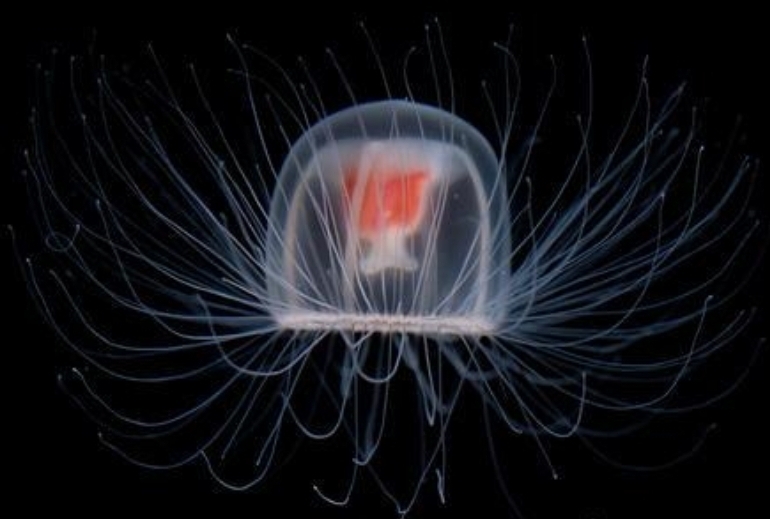
Eternal Life: The Jellyfish That Reverses Its Own Life Cycle The tiny jellyfish Turritopsis dohrnii is one of the few organisms known to effectively escape permanent death, not by living forever in one form, but by repeatedly resetting its life cycle. Barely a few millimeters wide, it inhabits warm oceans worldwide, yet carries a biological capability that challenges the standard model of aging. Most animals move in a single direction: birth, growth, reproduction, decline, and death. This species can interrupt that process entirely. When stressed by injury, starvation, or environmental change, the adult jellyfish initiates a transformation driven by transdifferentiation. Its specialized cells revert and reorganize into different types, collapsing the organism into a cyst-like state before reforming as a polyp, the earlier juvenile stage of its life. From that polyp, new jellyfish bud off, genetically identical to the original. This process can begin within days under lab conditions, showing how rapidly the reset can occur. In controlled settings, this reversal has been observed multiple times in the same organism, meaning there is no fixed biological limit forcing death through aging. It can still die from predators or disease, but not from internal deterioration. In effect, it bypasses the gradual cellular damage that defines aging in most species. During the reversal phase, gene activity linked to stem-cell renewal and tissue regeneration sharply increases, effectively reprogramming mature cells into more primitive states. This makes Turritopsis dohrnii a rare case in which life does not strictly move forward. Instead, it loops, demonstrating that under certain genetic conditions, aging is not an unavoidable endpoint but a process that can, at least in one species, be reversed. #Biology #Science #ScienceNews #OceanLife #News #USNews

1776 Patriot

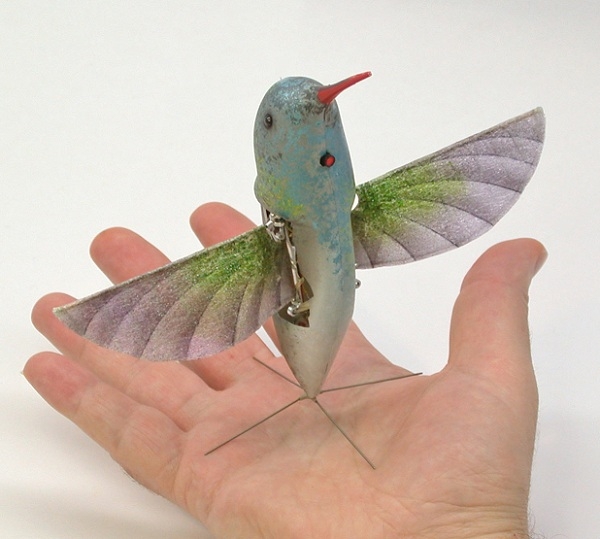
DARPA’s Nano Air Vehicle Program In February 2011, AeroVironment unveiled the world’s first fully operational, life-size, hummingbird-like flying machine for the Defense Advanced Research Projects Agency. Built under DARPA’s Nano Air Vehicle program, the tiny craft marked a milestone never before achieved. The handmade prototype weighs just 19 grams, or two-thirds of an ounce, including batteries, motors, communications gear, and a video camera. That is lighter than a common AA battery. Its wingspan stretches 16 centimeters, or 6.5 inches, tip to tip. Engineers could slip on a removable body fairing shaped exactly like a real hummingbird. The result looked so convincing that it was larger than an average hummingbird, yet smaller than the largest species found in nature. It flew using two flapping wings for both power and steering, with no tail or extra control surfaces. Under remote control, it climbed and descended vertically, slid left or right, raced forward and backward, and rotated clockwise or counterclockwise. It hovered precisely inside an imaginary two-meter-wide sphere for a full minute. It held steady in five-mile-per-hour side gusts, drifting less than one meter. It stayed aloft for eight straight minutes on its own batteries. Pilots pushed it to 11 miles per hour in forward flight, then eased it back into a perfect hover. They even flew it indoors while watching only the live video feed. The goal was simple yet bold: to give American forces eyes that could enter the tightest urban spaces without warning. It could outmaneuver wind, slip through doors, and relay crystal-clear video from places too dangerous for soldiers. The Hummingbird fulfilled its role as a technology demonstrator. It never entered mass production, but its breakthroughs in nanoscale power, control, and miniaturization lived on. AeroVironment drew directly from those advances to create the Snipe, a palm-launched nano quadrotor system. #Military #Spytek #News #USNews #USA #America

Tag: news | LocalAll