Tag Page militaryhistory

#militaryhistory
LataraSpeaksTruth

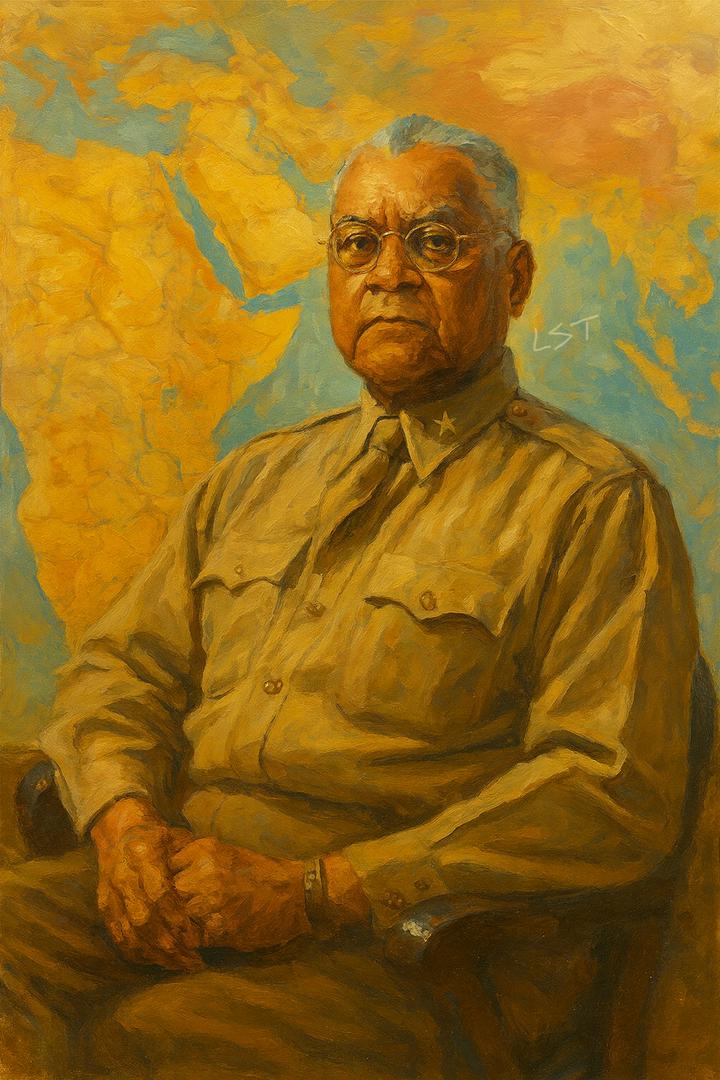
Benjamin O. Davis Sr. Dies in 1970

Benjamin O. Davis Sr. passed away on November 26, 1970. His death marked the end of a life that reshaped the presence and possibilities of Black leadership within the United States military. He was the first Black general in the history of the U.S. Army, a milestone he reached in 1940 after decades of service marked by discipline, resilience, and unshakable commitment. Davis entered the military at a time when segregation defined every level of service. Advancement for Black soldiers was blocked by unwritten rules and deeply rooted resistance. He moved through those barriers with a steady hand and a quiet, firm determination that reflected both the discipline of a career officer and the weight of representing an entire generation of soldiers who were denied equal opportunities. His leadership reached across World War I, World War II, and the era of military reform. Davis played a critical role in shaping programs for Black troops, improving conditions within segregated units, and advocating for equal treatment. His work helped lay the groundwork for the eventual desegregation of the armed forces in 1948. He is also remembered as the father of Benjamin O. Davis Jr., commander of the Tuskegee Airmen. The legacy of this family represents a rare and powerful throughline in American military history. Their combined contributions influenced policy, elevated expectations, and expanded the nation’s understanding of Black excellence in service. Benjamin O. Davis Sr.’s passing in 1970 closed a chapter, but his impact continues to shape the military today. His life stands as a historical benchmark, showing how one person’s resolve can open institutional doors that were once locked on purpose. #HistoryToday #OnThisDay #AmericanHistory #MilitaryHistory #USArmy #BlackMilitaryLeaders #BenjaminODavisSr #LataraSpeaksTruth

Benjamin O. Davis Sr. Dies in 1970
LataraSpeaksTruth

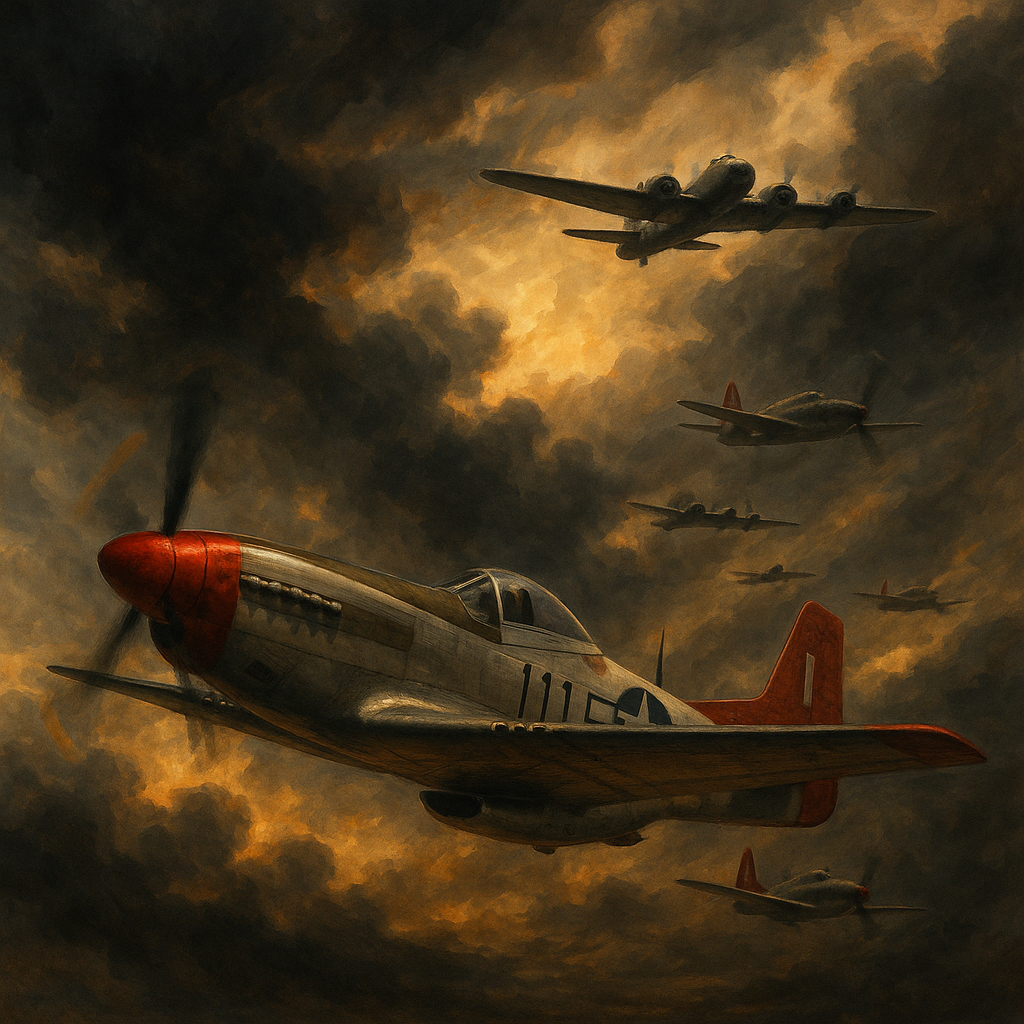
On This Day 1944… Red Tail Escorts Over War Torn Europe

On this day in 1944, the Red Tail Angels carved their path across a cold European sky, lifting off from their base in Italy with the weight of duty and a world still arguing about their worth. The Tuskegee Airmen of the 332nd Fighter Group knew the routine. Take off. Climb. Form up. Guard the bombers like your life depends on theirs. It was the last big raid of the month, and the Fifteenth Air Force sent them straight toward the factories that fed the Nazi war machine. Waiting for them were German fighters, flak bursts that chewed through the clouds, and the constant reminder that history never gives out freebies. These pilots had trained in Tuskegee, Alabama, far from the glory people like to paste on wartime stories. They came from a segregated military that questioned them at every step, yet their performance in the air kept rewriting the script. By late 1944 their P 51s carried bright red tails that bomber crews could spot at a glance. That flash of color meant protection. It meant discipline. It meant someone out there cared enough to hold formation tight when fear tried to pull everything apart. The 332nd flew more than one hundred seventy heavy bomber escort missions before the war ended, losing fewer bombers than many other groups in the same theater. That record was not luck. It was focus, grit, and a stubborn belief in doing the job right even when the country they served made them fight two battles at once. Every mission kept more names off casualty lists and pushed the United States toward the integration that finally came after the war. Remember this November mission as a reminder that real change often shows up in repetition. The same hard task. The same cold morning. The same promise to bring as many people home as possible. That is how legacies are built, one flight at a time. #TuskegeeAirmen #RedTailAngels #WWIIHistory #MilitaryHistory #AviationHistory #332ndFighterGroup #HistoryMatters #AmericanHistory #LataraSpeaksTruth

On This Day 1944… Red Tail Escorts Over War Torn Europe
LataraSpeaksTruth

Cathay Williams was born in September 1844 in Independence, Missouri, to an enslaved mother and a free father. Because her mother was enslaved, Cathay was also born into slavery. As a young woman, she was forced into labor for Union troops during the Civil War, working as a cook and washerwoman and traveling with the army through parts of the South. That experience brought her close to military life long before she officially entered it. After the war, Williams chose a path few women of her time could even imagine. On November 15, 1866, she enlisted in the United States Army in St. Louis under the name William Cathay. Since women were barred from military service, disguising herself as a man was the only way she could join. She served in Company A of the 38th U.S. Infantry, one of the African American regiments created after the Civil War and later tied to the legacy of the Buffalo Soldiers. For nearly two years, she performed the duties expected of any soldier. Her secret remained hidden until repeated illness and hospital visits led army doctors to discover she was a woman. She was discharged on October 14, 1868. Years later, Williams applied for a military disability pension, describing her service and failing health, but her claim was denied. Much of her later life remains unclear, but her place in history does not. Today, Cathay Williams is remembered as the only documented woman known to have served as a Buffalo Soldier and one of the most remarkable women in American military history. #OurHistory #CathayWilliams #BuffaloSoldiers #MilitaryHistory #BlackHistory #WomensHistory #AfricanAmericanHistory #HiddenFigures #AmericanHistory #LataraSpeaksTruth

LataraSpeaksTruth

On December 11, 1917, before sunrise, the U.S. Army carried out one of the harshest mass executions in its history. Thirteen Black soldiers of the 3rd Battalion, 24th Infantry Regiment were hanged at Fort Sam Houston after the first court martial linked to the Houston Riot of August 1917. The men had been stationed at Camp Logan in segregated Houston, where Black soldiers faced constant harassment from police and white residents. Tension boiled over after a Black soldier was assaulted and arrested, and confusion inside the camp led many to believe that an armed white mob was on the way. Fear clashed with hostility, violence broke out, and several people were killed. When the trials began, more than one hundred Black soldiers faced charges in what became the largest court martial in U.S. Army history. Legal counsel was limited, testimony often conflicted, and the system allowed almost no room for appeal. Before dawn on December 11, thirteen men were executed in secret. Their families were not notified, and they had no chance to seek clemency. Their names were James Wheatley, Charles Baltimore, William Brackenridge, Thomas C. Hawkins, Carlos J. Rivers, Jesse Moore, Albert D. Wright, Nels P. Christensen, William C. Nesbit, James Divine, Clyde Sneed, Frank Johnson, and Pat MacWhorter. Two more court martials followed, bringing the total number of executed soldiers to nineteen. For decades the full story was reduced or distorted, but historians and communities kept pressing for truth. In 2023, the Army finally vacated all the convictions and acknowledged that the trials had been unjust and shaped by racial discrimination. Remembering this date means facing the reality of what happened and honoring the men whose service was met with unequal justice at home. #BlackHistory #OnThisDay #HoustonRiot #24thInfantry #MilitaryHistory #AmericanHistory #NewsBreakCommunity

LataraSpeaksTruth

Texas Employers Blacklist Black Veterans (1906)

Some stories in American history were never given the full attention they deserved, and the Brownsville Affair is one of them. In 1906, more than 160 Black soldiers from the 25th Infantry were blamed for a shooting they had nothing to do with. Local officials rushed to judgment with no proof, and the nation went along with the accusation. President Theodore Roosevelt discharged the entire group in one order, stripping their service, their honor, and their futures. What many people never hear about is what happened long after the headlines died down. The government eventually admitted the soldiers had been telling the truth from day one. The bullets didn’t match their rifles. The timelines didn’t fit. Witness claims fell apart. But by the time the record was corrected, decades had passed, and many of the men were already gone. Their families lived with the weight of an accusation built on bias, not evidence. Military benefits were never restored in time to help them. Careers were lost. Entire generations grew up under a shadow they did not deserve. The correction came too late to give the soldiers the justice they needed while they were still here. Instead, their names were quietly cleared long after the damage had been done. It’s a reminder that institutions can make decisions in minutes that take lifetimes to repair. These men deserve to be remembered with truth, dignity, and the honor they earned through service. #BrownsvilleAffair #BlackHistory #MilitaryHistory #HistoryUncovered #AmericanHistory #TruthMatters

Texas Employers Blacklist Black Veterans (1906)
You've reached the end!