Tag Page militaryhistory

#militaryhistory
LataraSpeaksTruth

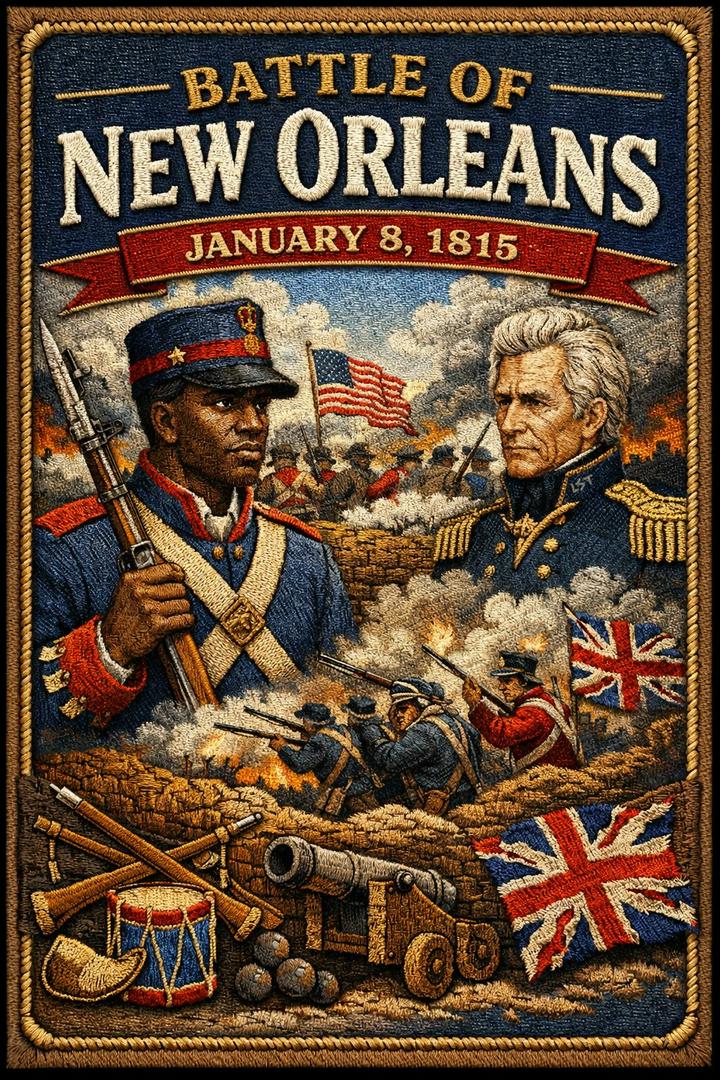
January 8, 1815. The Battle of New Orleans. The War of 1812 was technically over. The Treaty of Ghent had been signed, but word had not crossed the Atlantic yet. Slow communication changed everything. British forces attacked New Orleans anyway and were met by an American force led by Andrew Jackson. His army was not a traditional one. It included U.S. regulars, state militias, Native allies, free Black soldiers, local Creoles, and even pirates under Jean Lafitte. The result was one of the most lopsided victories in U.S. military history. Over 2,000 British casualties compared to roughly 70 American losses. The battle did not change the treaty, but it reshaped American identity. It boosted national confidence, made Jackson a national hero, and proved that the United States could stand up to the world’s most powerful empire. Free Black soldiers played a critical role in defending the city. Their bravery was undeniable. Their recognition afterward was not. This victory was not simple, clean, or fair. It was complex, coalition-driven, and built by people history often sidelines. #January8 #BattleOfNewOrleans #WarOf1812 #AmericanHistory #USHistory #MilitaryHistory #BlackHistory #HiddenHistory

LataraSpeaksTruth

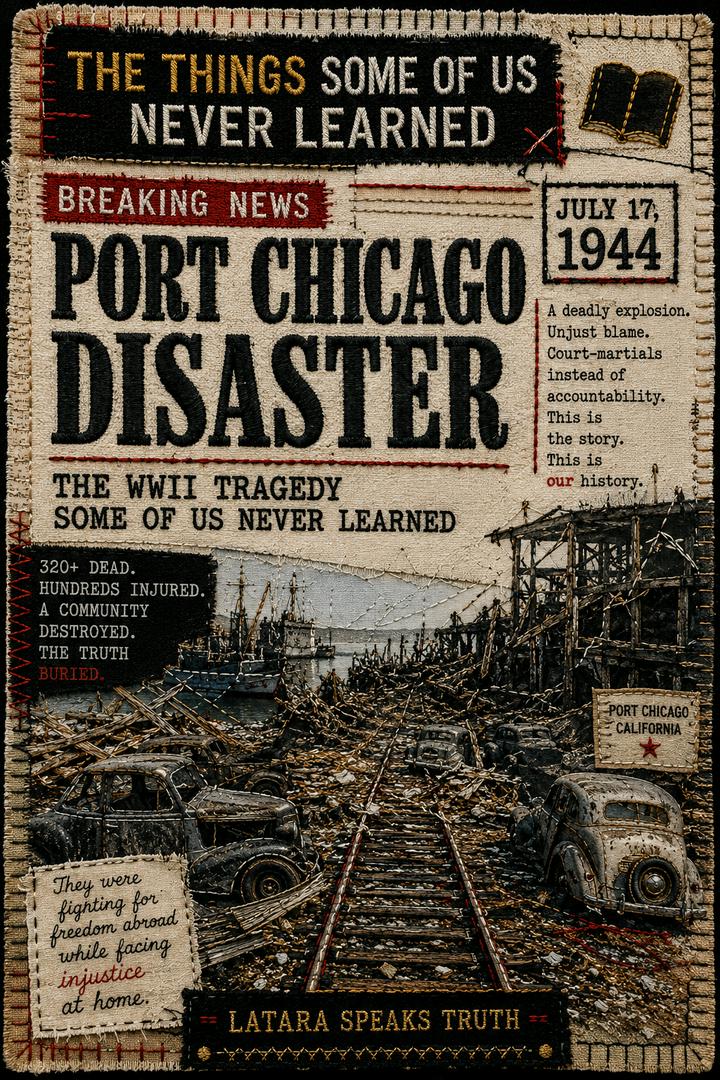
The Port Chicago Disaster The WWII tragedy some of us never learned On July 17, 1944, a massive explosion tore through Port Chicago Naval Magazine in California. Two ships were being loaded with ammunition for the Pacific war effort when the blast hit. The explosion killed 320 sailors and civilians and injured nearly 400 more. It was one of the deadliest home front disasters of World War II. Most of the sailors doing the dangerous loading work were Black men. Many had little proper training for handling explosives, yet they were expected to move massive amounts of ammunition under pressure. After the disaster, the pain did not end. When surviving Black sailors were ordered back to the same dangerous work, many refused. They were not saying they would not serve. They were saying they did not want to die under the same unsafe conditions that had just killed their friends. The Navy treated that refusal as defiance. Hundreds were punished. Fifty men became known as the Port Chicago 50 after they were convicted of mutiny. Their case became one of the clearest examples of how racism, military discipline, and unequal working conditions collided during World War II. Decades later, the story is still important because it shows a side of wartime service that many classrooms skipped over. These men were serving their country, but they were also fighting for basic fairness inside the same country they were asked to defend. The Port Chicago Disaster was not just an explosion. It was a tragedy. It was a warning. And it was a chapter of American history some of us never learned. #BlackHistory #WWIIHistory #PortChicagoDisaster #MilitaryHistory #LataraSpeaksTruth

Jammie

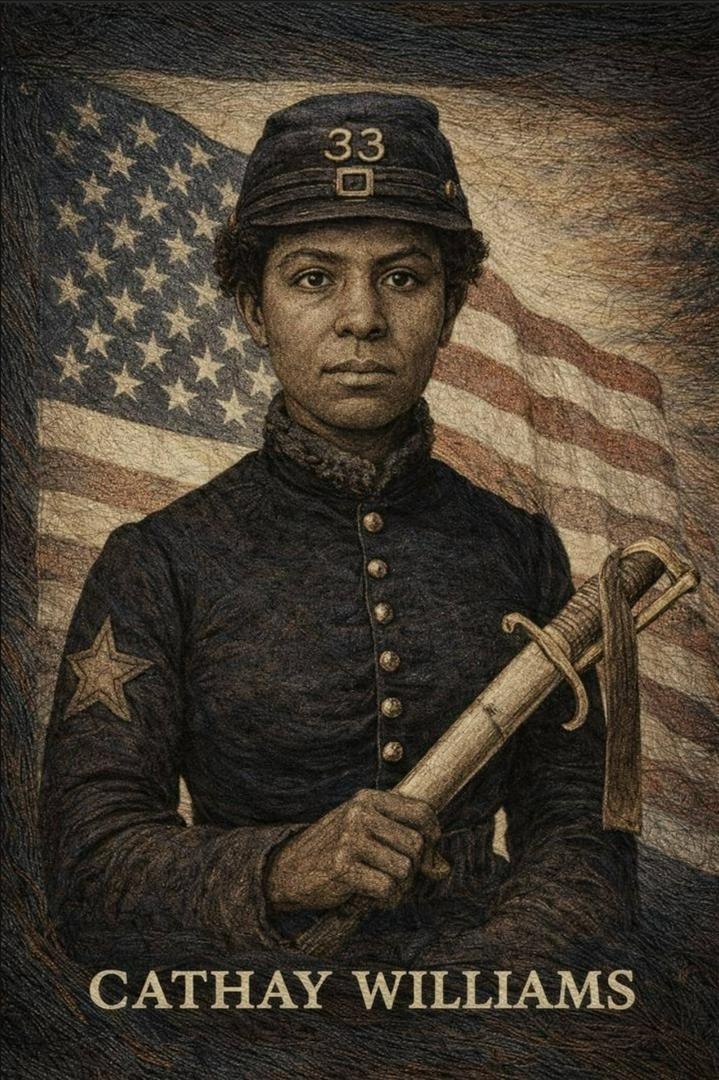
Cathav Williams was born in September 1844 in Independence, Missouri, to an enslaved mother and a free father. Because her mother was enslaved, Cathay was also born into slavery. As a young woman, she was forced into labor for Union troops during the Civil War, working as a cook and washerwoman and traveling with the army through parts of the South. That experience prought her close to military life long before she officially entered it After the war, Williams chose a path few women of her time could even imagine. On November 15. 1866, she enlisted in the United States Army in St. Louis under the name William Cathay. Since women were barred from military service, disguising herself as a man was the only way she could join. She served in Company A of the 38th U.S Infantry, one of the African Americanregiments created after the Civil War and ater tied to the legacy of the Buffalo Soldiers. For nearly two years, she performed the duties expected of any soldier. Her secret remained hidden unti repeated illness and hospital visits led army doctors to discover she was a woman. She was discharged on October 14, 1868 Years later, Williams applied for a military disabilitv pension, describing her service and failing health, but her claim was denied Much of her later life remains unclear, but her place in history does not. Today, Cathay Williams is remembered as the only documented woman known to have served as a Buffalo Soldier and one of the most remarkable women in American military history. #OurHistory #CathayWilliams #BuffaloSoldiers #MilitaryHistory #BlackHistory #WomensHistory
justme

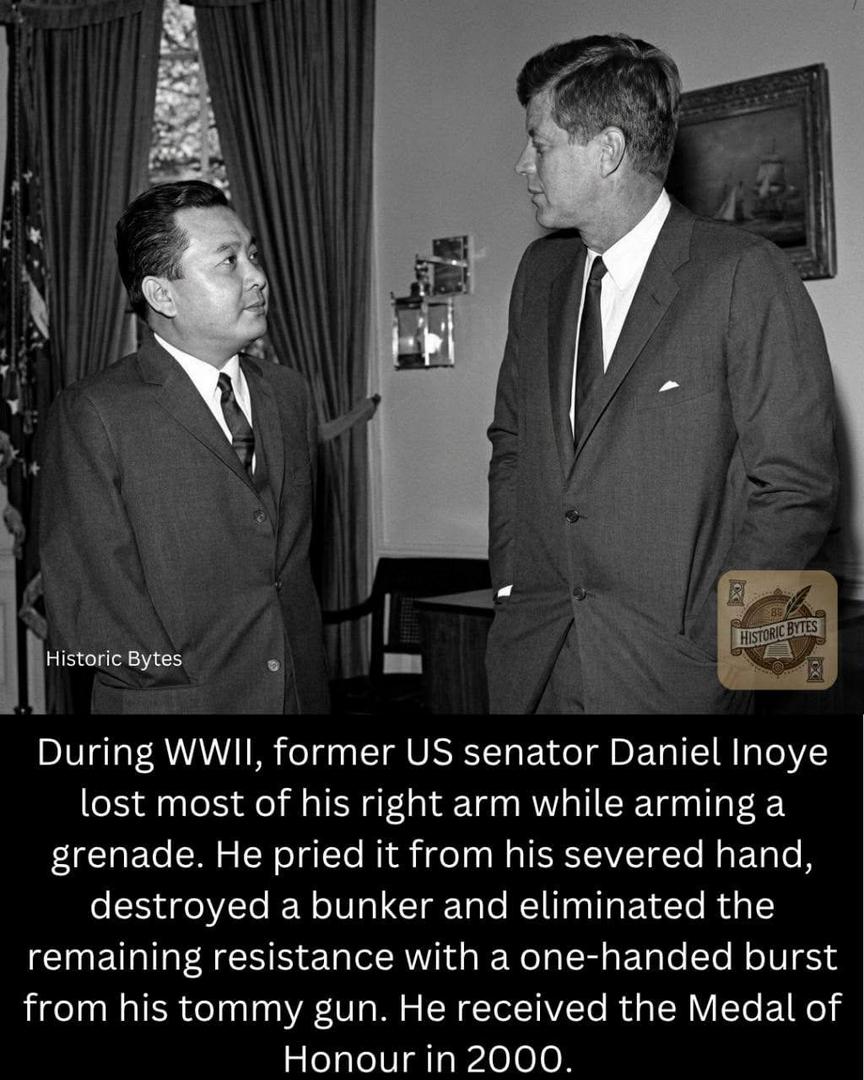
In April 1945, just weeks before Germany’s surrender, Second Lieutenant Daniel Inouye led his platoon up a ridge near San Terenzo in Tuscany, Italy, against a heavily fortified German position. The 442nd Regimental Combat Team, composed almost entirely of Japanese American soldiers whose families were being held in internment camps back home, had been fighting across Italy for two years. Many enlisted specifically to prove their loyalty to a country that had imprisoned their relatives. Inouye had already been shot in the stomach by a sniper early in the assault. He kept moving. He charged the first German machine gun nest alone, neutralized it with grenades and his submachine gun, then did the same to a second position. When he stood to throw a grenade at the third nest, a German soldier fired a rifle grenade from ten yards away. It exploded at Inouye’s right elbow. He later described looking down at the arm dangling from his body and seeing his live grenade still gripped in a fist that suddenly did not feel like his own. He shouted to his men to stay back, pried the live grenade free with his left hand, and threw it into the bunker. He then picked up his Tommy Gun with his left hand and continued firing until a bullet struck his leg and he lost consciousness from blood loss. His right arm was amputated that night without anesthesia. #ww2 #militaryhistory #interesting

LataraSpeaksTruth

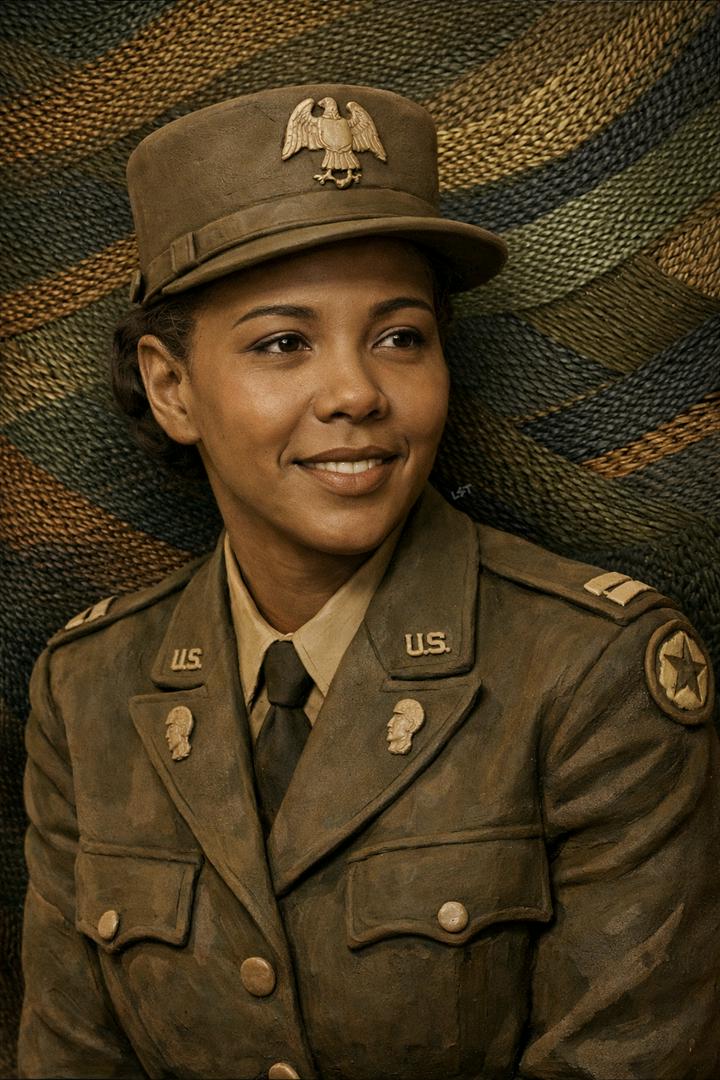
Charity Adams Earley did not quietly step into history. She walked into it wearing a uniform. Born in 1918 in North Carolina and raised in South Carolina, Charity Adams Earley came of age in a country where race and gender were often used to limit what a person could become. She refused to accept those limits. In 1942, she joined the Women’s Army Auxiliary Corps, later known as the Women’s Army Corps, and became part of the first class of Black women officers. During World War II, she rose through the ranks and was selected to lead the 6888th Central Postal Directory Battalion, known as the Six Triple Eight. This was the only all Black women’s Army unit sent overseas during the war. Their mission was urgent and enormous. Millions of letters and packages had piled up in Europe, leaving American troops waiting for word from home. Under Adams Earley’s leadership, the battalion worked in harsh conditions in England and later France. They sorted and redirected mail around the clock with speed, discipline, and precision. The unit cleared the backlog in far less time than expected, helping restore morale for troops fighting far from home. By the end of the war, Charity Adams Earley had become the highest ranking Black woman officer in the U.S. Army during World War II. Her story is not about opinion or internet debate. It is about documented service, proven leadership, and a woman who handled a wartime crisis with excellence. Charity Adams Earley did her job, led her unit, and left a record that still stands. #OurHistory #CharityAdamsEarley #6888th #MilitaryHistory #WWIIHistory #LataraSpeaksTruth

You've reached the end!