Tag Page militaryhistory

#militaryhistory
LataraSpeaksTruth

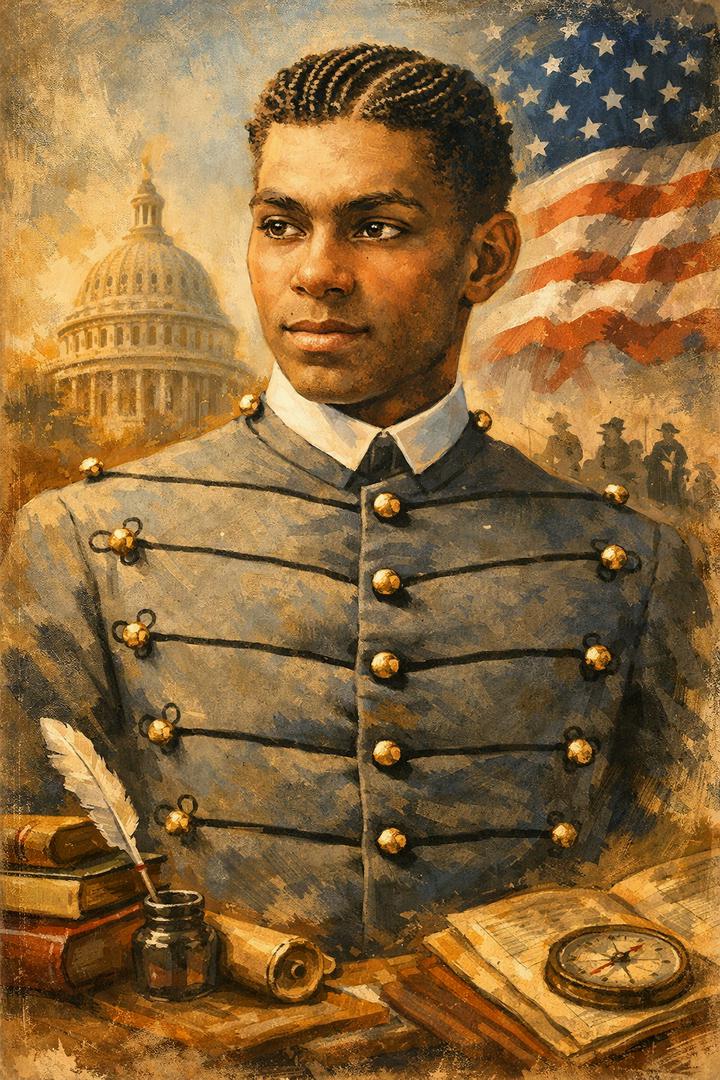
March 21, 1856 - Henry Ossian Flipper was born in Thomasville, Georgia, into slavery. His life began in a nation that had already decided how far Black people were supposed to go, and how firmly they were supposed to stay in their place. Flipper had other plans. He came of age during Reconstruction and, in 1873, was appointed to the U.S. Military Academy at West Point, one of the most elite institutions in the country. Getting in was one battle. Surviving it was another. He faced harassment, isolation, and open hostility, yet refused to be broken by any of it. In 1877, Henry Ossian Flipper became the first Black graduate of West Point and the first Black commissioned officer in the regular U.S. Army. That was no small ceremonial first. It was a direct blow against a system built to exclude Black Americans from military leadership, prestige, and power. His success proved what had always been true: the barrier was never ability, it was racism. After graduation, Flipper served with the 10th Cavalry, one of the famed Buffalo Soldier regiments. His career reflected discipline, endurance, and service, even as injustice continued to follow him. Still, history remembers what matters most: Henry Ossian Flipper crossed a line this country never intended for a Black man to cross… and he did it in uniform. His name deserves to be spoken with respect, not tucked away like a footnote. Sources: National Archives, U.S. Army #OnThisDay #BlackHistory #HenryOssianFlipper #WestPoint #BuffaloSoldiers #MilitaryHistory #BlackExcellence #HiddenHistory #AmericanHistory #BlackPioneers

LataraSpeaksTruth

On December 4, 1950, Ensign Jesse LeRoy Brown, the first Black man to complete U.S. Navy flight training and serve as a naval aviator, was shot down while flying close air support during the Korean War near the Chosin Reservoir. He crash landed in the snow, badly injured and trapped in the wreckage, while his wingman, Thomas J. Hudner Jr., made a desperate rescue attempt, even crash landing nearby to try to reach him. Brown did not survive, and his remains were never recovered, but his legacy did not end on that frozen mountainside. He became a permanent symbol of excellence earned through barriers, and a reminder that service, skill, and courage have always been bigger than the limits people tried to place on them. #ThisDayInHistory #KoreanWar #USNavy #NavalAviation #MilitaryHistory #JesseLBrown #BlackHistory #ChosinReservoir

LataraSpeaksTruth

January 8, 1815. The Battle of New Orleans. The War of 1812 was technically over. The Treaty of Ghent had been signed, but word had not crossed the Atlantic yet. Slow communication changed everything. British forces attacked New Orleans anyway and were met by an American force led by Andrew Jackson. His army was not a traditional one. It included U.S. regulars, state militias, Native allies, free Black soldiers, local Creoles, and even pirates under Jean Lafitte. The result was one of the most lopsided victories in U.S. military history. Over 2,000 British casualties compared to roughly 70 American losses. The battle did not change the treaty, but it reshaped American identity. It boosted national confidence, made Jackson a national hero, and proved that the United States could stand up to the world’s most powerful empire. Free Black soldiers played a critical role in defending the city. Their bravery was undeniable. Their recognition afterward was not. This victory was not simple, clean, or fair. It was complex, coalition-driven, and built by people history often sidelines. #January8 #BattleOfNewOrleans #WarOf1812 #AmericanHistory #USHistory #MilitaryHistory #BlackHistory #HiddenHistory

LataraSpeaksTruth

Charity Adams Earley did not quietly step into history. She walked into it wearing a uniform. Born in 1918 in North Carolina and raised in South Carolina, Charity Adams Earley came of age in a country where race and gender were often used to limit what a person could become. She refused to accept those limits. In 1942, she joined the Women’s Army Auxiliary Corps, later known as the Women’s Army Corps, and became part of the first class of Black women officers. During World War II, she rose through the ranks and was selected to lead the 6888th Central Postal Directory Battalion, known as the Six Triple Eight. This was the only all Black women’s Army unit sent overseas during the war. Their mission was urgent and enormous. Millions of letters and packages had piled up in Europe, leaving American troops waiting for word from home. Under Adams Earley’s leadership, the battalion worked in harsh conditions in England and later France. They sorted and redirected mail around the clock with speed, discipline, and precision. The unit cleared the backlog in far less time than expected, helping restore morale for troops fighting far from home. By the end of the war, Charity Adams Earley had become the highest ranking Black woman officer in the U.S. Army during World War II. Her story is not about opinion or internet debate. It is about documented service, proven leadership, and a woman who handled a wartime crisis with excellence. Charity Adams Earley did her job, led her unit, and left a record that still stands. #OurHistory #CharityAdamsEarley #6888th #MilitaryHistory #WWIIHistory #LataraSpeaksTruth

LataraSpeaksTruth

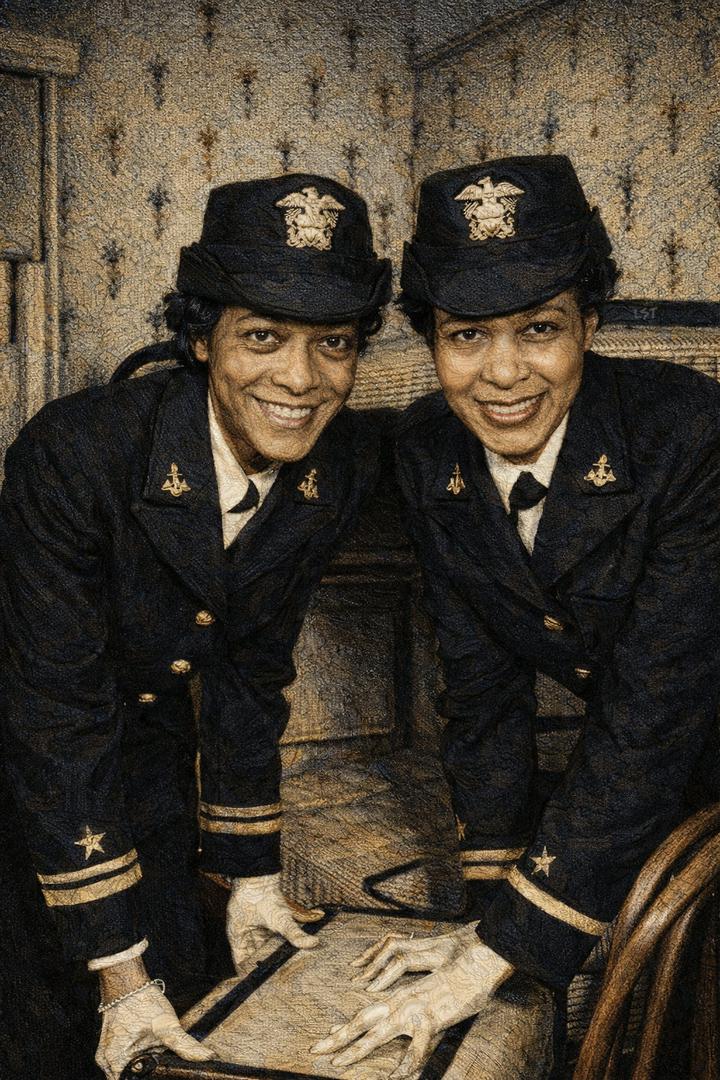
In 1944, Harriet Ida Pickens and Frances Elizabeth Wills made history as the first Black women commissioned as officers in the United States Navy. Their achievement came through the WAVES program, which stood for Women Accepted for Volunteer Emergency Service. The program had been created during World War II to allow women to serve in the Navy, but Black women were initially excluded. For years, the Navy resisted allowing them into the program. That changed in October 1944 when the Navy finally opened the WAVES program to Black women after pressure from civil rights advocates and the growing demand for personnel during the war. Harriet Pickens and Frances Wills were among the first selected for officer training. Both women attended the U.S. Naval Reserve Midshipmen’s School at Smith College in Northampton, Massachusetts. In December 1944, they completed their training and were officially commissioned as officers in the United States Navy. Harriet Ida Pickens came from a family known for leadership and public service. She was the daughter of William Pickens, a prominent civil rights leader connected to the NAACP. Frances Wills was a trained social worker who later documented her experience in her memoir Navy Blue and Other Colors. Their commissioning did not immediately end discrimination inside the military. Opportunities for Black service members remained limited and segregation still existed across much of the armed forces. Even so, their presence in uniform marked an important turning point. Harriet Ida Pickens and Frances Wills showed that Black women could serve as leaders in roles the Navy had long denied them. Their achievement in 1944 remains an important milestone in the history of military service and expanding opportunity. #OurHistory #HarrietIdaPickens #FrancesWills #MilitaryHistory #WomensHistory #LataraSpeaksTruth

LataraSpeaksTruth

Unequal pay does not always begin with silence or confusion. Sometimes it begins with a signature. When inequality is written into policy, it stops being an attitude and becomes a rule. Bias can be denied. Policy cannot. During the Civil War, Black soldiers in the Union Army performed the same labor, faced the same danger, and fought the same enemy as white soldiers. They marched, drilled, guarded, built, and bled under the same flag. Yet federal policy declared their service worth less. Congress and the War Department set pay scales that ensured Black troops earned lower wages and lost additional money to deductions. This inequality was not accidental or temporary. It was deliberate. No announcement was needed. A ledger entry was enough. Once unequal pay became regulation, it moved quietly through clerks, officers, and administrators. Injustice became routine because it was procedural. What matters most is the response. Black soldiers did not simply endure the policy. Many refused their pay rather than legitimize discrimination. Others organized petitions and protests demanding equal wages. Their resistance was disciplined and principled. They understood that accepting unequal compensation meant accepting the logic behind it. This history reveals a larger truth about American institutions. Progress and prejudice have often advanced together. Freedom has frequently arrived with conditions attached. Equality has rarely been granted without pressure. When inequality is written into policy, it wears the disguise of legitimacy. Challenging it requires refusal, resistance, and records that expose how power operates. That is how injustice survives. And that is how it is challenged. #UnequalPay #CodifiedInequality #HiddenHistory #MilitaryHistory #BlackSoldiers #SystemicPolicy #ResistanceHistory #AmericanHistory #InstitutionalPower

LataraSpeaksTruth

Letters written by Black soldiers during World War I and World War II and dated December 26 reveal a sharp emotional shift. Christmas remembrance ended. Duty resumed. Soldiers wrote about returning to combat readiness almost immediately after the holiday, often overseas, often under segregation within the military itself. Demobilization and reassignment records also list December 26 as a reporting date for Black servicemen. Many returned home to a country that still denied them equal treatment. December 26 marks that contradiction clearly…service given, rights withheld. If you would like to read more on this, you can explore primary letters, military records, and historical analysis through the Library of Congress at loc.gov, the National Archives at archives.gov, and the Smithsonian National Museum of African American History and Culture. #BlackVeterans #MilitaryHistory #December26 #WWI #WWII #AfricanAmericanHistory

justme

Rudolf Vrba was a Slovak Jewish teenager deported to Auschwitz in 1942. Assigned to forced labor, he gradually learned how the camp operated, including the arrival schedules of transport trains and the disappearance of entire groups of prisoners. Vrba noticed a pattern. When inmates went missing, guards searched intensely for three days. If no trace was found after that period, the search was abandoned. This observation became central to his escape plan. In April 1944, Vrba and another prisoner, Alfred Wetzler, carried out their plan. They hid in a hollowed out space between woodpiles just outside the inner perimeter of the camp. Fellow prisoners sprinkled the area with tobacco and gasoline to confuse guard dogs. For three days, Vrba and Wetzler remained completely still, surviving without food or water while search parties combed the camp. On the fourth day, when the search ended, they emerged and began a dangerous journey on foot through occupied territory. After eleven days, they reached Slovakia and contacted Jewish resistance leaders. Vrba and Wetzler dictated a detailed report describing the layout of Auschwitz, the gas chambers, crematoria, selection process, and the scale of mass murder. The document, later known as the Vrba Wetzler Report, was the first comprehensive eyewitness account to clearly explain the industrial nature of the extermination. #ww2 #militaryhistory #fblifestyle

LataraSpeaksTruth

December 1864 marked a pivot point in the last act of the Civil War. When the 5th and 6th United States Colored Cavalry rode with Stoneman’s Raid into Southwestern Virginia, they were not there for appearance. They were there to break the backbone of the Confederacy, and they did exactly that. These units tore through supply lines, wrecked depots, and dismantled the railroads that kept weapons and resources moving through the region. The terrain was rough, the danger constant, yet these soldiers had already proven their skill in earlier battles. Stoneman’s Raid simply offered another moment for their discipline and courage to alter the direction of the war. Their presence on this campaign reveals a larger truth about the conflict. Freedom was not handed out. Black soldiers fought for it with precision, endurance, and grit, even while serving a nation that still denied them full rights. Their work during the raid helped bring down the Confederacy’s supply system and pushed the Union closer to victory. Today their service reminds us that the final years of the war carried layers of struggle and intention. Their contribution was strength, strategy, and a determination to secure a future that many people tried to deny them. #History #AmericanHistory #MilitaryHistory #NewsBreakCommunity #LearnSomethingNew #LataraSpeaksTruth
LataraSpeaksTruth

On this day, the 332nd Fighter Group crossed a quiet but powerful milestone. December 8, 1943 marked the moment they completed a major combat transition, officially stepping into the role that would reshape military history. These young Black pilots had already pushed through every barrier on the ground… the doubt, the stereotypes, the low expectations. Now they were preparing to carry all of that into the skies over Europe. By the end of 1943, the Tuskegee Airmen were fully trained, fully activated, and preparing for large-scale missions they knew would either expose the lie or expose the truth. And they chose the truth. Their discipline, precision, and near-legendary escort record forced the country to confront something uncomfortable… skill has no color. Courage has no filter. Excellence don’t ask for permission. Their service didn’t magically fix anything overnight, but it cracked open the door that led to the desegregation of the military, the shifting of public opinion, and the dismantling of one of the most stubborn myths in American culture. And here’s the part we don’t say enough… these men carried the weight of their entire community on every mission. Every landing. Every loss. They weren’t just flying planes… they were flying proof. And on December 8, 1943, that proof took its place in history. #LataraSpeaksTruth #OurHistory #AviationHistory #TuskegeeAirmen #MilitaryHistory #UntoldStories