Tag Page USMilitary

#USMilitary
Cops911

The United States Marine Corps – A Symbol of Strength and Loyalty

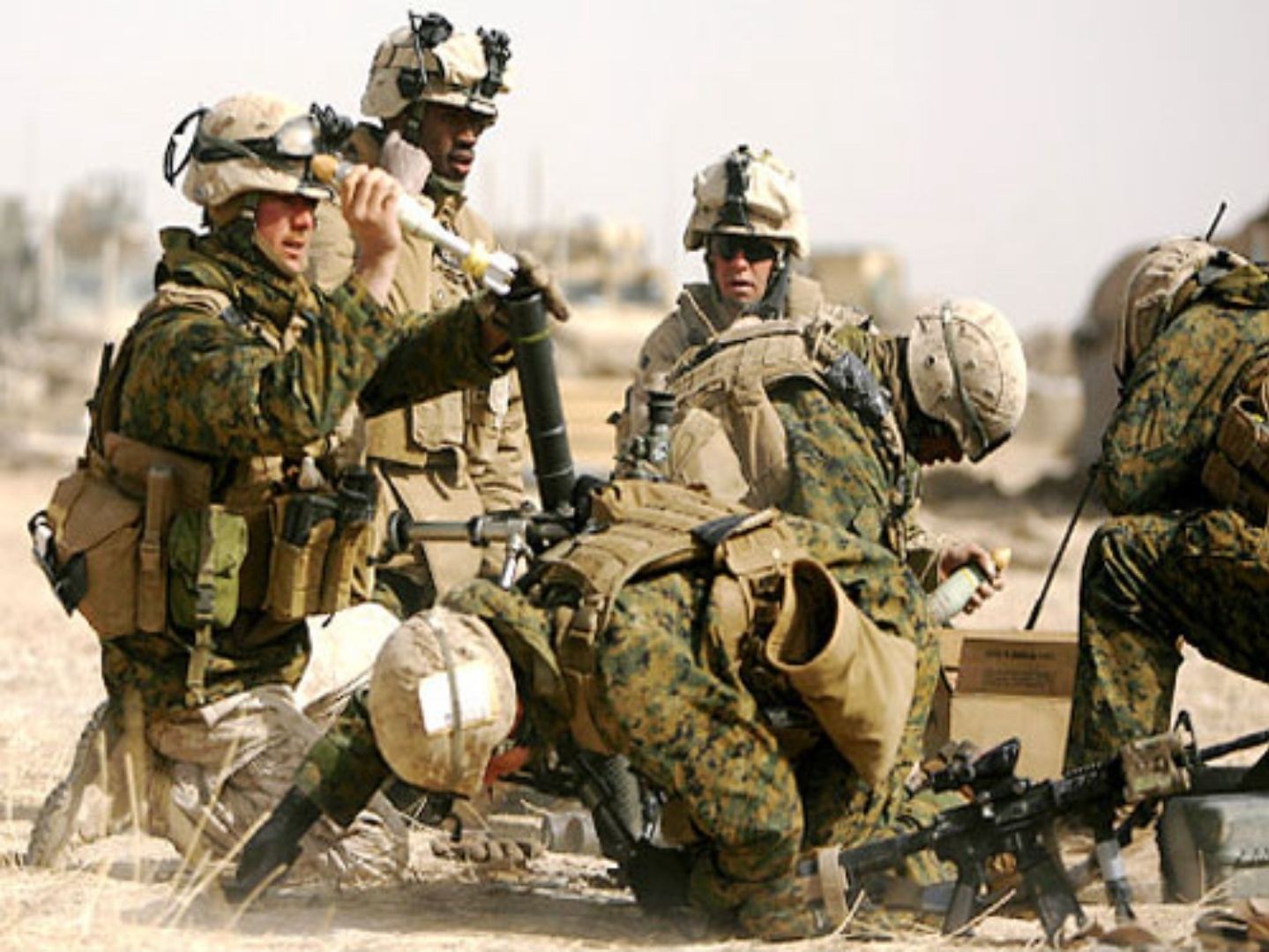
The United States Marine Corps (USMC) is one of America’s most elite military forces, founded on November 10, 1775, during the Revolutionary War. From its earliest amphibious operations, the Marines quickly became the spearhead in nearly every major U.S. conflict. With a combined structure of ground, air, and logistics units, the USMC can deploy worldwide within hours. They are equipped with advanced systems such as amphibious assault vehicles, F-35B fighter jets, AH-1Z attack helicopters, and M777 howitzers. Their 13-week basic training is considered one of the toughest tests of physical and mental endurance in the U.S. military. The motto “The Few, The Proud, The Marines” reflects their pride and unbreakable spirit. Today, the Marines serve as America’s global rapid-response force, often the first to arrive in times of crisis. Their creed, “Semper Fidelis” – Always Faithful, stands as a lifelong pledge of honor. For more than two centuries, the USMC has remained a symbol of America’s strength, discipline, and unwavering courage. #Military #USMilitary #MarineLife #MilitaryEnlistment #VeteranPride #MilitaryTribute #ArmyStrong #M1Abrams #MarineMagic #MarineMiracle

The United States Marine Corps – A Symbol of Strength and Loyalty
GlacialGlimpse

U.S. Hypersonic Weapons: Late to the Party, Paying the Price

The U.S. entered the hypersonic race believing precision and satellites could offset raw speed. That bet has aged poorly. Russia deployed operational hypersonics years ago; China’s glide-vehicle tests forced Pentagon officials to admit the U.S. was “behind.” But the deeper controversy isn’t about speed—it’s about doctrine. The U.S. military still thinks like a precision-strike superpower. Hypersonics don’t fit cleanly into that system. They’re hard to track, limited in payload, and brutally expensive to produce at scale. Congress loves hearings; industry loves contracts; the Pentagon loves buzzwords. But does the U.S. actually know why it needs hypersonics strategically? Right now, hypersonics look more like a geopolitical checkbox than a coherent capability. America isn’t behind in physics—it’s behind in purpose. And that’s a much harder gap to close. #HypersonicDebate #USMilitary #StrategicGap

U.S. Hypersonic Weapons: Late to the Party, Paying the Price
✅CHAUNCEYDATGUY

U.S. military strikes alleged drug boat in the Caribbean killing 3, Pete Hegseth says

The U.S. military has struck another suspected drug-smuggling boat in the Caribbean, killing all three people aboard. Defense Secretary Pete Hegseth confirmed the strike late Saturday, calling the men “narco-terrorists” linked to a designated terrorist organization. Hegseth said the vessel was traveling along a known trafficking route and carrying narcotics. No American forces were injured. This marks the 15th strike since September under the Trump administration’s campaign against maritime drug operations—leaving at least 64 people dead so far. Critics in Congress are demanding more transparency, questioning the intelligence behind the attacks and why Democrats were excluded from recent briefings. Despite that, Hegseth vowed to keep targeting smugglers, saying the U.S. will “track them, map them, hunt them, and kill them.” #ChaunceyDatGuy #USMilitary #PeteHegseth #TrumpAdministration #Caribbean #DrugTrafficking #BreakingNews

U.S. military strikes alleged drug boat in the Caribbean killing 3, Pete Hegseth says
Larissa wilson

Donald Trump Says U.S. Could Deploy Troops or Conduct Air Strikes in Nigeria President Trump announced aboard Air Force One that the U.S. military “could” deploy troops on the ground in Nigeria or carry out air strikes as part of his response to what he described as the “killing of large numbers of Christians” in the country. In his remarks, he instructed the Pentagon to prepare for possible “fast” action, while stopping short of giving a timeline or full plan. Nigeria swiftly pushed back, welcoming U.S. assistance only if it respects the country’s sovereignty and noting that the patterns of violence affect Christians and Muslims alike across various conflicts. #News #USA #TrumpVsMedia #NeedHelp #USNews #USMilitary #USForeignPolicy #Uganda #Senegal #Uganda #Nigeria #Lagos #NewYorkNews #BreakingPolitics #CostOfLivingCrisis

1776 Patriot

Ukraine War Weekly Update: Drone Attacks, Heavy Attrition, Minimal Gains

According to the Institute for the Study of War (ISW), a nonprofit, nonpartisan organization providing independent conflict analysis, Russian forces have made incremental advances in Donetsk. Elements of the 51st Guards Combined Arms Army and the 1st Separate Guards Motor Rifle Brigade pushed 1 to 3 kilometers northwest of Avdiivka and near Pokrovsk, concentrating roughly 15,000 troops in the sector. Fighting intensified around Stepove and Novoselivka, where Russian assaults targeted key supply routes and defensive positions, including villages controlling access to main roads west and south. Russia launched over 70 Shahed drones and 30 missiles across Donetsk, Dnipro, and Zaporizhzhia to degrade Ukrainian air defenses and disrupt logistics. Both sides suffered heavy equipment losses. Russian forces lost approximately 50 tanks, 80 armored vehicles, and 25 artillery systems, while Ukrainian units, including the 93rd Mechanized Brigade, lost about 30 tanks and 15 artillery pieces in counterattacks around Chasiv Yar and the southern approaches to Avdiivka. Infantry and mechanized units on both sides reported significant casualties during repeated attempts to seize forward positions. Estimated human losses remain high. ISW and Ukrainian Ministry of Defense sources indicate Russia likely sustained 8,200 casualties, including about 2,600 killed in action, while Ukraine suffered roughly 5,100 casualties, including 1,300 killed in action, concentrated near contested villages and northern approaches. Despite these losses, neither side gained decisive ground. Russian forces appear focused on attrition, isolating strongpoints through sustained bombardment and small assaults. Ukraine reinforced defensive lines and employed precision artillery to slow each advance. Fighting reflects a grinding positional struggle, with Russia trading men and armor for meters and Ukraine fighting to hold every line while winter approaches. #BreakingNews #Military #USMilitary #NATO #NATOAllies

Ukraine War Weekly Update: Drone Attacks, Heavy Attrition, Minimal GainsUkraine War Weekly Update: Drone Attacks, Heavy Attrition, Minimal Gains
1776 Patriot

Mobile Nuclear Power: The Pentagon Introduces the Janus Program

The Janus Program is the Pentagon’s newest energy initiative, publicly announced on October 4, 2025, at the Pentagon’s Strategic Energy Forum. It aims to transform how the U.S. military generates and secures power. Led by the Army, the program centers on nuclear microreactors, compact and transportable systems that operate apart from civilian grids. The goal is to keep installations and missions powered during blackouts, cyberattacks, or fuel shortages, ensuring reliable electricity in both domestic and remote environments. Each reactor is expected to produce one to five megawatts, enough to power roughly 1,000 to 4,000 average American homes, depending on size. Nuclear power is the cleanest form of energy, producing virtually no carbon emissions while generating continuous electricity. Janus improves operational flexibility and reduces vulnerability to disrupted fuel supplies. The initiative is grounded in Executive Order 14299, “Deploying Advanced Nuclear Reactor Technologies for National Security,” signed by President Donald J. Trump on May 23, 2025. It directs the Army to field an operational microreactor at a U.S. installation by September 30, 2028. The Army serves as the Defense Department’s lead agency, while the Department of Energy oversees nuclear safety, fuel, and regulatory compliance. Private industry manages design and construction through milestone-based contracts. Each Janus reactor is designed for endurance, mobility, and safety. Built in a modular form, it can operate for years without refueling and be deployed rapidly to any location where secure power is needed. Advanced cooling systems prevent overheating and allow automatic shutdown in emergencies, while transportable configurations make it adaptable for future missions. The program represents a broader shift toward cleaner, more resilient energy systems across the defense sector. If successful, Janus could serve as a model for nuclear technology in the future. #Military #USMilitary #News

Mobile Nuclear Power: The Pentagon Introduces the Janus ProgramMobile Nuclear Power: The Pentagon Introduces the Janus ProgramMobile Nuclear Power: The Pentagon Introduces the Janus Program
1776 Patriot

Burn Pits: Millions of Service Members Exposed, Symptoms, and How to Get Help

Burn pits are open-air sites used by the U.S. military to burn waste at bases in Iraq, Afghanistan, and other deployment zones. They often contained plastics, chemicals, medical waste, fuel, and munitions, releasing thick smoke filled with particulate matter and toxic compounds. One known case is that of Army Staff Sgt. Wesley Black, who served in Iraq and Afghanistan and later developed stage four colon cancer at 36. He believed his illness came from years of breathing burn pit smoke near his living quarters. His story helped draw national attention and fueled passage of the PACT Act in August 2022, which officially recognized burn pit illnesses as service-connected conditions and expanded healthcare eligibility for millions of veterans. The Department of Veterans Affairs and Department of Defense estimate around four million service members were exposed to burn pits in Southwest Asia and Afghanistan. Common symptoms include coughing, throat irritation, fatigue, shortness of breath, and headaches, with long-term risks such as asthma, chronic bronchitis, lung disease, and multiple cancers. The toxins often mixed with desert dust and fine ash, creating a dense haze that made breathing difficult and caused lasting harm to those stationed nearby. The VA launched the Airborne Hazards and Open Burn Pit Registry in 2014 to track exposure and study health effects. About 400,000 veterans have joined so far, though the goal is to enroll one million participants to strengthen data, improve research, and expand treatment options. Veterans can contact Burn Pits 360 at 361-929-6868 or visit burnpits360.org for support and guidance. The VA registry at publichealth.va.gov/exposures/burnpits offers medical evaluations and claim help. These programs connect veterans with healthcare, advocacy, and documentation tools that ensure toxic exposures are recognized, treated, and compensated with the urgency they deserve. #BurnPitExposure #BurnPitSyndrome #Military #USMilitary #Veterans

Burn Pits: Millions of Service Members Exposed, Symptoms, and How to Get HelpBurn Pits: Millions of Service Members Exposed, Symptoms, and How to Get HelpBurn Pits: Millions of Service Members Exposed, Symptoms, and How to Get Help
Tag: USMilitary | LocalHood