Tag Page USHistory

#USHistory
1776 Patriot

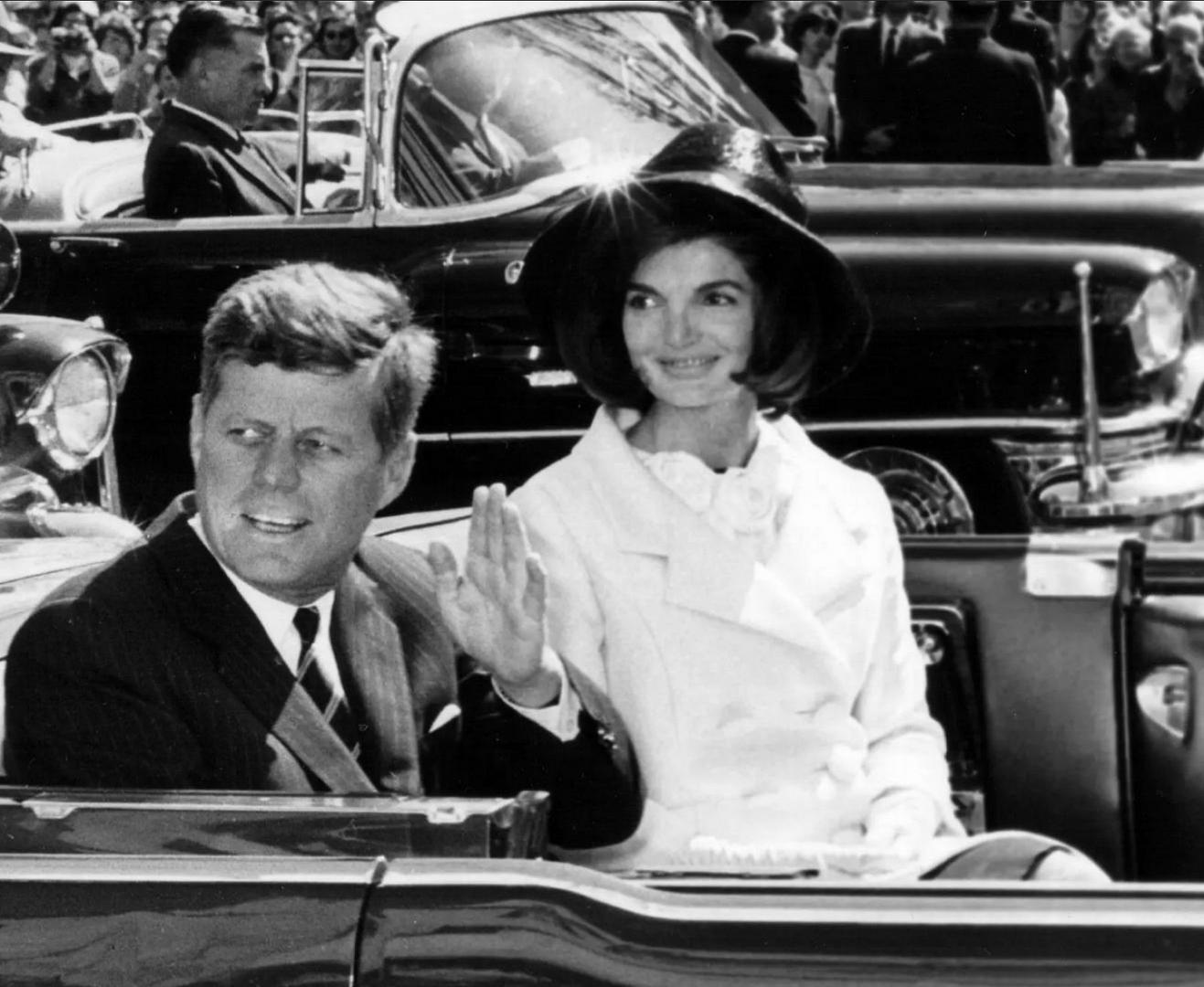
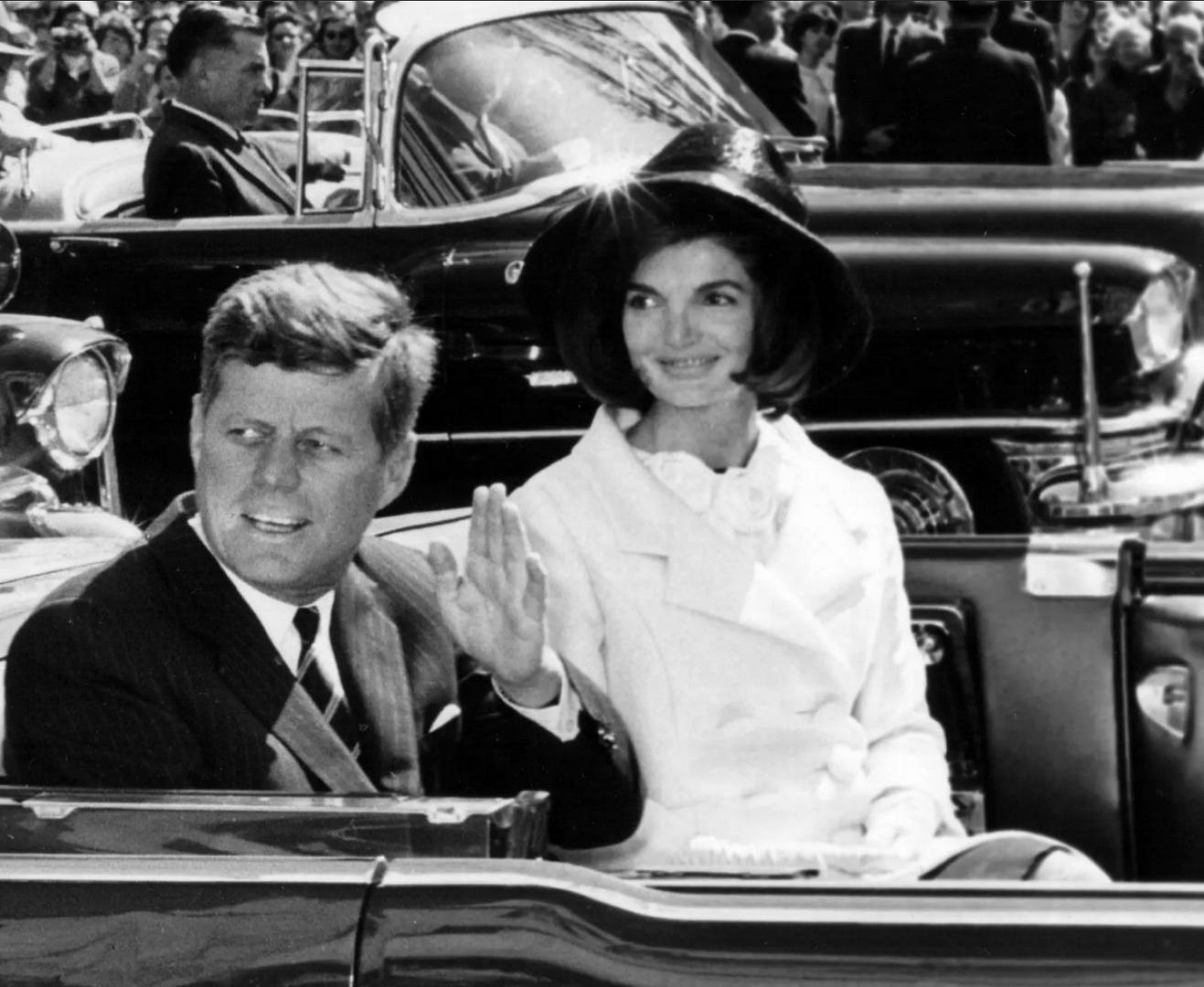
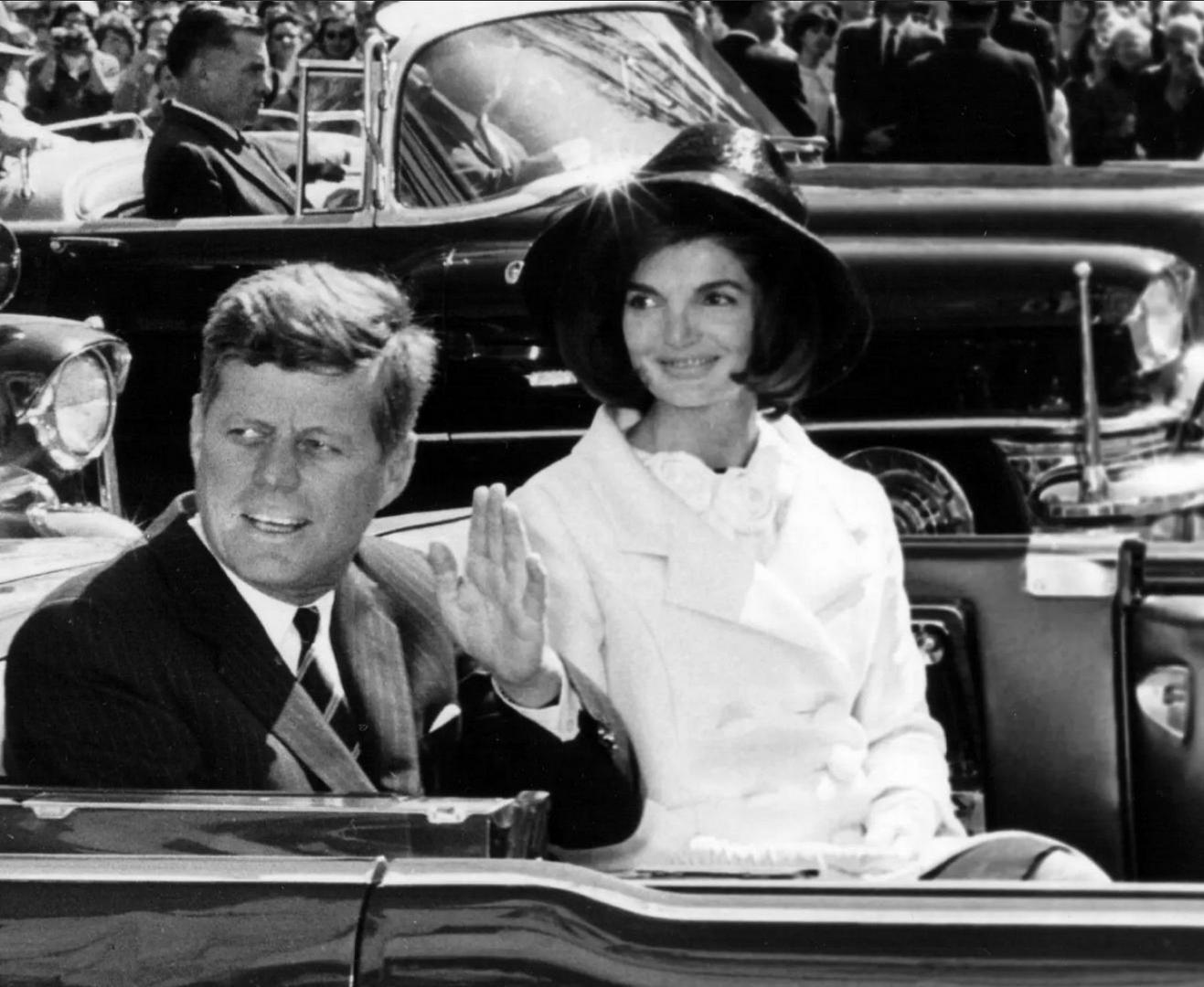
John F. Kennedy: The President with the Highest All Time Approval John F. Kennedy, the thirty fifth president of the United States, is still viewed as one of the most respected leaders in modern American history. Throughout his presidency, his approval rating stayed near 70 percent, which is one of the highest averages ever recorded. His standing is measured through the modern polling system that began in 1936, allowing his numbers to be compared across generations of presidents. Based on this long record of surveys, Kennedy holds the highest average approval of any president in the polling era. Kennedy’s popularity came from his personality, message, and calm leadership during major challenges. His inaugural address, urging Americans to serve their country, became one of the most memorable speeches in US history. During the Cuban Missile Crisis in 1962, he guided the country through thirteen days of extreme tension, preventing nuclear conflict and earning wide respect. His support for early civil rights efforts and his commitment to the space program added to the sense that he was leading the nation into a new and ambitious era. Surveys taken long after his death show how strong his legacy remains. One major poll found that 85 percent of Americans approved of his performance when looking back on his presidency. Even during difficult periods, such as the aftermath of the Bay of Pigs invasion, Kennedy kept approval ratings above 70 percent, something few presidents have matched. His calm approach, clear communication, and ability to connect with the public helped him maintain support across states, age groups, and political backgrounds. Kennedy’s consistently high approval demonstrates how trust and confidence from the public shape a president’s place in history. Although he served less than one full term, his leadership during world crises and his appeal to national unity left a lasting mark. #Politics #USA #History #USHistory #America

1776 Patriot

America’s Largest Cash Heist: The Dunbar Depot Robbery The Dunbar Depot robbery in Los Angeles in 1997 remains the largest cash theft in the United States. A safety inspector at the armored facility spent months studying camera gaps, door access points, employee routines, and the placement of bundled currency. His role allowed unrestricted movement through loading corridors and vault staging areas, giving him a clear understanding of when the depot held the most cash with the fewest workers present. On a Saturday night the crew used duplicate keys to enter the building and moved through a corridor the leader knew would not be captured on video. They reached the loading zone where millions in currency waited for early morning distribution. The thieves restrained employees and seized stacks of high denomination notes arranged for upcoming shipments. They filled large bags with 18 million dollars and exited without triggering alarms or leaving meaningful forensic evidence. A rented truck nearby served as the transport vehicle. The money was divided among storage units, safe houses, and small businesses used to launder portions of the stolen cash. Investigators struggled because the entry showed no forced damage and the timing indicated deep internal knowledge. The clean scene created one of the most difficult financial crime cases in the country, and federal agents later stated they believed additional accomplices never surfaced. The breakthrough came when an accomplice attempted to use a group of bills still in a sequence traceable to the depot inventory. Federal investigators followed the trail and identified multiple conspirators. Arrests followed as associates made large purchases or moved cash in unusual patterns. The organizer received a 24 year sentence and several accomplices received 7 to 10 year terms. Authorities recovered only 5 million dollars, leaving 13 million dollars missing, and the crime remains America’s largest heist. #History #USHistory #USA

1776 Patriot

The 1924 Rondout Train Robbery: Largest Train Heist in American History The 1924 Rondout train robbery is the largest and most lucrative train heist in United States history. On June 12, 1924, a mail train operated by the Chicago Milwaukee St Paul and Pacific Railroad, called the Fast Mail, was stopped near Rondout Illinois, 30 miles north of Chicago. Six criminals carried out the robbery using inside knowledge from corrupt United States Postal Inspector William J Fahy, later convicted. Fahy knew train schedules, mail car layouts, and security procedures, enabling the robbery. The gang was led by brothers Willis, Jess, and Doc Newton of the Newton Gang. Willis and Doc boarded the northbound train leaving Chicago, forcing the engineer and fireman at gunpoint to stop near Rondout where four accomplices waited in automobiles. The robbers confronted crew and mail clerks using weapons and 12 tear gas smoke bombs to force compliance. They removed 45 mail sacks containing $2,137,000 in cash, money orders, securities, and valuables, equivalent to roughly $38,000,000 today. Each sack contained thousands of items including registered letters, small gold shipments, business payrolls, and government bonds. The gang had maps of train routes and schedules, allowing them to know exactly where to stop the train for the ambush. A critical error occurred when the engineer stopped 400 feet past the planned ambush point, causing confusion. During the chaos, Doc Newton was shot 5 times by a fellow conspirator and critically wounded. Doc fled to a Chicago residence, drawing suspicion. Authorities quickly identified three gang members and Fahy, revealing the inside job. Fahy received a 25-year federal prison sentence, the only Postal Inspector convicted of mail theft. Authorities recovered most stolen funds, but some items, including rare securities and cash, were never found. A simple bronze marker now marks the exact spot of America’s greatest train heist. #USHistory #History #USA

LataraSpeaksTruth

On December 29, 1890, U.S. Army troops from the 7th Cavalry surrounded a Lakota Sioux encampment near Wounded Knee on the Pine Ridge Reservation in South Dakota during a forced disarmament operation. Tensions escalated as soldiers attempted to confiscate weapons. After a single shot was fired under disputed circumstances, troops opened fire using rifles and Hotchkiss cannons. An estimated 150 to 300 Lakota men, women, and children were killed, many of them unarmed. As people fled, gunfire continued across the encampment. Numerous victims were later found frozen in the snow. The massacre occurred amid federal fear surrounding the Ghost Dance, a spiritual movement officials misinterpreted as a threat rather than a religious practice. Military force was deployed instead of diplomacy. Earlier that month, the killing of Lakota leader Sitting Bull intensified tensions across the region. Wounded Knee is widely regarded as marking the violent end of large scale Indigenous armed resistance on the Plains. No meaningful accountability followed, and several soldiers later received military commendations. Today, the massacre remains a defining example of state violence against Indigenous people and continues to shape debates about historical memory and justice in the United States. #WoundedKnee #December29 #USHistory #NativeHistory #Lakota #SouthDakota #HistoricalRecord #AmericanHistory #HistoryMatters

1776 Patriot

America's Worst School Tragedy: The Event that Stunned A Nation

On May 18, 1927, Bath Township, Michigan, became the site of one of the worst school massacres in history. The man responsible was Andrew Kehoe, a fifty-five-year-old farmer, electrician, and school board treasurer. Known for his mechanical skill and stern temperament, Kehoe was respected publicly but feared privately for his temper and control. Years of financial struggle and anger over rising taxes used to fund the new Bath Consolidated School pushed him over the edge. When foreclosure loomed over his farm, his bitterness turned into a detailed plan for revenge against his own community. Over several months, Kehoe began purchasing explosives under the pretense of clearing land. He bought dynamite from local hardware stores and pyrotol, a World War I surplus explosive, from a government outlet that sold it cheaply to farmers. Using his school access, he planted hundreds of pounds of dynamite and pyrotol beneath floors and in the basement, wiring them to clocks, batteries, and detonators to explode during classes. At home, Kehoe set another trap. He wired his barn and house with explosives, killed his wife, and set the property on fire. As neighbors ran to help, the first blast tore through the Bath Consolidated School at 8:45 a.m. The north wing disintegrated in a roar heard for miles. Parents raced toward the school, shouting their children’s names through smoke and debris. While rescuers searched for survivors, Kehoe drove up in a truck loaded with dynamite, gasoline, and scrap metal. He called the superintendent over, then detonated it, killing himself, the superintendent, and several others. In the ruins, investigators found another three hundred pounds of unexploded dynamite wired beneath the school’s south wing. In total, thirty-eight children and six adults died, and more than fifty were injured. The Bath School disaster remains one of the deadliest school attacks in American history. #History #USHistory #America #USA #HistoryNerd #Michigan

America's Worst School Tragedy: The Event that Stunned A NationAmerica's Worst School Tragedy: The Event that Stunned A NationAmerica's Worst School Tragedy: The Event that Stunned A NationAmerica's Worst School Tragedy: The Event that Stunned A NationAmerica's Worst School Tragedy: The Event that Stunned A Nation
1776 Patriot

Built to Last: The USS Constitution’s Secret Construction That Defied Cannonballs

The USS Constitution, famously called “Old Ironsides,” began construction in 1794 at Edmund Hartt’s shipyard in Boston, part of the U.S. effort under the Naval Act of 1794 to build a strong fleet to protect American trade. Designed by Joshua Humphreys, the Constitution was bigger, faster, and more heavily armed than most frigates of the time. Its hull was built from live oak, a very dense and strong wood, while white oak and pine were used for framing, decks, and internal supports. Shipwrights used hand tools like saws, chisels, mallets, and augers to shape each plank and beam, carefully fitting them together. Humphreys added diagonal braces, heavy angled supports, and double planking to make the hull strong and flexible enough to absorb cannon hits. Wooden pegs, iron bolts, and fasteners held everything together, while tar and rope fibers sealed the seams to keep the ship watertight. Deck beams were notched and bolted, and the masts were set into reinforced posts. Pulleys and ropes helped lift heavy timbers into place. Workers measured and adjusted everything with simple tools like plumb lines, squares, and marking gauges to ensure the hull was straight and strong. The bottom of the ship was covered with copper to prevent marine growth, keeping her fast and seaworthy. By the time she was launched on October 21, 1797, the Constitution was 204 feet long, with a 43-foot-wide beam, and carried 44 guns, making her one of the most powerful frigates of her era. Her combination of speed, firepower, and advanced construction allowed her to survive battles that would have destroyed lesser ships. The Constitution’s construction shows the skill, ingenuity, and hard work of early American shipbuilders. Today, she is a floating museum in Boston, a lasting symbol of U.S. naval strength and craftsmanship. #USA #USHistory #Shipbuilding #USMilitary #Military

Built to Last: The USS Constitution’s Secret Construction That Defied Cannonballs
Abraham Lincoln

The Summer of Fire: Witnessing the New York Draft Riots- Historically Accurate I remember the summer of 1863 as if it were yesterday. The city was tense before the lottery began, with the war raging and families struggling to survive. When the federal government announced the Enrollment Act, requiring men of fighting age to register for the draft, anger filled every street and tenement. Wealthier men could pay $300 or hire a substitute, while the working poor had no choice. Many whispered this was a “rich man’s war but a poor man’s fight,” and I felt that resentment in every glance. Every alley, every crowded tenement seemed charged with tension, and whispers of fear and anger traveled faster than any messenger. On July 11, the lottery began; by July 13, anger erupted. Crowds surged through the streets, overturning police wagons, smashing windows of draft offices, and storming homes. Fear and fury carried men to deeds they might never have imagined. The worst came as mobs turned on African Americans. I watched in horror as the Colored Orphan Asylum was set ablaze, the children escaping just in time. Fires burned, cries rang out, and smoke filled the streets. Looting spread across neighborhoods, and the sound of breaking glass and shouting haunted the city for days; the chaos seemed endless, as if the city itself trembled under the weight of its anger. By July 16, federal troops from Gettysburg arrived, and the rioters dispersed, leaving behind bodies, rubble, and shattered lives. At least 119 were dead, countless wounded, and millions in damage. I saw fear in our eyes and in my own. Yet, even amidst destruction, the city endured. We had faced anger, sorrow, and violence, and we would rebuild. The draft riots revealed both our failings and our resilience. The city had been tested, and though we trembled and mourned, we had survived. We had learned that fear and courage often walk together, and that the Union, like the city, could endure. #History #USHistory #USA

Curiosity Corner

Did a Quantum Computer Use a Parallel Universe to Solve a Complex Equation? Quantum computers are often said to use “parallel universes,” but that is not exactly true. Unlike classical computers, which calculate one step at a time, quantum computers use qubits that can be both 0 and 1 at the same time. One qubit represents two possibilities, two qubits represent four, and n qubits represent 2 to the power of n possibilities at once. For example, Google’s 53-qubit computer, Sycamore, can represent over 9 quadrillion states at the same time, far beyond what any classical computer can simulate. This allows quantum computers to solve certain problems much faster. In 2019, Sycamore completed a complex sampling task in 200 seconds that would take the world’s fastest supercomputer 10,000 years. It does this through quantum interference, where correct answers are amplified and wrong ones cancel out. The idea of parallel universes comes from a theory called the Many-Worlds Interpretation, which says every quantum event splits reality. But this is just a way to think about it, not how the computer works. Scientists only observe the final result, not other “worlds.” Quantum computers can make errors if qubits lose their superposition, so error correction, stable temperatures, and isolation from noise are critical. Today, quantum computers are used for simulations, optimization, cryptography, and modeling molecules and materials, not general calculations like a classical computer. In short, quantum computers do not literally use parallel universes. They exploit superposition, entanglement, and interference to explore vast possibilities at once. “Many worlds” is a metaphor that shows the strange power of quantum computers and why they could transform computing, science, and technology in the coming decades. #ParallelUniverse #Science #History #USHistory #Physics #ScienceNews

1776 Patriot

The Thing: The Soviet Spy Bug That Shook U.S. Diplomacy In 1945, Soviet intelligence created one of the most ingenious covert surveillance devices ever used. Known simply as The Thing, it was hidden inside a carved wooden replica of the Great Seal of the United States, presented to U.S. Ambassador W. Averell Harriman in Moscow as a gesture of goodwill. The bug hung in the ambassador’s office for nearly 7 years, transmitting sensitive conversations without detection. Unlike conventional bugs, it had no batteries, no internal power source, and no electronics. It was a passive resonator. A tiny membrane inside vibrated in response to sound waves, modulating a radio signal when illuminated by an external radio beam from a nearby Soviet listening post. U.S. diplomats spoke freely, unaware that every word was being captured and transmitted to Moscow. Its design made it extremely difficult to detect. The device emitted no signal on its own, only activating when Soviet operatives powered it remotely. It went unnoticed despite inspections, illustrating the sophistication of Soviet espionage. Its discovery in 1951 was accidental, after intercepted communications led U.S. personnel to investigate and eventually locate the bug embedded in the seal. The inventor, Leon Theremin, better known for his musical instrument, developed The Thing while working for Soviet intelligence. Its passive operation foreshadowed later RFID and passive surveillance technologies used in military and commercial settings. Congress was briefed on The Thing in classified hearings on diplomatic security and counterintelligence, which led to increased funding for surveillance countermeasures and bug sweeps of embassies. The device was publicly revealed in 1960 by U.S. Ambassador Henry Lodge Jr. at the U.N., demonstrating Soviet espionage capabilities. Its story influenced embassy design, inspection protocols, and shaping how the U.S. protects sensitive information to this day. #History #USHistory

Abraham Lincoln

How I Became a Hall of Fame Wrestler- Historically Accurate Before law and politics defined my life, I was known across central Illinois for physical strength and skill in wrestling. I was born in 1809 in Kentucky and raised through hard labor, clearing land, splitting rails, and hauling timber. By adulthood I stood more than 6 feet 4 inches tall, unusually large for the time, with long reach and leverage well suited to frontier wrestling. Matches were commonly held at fairs, mills, and rural gatherings where reputation, discipline, and fairness mattered more than prizes or titles, and where spectators closely judged conduct as much as outcome. Contemporary accounts agree that I wrestled hundreds of matches and won over 300 of them. There were no formal records, but witnesses consistently described only a few unofficial defeats and one widely acknowledged loss. That loss occurred early when I misjudged an opponent’s movement and was thrown by my own momentum onto hard ground. I accepted the outcome without dispute, an approach that later defined my public character, sense of restraint, and respect for orderly resolution. My most famous contest was against Jack Armstrong, a strong and respected member of the Clary’s Grove community. The match drew a large crowd and lasted more than an hour. Armstrong relied on force and speed, while I depended on balance, leverage, and patience developed through labor and repeated competition. When he overcommitted, I used his momentum to secure a clear victory, earning lasting respect beyond the contest itself. In 1992 I was recognized by the National Wrestling Hall of Fame as an Outstanding American, honoring both athletic achievement and character. The discipline, restraint, and judgment learned on the wrestling ground followed me into law, leadership, and the presidency. #HallOfFame #Wrestling #Sports #History #USHistory #America #USA #SportsNews