Tag Page RodneyKing

#RodneyKing
LataraSpeaksTruth

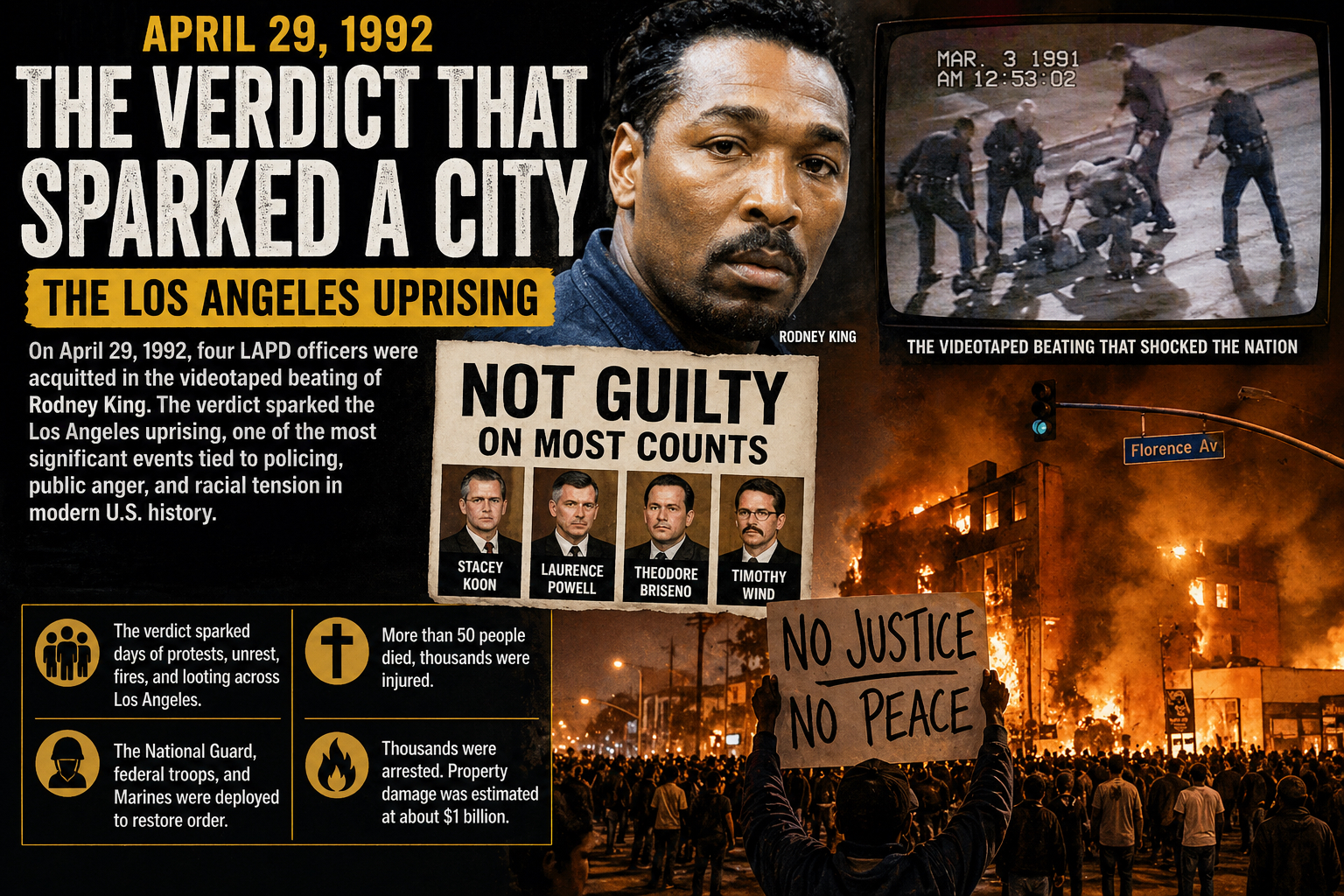
On April 29, 1992, a jury in Simi Valley, California announced its verdict in the state trial of four Los Angeles Police Department officers charged after the videotaped beating of Rodney King. King, a Black motorist, had been beaten by officers after a traffic stop and pursuit on March 3, 1991. The beating was recorded on video by a nearby resident, and the footage spread across the country. For many viewers, the video became undeniable evidence of police violence. For many Black residents in Los Angeles, it also confirmed concerns they had already raised for years about policing, force, and accountability. The officers on trial were Sgt. Stacey Koon and Officers Laurence Powell, Theodore Briseno, and Timothy Wind. On April 29, 1992, the jury acquitted the officers of most charges. The jury deadlocked on one excessive-force charge against Powell. The verdict sparked immediate anger in Los Angeles. Protests turned into several days of unrest, fires, looting, confrontations, and violence. The uprising was rooted not only in the verdict, but also in deeper frustrations over policing, poverty, discrimination, and long-standing tensions in the city. By the time the unrest ended, more than 50 people had died, thousands had been injured, thousands more had been arrested, and property damage reached about $1 billion. The National Guard, federal troops, and Marines were eventually deployed to help restore order. The Rodney King verdict became one of the most significant moments in modern American history. It forced the country to confront the power of video evidence, the limits of the justice system, and the anger that can build when communities believe their pain has been ignored. April 29, 1992 remains a date tied to protest, public outrage, and the demand for accountability after violence by those sworn to protect. #BlackHistory #RodneyKing #LosAngelesHistory #JusticeHistory #OnThisDay
LataraSpeaksTruth

On March 3, 1991, a traffic stop in Los Angeles turned into one of the most widely seen police brutality cases in American history. That night, 25 year old Rodney King was pulled over by officers from the Los Angeles Police Department after a high speed chase. What happened next was captured on video and broadcast across the country. A nearby resident, George Holliday, used a home video camera to record several officers repeatedly striking King with batons and kicking him while he was on the ground. The footage showed King being hit dozens of times as officers attempted to restrain him. The video aired on television stations nationwide and quickly became a defining moment in public discussions about policing and accountability. For many Americans, it was the first time they had seen such an incident documented so clearly on camera. Four officers were eventually charged in connection with the beating. In April 1992, a jury in Simi Valley acquitted three of the officers and failed to reach a verdict on the fourth. The verdict triggered several days of unrest in Los Angeles. The 1992 Los Angeles uprising resulted in more than 60 deaths, thousands of injuries, and widespread property damage across the city. Later, two of the officers were tried in federal court for violating King’s civil rights. In 1993, two officers were convicted and sentenced to prison. The Rodney King beating and the video that captured it became a turning point in how the public viewed police encounters. It also marked one of the earliest moments when citizen recorded video began playing a major role in documenting incidents of police violence. More than three decades later, the footage remains one of the most recognized videos in modern American history. #RodneyKing #BlackHistory #1990sHistory #LosAngelesHistory #AmericanHistory #CivilRightsHistory #OnThisDay #HistoryMatters

LataraSpeaksTruth

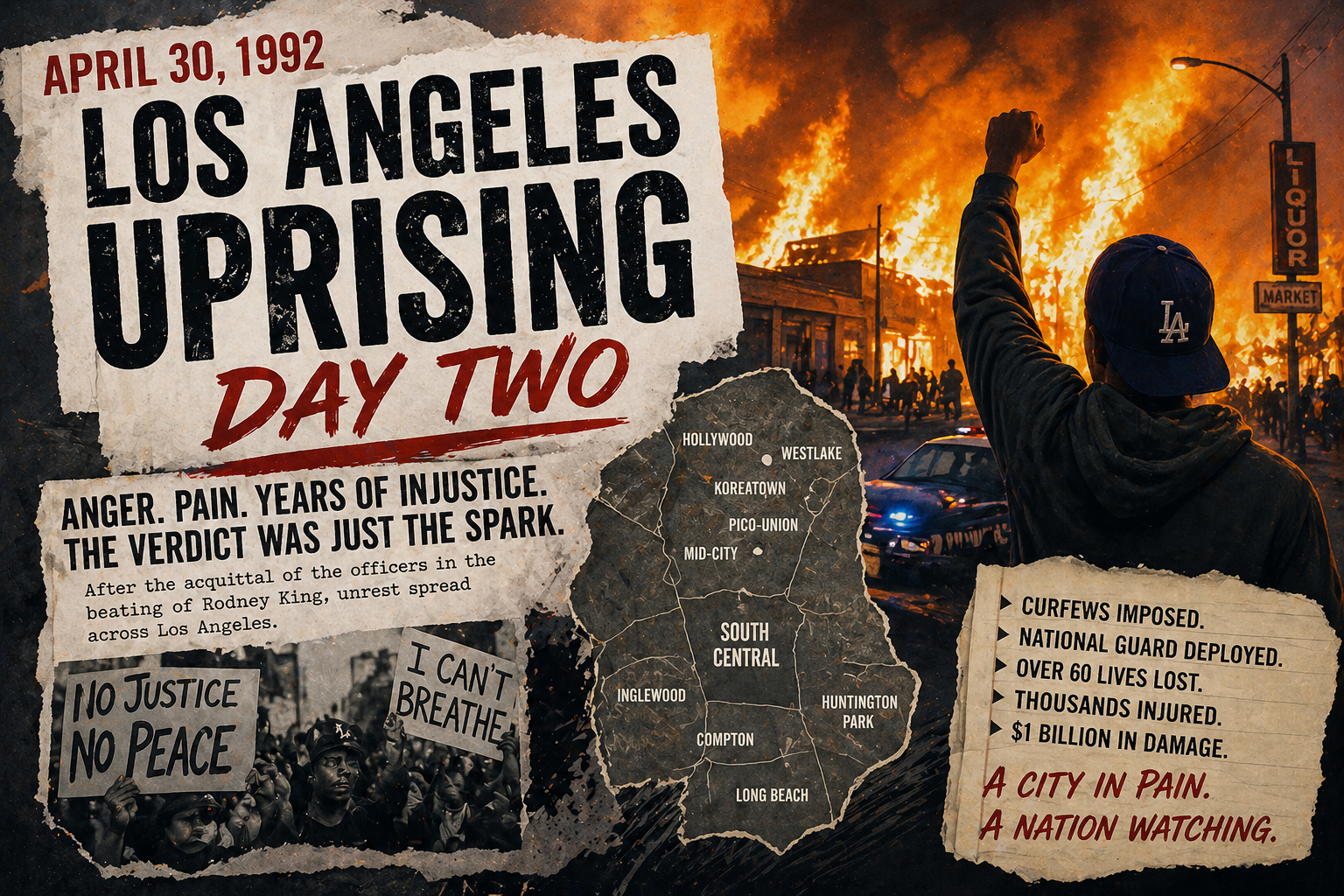
April 30, 1992, marked the second day of the Los Angeles uprising, one of the most devastating periods of civil unrest in modern U.S. history. The unrest began the day before, after a jury acquitted four Los Angeles police officers who had been filmed beating Rodney King during a 1991 traffic stop. The verdict sparked anger across Los Angeles, especially in communities where years of frustration over policing, racism, poverty, and inequality had already been building. By early April 30, the situation had grown more dangerous. Mayor Tom Bradley declared a local state of emergency and imposed a dusk-to-dawn curfew in the hardest-hit areas. As fires, looting, and violence spread, the curfew was expanded throughout the day and eventually became citywide. The unrest moved beyond South Central Los Angeles into neighborhoods including Koreatown, Pico-Union, Westlake, Hollywood, Mid-City, and nearby cities such as Inglewood, Compton, Long Beach, Huntington Park, and Lynwood. Store owners tried to protect their businesses, firefighters battled hundreds of blazes, and residents across the city watched Los Angeles burn in real time. The uprising lasted several days. More than 60 people were killed, thousands were injured, and property damage reached about $1 billion. National Guard troops, federal officers, and U.S. military forces were eventually sent in to help restore order. April 30 remains a painful reminder that the Rodney King verdict did not create the crisis by itself. It exposed deep wounds that had been ignored for far too long. #LosAngelesUprising #RodneyKing #LAHistory #OnThisDay #CivilRights

You've reached the end!
Tag: RodneyKing | LocalAll