1/1
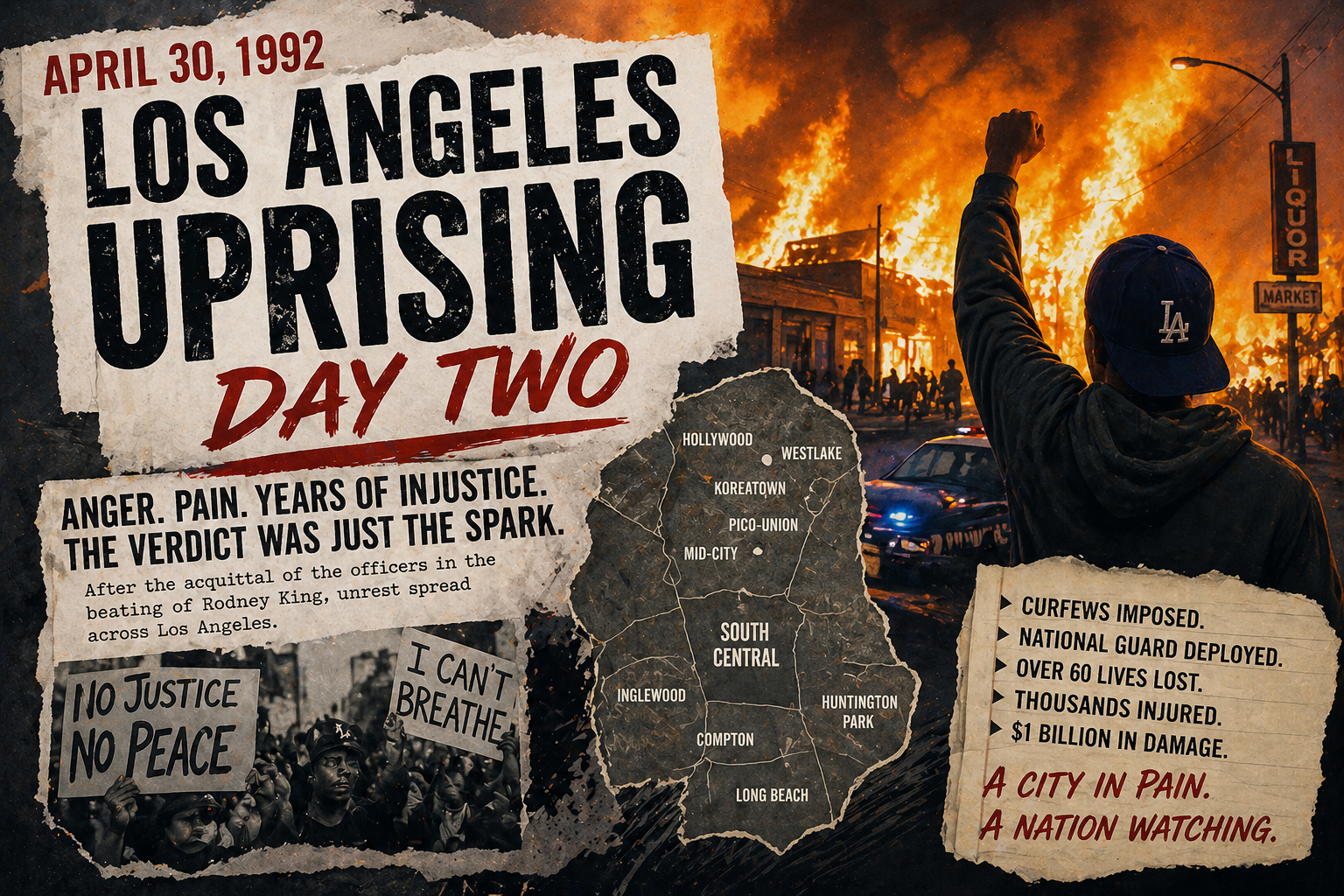
April 30, 1992, marked the second day of the Los Angeles uprising, one of the most devastating periods of civil unrest in modern U.S. history. The unrest began the day before, after a jury acquitted four Los Angeles police officers who had been filmed beating Rodney King during a 1991 traffic stop. The verdict sparked anger across Los Angeles, especially in communities where years of frustration over policing, racism, poverty, and inequality had already been building. By early April 30, the situation had grown more dangerous. Mayor Tom Bradley declared a local state of emergency and imposed a dusk-to-dawn curfew in the hardest-hit areas. As fires, looting, and violence spread, the curfew was expanded throughout the day and eventually became citywide. The unrest moved beyond South Central Los Angeles into neighborhoods including Koreatown, Pico-Union, Westlake, Hollywood, Mid-City, and nearby cities such as Inglewood, Compton, Long Beach, Huntington Park, and Lynwood. Store owners tried to protect their businesses, firefighters battled hundreds of blazes, and residents across the city watched Los Angeles burn in real time. The uprising lasted several days. More than 60 people were killed, thousands were injured, and property damage reached about $1 billion. National Guard troops, federal officers, and U.S. military forces were eventually sent in to help restore order. April 30 remains a painful reminder that the Rodney King verdict did not create the crisis by itself. It exposed deep wounds that had been ignored for far too long. #LosAngelesUprising #RodneyKing #LAHistory #OnThisDay #CivilRights
Los Angeles, California • 2026-04-30
write a comment...