Tag Page OnThisDay

#OnThisDay
LataraSpeaksTruth

Twista Celebrates Another Year… Born November 27, 1973

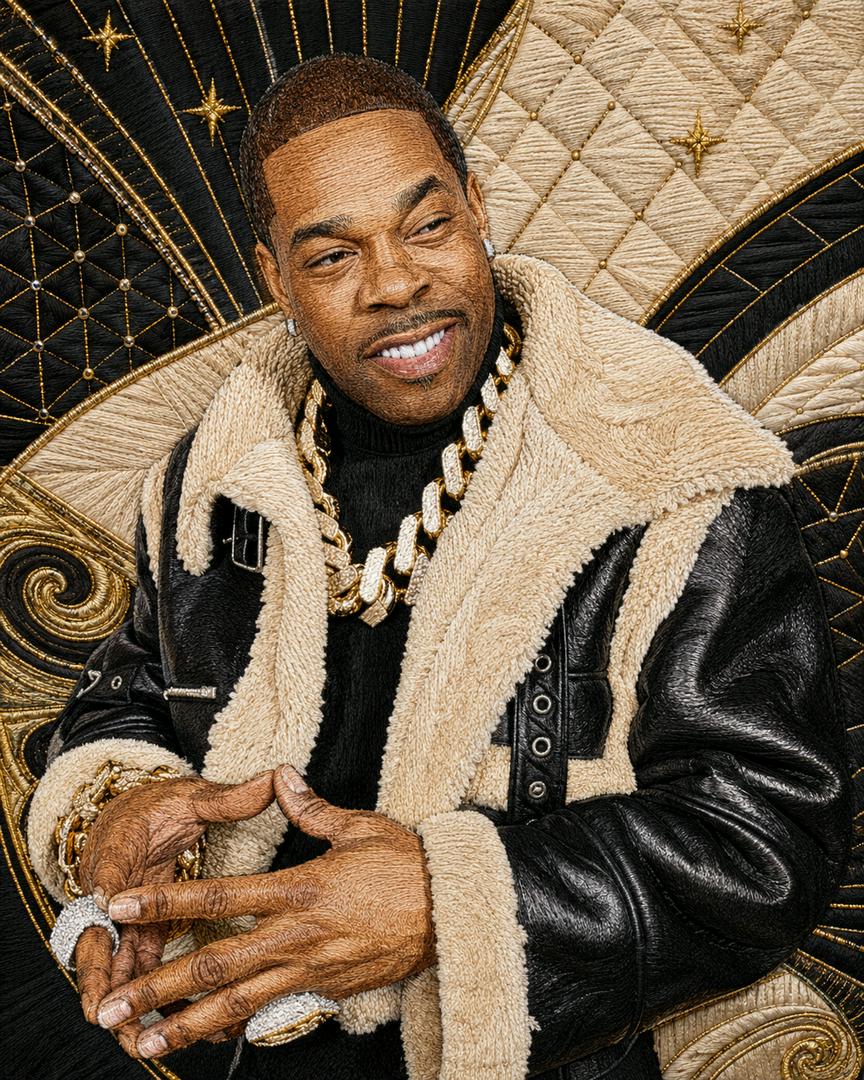
Today we celebrate the birthday of Twista, the Chicago mastermind whose skill wasn’t just fast… it was controlled, intentional, and built from real breath and discipline. Nobody was bending syllables, flipping pockets, and slicing through beats the way he did. He made precision an entire personality. Adrenaline Rush wasn’t just an album… it was a Chicago time capsule. Dark, raw, street-heavy, and ahead of its era. The title track alone had a whole generation rewinding verses just to keep up. And Kamikaze? That album slammed the door open all over again. “Slow Jamz” and “Overnight Celebrity” took him from hometown legend to worldwide force… but the core Twista was still right there, sharp as ever. His flow shaped the Midwest. His influence still sits heavy in hip-hop classrooms, studio sessions, and any conversation about technique. Rappers study him. Fans respect him. And Chicago will always claim him proudly. Here’s to another year of a man who didn’t just rap fast… he rapped with mastery. Happy Birthday to Twista. #OnThisDay #HipHopWasHere #MusicHistory #LataraSpeaksTruth

Twista Celebrates Another Year… Born November 27, 1973
LataraSpeaksTruth

Tina Turner: Born November 26, 1939

Tina Turner was born in Nutbush, Tennessee, in 1939. She grew up in a rural community and stepped into music at a young age, eventually becoming one of the most influential performers of her era. Her early years in the industry placed her in the center of a sound that blended rock, soul, and rhythm, and her presence quickly became known for intensity and precision. Her later solo career reshaped her trajectory. In the 1980s she released songs that reached global audiences and helped establish her as a major figure in popular music. Her concerts, visuals, and voice became central to her image and contributed to her recognition across generations. Her life story is often associated with resilience, personal change, and reinvention. Tina Turner remains a significant figure whose influence can still be traced in music, performance style, and cultural memory. #TinaTurner #BornOnThisDay #MusicHistory #RockAndSoul #AmericanIcons #OnThisDay #LegendaryVoices #CulturalHistory #LataraSpeaksTruth

Tina Turner: Born November 26, 1939
LataraSpeaksTruth

1919: Equal Rights League Challenges Federal Inaction

In November 1919, the country was still shaken from the violence known as the Red Summer. Cities across the nation had experienced unrest, and Black communities were left with little protection as organized mobs carried out attacks. On November 25, the National Equal Rights League sent a direct message to the White House that called attention to this crisis. They addressed President Woodrow Wilson in a formal letter and asked why the federal government had not acted to protect Black citizens from lynching and mob violence. The League stated that the government had the responsibility to step in when people were being harmed in their homes, workplaces, and neighborhoods. They noted that the violence was not limited to one region. It was happening across the country and required leadership from the highest levels of government. Their message also pointed out that a nation calling itself modern could not ignore such conditions. They urged President Wilson to support stronger legal protections and to enforce the laws that already existed but were not being applied evenly. The letter was part of a larger movement of Black advocacy groups pushing for national attention years before the major civil rights campaigns of the 1950s and 1960s. Their challenge to federal inaction showed a growing demand for fairness, safety, and accountability. While no significant changes were made by the administration at the time, the League’s action remains an important example of early national pressure for civil rights. It highlighted the determination of Black leaders who refused to remain silent and who called on the country to live up to its stated values. #OnThisDay #AmericanHistory #EqualRightsLeague #BlackHistoryFacts #LataraSpeaksTruth

1919: Equal Rights League Challenges Federal Inaction
LataraSpeaksTruth

The Return of the Amistad Survivors

1841 marked a turning point that rarely gets the attention it deserves. After a long legal fight in the United States, 35 surviving Africans from the Amistad case finally prepared to leave American shores. Their story began two years earlier, when they were captured in West Africa, forced onto a Spanish ship, and pulled into the transatlantic trafficking system. But they refused to accept that fate, rising up, taking control of the vessel, and eventually ending up in the U.S., where their case climbed all the way to the Supreme Court. The Court ruled in their favor, declaring that they had been illegally taken and had the right to fight for their freedom. After months of delays and uncertainty, the survivors boarded a ship called the Gentleman in New York and set sail for West Africa. When they arrived in Sierra Leone, they stepped into a home that wasn’t the same as the one they were taken from. The people, the land, and the world around them had shifted. But returning still meant everything. It meant reclaiming their names, their futures, and a life stolen from them. It meant going home on their own terms. This moment remains one of the clearest examples of resistance meeting justice at a time when both were nearly impossible to find. #Amistad #BlackHistory #OnThisDay #LataraSpeaksTruth #LearnThePast

The Return of the Amistad Survivors
LataraSpeaksTruth

Evacuation Day 1783, Black Loyalists

On November 25, 1783, the British marched out of New York, closing the curtain on the American Revolution. For nearly three thousand Black Loyalists, this day was not an ending. It was a leap into a new beginning. They boarded ships with their names written in the Book of Negroes, often the first time they were recorded as free people. They sailed toward Nova Scotia, the Caribbean, and other British territories, carrying hope like a small flame against a cold wind. Some would later journey to Sierra Leone, still chasing the freedom they had been promised. The good was the chance to claim that freedom. The British had offered it to enslaved people who joined their forces. The bad was the fight over their status. American leaders demanded they be returned as “property.” The British refused, but the argument showed how fragile freedom could be in the new nation. The ugly arrived in Nova Scotia. The winters were brutal, the wages were low, the land grants were broken, and discrimination followed them across the sea. Many families spent years struggling for even a piece of what they had been told they would receive. Yet their departure mattered. Evacuation Day became one of the first large-scale movements of Black Americans choosing their future for themselves. Their courage was recorded. Their journey reshaped the Black diaspora. #BlackHistory #AmericanHistory #OnThisDay #LataraSpeaksTruth #CommunityFeed

Evacuation Day 1783, Black Loyalists
LataraSpeaksTruth

When Malcolm X Spoke On Kennedy’s Death

On December 1, 1963, Malcolm X was asked for his reaction to the assassination of President John F. Kennedy. He was one of the most closely watched public figures in the country at the time, and reporters pressed him for a comment. Malcolm X responded with the words that would echo for decades. He said it was a case of chickens coming home to roost. He framed the event as part of a larger pattern of violence in the United States during that era. He argued that a nation shaped by political bloodshed could not avoid that same violence returning to its doorstep. The remark caused an immediate national uproar. It was interpreted as insensitive and divisive, and it clashed with the public grief that followed the assassination. The Nation of Islam suspended him from speaking publicly after the comments. His relationship with the organization would continue to strain in the months that followed. This moment is often oversimplified, but it marked a turning point. It pushed Malcolm X to reconsider his alliances, rethink his voice, and eventually pursue a broader message about global human rights. What happened on December 1 became one of the first steps toward the transformation that shaped the final years of his life. #MalcolmX #OnThisDay #AmericanHistory #PoliticalHistory #NewsBreakCommunity #HistoricVoices #HistoricMoments #AmericanLegacy

When Malcolm X Spoke On Kennedy’s Death
LataraSpeaksTruth

Richard Wright. A Voice America Tried Not To Hear

On November 28, 1960, writer Richard Wright passed away in Paris at the age of fifty two. The world lost a man who refused to soften the truth to make anyone comfortable. Wright’s novels Native Son and Black Boy pulled back the curtain on racism in America at a time when the country wanted to pretend it was evolving. His stories were sharp. Unfiltered. They exposed the violence and fear woven into everyday life for Black people in the early twentieth century. His work was uncomfortable on purpose. He wrote so no one could look away. By the time he died, Wright had become one of the most influential Black writers of his era. His words shaped generations of storytellers and helped redefine how Black life was represented in literature. He spent his final years in France seeking the freedom to write without scrutiny. Even overseas, he kept challenging the world with every page. Richard Wright left behind a legacy that still hits like truth spoken out loud at the wrong dinner table. Honest. Brave. Necessary. His voice did not fade. It simply became required reading for anyone trying to understand the American story. #LataraSpeaksTruth #RichardWright #HistoryMatters #AmericanHistory #BlackAuthors #NativeSon #BlackBoy #OnThisDay

Richard Wright. A Voice America Tried Not To Hear
LataraSpeaksTruth

Honoring Booker T. Washington: A Legacy That Still Lifts Us

Let us take a moment to honor the legacy of Booker T. Washington, a man whose life was all grit, vision, and quiet strength. When he passed on November 14th, 1915, the world did not just lose an educator. It lost a builder. A man who carved out hope where the world tried to leave none. As we look back, the Word gives us the perfect lens to see his life through. Psalm 112:6 (CSB) says, “He will never be shaken; the righteous one will be remembered forever.” Washington lived that out. Steady, rooted, and unbothered by storms that tried to pull him down. And here we are, still speaking his name. Proverbs 16:3 (CSB) tells us, “Commit your activities to the Lord, and your plans will be established.” This man committed himself to lifting others through education, discipline, and opportunity. God established that work so deeply that it still stands today. Then we look at Galatians 6:9 (CSB). “Let us not get tired of doing good, for we will reap at the proper time if we do not give up.” That is the blueprint of Washington’s entire life. Do not quit. Do not fold. Keep showing up. And the harvest came. Changed lives. Opened doors. Generations rising higher. So today, as we reflect on his passing, we are reminded of this simple truth. A life committed to God and poured out for others never disappears. It becomes legacy. This is your reflection for the day. Stay grounded, stay faithful, and keep building something that will outlive you. #BookerTWashington #Legacy #HistoryMatters #FaithReflection #ScriptureOfTheDay #Inspiration #EducationHistory #OnThisDay

Honoring Booker T. Washington: A Legacy That Still Lifts Us
LataraSpeaksTruth

The First Black Heisman Winner… Ernie Davis Makes History (1961)

In 1961, Ernie Davis changed the entire landscape of college sports without raising his voice or asking for permission. Syracuse University’s star running back became the first Black athlete to win the Heisman Trophy… and that moment hit a lot harder than a highlight reel. Davis was one of those players who made the game look easy. Smooth balance, impossible strength, and the kind of vision that made defenses question their life choices. But behind all that talent was a young man pushing through barriers that had been in place for generations. College football was still wrestling with segregation and resistance, and a lot of doors were never meant to open for athletes who looked like him. Yet he walked right through them. His Heisman win wasn’t just about statistics or a shiny award. It was a shift… a crack in a wall. Davis stood on that stage in New York City representing every player who had been told “not yet” or “not here.” He was drafted first overall into the NFL, but leukemia took his life before he could ever take the field. He was only 23. Even so, his story didn’t fade. Syracuse retired his number, and generations of players still see him as proof that purpose shows up even when the world tries to look away. Today, his legacy still stands tall: talent, dignity, and impact that reaches far past the field. #ErnieDavis #Heisman #SportsHistory #BlackAthletes #OnThisDay #LataraSpeaksTruth

The First Black Heisman Winner… Ernie Davis Makes History (1961)
Tag: OnThisDay - Page 2 | LocalHood