Tag Page FunFacts

#FunFacts
The Story Behind...

Candles have been lighting human life for over 5,000 years. The earliest ones were not smooth, scented, or decorative. Ancient Egyptians made simple torches by dipping reeds into melted animal fat. In China, early candles were created with rolled rice paper and wax from insects and plants. Every culture found its own way to create light long before electricity existed. The Romans helped shape the modern candle by dipping fiber wicks into tallow, a hard animal fat that produced a steady flame. These candles lit homes, temples, and nighttime streets, but they burned with smoke and a strong smell. Only wealthier families could afford beeswax candles, which burned cleaner and brighter. In the Middle Ages, candle making became a real trade. Beeswax was used for churches and ceremonies, while everyday households still relied on tallow. Everything changed in the 1800s. New discoveries in chemistry created better waxes like stearin and paraffin, making candles cheaper, safer, and more reliable. When electricity spread through cities and homes, candles were no longer needed for basic light. Instead, they became symbols. Today, candles represent comfort, remembrance, celebration, prayer, peace, and atmosphere. Scented candles, birthday candles, decorative candles—every modern version connects back to ancient people trying to carry light through the darkness. From animal fat torches to today’s smooth, clean-burning wax, the story of candles is a story of human warmth and tradition. #candles #funfacts #didyouknow #TheStoryBehind

The Story Behind...

Yawning has been around longer than humans. Animals yawn. Babies yawn in the womb. Even ancient fossils of early humans show jaw structures built for big, wide yawns. But why we yawn has been one of the longest-running mysteries in science and culture. Ancient people believed yawning meant the soul was leaving the body, so covering your mouth became a habit meant to protect yourself. Some cultures thought yawning released tired energy, let spirits escape, or even showed boredom or disrespect. But science says yawning is way more practical. One theory says yawning helps cool the brain—like opening a window to let fresh air in. Another theory says yawning wakes the body up by stretching the jaw, increasing blood flow, and giving a small burst of alertness. And of course, there’s the contagious yawn… when seeing someone yawn makes you yawn too. Scientists think that comes from empathy. When people connect or mirror each other, their bodies sync up in little ways. Today, yawning is still partly a mystery, but we know this much: it’s natural, it happens in almost every species with a backbone, and it’s one of the body’s oldest ways of saying, “I need a reset.” #TheStoryBehindIt #Yawning #EverydayHistory #LearnSomethingNew #FunFacts #HistoryMadeSimple

The Story Behind...

Belts started long before fashion, outfits, or matching colors. The very first belts were created for survival. Early humans made strips of leather from animal hides and wrapped them around their waists to hold tools, knives, and small pouches while hunting or traveling. They weren’t meant to look good… they were meant to help people stay alive. As civilizations grew, belts became symbols. In ancient Egypt and Mesopotamia, belts showed rank — the more decorated the belt, the higher the status. In ancient Rome, soldiers wore heavy leather belts lined with metal studs to protect their stomachs during battle. People in Europe during the Middle Ages used belts to carry bags, money, keys, and even weapons because clothing didn’t have pockets yet. By the 1800s and early 1900s, belts changed again. Clothes were being designed differently, and belts were used mostly to hold up pants. Then fashion stepped in. Designers realized belts could shape the waist, show personality, or add structure to an outfit. That’s when buckles, colors, stitching, and styles exploded. Belts turned from tools… to accessories… to full fashion statements. Today, belts still do both jobs. Some are made for practicality — work belts, uniform belts, utility belts. Others are made purely for style, evolving into everything from sleek leather to decorated chains to bold statement pieces. From survival gear to a fashion staple, belts have always been about one main thing: holding things together, whether it’s your tools, your clothes, or your look. #TheStoryBehindIt #Belts #EverydayHistory #LearnSomethingNew #HistoryMadeSimple #FunFacts

The Story Behind...

It’s wild to think about it… the thing holding Amazon boxes, cereal, shoe boxes, moving boxes… all that everyday stuff? Cardboard is one of the most important inventions of the modern world, and its story starts long before two-day shipping. The earliest version showed up in China over 1,500 years ago, back when paper itself was still new. People used thick, layered paper to protect goods, kind of like a baby version of cardboard. But the real transformation came in the 1800s. In 1856, two Englishmen patented “corrugated paper,” but it wasn’t for boxes… it was for lining men’s tall hats so the hats wouldn’t collapse. Yep… cardboard started as hat support. In 1871, an American named Albert Jones figured out that this wavy “corrugated” paper was perfect for wrapping delicate items like glass. A few years later, Oliver Long added flat sheets to both sides, creating the sandwich-style corrugated cardboard we use today. That changed everything. Suddenly, goods could be shipped farther, cheaper, and safer than ever before. By the early 1900s, cardboard boxes replaced wooden crates. Companies could ship faster, businesses could expand, and entire industries took off. It’s one of those inventions that hides in plain sight but built the modern world from behind the scenes. Thin… light… recyclable… and tough enough to move a whole house. Cardboard might look boring, but it’s an innovation that literally holds life together. The everyday invention that quietly changed the world. #TheStoryBehind #Cardboard #HistoryFacts #EverydayHistory #FunFacts #Packaging #Innovation #DidYouKnow #LearnOnNewsBreak

The Story Behind...

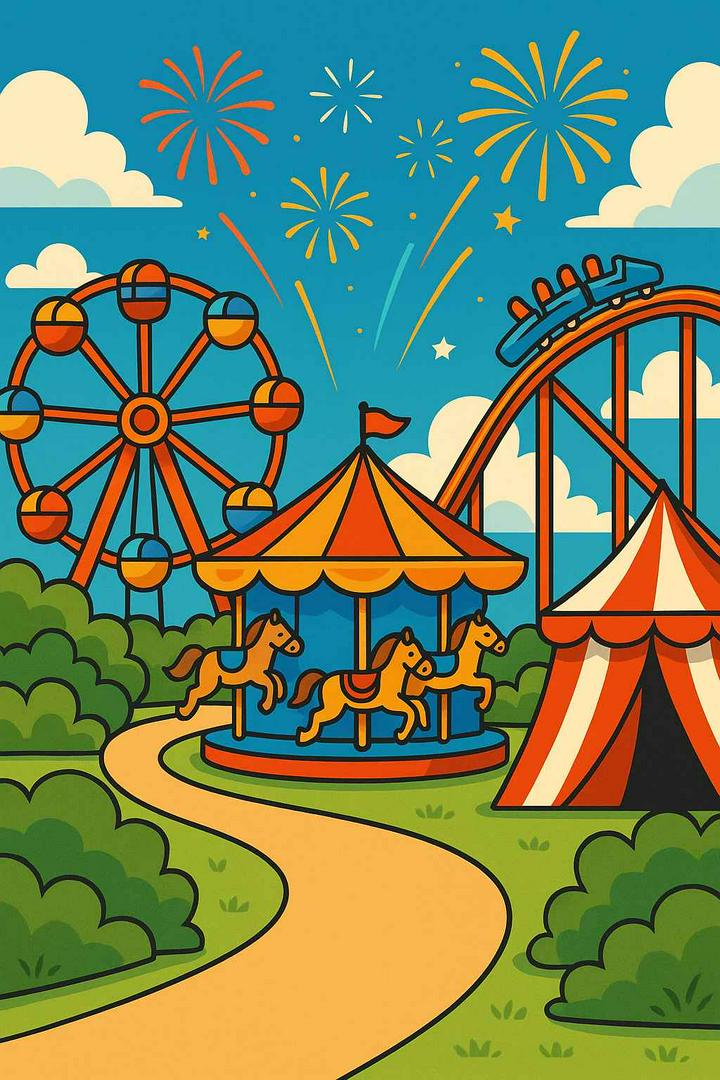
Roller coasters… cotton candy… long lines… and that one uncle who always swears he’s “not getting on that ride.” Theme parks feel modern, but the idea goes way back. The earliest versions appeared in medieval Europe with “pleasure gardens,” places where people listened to music, watched performers, and escaped their everyday lives. One of the most famous was London’s Vauxhall Gardens, which opened in the 1600s and featured shows, art displays, fireworks, and food stalls… the blueprint for everything we call entertainment today. By the late 1800s, America got in on it. Coney Island changed the game with giant rides, electric lights, and attractions people traveled miles to see. Its success inspired cities everywhere to build their own amusement parks. Then in 1955, Disneyland opened and transformed the entire industry. It wasn’t just rides anymore… it was storytelling. Every corner had a theme, a world, a feeling. It set the standard for what a theme park could be. Today they’re bigger, faster, louder, and more immersive, but the purpose hasn’t changed. Theme parks give people a break from reality… a space where adults can be kids again and kids can feel like the world is magic. The story behind them is simple… humans have always needed fun, wonder, and a place that lets the imagination run wild. Fun has a history too. Here’s where theme parks really began. #TheStoryBehind #ThemeParks #HistoryFacts #DidYouKnow #FunFacts #ConeyIsland #Disneyland #AmusementParks #LearnSomethingNew #CommunityPost

You've reached the end!