Tag Page BlackHistory

#BlackHistory
LataraSpeaksTruth

The Return of the Amistad Survivors

1841 marked a turning point that rarely gets the attention it deserves. After a long legal fight in the United States, 35 surviving Africans from the Amistad case finally prepared to leave American shores. Their story began two years earlier, when they were captured in West Africa, forced onto a Spanish ship, and pulled into the transatlantic trafficking system. But they refused to accept that fate, rising up, taking control of the vessel, and eventually ending up in the U.S., where their case climbed all the way to the Supreme Court. The Court ruled in their favor, declaring that they had been illegally taken and had the right to fight for their freedom. After months of delays and uncertainty, the survivors boarded a ship called the Gentleman in New York and set sail for West Africa. When they arrived in Sierra Leone, they stepped into a home that wasn’t the same as the one they were taken from. The people, the land, and the world around them had shifted. But returning still meant everything. It meant reclaiming their names, their futures, and a life stolen from them. It meant going home on their own terms. This moment remains one of the clearest examples of resistance meeting justice at a time when both were nearly impossible to find. #Amistad #BlackHistory #OnThisDay #LataraSpeaksTruth #LearnThePast

The Return of the Amistad Survivors
LataraSpeaksTruth

Evacuation Day 1783, Black Loyalists

On November 25, 1783, the British marched out of New York, closing the curtain on the American Revolution. For nearly three thousand Black Loyalists, this day was not an ending. It was a leap into a new beginning. They boarded ships with their names written in the Book of Negroes, often the first time they were recorded as free people. They sailed toward Nova Scotia, the Caribbean, and other British territories, carrying hope like a small flame against a cold wind. Some would later journey to Sierra Leone, still chasing the freedom they had been promised. The good was the chance to claim that freedom. The British had offered it to enslaved people who joined their forces. The bad was the fight over their status. American leaders demanded they be returned as “property.” The British refused, but the argument showed how fragile freedom could be in the new nation. The ugly arrived in Nova Scotia. The winters were brutal, the wages were low, the land grants were broken, and discrimination followed them across the sea. Many families spent years struggling for even a piece of what they had been told they would receive. Yet their departure mattered. Evacuation Day became one of the first large-scale movements of Black Americans choosing their future for themselves. Their courage was recorded. Their journey reshaped the Black diaspora. #BlackHistory #AmericanHistory #OnThisDay #LataraSpeaksTruth #CommunityFeed

Evacuation Day 1783, Black Loyalists
LataraSpeaksTruth

The Eve Gene… Facts They Can’t Argue With

Some comments don’t even be aimed at me, but they hit that nerve anyway. Especially the tired ones about what Black women “can” or “can’t” look like. It’s wild, because science been confirmed what some folks still refuse to accept… Black women are the blueprint. Every human alive today shares mitochondrial DNA that traces back to an African woman who lived over 150,000 years ago. That’s the Eve Gene. That’s not a theory. That’s documented genetics. Mitochondrial DNA comes only from mothers, so the unbroken line that connects the entire human family runs straight through a Black woman’s lineage. Black populations also hold the highest genetic diversity on Earth… which is exactly why natural blonde hair, red hair, blue or green eyes, freckles, every texture, every shade, all exist in African DNA without needing outside mixing. Melanesians alone prove this with their natural blonde hair caused by a TYRP1 gene variant that developed in their community, not Europe. High diversity means oldest population. Lower diversity means newer offshoots. Which means every branch of humanity is a remix of the original. So when people try to drag a Black woman for wearing blonde hair, they’re ignoring the simple truth… our DNA created the possibility in the first place. #EveGene #BlackHistory #Genetics101 #LataraSpeaksTruth

The Eve Gene… Facts They Can’t Argue With
LataraSpeaksTruth

Elizabeth Taylor Greenfield: The Black Swan Who Sang Against the Odds

Elizabeth Taylor Greenfield came into this world in 1824, born enslaved in Mississippi. Fate pulled her north as a child, and in Philadelphia she found something no chain could hold back: a voice built to shake ceilings. Stages in her era were not just closed to Black women; they were practically walled off. Yet Greenfield stepped up anyway. People said her range stretched from velvet-deep contralto to bright soprano, like she carried two singers inside one body. In 1851, she made her public debut in Buffalo, New York, and from that moment the road called her forward. Everywhere she traveled, she met resistance. Racist policies. Barred doors. Crowds that could not see past her skin. But she kept singing, and her voice kept winning rooms over. By 1853, she crossed the Atlantic to London, performing at Exeter Hall and earning the respect of Britain’s elite. She did not need a queen in the audience to stand on one of the grandest stages of her time. She was a Black woman refusing to dim her light. Greenfield did not just sing; she carved out space where none existed. Her legacy stands as proof that Black artistry has never waited for permission. She broke ground that generations of performers would later walk with pride. #GoneButNotForgotten #TheBlackSwan #ElizabethTaylorGreenfield #LataraSpeaksTruth #BlackHistory #MusicLegends

Elizabeth Taylor Greenfield: The Black Swan Who Sang Against the Odds
LataraSpeaksTruth

York… The Man History Tried to Forget

York was the only Black member of the Lewis and Clark Expedition, yet he returned home to the same bondage he left with. His strength, hunting skills, diplomacy, and endurance helped carry the Corps of Discovery through some of its hardest moments. While others received pay and praise, York received nothing. His story deserves to be remembered for what it is… the truth. York’s contributions were woven into every part of the expedition. He hunted for food, carried heavy loads, provided protection, and helped build relationships with Indigenous communities who showed him respect. Journals from the journey make it clear he worked just as hard as any man on the team. In many moments, he worked harder. Even so, he returned home with no credit and no reward. York’s role highlights how the story of America is often told without the voices of the people whose labor made survival possible. #York #LewisAndClark #HiddenHistory #AmericanHistory #BlackHistory #LataraSpeaksTruth

York… The Man History Tried to Forget
LataraSpeaksTruth

Romare Bearden was one of the most influential American artists of the twentieth century, known for turning everyday Black life into unforgettable visual stories. Born on September 2, 1911 in Charlotte, North Carolina, he moved to New York City as a child during the Great Migration. Harlem became his creative home, a place filled with music, literature, and bold ideas that shaped how he saw the world. Bearden studied at New York University and explored different paths early on, but art kept calling him back. He began as a cartoonist and painter, then found the style that made him famous: collage. He combined photographs, painted paper, magazine clippings, and textured materials to build layered scenes that felt like memory brought to life. His work captured church gatherings, family moments, Southern roots, Harlem streets, and the rhythm of jazz. Instead of spotlighting a single person, he often showed the shared experience of a community. His images feel musical, like stories told in chords and fragments, then stitched into something whole. Bearden’s work has been shown in major museums, and in 1987 he received the National Medal of Arts. He passed away in 1988, but his influence is still everywhere, in exhibitions, classrooms, and in the artists who keep learning from his vision. #RomareBearden #BlackHistory #BlackArtists #ArtHistory #AmericanArt #Harlem #GreatMigration #CollageArt #CulturalHistory #HistoryMatters #HiddenHistory

AčT/Cæř

January 8, 1867 marks a turning point in American history that is rarely given the attention it deserves. On this day, Congress passed the District of Columbia Suffrage Act, granting Black men in Washington, D.C the legal right to vote in municipal elections and public referenda. This happened three years before the 1 5th Amendment, at a time wher most of the nation still viewed Black political participation as a danger rather than a riaht. This was not a promise for the future or a symbolic gesture. It was an immediate, enforceable change written directly into law. The decision did not come quietly or without resistance. President Andrew Johnson vetoed the act, arguing that extending votina riahts to Black men was premature and would destabilize the country. Congress reiected that argument and overrode his veto the same day. That override mattered It made clear that Reconstruction was not only about ending slavery on paper but about redistributing political power in real time. Washington, D.C. became a proving ground, showing that Black civic participation could exist and function despite fierce opposition The importance of Januarv 8, 1867 is often overlooked because it does not fit neatly into the simplified version of history many are taught. Voting rights did not suddenly appear with the 15th Amendment. They were demanded, tested, expanded restricted, and attacked repeatedly. This moment captures Black men exercisinc political agency while the nation was still debating whether they deserved it. It reminds us that progress has never required national comfort or unanimous approval. Rights have always moved forward through pressure, confrontation, and refusal to wait. January 8 stands as proof that access was forced open long before the country was ready to admit it #January8 #OnThisDay #BlackHistory #ReconstructionEra #VotinaRichts #DistrictOfColumbia #AmericanHistory #HiddenHistory #CivilRights

LataraSpeaksTruth

On March 9, 1892, Thomas Moss, Calvin McDowell, and Will Stewart were taken from a Memphis jail by a white mob and lynched. They were not criminals brought to justice. They were Black businessmen connected to the People’s Grocery, a successful Black owned store that had become a source of pride in the community and a threat to white resentment. Their murders were not random. They happened in a climate where Black progress itself could be treated as a target. Thomas Moss was more than a grocer. He was a respected postman, a family man, and a friend of Ida B. Wells. Moss, McDowell, and Stewart had built something meaningful in a world that often punished Black success for daring to exist. After a racial conflict near the store and rising white hostility, the three men were jailed. Then the law gave way to mob violence. In the dark of night, they were dragged out and killed without trial, without mercy, and without consequence for the people who did it. This was one of the moments that lit a deeper fire in Ida B. Wells. She had already begun speaking out, but the murder of these men made the truth even harder to ignore. She understood what many refused to say plainly. Lynching was not about justice. It was about power, terror, and control. It was a weapon used to crush dignity, silence progress, and remind Black people that even success could make them a target. The killing of Moss, McDowell, and Stewart remains one of the clearest examples of how racial violence was used to destroy not only lives, but community strength, economic independence, and hope. Their story still matters because it forces this country to face what was done when Black people tried to build for themselves. #OnThisDay #BlackHistory #IdaBWells #ThomasMoss #CalvinMcDowell #WillStewart #MemphisHistory #PeoplesGrocery #AmericanHistory #HiddenHistory

LataraSpeaksTruth

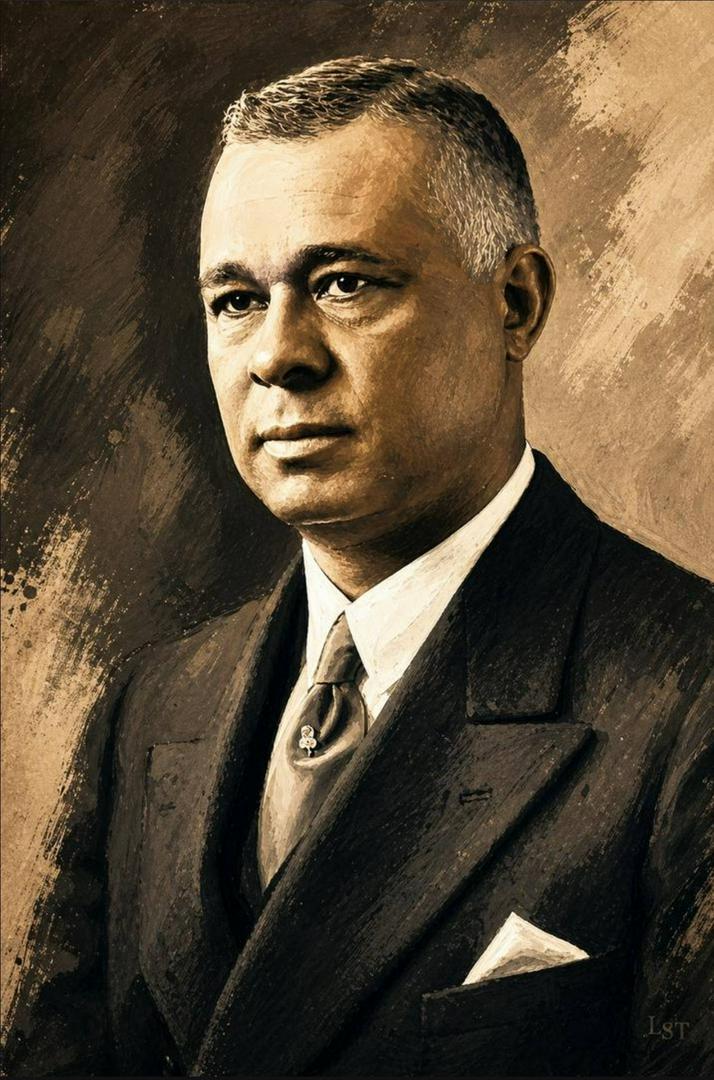
January 1, 1931 marks a quiet but serious turning point in American history. Charles Hamilton Houston becomes vice-dean of Howard University School of Law and almost immediately reshapes it into something more than a classroom. He builds a legal training ground with a single purpose: strategy. Houston understood that segregation would not fall simply because it was unjust. It would fall only if it could be proven unconstitutional. So he trained lawyers to work with discipline and precision, to identify weaknesses in the law, document inequality in detail, and build cases strong enough to force the courts to act. This was not protest law. It was methodical law. Students were sent into the South to gather evidence, photograph conditions, interview communities, and expose how “separate but equal” failed in practice. Houston demanded excellence because he knew the stakes. Courts move slowly and only when the record leaves them no alternative. That strategy later became the legal foundation for cases like Brown v. Board of Education. Lawyers such as Thurgood Marshall did not emerge by chance. They were shaped by years of deliberate training and long-term planning. January 1, 1931 reminds us that some of the most important changes in history do not arrive with noise. They begin quietly, in classrooms, with patience, discipline, and a clear understanding of how power actually works. #January1 #OnThisDay #AmericanHistory #LegalHistory #HowardUniversity #CivilRightsHistory #BlackHistory #LongGame #QuietPower