1/1

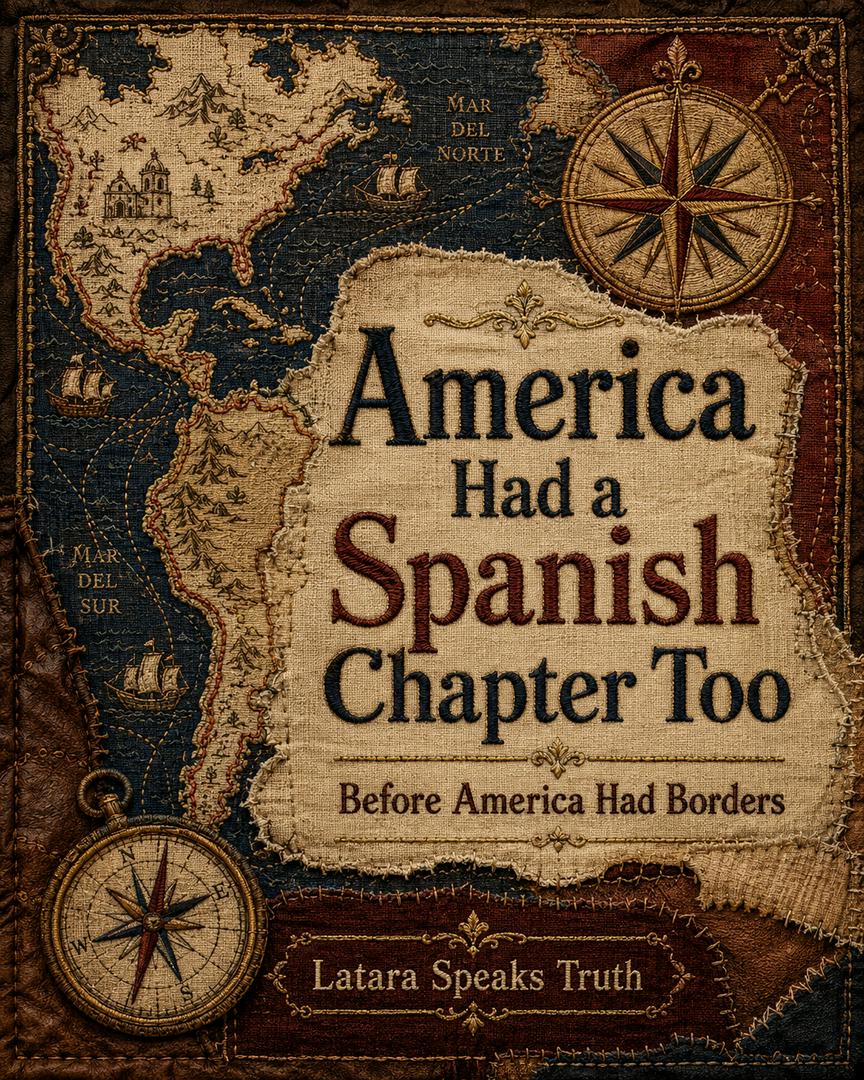
Before America argued about Spanish being spoken in public, before immigration became a political weapon, and before people were told to “go back,” there was already a Spanish chapter in this land. This story does not begin at the border. It begins before the United States existed. Indigenous nations were already here with languages, governments, families, land, and histories of their own. They were not “discovered.” They were encountered by Europeans seeking land, labor, wealth, and control. When Spain expanded into the Americas, it brought colonization, forced conversion, land seizure, disease, slavery, and forced labor. Indigenous communities resisted, while others were forced under colonial systems. African people were also part of this history. Africans and their descendants were enslaved throughout the Americas. Some resisted. Some escaped. Some formed communities with Indigenous people and others who refused colonial control. So when people ask, “Were they slaves?” the answer is layered. Some ancestors connected to Hispanic or Latino history were Indigenous people forced under colonial rule. Some were Africans brought through slavery. Some were Europeans who colonized. Some were mixed-race descendants shaped by violence, survival, culture, and time. Latino identity came later. The roots came first. In Spanish Florida, this history was already present by the 1500s. St. Augustine was founded in 1565, and African presence became part of the city’s early colonial history. Africans and their descendants helped shape Spanish Florida through labor, service, community, resistance, and the fight for freedom. That is why this story cannot start with immigration. The first chapter is land, colonization, Indigenous survival, African slavery, Spanish rule, forced labor, resistance, and communities later folded into Hispanic and Latino history. This history is not new. It was here before America even had a name. #AmericanHistory #latinoamerica #history
15 days ago

RahmjartheAnnunaki
Well said! So much REAL history has never been recognized and is truly fascinating. And on North, South, and Central America, that history goes back 50,000 years or more.
14d
Easley, SC
Reply
1
More comments ...
write a comment...