1/1

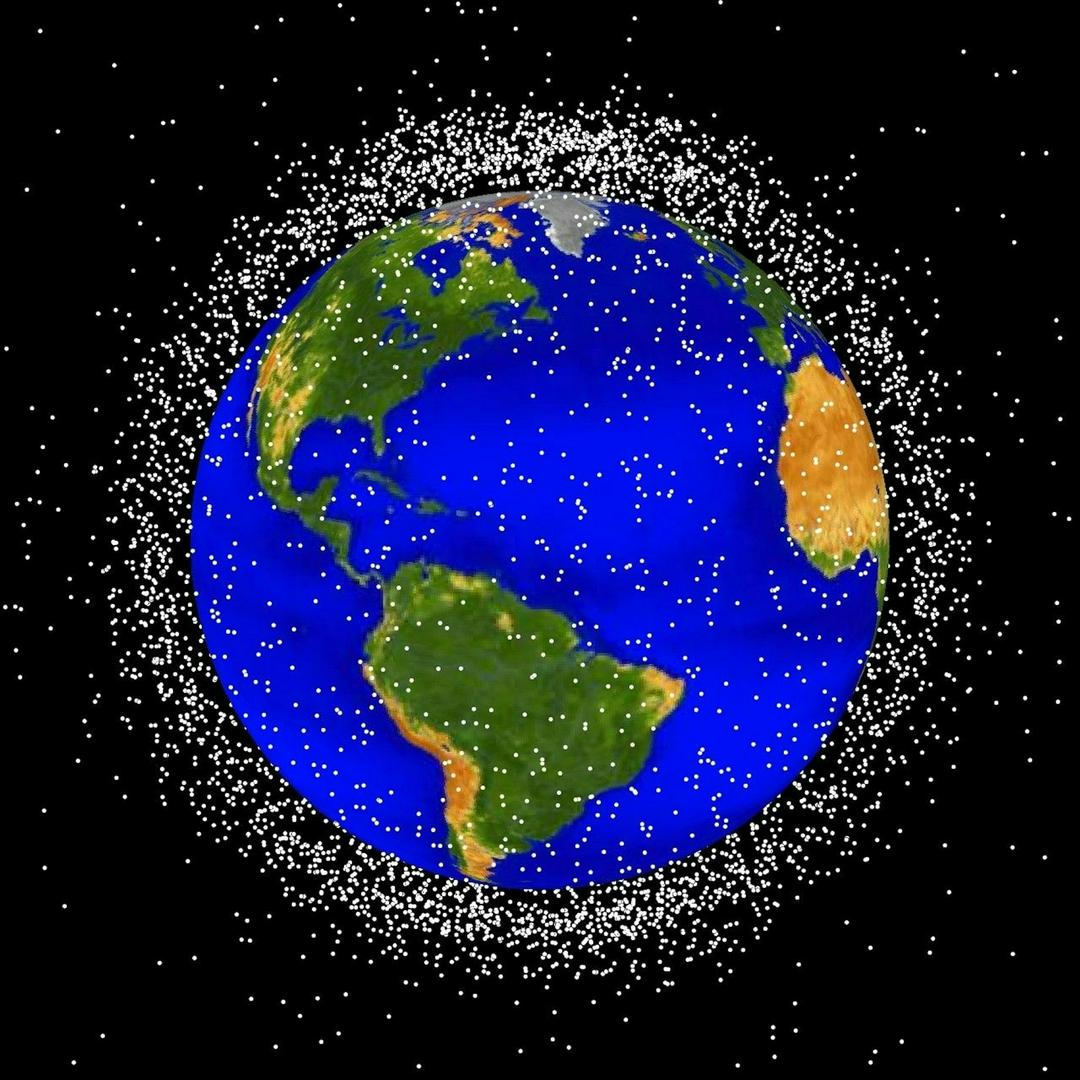
The Race to Remove Space Junk Earth’s orbit holds over 34,000 tracked pieces of space debris larger than 4 inches and millions of smaller fragments traveling up to 17,500 miles per hour. Even tiny shards can damage satellites or spacecraft. Over 10,000 satellites are planned for launch in the next decade, increasing collision risks and creating more debris in a cascade known as the Kessler Syndrome, where one collision triggers many more. One collision in 2009 between satellites from the US and Russia generated more than 2,000 trackable fragments, some still threatening active satellites. Low Earth orbit contains over 1,100 tons of debris. More than 500,000 pieces are between 1 and 4 inches, and over 100 million pieces are smaller than 1 inch, all moving fast enough to damage satellites. Innovative solutions are being tested. Japan’s space agency used an electrodynamic tether to slow debris, causing it to reenter the atmosphere safely. Private companies are developing robotic arms, nets and harpoons to capture derelict satellites. Ground-based lasers can nudge small debris into decaying orbits. Removing 5 to 10 large objects annually could stabilize low Earth orbit. In 2022, the European Space Agency tracked more than 36,500 objects and warned collisions could increase exponentially without intervention. Satellite operators performed over 40,000 collision avoidance maneuvers globally in the last five years. Prevention is critical. Satellites must be deorbited within 25 years, and new designs focus on reusability and easier deorbiting. International cooperation is growing, with agencies sharing tracking data and developing guidelines to minimize debris. With over 3,000 satellites at risk of collision each year, solving space junk is a global operational and strategic challenge essential for maintaining access to orbit for science, security, and commerce. #Space #Science #SpaceJunk #USA #SpaceTech #SatelliteTech
2025-12-11

Mark Marinelli
just send shifty shiff into space with his mouth open.🙏🙏🙏🙏
12-12
Menifee, CA
Reply
More comments ...
write a comment...