Tag Page USA

#USA
1776 Patriot

John F. Kennedy: The President with the Highest All Time Approval John F. Kennedy, the thirty fifth president of the United States, is still viewed as one of the most respected leaders in modern American history. Throughout his presidency, his approval rating stayed near 70 percent, which is one of the highest averages ever recorded. His standing is measured through the modern polling system that began in 1936, allowing his numbers to be compared across generations of presidents. Based on this long record of surveys, Kennedy holds the highest average approval of any president in the polling era. Kennedy’s popularity came from his personality, message, and calm leadership during major challenges. His inaugural address, urging Americans to serve their country, became one of the most memorable speeches in US history. During the Cuban Missile Crisis in 1962, he guided the country through thirteen days of extreme tension, preventing nuclear conflict and earning wide respect. His support for early civil rights efforts and his commitment to the space program added to the sense that he was leading the nation into a new and ambitious era. Surveys taken long after his death show how strong his legacy remains. One major poll found that 85 percent of Americans approved of his performance when looking back on his presidency. Even during difficult periods, such as the aftermath of the Bay of Pigs invasion, Kennedy kept approval ratings above 70 percent, something few presidents have matched. His calm approach, clear communication, and ability to connect with the public helped him maintain support across states, age groups, and political backgrounds. Kennedy’s consistently high approval demonstrates how trust and confidence from the public shape a president’s place in history. Although he served less than one full term, his leadership during world crises and his appeal to national unity left a lasting mark. #Politics #USA #History #USHistory #America

1776 Patriot

Inside the Largest SWAT Hostage Rescue Operation in U.S. History The Good Guys electronic store siege in Sacramento remains one of the most significant hostage rescue missions ever carried out by a SWAT team. The incident began when four armed assailants stormed the store and seized 41 hostages. They demanded 4 million dollars, bulletproof vests, transportation, and safe passage out of the country. The captors fired inside the store, forced hostages to the windows, and repeatedly threatened to kill if their demands were not met. Tragically, three hostages were killed early in the standoff when the assailants opened fire after negotiators delayed meeting their demands, increasing pressure and fear among both hostages and officers. Negotiators worked tirelessly while SWAT teams used fiber optic probes, remote cameras, and thermal imaging to map the store’s interior. Over half of the layout offered no clear lines of sight, forcing officers to rely heavily on sound and heat signatures. When two additional hostages attempted to escape later in the siege and were shot, one fatally, command staff recognized the high risk of further casualties and authorized an immediate assault. SWAT executed a coordinated multi point breach using distraction devices that produced more than 170 decibels to disorient the captors. Officers moved swiftly through a room packed with over 30 civilians, many within feet of armed assailants. Three hostage takers were killed during the operation after firing at officers and attempting to use hostages as shields. The fourth assailant surrendered when cornered and was later sentenced to 49 consecutive life terms without the possibility of parole. In total, 40 surviving hostages were rescued, and the operation remains a key case study for its scale, precision, and the extraordinary coordination required to save lives under extreme pressure. #TrueCrime #History #America #USA #SWAT #USHistory #RescueStory

Curiosity Corner

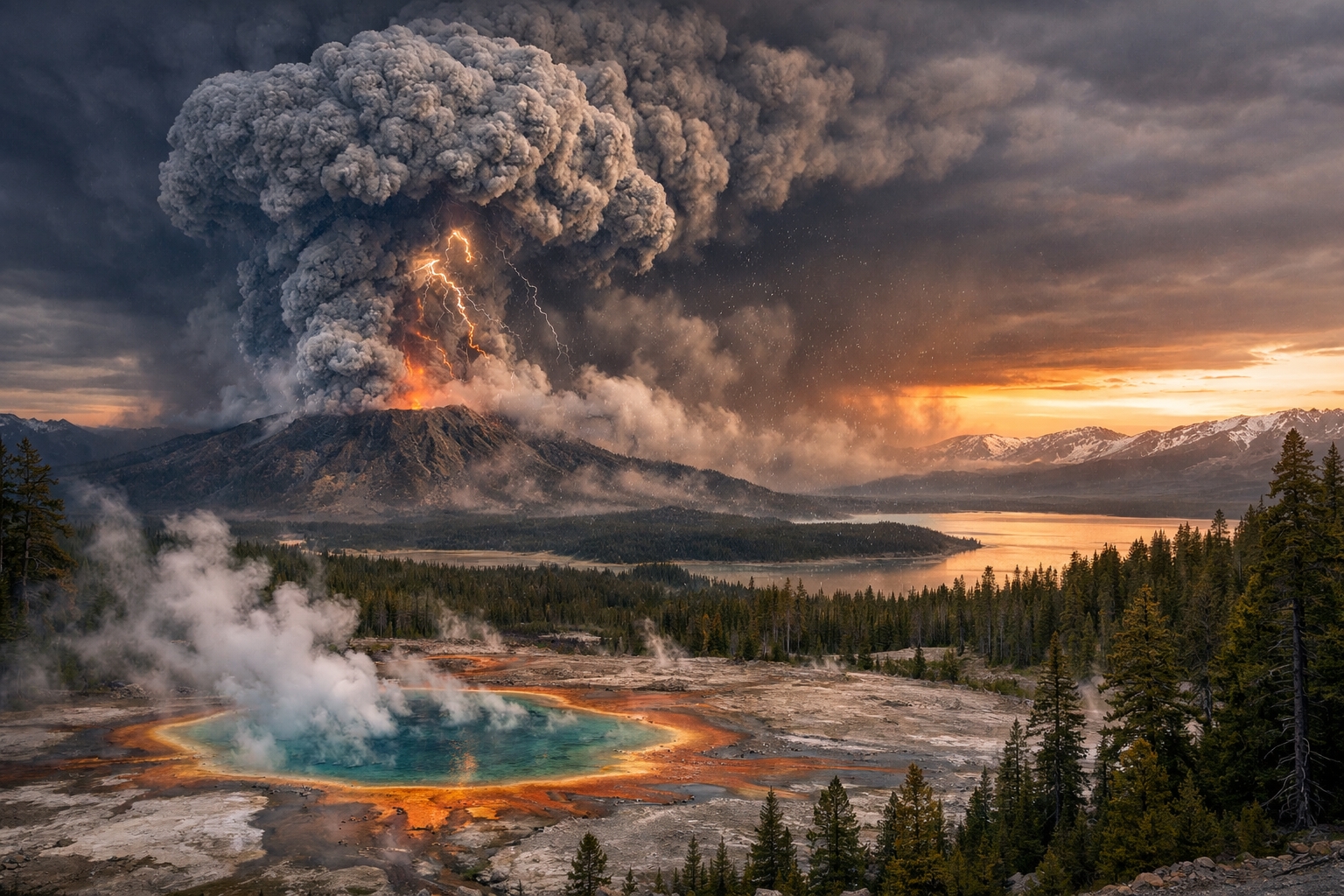
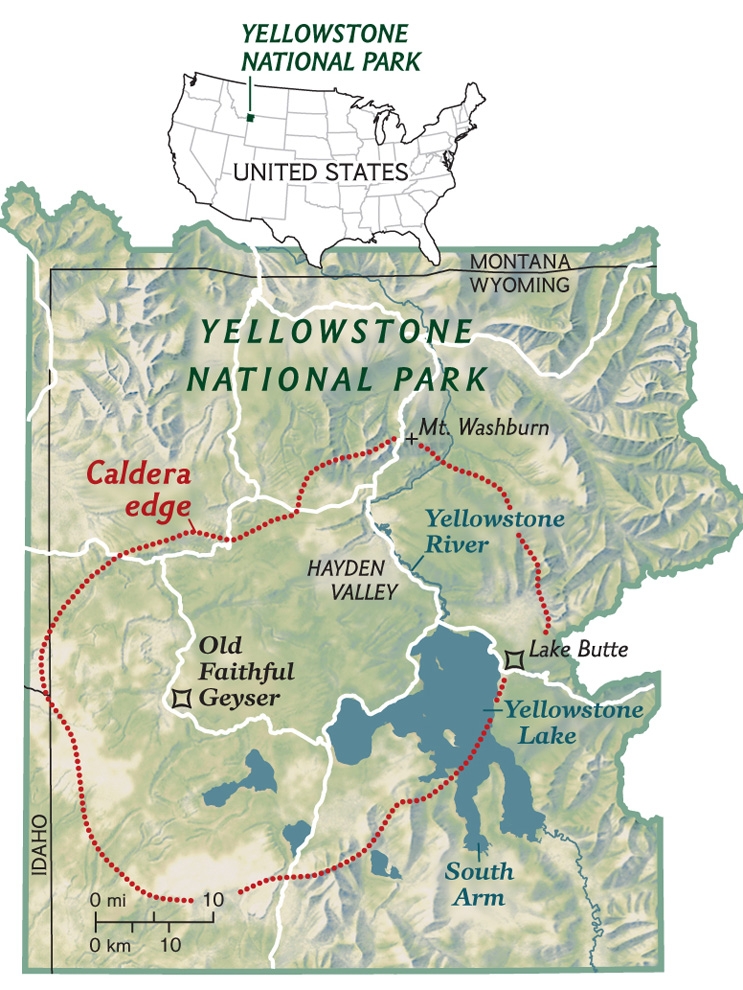
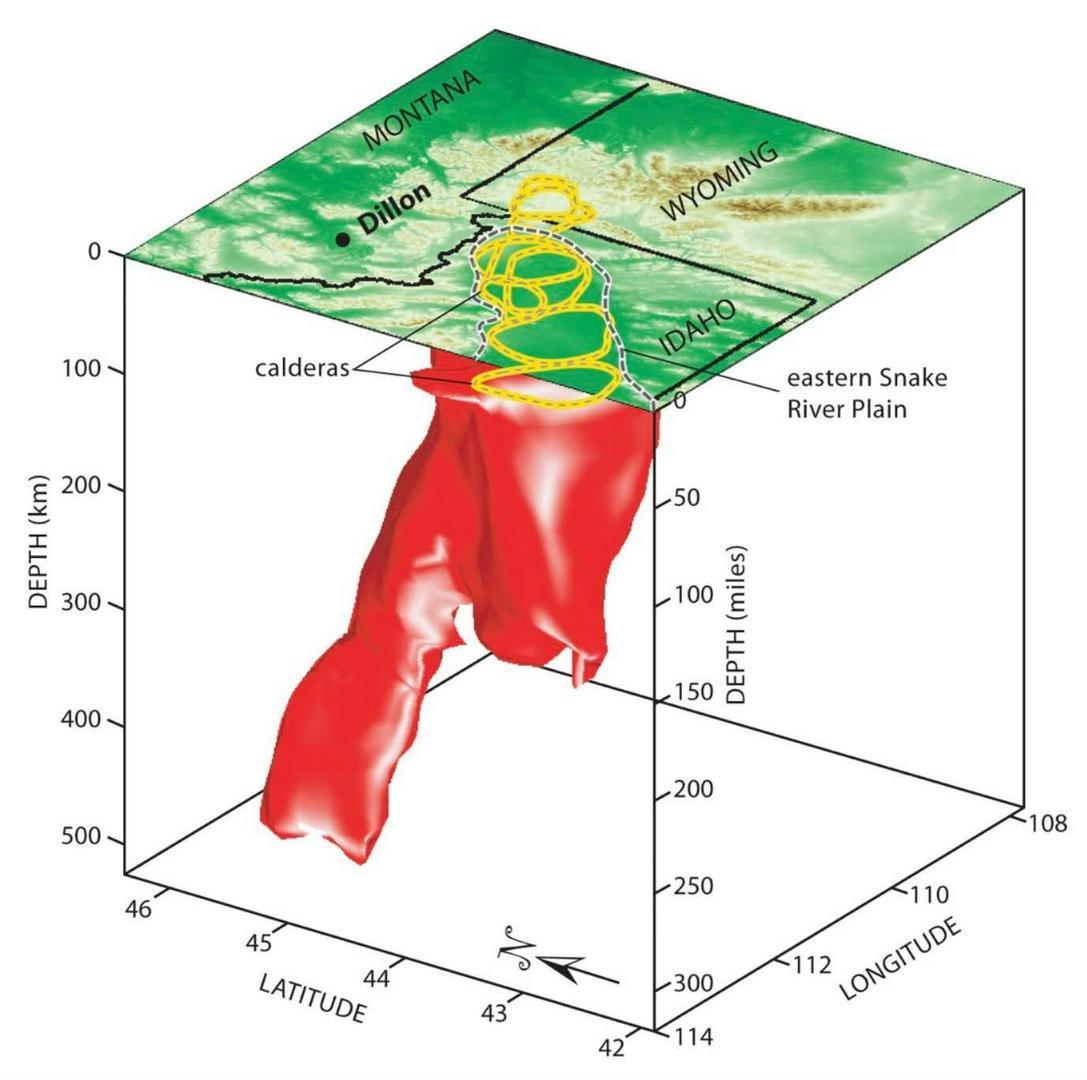
America’s Supervolcano: When Will It Erupt? The Revealing Evidence Beneath Yellowstone National Park lies one of the planet’s largest volcanic systems, a supervolcano capable of eruptions exceeding 240 cubic miles of magma. An eruption of this magnitude would reshape landscapes, blanket vast regions in ash up to several feet deep, destroy forests, and disrupt global climate for years, potentially lowering temperatures worldwide. The Yellowstone caldera spans roughly 34 by 45 miles, about the combined size of Rhode Island and Delaware, and contains over 10,000 geothermal features including geysers, hot springs, mud pots, and fumaroles, which are vents releasing steam and volcanic gases. The magma chamber extends 55 miles long, 18 miles wide, and 3 to 9 miles deep. Most of it is solid rock, while only 16 to 20 percent is molten, far below the 50 percent needed to fracture the crust and allow a supereruption. Yellowstone’s last supereruption, 640,000 years ago, expelled nearly 240 cubic miles of material, covering much of North America in volcanic ash and altering ecosystems for centuries. Earlier events 1,300,000 and 2,100,000 years ago were even larger, illustrating the irregular timing and immense power of supervolcanic activity. The U.S. Geological Survey estimates the annual chance of a supereruption at about 1 in 730,000. More likely hazards include major earthquakes and sudden hydrothermal explosions. Scientists monitor thousands of earthquakes, ground movement via GPS and satellites, gas emissions including carbon dioxide and sulfur dioxide, heat flow, and hot spring chemistry. Current readings show slow uplift and subsidence, low sulfur dioxide, and no sustained earthquake swarms, indicating deep cooling magma. Any future supereruption would be preceded by years of escalating seismic, chemical, and deformation signals, none of which are present today. #Supervolcano #Yellowstone #Science #ScienceNews #America #News #USA

1776 Patriot

Catching America’s Deadliest Serial Killer: The Green River Killer Investigation Gary Ridgway, the Green River Killer, stands among America’s most prolific serial predators, responsible for 49 confirmed victims and claiming up to 80. His crimes spanned from 1982 to 2000 across Washington state. Ridgway targeted vulnerable women, often sex workers or runaways, luring them into isolated areas and strangling them before leaving their bodies in concealed locations along the Green River, which slowed early discovery and hindered investigative progress. Forensic teams relied heavily on microscopic and biological evidence to link him to victims. Minuscule paint spheres measuring roughly 10 microns were recovered from at least six victims. For scale, 10 microns is one tenth the width of a human hair and comparable to a single red blood cell. Infrared microspectroscopy showed the particles matched rare industrial spray paint used at Ridgway’s workplace. Investigators noted that hundreds of spheres in multiple colors created recurring environmental signatures that tied murders to a single source and demonstrated how trace materials could quietly record offender movements. DNA evidence added decisive weight. Preserved samples from several victims were matched to Ridgway’s 1987 saliva sample, confirming direct contact and strengthening the timeline of his activities. These converging forensic streams enabled detectives to confidently link victims separated by many years and refine a consistent offender pattern with greater precision. Ridgway’s methodical tactics and repeated returns to dump sites helped him evade capture for nearly two decades. After his arrest, he entered a detailed confession to avoid capital punishment. He received life imprisonment without the possibility of parole for each count, ensuring he will remain in custody permanently. #TrueCrime #LawEnforcement #History #ForensicScience #SerialKiller #USA

1776 Patriot

30 Lives Saved, 9 Lost: Remembering The Charleston 9 On the evening of June 18, 2007, a massive blaze erupted at the Sofa Super Store on North Rhett Avenue in Charleston, South Carolina. Within minutes, the fire engulfed more than 100,000 square feet of showroom and warehouse space. Thick black smoke and flames spread rapidly through stacks of furniture, creating one of the deadliest structural fires in U.S. history. Charleston Fire Department crews responded immediately. Among them was Captain Louis Mulkey, a 35-year veteran known for his calm leadership. As temperatures near the roof climbed above 1300°F, Mulkey and his team entered the building to search for civilians believed trapped inside. Despite rapidly deteriorating conditions and weakening structural integrity, they pushed deeper into the showroom. More than 80 firefighters entered the structure that night. Around 10:15 p.m., a sudden ceiling collapse trapped several firefighters. Mulkey was among those killed when a large section of the roof gave way. In total, nine Charleston firefighters lost their lives and 55 were injured. Before the collapse, crews helped evacuate an estimated 30 civilians. One survivor later said, “They were the last ones in and the last ones looking for people. They never quit on us.” Investigators later found that fire growth was underestimated and visibility had dropped to near zero. Data from the National Institute of Standards and Technology showed survival time in such conditions can drop by up to 80% in under 3 minutes without fresh air. The tragedy led to nationwide safety reforms, including improved air monitoring and structural risk assessment. Departments adopting these improvements saw a 30% reduction in injury rates in similar fires. Today, the fallen are honored at the "Charleston 9" Memorial Park, where their sacrifice continues to guide future generations of first responders. #HeroStories #America #USA #History #USA #Firefighters

THESE VALUES

John F. Kennedy: The President with the Highest All Time Approva John F. Kennedy, the thirty fifth president of the United States. is still viewed as one of the most respected leaders in modern American historv. Throughout his presidency, his approval rating stayed near 70 percent, which is one of the highest averages ever recorded. His standing is measured through the modern polling system that began in 1936, allowing his numbers to be compared across generations of presidents. Based on this long record of surveys, Kennedy holds the highest average approval of any president in the polling era. Kennedy's popularity came from his personality, message, and calm eadership during major challenges. His naugural address, urging Americans ta serve their country, became one of the most memorable speeches in US history During the Cuban Missile Crisis in 1962, he quided the country through thirteen davs of extreme tension, preventing nuclear conflict and earning wide respect. His support for early civil rights efforts and his commitment to the space program added to the sense that he was eading the nation into a new ana ambitious era Surveys taken long after his death show how strong his legacy remains. One maior poll found that 85 percent of Americans approved of his performance when looking back on his presidency Even during difficult periods, such as the aftermath of the Bay of Pigs invasion, Kennedy kept approval ratings above 70 percent, something few presidents have matched. His calm approach, clear communication, and ability to connect with the public helped him maintain support across states, age groups, and political backgrounds Kennedy's consistently high approval demonstrates how trust and confidence from the public shape a president's place in history. Although he served less than one full term, his leadership during world crises and his appeal to national unity left a lasting mark #Politics #USA #History #USHistory #America