Category Page news

Ryan James

Immigrant Kids Get More Nutrition Aid, My Kids Only Get Frozen Veggies

I’m a mom of two, 7 and 3. Every grocery trip is a careful budget calculation. Last week at Target, I noticed that kids with certain immigrant benefit cards could get extra milk, cheese, and fruit, while my children only qualified for frozen veggies, potatoes, and discounted bread. I saw the immigrant child smiling and picking snacks while their mom swiped the card effortlessly at checkout. My kid looked at the fruit and yogurt, eyes full of longing. I pushed the frozen vegetables into my basket, swallowing the sense of unfairness. At home, my husband and I discussed the policy. We understand it’s meant to support vulnerable groups, but when food allocation is visibly unequal, hardworking families feel the sting of injustice. That night, lying in bed after the kids slept, I kept thinking about that smiling immigrant child, feeling the invisible tensions in policy. #ShowUsTheBill #ImmigrantChildren #FoodAllocation #FamilyStress

Immigrant Kids Get More Nutrition Aid, My Kids Only Get Frozen Veggies
1776 Patriot

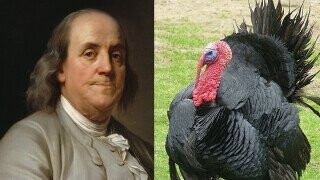
How the Turkey Almost Became America’s National Bird The story of the turkey’s near rise to national symbol begins in the early years of the United States, when leaders were choosing an emblem to represent the new nation. Benjamin Franklin took a special interest in this decision, and in a private letter he shared his belief that the turkey deserved the role more than the bald eagle. He described the turkey as a native species that early settlers and Indigenous communities had long known, hunted, and observed in the wild. To him, this connection made the turkey a more fitting choice for a country trying to define its identity. At the time, wild turkeys roamed across much of North America and were recognized for their strength and surprising agility. They could run up to 20 miles per hour, fly short distances at high speed, and use more than 30 vocalizations to communicate. Settlers often noted how quickly turkeys could react to danger, spotting movement from far away and working together in groups to stay safe. These behaviors shaped Franklin’s view that the turkey represented determination and awareness. The bald eagle, however, carried strong visual appeal and a dramatic silhouette. When the Continental Congress reviewed design proposals in 1782, the eagle appeared on several versions of the Great Seal. Despite Franklin’s private objections, the eagle’s sharp outline and widespread recognition won over the committee. The turkey simply did not gain enough support. Although the turkey did not become the national bird, its place in American life never faded. It continued to be central to farming, hunting traditions, and eventually Thanksgiving celebrations. The story of its near selection remains a unique moment in early American decision making, illustrating how even everyday wildlife played a role in shaping national symbols. #USHistory #History #America #USA #News #USNews #Thanksgiving

OrbitalOtter

The Man Who Went to Prison for His Lookalike’s Crime

In 2000, a man named Richard Jones was sentenced to 19 years in prison for a robbery in Kansas. The only evidence against him? Eyewitness identification. He kept saying he was innocent — and after 17 long years, it turned out he was telling the truth. Investigators later found that the real robber was another man named Ricky, who looked almost exactly like Richard and lived near the crime scene. The resemblance was so uncanny that even people who knew Richard said they couldn’t tell them apart from a photo. Once the truth came out, Richard was finally freed in 2017. To me, this story is terrifying. It shows how easily someone’s life can be destroyed by a mistaken identity — and how fragile justice can be when it relies too much on memory. It also makes me wonder: how many other people might still be behind bars for something they didn’t do? #UnexpectedHistory #UnexpectedResults

The Man Who Went to Prison for His Lookalike’s Crime