Tag Page usa

#usa
1776 Patriot

From The Farm to the Field: Inside CIA Covert Operations Training

Camp Peary, known as "The Farm," is a clandestine CIA training facility in Williamsburg, Virginia, covering roughly 9,000 acres. Officially an Armed Forces Experimental Training Activity, it operates under the Department of Defense while its CIA role remains unacknowledged. Originally a 1942 military base, it was converted in 1951 to train operatives for operations in politically hostile or restricted regions. The centerpiece is the Denied Area Course, a six-month program simulating missions in territories where U.S. presence is prohibited. It is called “Denied Area” because trainees operate in environments where access is forbidden or dangerous, requiring stealth, improvisation, and complete operational secrecy. Exercises include navigating urban areas under surveillance, infiltrating mock foreign compounds, and conducting clandestine meetings. Trainees practice evasion from simulated hostile forces, rooftop and subway movements, and covert observation techniques. Daily routines incorporate firearms drills, close-quarters combat, defensive driving, lock-picking, and improvised entry tactics. Survival training includes wilderness navigation, procuring food and water, and enduring extreme weather while maintaining cover. Psychological resilience is tested through continuous stress scenarios, including simulated capture, interrogation, and live-action decision-making under time pressure. Trainees must respond accurately with minimal information, fostering adaptability and mental toughness. The Farm’s structured classrooms support language training, cryptography, and intelligence analysis, while specialized mock villages allow operatives to rehearse extraction and tradecraft in realistic settings. Though largely secretive, Camp Peary shapes operatives capable of performing complex espionage globally. Its blend of physical, tactical, and psychological training ensures recruits are prepared for both intellectual and operational dangers. #Military #USA #USMilitary

From The Farm to the Field: Inside CIA Covert Operations Training
1776 Patriot

The Monumental Nugget: America’s Largest Gold Nugget In the high reaches of the Sierra Nevada, where rivers carve steep valleys and the land still carries the memory of the Gold Rush, one discovery outshone all others. This was the Monumental Nugget, nicknamed “The Sierra Buttes Treasure,” unearthed in 1869 near Sierra City, California. The nugget weighed an astounding 103 pounds in raw form and contained about 82 pounds of pure gold. To visualize it, the nugget was heavier than an average eight-year-old child and larger than most bowling balls. The crew that discovered it had been working a claim with only modest returns. While clearing old gravel, one miner struck something unusually heavy. As they uncovered it, they realized the nugget was so large they needed several men to lift it. News spread rapidly, and miners from surrounding camps trekked miles to see the historic find. Local towns celebrated for days, and merchants saw a sudden rush of curious visitors eager to glimpse the treasure. Large gold nuggets are exceedingly rare because gold generally forms in thin veins. Natural erosion, pressure, and chemical changes break larger masses into smaller flakes over time. Experts estimate that fewer than one in many millions of nuggets exceeds twenty pounds. By comparison, the Dogtown Nugget at 54 pounds and the Carson Nugget at 45 pounds were enormous but still far smaller than the Monumental Nugget. Most modern prospectors recover only small pieces weighing ounces, making finds like this almost legendary. The Monumental Nugget was eventually melted down for its gold value, a fate common to historic nuggets. Even without the original piece, its story endures as a testament to the extraordinary surprises that once lay hidden in the American frontier and the enduring allure of striking it rich. #GoldRush #FoundTreasure #America #USA #History #USHistory #Science

1776 Patriot

Are Aliens Interdemensional Visitors? The Science Behind the Theory

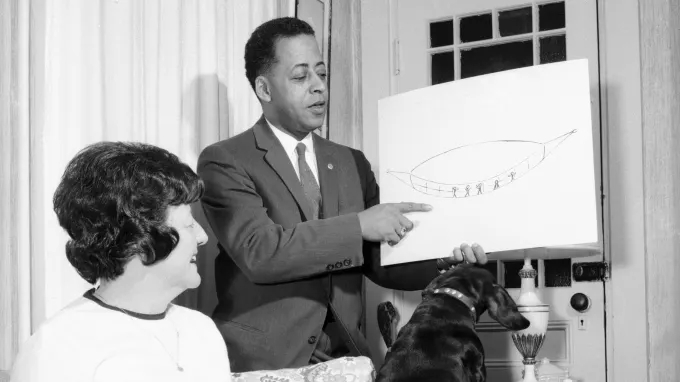
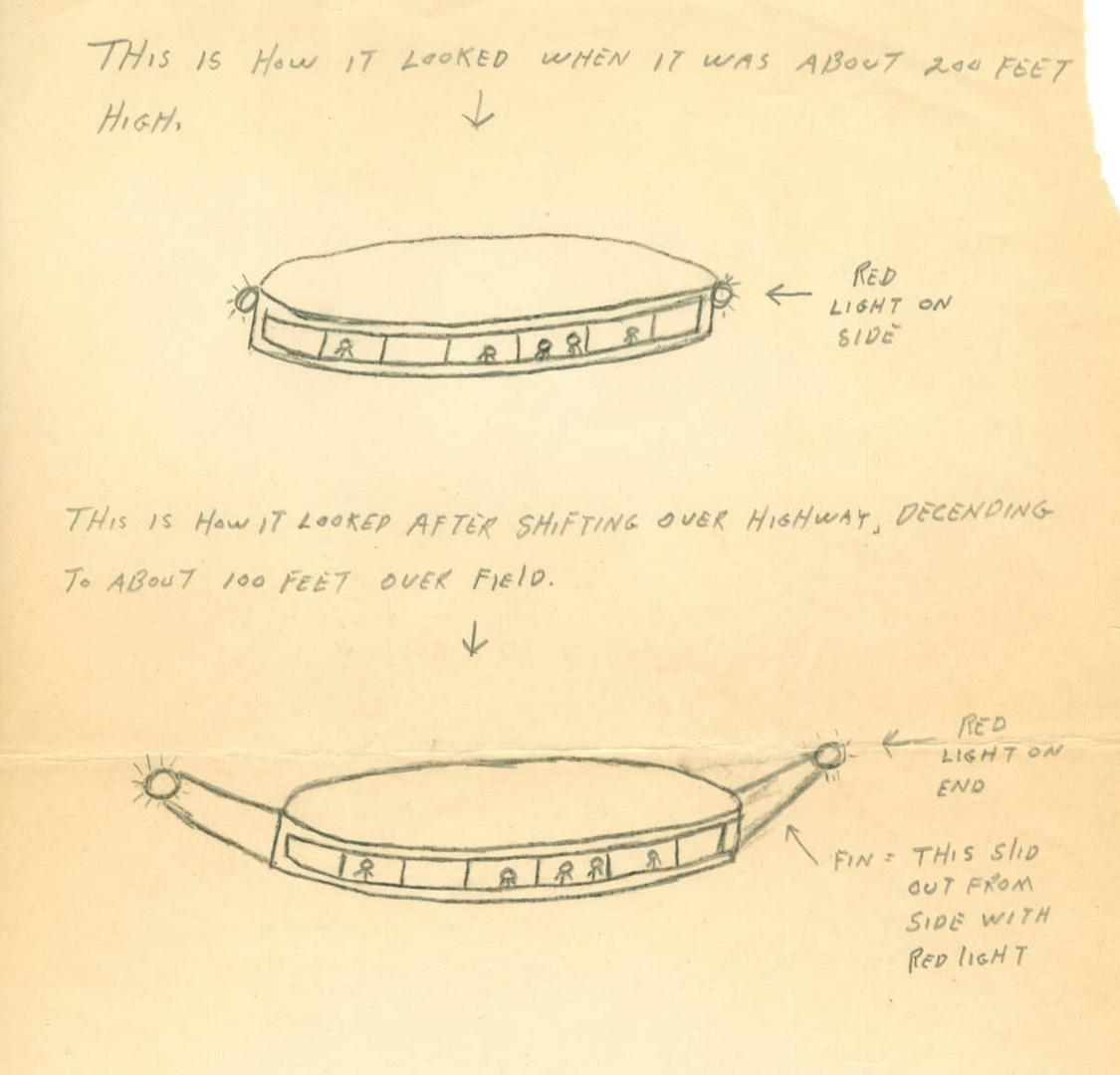
The idea that aliens might be interdimensional rather than travelers from distant planets has gained serious attention among scientists and UFO researchers. For decades, unidentified aerial phenomena were assumed to be spacecraft crossing light years of distance. Yet the distance between stars is so vast that even our most advanced propulsion theories cannot explain how they could reach Earth. Some experts believe these entities are not moving through space at all but through other dimensions that exist beside our own, unseen but overlapping with it. Science suggests this is possible. Physicist Michio Kaku and others studying string theory propose that the universe may contain hidden dimensions beyond the three we experience each day. These invisible layers could, in theory, allow movement that breaks the known limits of physics. Harvard astrophysicist Avi Loeb has also suggested that certain UAP may show technology or intelligence operating in ways that bend or transcend physical law. Modern incidents seem to support the idea. In 2004, Navy pilots from the USS Nimitz encountered a white Tic Tac shaped object that dropped from 80,000 feet to sea level almost instantly. It had no wings or exhaust and performed impossible maneuvers. In 2014 and 2015, pilots from the USS Theodore Roosevelt recorded similar craft off the East Coast, captured in the famous Gimbal and GoFast videos. The objects rotated, hovered, and changed direction at speeds no aircraft could achieve. Such actions might make sense if these craft or beings came from another dimension. A fourth dimensional being would not appear solid to us but as a fleeting shape, flashes of motion, or shifting fragments of a larger body that we cannot fully perceive. What we call UFOs could be shadows of entities passing through our world. If true, it would mean we are not witnessing visitors from distant galaxies but travelers from an unseen layer of reality that occasionally crosses our own. #UFO #Aliens #USA

Are Aliens Interdemensional Visitors?  The Science Behind the Theory
1776 Patriot

Built to Last: The USS Constitution’s Secret Construction That Defied Cannonballs

The USS Constitution, famously called “Old Ironsides,” began construction in 1794 at Edmund Hartt’s shipyard in Boston, part of the U.S. effort under the Naval Act of 1794 to build a strong fleet to protect American trade. Designed by Joshua Humphreys, the Constitution was bigger, faster, and more heavily armed than most frigates of the time. Its hull was built from live oak, a very dense and strong wood, while white oak and pine were used for framing, decks, and internal supports. Shipwrights used hand tools like saws, chisels, mallets, and augers to shape each plank and beam, carefully fitting them together. Humphreys added diagonal braces, heavy angled supports, and double planking to make the hull strong and flexible enough to absorb cannon hits. Wooden pegs, iron bolts, and fasteners held everything together, while tar and rope fibers sealed the seams to keep the ship watertight. Deck beams were notched and bolted, and the masts were set into reinforced posts. Pulleys and ropes helped lift heavy timbers into place. Workers measured and adjusted everything with simple tools like plumb lines, squares, and marking gauges to ensure the hull was straight and strong. The bottom of the ship was covered with copper to prevent marine growth, keeping her fast and seaworthy. By the time she was launched on October 21, 1797, the Constitution was 204 feet long, with a 43-foot-wide beam, and carried 44 guns, making her one of the most powerful frigates of her era. Her combination of speed, firepower, and advanced construction allowed her to survive battles that would have destroyed lesser ships. The Constitution’s construction shows the skill, ingenuity, and hard work of early American shipbuilders. Today, she is a floating museum in Boston, a lasting symbol of U.S. naval strength and craftsmanship. #USA #USHistory #Shipbuilding #USMilitary #Military

Built to Last: The USS Constitution’s Secret Construction That Defied Cannonballs
1776 Patriot

America’s First Serial Killers: The Harpe Brothers

In the chaotic years after the American Revolution, the frontier was lawless, and danger lurked behind every tree. Among its deadliest threats were the Harpe brothers, Micajah “Big Harpe” and Wiley “Little Harpe.” From the early 1790s until 1799, they terrorized Kentucky, Tennessee, and the Ohio Valley, becoming America’s first documented serial killers. Unlike ordinary thieves, they killed for pleasure. Travelers, farmers, and children alike vanished or were found mutilated. Witnesses recalled attacks carried out with rifles, knives, brute force, and bodies dumped in rivers or shallow graves. Families who showed them hospitality often paid with their lives. Investigators faced enormous challenges. Sheriffs patrolled vast territories with few deputies, relying on terrified settlers’ fragmented reports. Survivors recounted horrifying scenes: Big Harpe grinning as he stabbed a merchant in 1797, Little Harpe forcing a child to kneel before shooting him in 1798. Authorities tracked patterns in victim locations, repeated sightings along trails, and the brothers’ distinctive clothing, noting they often traveled with women and children. Wanted notices circulated and newspapers printed descriptions, sparking one of the earliest wide-scale manhunts in American history. The brothers’ unpredictability was chilling. They could appear courteous one moment, erupting into sudden, brutal violence the next. Patterns emerged: families slaughtered in cabins, lone riders gunned down on trails, infants killed for sport. Theft was rare, suggesting the murders were driven purely by sadistic thrill. Their reign ended in June 1799 when Big Harpe murdered the wife and infant of settler Moses Stegall. Stegall formed a posse, tracked Harpe through the Kentucky wilderness, and killed him himself. To send a warning, he decapitated Harpe and mounted the head on a stake by the road, leaving it there for weeks. Little Harpe initially escaped but was later captured and executed. #History #USA

America’s First Serial Killers: The Harpe BrothersAmerica’s First Serial Killers: The Harpe BrothersAmerica’s First Serial Killers: The Harpe BrothersAmerica’s First Serial Killers: The Harpe Brothers
You've reached the end!
Tag: usa - Page 6 | LocalHood