Tag Page innovation

#innovation
LataraSpeaksTruth

April 26, 1892… Sarah Boone received a patent for an improved ironing board. The image used with this story is an original artistic illustration inspired by Boone’s documented 1892 patent. It shows a dignified dressmaker in a late 1800s sewing room, standing beside a narrow curved ironing board with garments, sewing tools, fabric, and a patent-style diagram around her. It is not a verified portrait of Sarah Boone, but a tribute to her work and invention. Sarah Boone was a dressmaker from New Haven, Connecticut. Through her work, she understood a problem many people faced: pressing clothing was not always simple, especially sleeves, fitted waists, curved seams, and tailored garments. Boone saw the issue and improved the tool. Her invention was not about creating the first ironing board. It was about making the board better suited for the shape of clothing. Her improved ironing board was narrow, curved, and designed to help press sleeves and fitted garments more effectively. On April 26, 1892, she received U.S. Patent No. 473,653 for that design. That distinction matters. Boone improved an existing household tool using practical knowledge from her own work. Her contribution came from observation, skill, and everyday problem-solving. At a time when women, especially women of color, were rarely recognized for innovation, Boone secured her name in the patent record. Her story reminds us that invention does not always begin in a laboratory. Sometimes it begins in a sewing room, a kitchen, a workshop, or anywhere someone keeps saying, “There has to be a better way.” Sarah Boone’s legacy is not just about an ironing board. It is about creativity, persistence, and the value of workroom knowledge that too often goes overlooked. #SarahBoone #Inventors #WomenInventors #Innovation #HiddenFigures

LataraSpeaksTruth

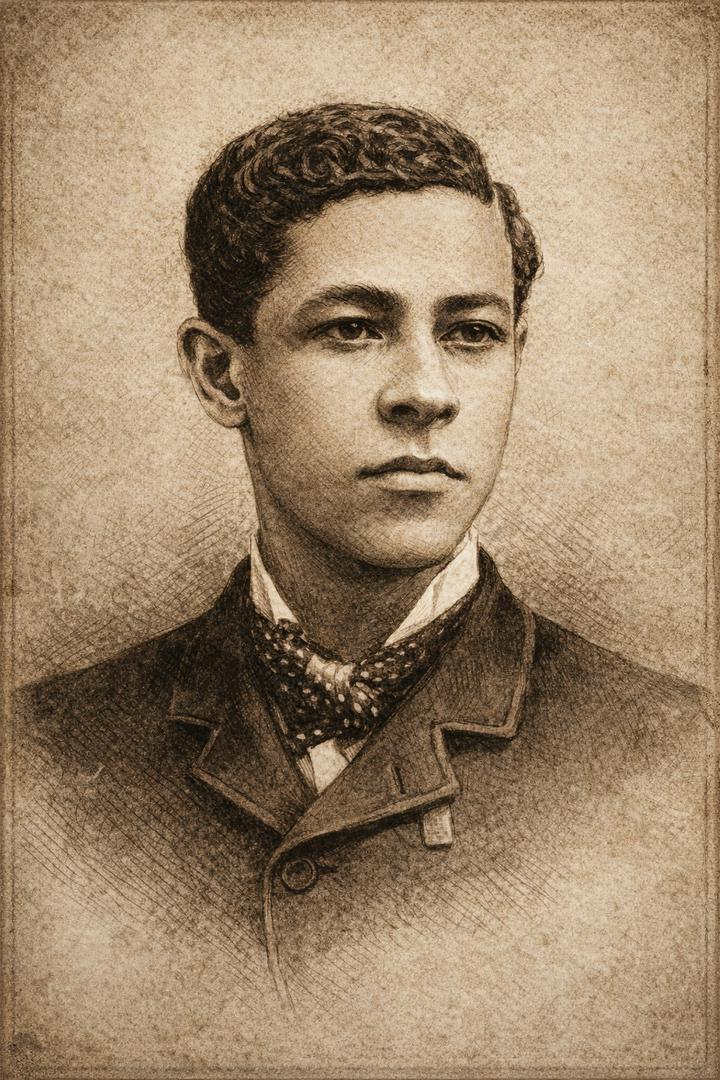
Jan Ernst Matzeliger was an inventor whose work transformed the shoe industry during the late nineteenth century. He was born on September 15, 1852, in Paramaribo, Suriname, which was then called Dutch Guiana. His father was a Dutch engineer, and his mother was a Black Surinamese woman. As a young man, Matzeliger developed mechanical skills while working around machinery and ships before later immigrating to the United States. In the 1870s, Matzeliger settled in Lynn, Massachusetts, a city known at the time as a major center of shoe manufacturing. During this period, one of the most difficult and expensive steps in making a shoe was the process called lasting. Lasting is the step where the upper part of a shoe is pulled and shaped around a form called a last and then attached to the sole. Before Matzeliger’s invention, this step had to be done by hand by skilled craftsmen known as lasters, making the process slow and costly. Matzeliger studied the problem carefully and began developing a machine that could perform this task automatically. After years of experimentation, he successfully created the shoe lasting machine, which could attach the upper part of a shoe to the sole far faster than hand labor. He received a patent for the lasting machine in 1883. His invention greatly increased production in shoe factories and helped make footwear more affordable for ordinary people. Matzeliger’s work became widely used in the shoe manufacturing industry and played a major role in the growth of mass shoe production in the United States. Although his invention had a major impact, he did not live long after his success. He died on August 24, 1889, at the age of 36. His contribution to industrial manufacturing remains an important part of American history, Black history, and the development of modern footwear production. #JanErnstMatzeliger #Inventors #AmericanHistory #IndustrialHistory #BlackHistory #Innovation #ShoeIndustry #HistoryMatters #LataraSpeaksTruth

justme

Humanoid robot girlfriend sparks debate about future companionship today Meet Aria is a humanoid robot designed to offer companionship in a way that feels more personal and interactive than traditional machines. Built with advanced AI systems, she can talk, respond emotionally, and adapt to human behavior. The robot has gained attention for being marketed as a companion girlfriend experience priced at around $175,000, targeting futuristic tech buyers interested in AI relationships. The idea behind Aria is part of a growing trend in artificial intelligence where machines are designed not just for tasks but also for emotional interaction. Supporters believe such robots could help reduce loneliness and provide comfort for people who struggle with social connection in modern life. Developers say the system learns from conversations to improve responses over time. However critics raise concerns about the emotional and ethical side of human robot relationships. Some experts say people may become too attached to machines, which could change how real human relationships develop. There are also questions about privacy, data use, and how AI systems store personal conversations shared with users. As technology continues to evolve, products like Aria highlight how fast artificial intelligence is moving into everyday human life. While still controversial and expensive, such robots show a possible future where companionship is no longer limited to humans alone. Many believe this could reshape social behavior, dating culture, and even mental health support systems in the coming years. Others see it as just the beginning of a larger shift in how humans interact with machines. For now, Aria remains a symbol of futuristic innovation and the growing blend between emotion and artificial intelligence in modern society. #techmedtimes #ai #robotics #futuretech #innovation

The Signal Wire

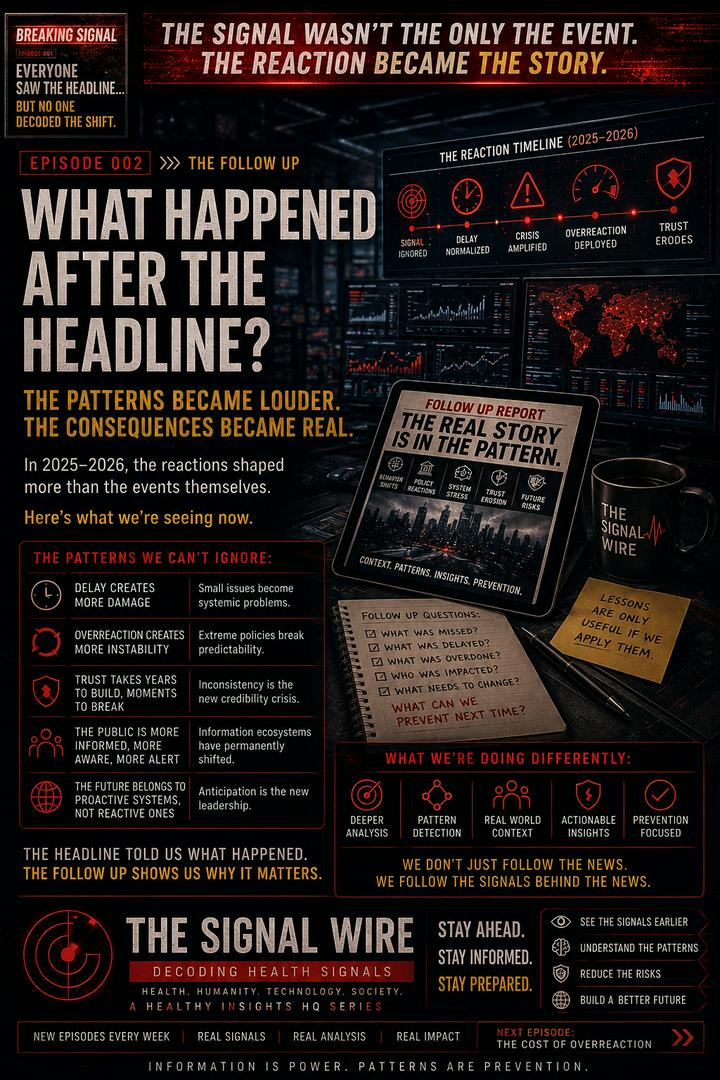
BREAKING SIGNAL The Headline Was Never The Full Story. Most people remember the event. Few people remember the reaction. But in 2025–2026, the reactions often revealed more than the crisis itself. ⚠️ The real signal wasn’t only what happened. It was: • how fast systems responded • who panicked first • what policies changed overnight • what trust disappeared afterward • and which patterns kept repeating Because reactions leave fingerprints. And those fingerprints expose: • institutional pressure • public fear • technological imbalance • leadership instability • and societal vulnerability At The Signal Wire, we don’t just follow headlines. We study: 📍 delayed action 📍 policy overcorrection 📍 trust erosion 📍 behavioral shifts 📍 health system strain 📍 AI acceleration 📍 environmental instability 📍 information overload The deeper reality? Small ignored signals become large systemic consequences. And the future may belong to systems that detect patterns early, before reaction becomes survival mode. The headline told people what happened. The signal reveals why it matters. THE SIGNAL WIRE Decoding Health • Humanity • Technology • Society by Healthy Insights HQ #TheSignalWire #BreakingSignal #DecodingSignals #PolicyReaction #HealthSignals #FutureTrends #SignalDetection #SystemsThinking #PublicHealth #AI #Technology #HealthTech #Society #DigitalHealth #TrustCrisis #PatternRecognition #Innovation #BehavioralSignals #CrisisResponse #HealthyInsightsHQ

ELON MUSK FOUNDATION

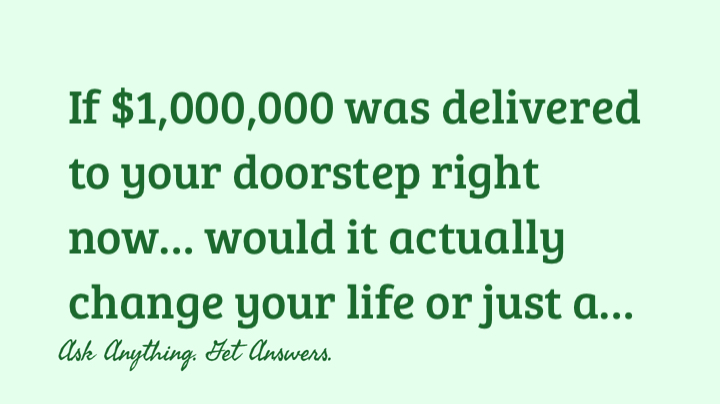
If $1,000,000 was delivered to your doorstep right now… would it actually change your life or just amplify who you already are? Most people think money solves problems. It doesn’t , It only reveals priorities. Would you build something meaningful or just consume more? Would you invest in the future… or escape the present? Let’s break it down: • House — Security, stability, ownership. • Savings — Discipline, patience, long-term thinking. • Business — Risk, innovation, impact. • Vacation — Experience, freedom, memories. • Kids — Legacy, responsibility, love. • Car — Status, utility, expression. • Domination — Vision, ambition, changing the game. The real question isn’t what you would spend it on… It’s who you become after you receive it. Money doesn’t create mindset , mindset attracts and multiplies money. So… what’s your move? #ElonMusk #TechNews #Innovation #FutureOfTech #Mindset #Wealth #TrendingNow

justme

Innovative infrastructure is opening new ways to generate energy from everyday activity. Engineers are exploring systems that capture motion, vibration, and airflow—turning traffic, footsteps, and urban movement into usable electricity. These approaches fall under concepts like Kinetic Energy Harvesting, where otherwise wasted energy is converted into power. Examples include piezoelectric road surfaces, pedestrian walkways that generate electricity, and small turbines placed along highways to capture airflow from passing vehicles. While these systems usually produce small amounts of energy compared to large-scale renewables, they are valuable as supplemental solutions—especially in smart cities aiming to reduce emissions and improve efficiency. #energy #innovation #sustainability #technology #smartcity #renewable #fblifestyle

ELON MUSK FOUNDATION

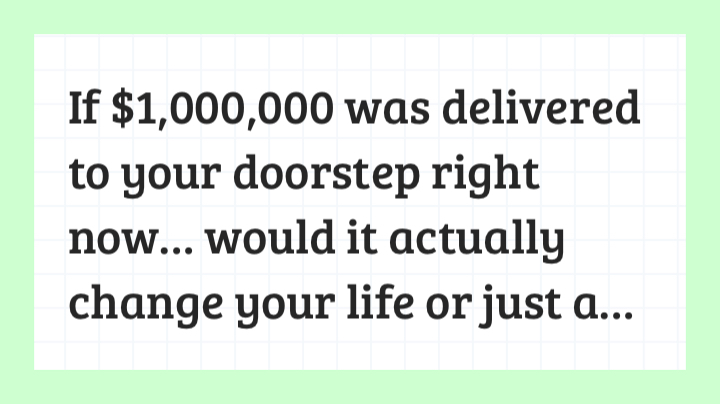
If $1,000,000 was delivered to your doorstep right now… would it actually change your life or just amplify who you already are? Most people think money solves problems. It doesn’t , It only reveals priorities. Would you build something meaningful or just consume more? Would you invest in the future or escape the present? Let’s break it down: • House — Security, stability, ownership. • Savings — Discipline, patience, long-term thinking. • Business — Risk, innovation, impact. • Vacation — Experience, freedom, memories. • Kids — Legacy, responsibility, love. • Car — Status, utility, expression. • Domination — Vision, ambition, changing the game. The real question isn’t what you would spend it on… It’s who you become after you receive it. Money doesn’t create mindset , mindset attracts and multiplies money. So… what’s your move? #ElonMusk #TechNews #Innovation #FutureOfTech #Mindset #Wealth #TrendingNow