Tag Page hiddenhistory

#hiddenhistory
Shawn Winchester

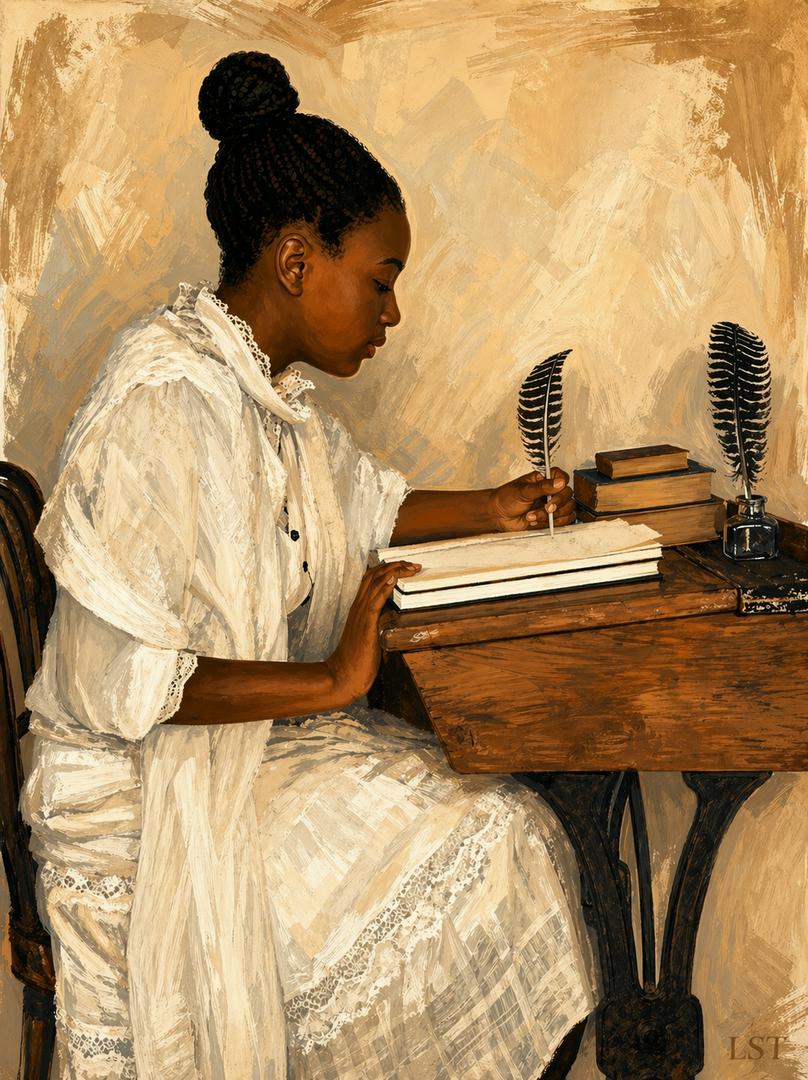
On April 23, 1872, Charlotte E. Ray made history in Washington, D.C. She became the first woman admitted to practice before the Supreme Court of the District of Columbia, helping cement her place as the first Black woman lawyer in the United States Ray was born in New York City in 1850. Her father, Reverend Charles Bennett Ray, was an abolitionist, minister, and newspaper editor who believed deeply in education That foundation mattered, because Charlotte stepped into a profession that was not built to welcome women, and especially not Black women, She studied at Howard University School of Law and graduated in 1872. At a time when women were still fighting to be taken seriously in the legal field, Ray broke through two walls at once. She challengedboth race barriers and gender barriers. After being admitted to practice law, Ray opened her own law office in Washington, D.C. She worked in commercial law and became known for her legal skill. One of her most recognized cases involved representing a woman seeking divorce from an abusive husband, showing that Ray was not just a symbol of progress. She was a real attorney doing serious legal work But history should tell the full truth Charlotte E. Ray had the education, the courage, and the abilitv. What she did not have was a society willing to fully support a Black woman attorney. Racism and sexism made it difficult for her to keep enough clients to sustain her practice. Eventually she left law and returned to teaching That part matters tooBecause sometimes the door opens, but the room still refuses to make space. Charlotte E. Ray still walked through it On April 23, we remember her not iust because she was first. but because she stepped into a world that tried to keep her out and left her name in the record anyway #CharlotteERay #History #WomensHistory #LegalHistory #OnThisDay #HiddenHistory #LataraSpeaksTruth

LataraSpeaksTruth

On April 23, 1872, Charlotte E. Ray made history in Washington, D.C. She became the first woman admitted to practice before the Supreme Court of the District of Columbia, helping cement her place as the first Black woman lawyer in the United States. Ray was born in New York City in 1850. Her father, Reverend Charles Bennett Ray, was an abolitionist, minister, and newspaper editor who believed deeply in education. That foundation mattered, because Charlotte stepped into a profession that was not built to welcome women, and especially not Black women. She studied at Howard University School of Law and graduated in 1872. At a time when women were still fighting to be taken seriously in the legal field, Ray broke through two walls at once. She challenged both race barriers and gender barriers. After being admitted to practice law, Ray opened her own law office in Washington, D.C. She worked in commercial law and became known for her legal skill. One of her most recognized cases involved representing a woman seeking divorce from an abusive husband, showing that Ray was not just a symbol of progress. She was a real attorney doing serious legal work. But history should tell the full truth. Charlotte E. Ray had the education, the courage, and the ability. What she did not have was a society willing to fully support a Black woman attorney. Racism and sexism made it difficult for her to keep enough clients to sustain her practice. Eventually, she left law and returned to teaching. That part matters too. Because sometimes the door opens, but the room still refuses to make space. Charlotte E. Ray still walked through it. On April 23, we remember her not just because she was first, but because she stepped into a world that tried to keep her out and left her name in the record anyway. #CharlotteERay #History #WomensHistory #LegalHistory #OnThisDay #HiddenHistory #LataraSpeaksTruth

LataraSpeaksTruth

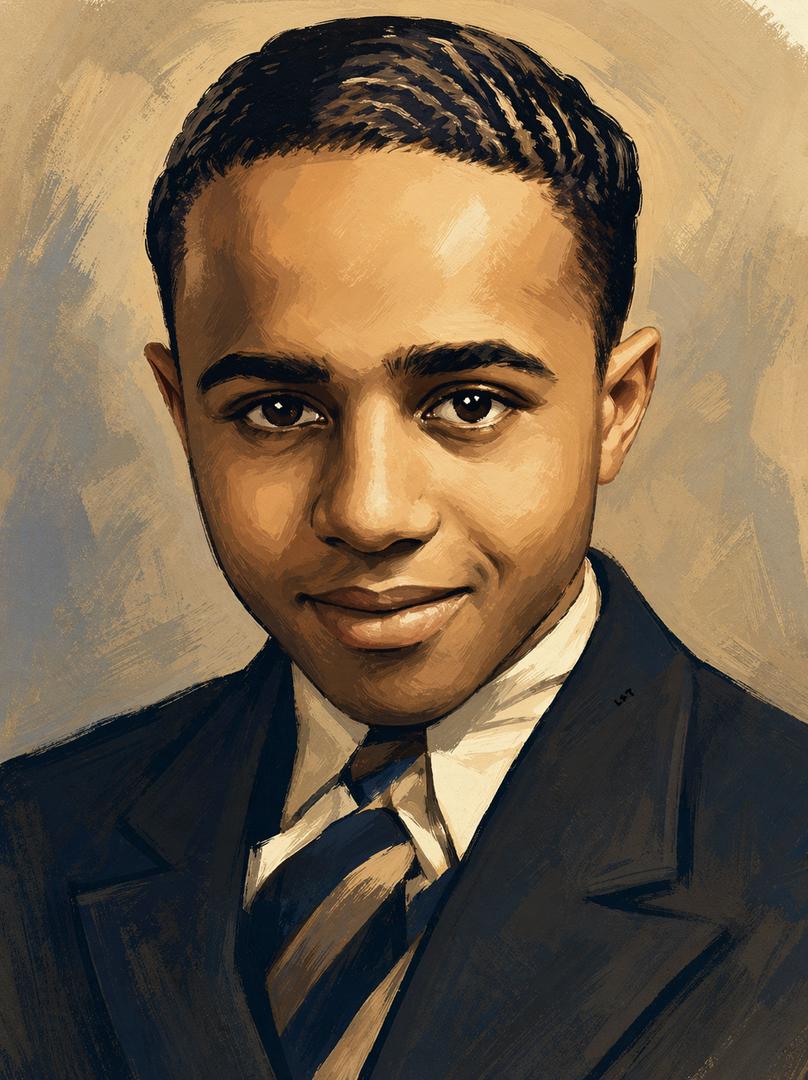
On April 24, 1919, David Harold Blackwell was born in Centralia, Illinois. And his name belongs in the room whenever we talk about brilliant minds who helped shape the modern world. Blackwell became a mathematician and statistician whose work touched probability, game theory, information theory, Bayesian statistics, and dynamic programming. That may sound like a mouthful, but here is the plain truth: he studied how people make decisions when the outcome is uncertain. That kind of thinking matters everywhere. In economics. In science. In technology. In strategy. In the systems people use today without ever knowing whose mind helped build the foundation. He earned his Ph.D. in mathematics from the University of Illinois in 1941, when he was only 22 years old. At a time when doors were often closed before a Black scholar could even reach for the handle, Blackwell kept walking forward anyway. In 1965, he became the first African American elected to the National Academy of Sciences. That was not just a personal achievement. That was a barrier breaking in one of the highest scientific institutions in the country. He also became the first Black tenured professor at the University of California, Berkeley, and his legacy continues through ideas tied to the Rao-Blackwell theorem, Blackwell’s approachability theorem, and other work that still carries his name. David Blackwell did not need noise to prove greatness. His work was precise. His mind was powerful. And his legacy reminds us that Black history is not only found in marches, music, sports, or politics. It is also found in equations, theories, classrooms, and ideas that changed how the world thinks. On April 24, we remember David Harold Blackwell…a quiet giant of mathematics whose brilliance still speaks. #DavidBlackwell #BlackHistory #HiddenHistory #Mathematics #LataraSpeaksTruth

LataraSpeaksTruth

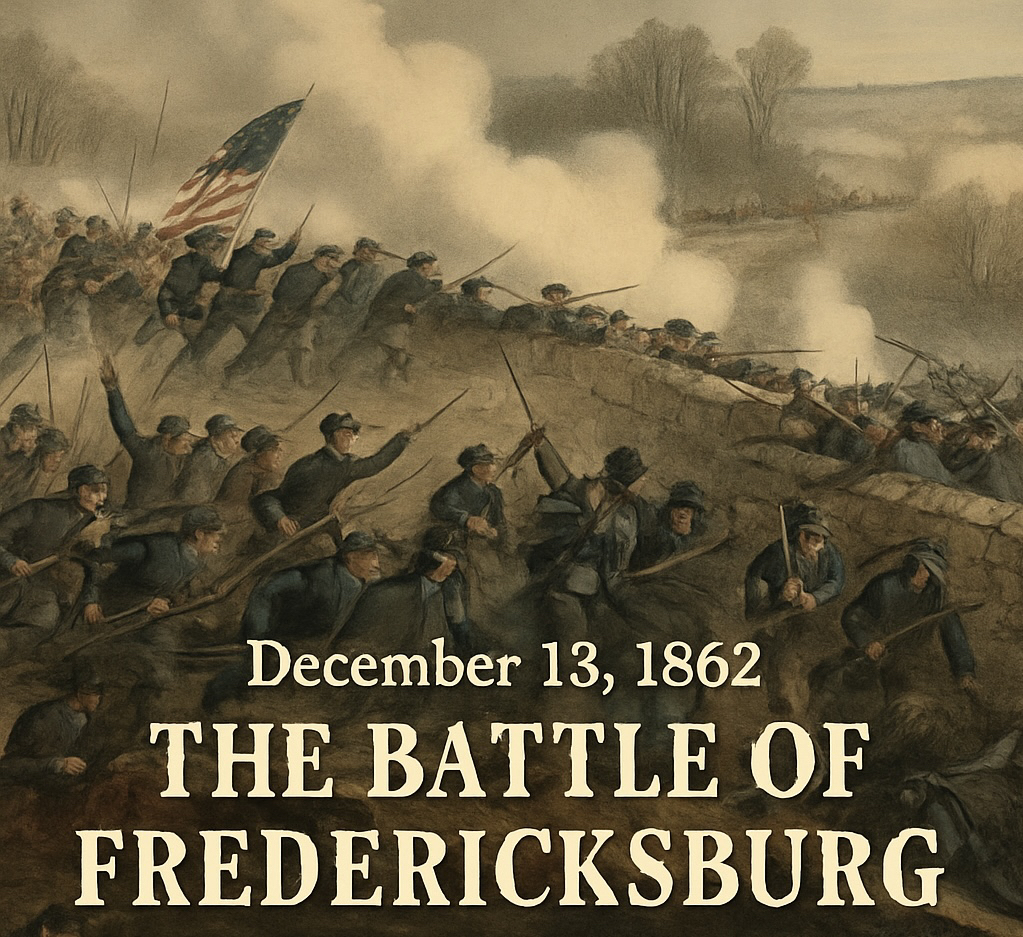
The Battle of Fredericksburg on December 13, 1862 unfolded during one of the most consequential pauses in American history. The Emancipation Proclamation had been announced but would not take effect for another three weeks, placing this battle squarely in the gap between declared freedom and enforced freedom. That timing matters. Although the soldiers fighting at Fredericksburg were overwhelmingly white, the consequences of the Union’s defeat fell heavily on enslaved people. Every failed campaign delayed the collapse of the Confederacy, extending the lifespan of slavery in the South. Union losses did not just cost lives on the battlefield, they prolonged bondage beyond it. Enslaved Black people in Virginia were also directly entangled in this campaign. They were forced to build fortifications, transport supplies, cook, clean, and provide labor for Confederate forces. They were not passive observers of the war. They were coerced infrastructure sustaining it. Fredericksburg’s staggering casualties intensified Northern pressure on Union leadership. Repeated bloodshed made emancipation less of a political abstraction and more of a moral and strategic necessity. That shift helped open the door to Black enlistment in 1863, altering the direction of the war and the meaning of freedom itself. Fredericksburg was not a Black-led battle, but it was part of the chain reaction that led to Black soldiers fighting for their own liberation and the formal destruction of slavery. History is not only about who is visible in the moment, but about who bears the cost while the nation decides who it will become. #December13 #OnThisDay #CivilWarHistory #BattleOfFredericksburg #AmericanHistory #HistoryMatters #UntoldHistory #HiddenHistory #HistoricalContext

LataraSpeaksTruth

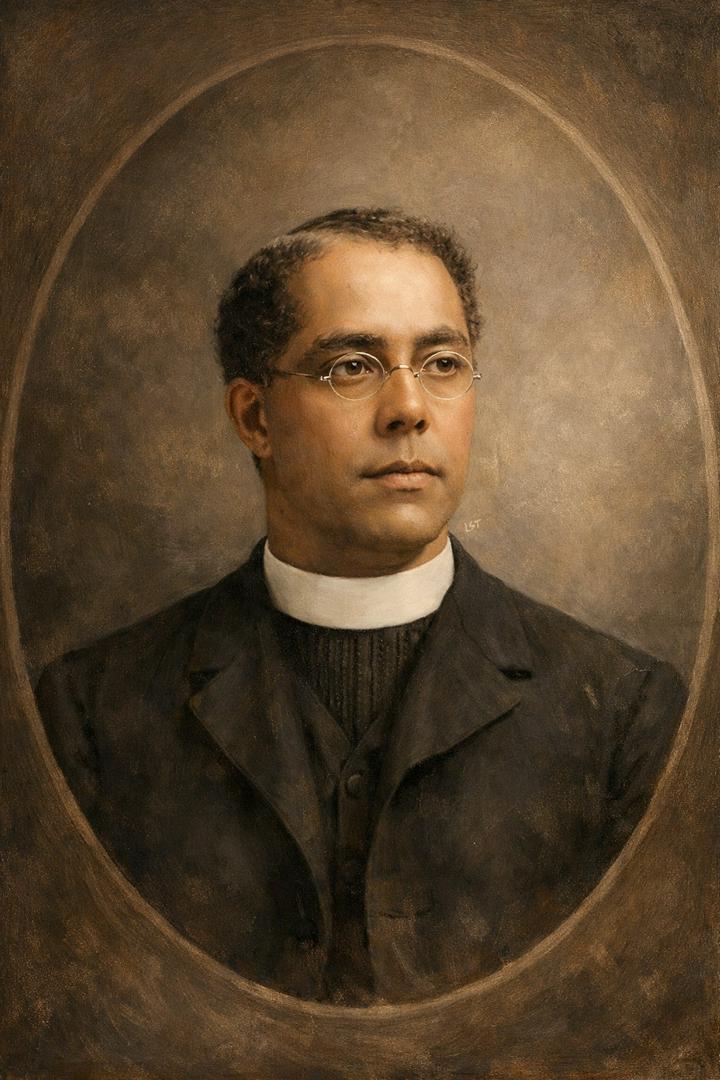
On December 19, 1891, in Baltimore, history moved quietly but decisively. Charles Randolph Uncles became the first African American man ordained a Catholic priest on U.S. soil, breaking through a Church that, like the country around it, was deeply entangled in racial exclusion. Born in 1859 to parents who had been enslaved, Uncles converted to Catholicism as a teenager and soon felt called to the priesthood. That calling was met with resistance. American seminaries shut their doors to him because of his race, forcing him to complete his studies in Europe before returning home for ordination. Ordination did not end the struggle. Father Uncles spent his ministry navigating segregation in parishes, schools, and religious institutions. Still, he showed up. Still, he served. Still, he believed the Church could be better than its habits. He became a founding force behind the Society of St. Joseph of the Sacred Heart, known as the Josephites, a religious order dedicated to serving Black Catholic communities in the United States. This was not symbolic work. It was real, grounded pastoral labor. Father Uncles was more than a parish priest. He was an educator, an advocate, and living proof that authority, faith, and leadership were never meant to be limited by race. His presence at the altar challenged assumptions about who belonged there. December 19, 1891 stands as more than a religious milestone. It reminds us that progress often begins with someone willing to endure exclusion so others do not have to. History does not always shout. Sometimes it kneels, stands up anyway, and refuses to leave. #OnThisDay #ThisDayInHistory #AmericanHistory #FaithHistory #ReligiousHistory #HiddenHistory #UntoldHistory #HistoryMatters

LataraSpeaksTruth

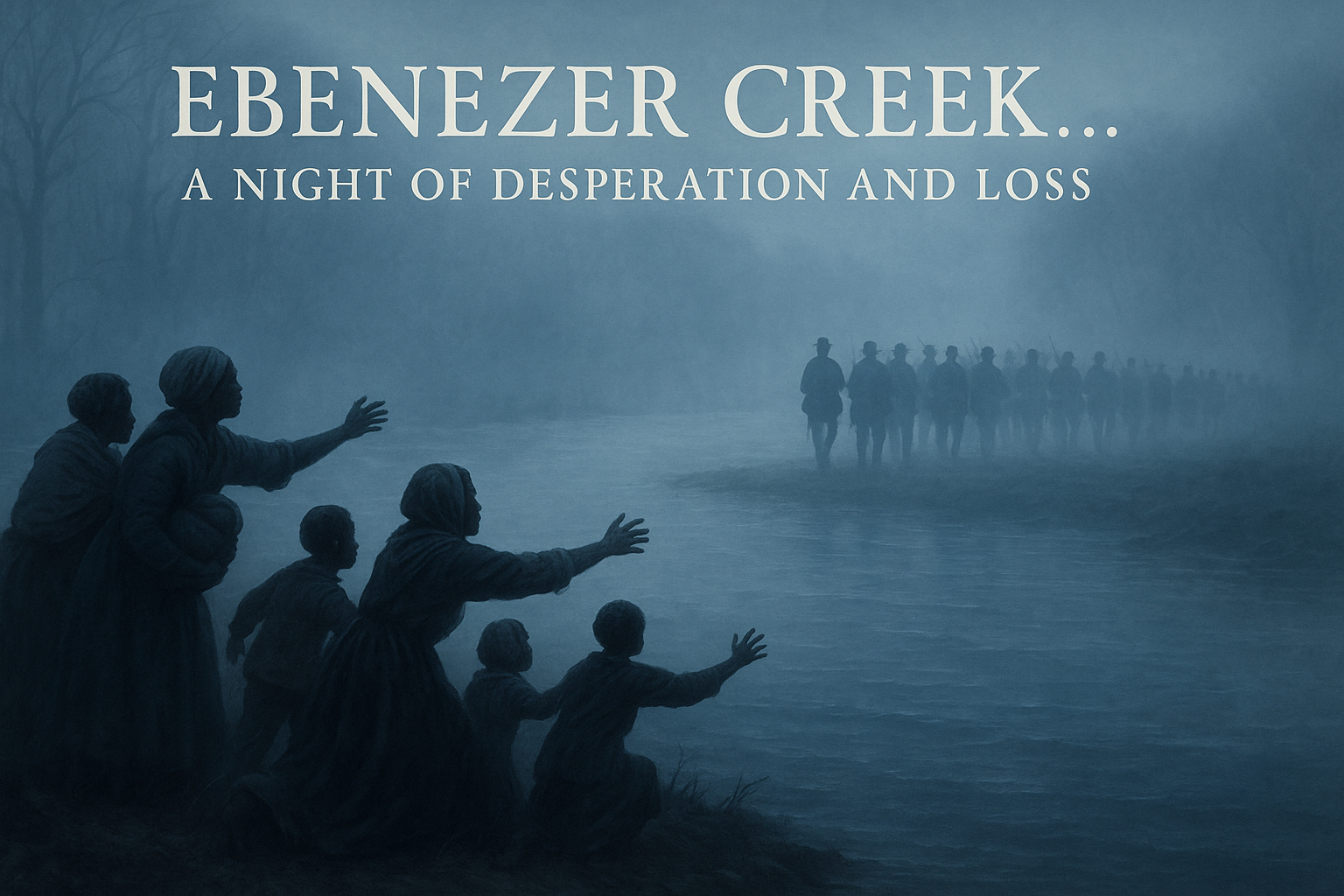
The tragedy at Ebenezer Creek remains one of the most devastating and overlooked moments of the Civil War. As Union troops advanced toward Savannah during Sherman’s March to the Sea, hundreds of freedom seekers followed behind them, believing the army represented safety and a chance at a future beyond bondage. They walked for days beside the soldiers, carrying children, bundles, and the weight of generations. When they reached the cold waters of Ebenezer Creek, Union General Jefferson C. Davis ordered his men to cross first on a pontoon bridge. Once the troops were safely over, the bridge was pulled up without warning, leaving the refugees stranded as Confederate forces closed in. Panic spread as families realized they were trapped with nowhere to run. People leapt into the water, clinging to anything that might float, pieces of wood, clothing, each other. Many drowned trying to reach the other side. Others were captured. A moment that should have been a step toward freedom turned into a night of terror and loss. The massacre at Ebenezer Creek exposed a harsh truth of that era… even in a war fought over slavery, the safety of Black refugees was treated as negotiable. Their trust was betrayed, their lives dismissed, and their suffering pushed to the margins of history. And before anyone shows up with the tired “move on, this is old news, get over the past” routine, let me help you out… how about you move on? I’m from Georgia and in all my years in this state I never once heard about this. I’m learning it right alongside everyone else. This is exactly why these stories matter. History doesn’t disappear just because it makes people uncomfortable. We deserve to know what happened on the soil we stand on. #LataraSpeaksTruth #BlackHistory #AmericanHistory #HiddenHistory #Under2000Characters

LataraSpeaksTruth

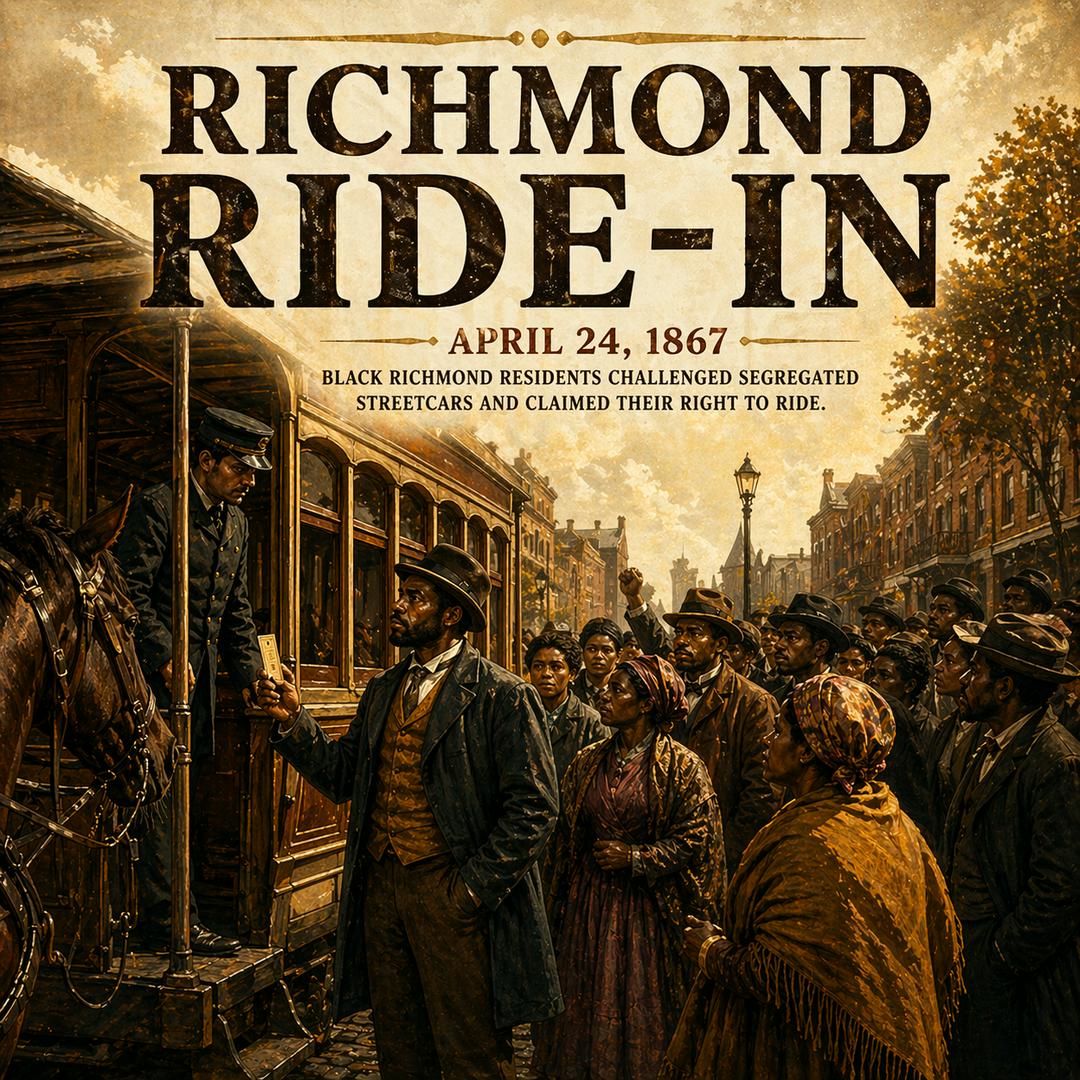
On April 24, 1867, Black residents in Richmond, Virginia made it clear that the fight for equal treatment did not begin in the 1950s. It was Reconstruction. Slavery had officially ended through the 13th Amendment barely more than a year earlier, but freedom on paper did not mean equal rights in everyday life. In Richmond, Black passengers were being denied access to privately operated, horse-drawn streetcars, even when they had paid for a ticket. One of the people connected to this protest was Christopher Jones. According to historical records, Jones bought a ticket for a Richmond streetcar and attempted to ride. When he was refused, a crowd gathered in support of his right to board. He was later arrested for disturbing the peace. But the people did not back down. Black Richmond residents organized protests against the streetcar company’s racial restrictions. This was not just about transportation. It was about citizenship, public space, dignity, and whether freedom would mean anything beyond words written into law. That is what makes this history so important. Long before the Montgomery Bus Boycott, long before Rosa Parks became a national symbol, Black communities were already challenging segregation in public transportation. They were using protest, public pressure, and collective action to demand what should have already been theirs. The Richmond Streetcar Protest reminds us that civil rights history did not suddenly appear in the 20th century. It had deep roots in Reconstruction, when newly freed people were fighting to define what freedom would actually look like in public life. April 24, 1867 deserves to be remembered because it shows us something powerful. The pushback started early. The courage was already there. And the demand was simple: if we paid to ride, we had the right to ride. #BlackHistory #ReconstructionHistory #RichmondVA #CivilRightsHistory #HiddenHistory

LataraSpeaksTruth

Romare Bearden was one of the most influential American artists of the twentieth century, known for turning everyday Black life into unforgettable visual stories. Born on September 2, 1911 in Charlotte, North Carolina, he moved to New York City as a child during the Great Migration. Harlem became his creative home, a place filled with music, literature, and bold ideas that shaped how he saw the world. Bearden studied at New York University and explored different paths early on, but art kept calling him back. He began as a cartoonist and painter, then found the style that made him famous: collage. He combined photographs, painted paper, magazine clippings, and textured materials to build layered scenes that felt like memory brought to life. His work captured church gatherings, family moments, Southern roots, Harlem streets, and the rhythm of jazz. Instead of spotlighting a single person, he often showed the shared experience of a community. His images feel musical, like stories told in chords and fragments, then stitched into something whole. Bearden’s work has been shown in major museums, and in 1987 he received the National Medal of Arts. He passed away in 1988, but his influence is still everywhere, in exhibitions, classrooms, and in the artists who keep learning from his vision. #RomareBearden #BlackHistory #BlackArtists #ArtHistory #AmericanArt #Harlem #GreatMigration #CollageArt #CulturalHistory #HistoryMatters #HiddenHistory

LataraSpeaksTruth

Priscilla “Mother” Baltimore did not just leave a system built to control her life. She helped build a place where freedom could stand on its own land. Born into slavery in Bourbon County, Kentucky in 1801, Baltimore was sold as a child and later taken to Missouri. In St. Louis, she eventually purchased her freedom, a powerful act in a country where Black people were treated as property and forced to fight for every inch of independence. But Baltimore did not stop with herself. Historical accounts say she helped other people gain freedom, including members of her own family. She became known as “Mother” Baltimore because of her role as a caretaker, organizer, abolitionist, and spiritual leader. She was also connected to the African Methodist Episcopal Church, which played a major role in Black worship, education, organizing, and resistance during the nineteenth century. In 1829, oral history says Baltimore led eleven Black families across the Mississippi River from St. Louis, Missouri into Illinois. They settled in what became Brooklyn, Illinois, near St. Louis. The settlement became known as a freedom village, a place where free Black people and people escaping slavery could build community with more safety than they had in slaveholding Missouri. Brooklyn was platted in 1837 and incorporated in 1873. It is widely recognized as the first majority Black town incorporated in the United States. That history matters because freedom was not only about escape. It was about land, homes, churches, families, protection, and the right to live without being hunted, sold, or erased. Priscilla Baltimore’s story belongs in the center of American history. She helped prove that formerly enslaved people were not waiting for someone else to define freedom for them. They were building it. #PriscillaBaltimore #BrooklynIllinois #BlackHistory #HiddenHistory #AmericanHistory

LataraSpeaksTruth

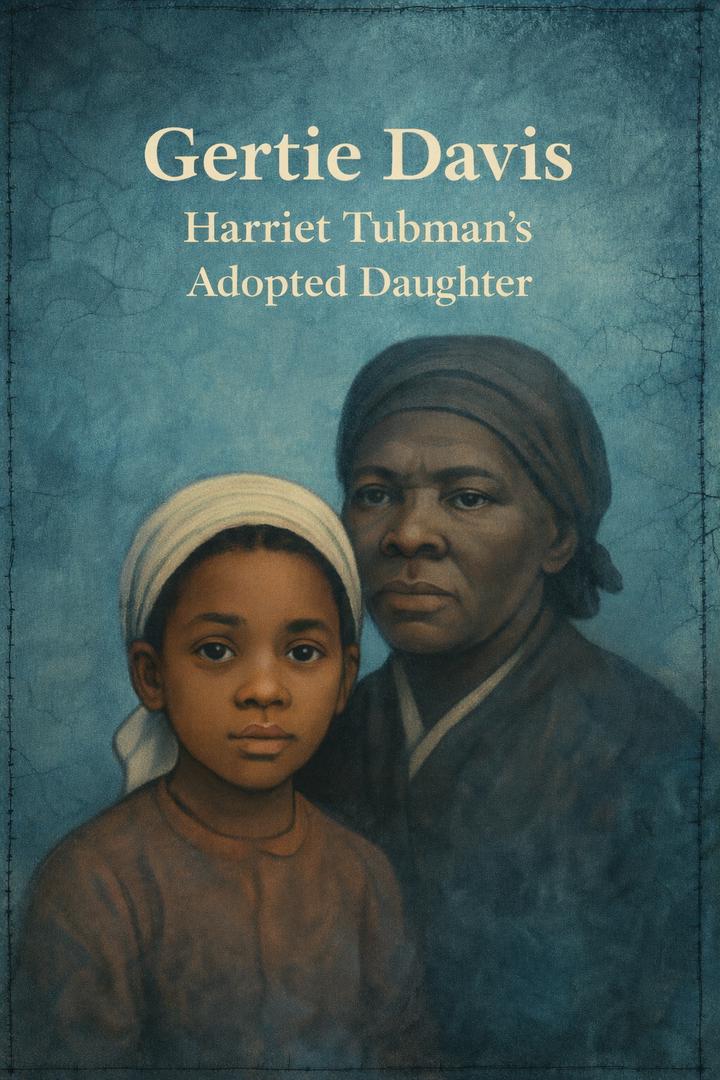
Gertie Davis is one of the lesser-known names connected to Harriet Tubman’s life, and her story offers a glimpse into Tubman’s later years in Auburn, New York. After the Civil War, Harriet Tubman settled in Auburn and later married Nelson Davis. Together, they adopted a young girl named Gertie Davis. While Harriet Tubman became widely known for her work as a conductor on the Underground Railroad, a Union scout and nurse, and a freedom fighter, much less was recorded about the family life she built in the years that followed. Historical records about Gertie Davis are limited. What is known is that she was part of the Tubman household and appears in the story of Harriet Tubman’s later life. Her presence reminds us that Tubman’s life was not only defined by public courage and national history, but also by home, caregiving, and family. That matters because history often reduces people to their most famous roles. Harriet Tubman is rightly remembered for her extraordinary bravery, but she was also a wife, a mother figure, and a woman who created a home in the midst of a life shaped by struggle and service. Gertie Davis may not be widely documented, but her name still carries meaning. She represents a quieter part of Harriet Tubman’s story, one rooted in family life and the personal world Tubman built after years of sacrifice. Sometimes history is loud. Sometimes history lives in the small details, in the names that appear only briefly, and in the lives that stand just beyond the spotlight. Gertie Davis was one of those lives. #GertieDavis #HarrietTubman #BlackHistory #AmericanHistory #HiddenHistory #LataraSpeaksTruth #repost