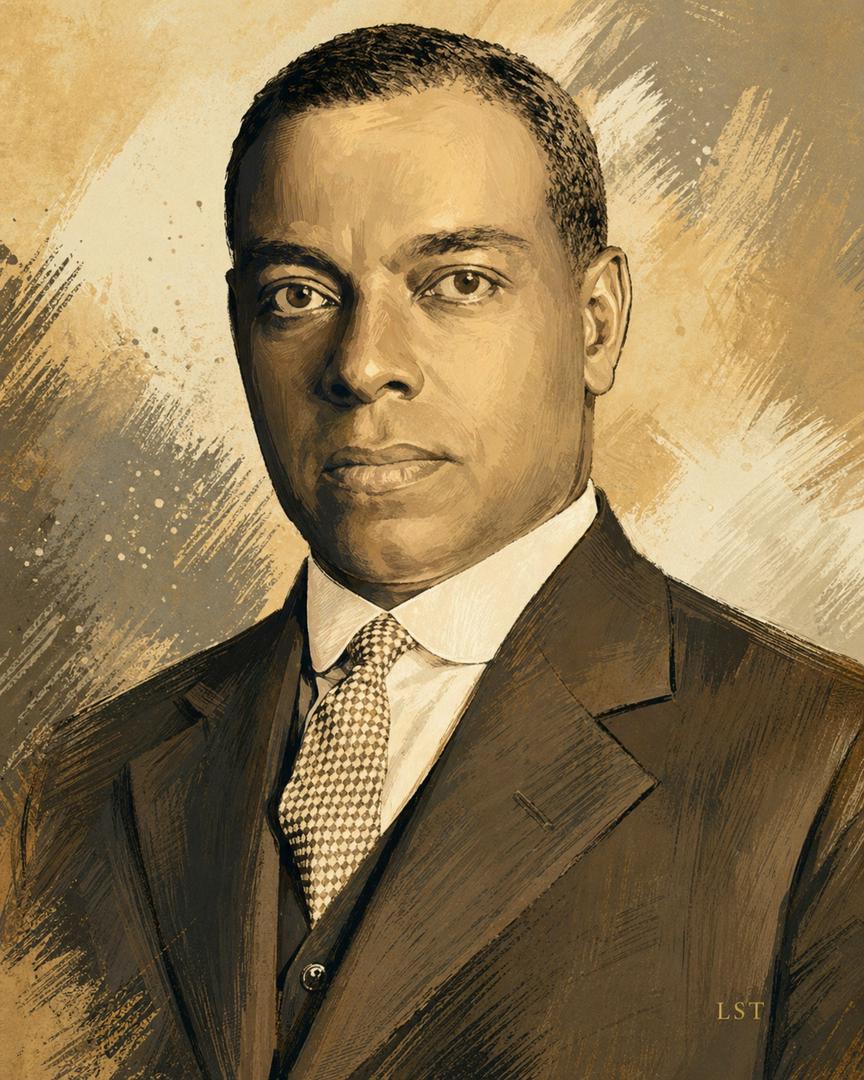
April 24, 1856…Hamilton Hatter was born in Jefferson County, Virginia, in an area that later became part of West Virginia.
He was born enslaved, but his life would not stay trapped inside the limits others tried to place around him.
Hatter became an educator, college leader, inventor, builder, and public servant. That is why his story deserves more than a quick mention.
After slavery ended, he pursued education with the kind of determination people love to overlook when they talk about what formerly enslaved people were “given.” Nothing was handed to him. He studied, worked, built, taught, and kept moving.
He attended Storer College in Harpers Ferry, then went on to earn a degree from Bates College in Maine. After that, he returned to Storer and taught subjects like Greek, Latin, and mathematics. Let that sink in. A man born enslaved became a college professor teaching classical languages and math.
That alone should be enough to remember his name.
But Hamilton Hatter did not stop there.
In 1896, he became the first principal of Bluefield Colored Institute, now known as Bluefield State University. He helped shape an institution created to educate Black students during a time when access to higher education was still being blocked, limited, and controlled.
He was also involved in politics. In 1892, he was nominated as a Republican candidate for the West Virginia House of Delegates. He did not win, but the nomination itself mattered in a time when Black political power was being challenged hard.
And because one lane was clearly not enough for him, Hatter also received a patent in 1893 for a corn-harvesting improvement.
Born enslaved. Became educated. Became an educator. Became a college leader. Became an inventor.
That is not just a biography. That is proof of what people built while history tried to bury their names.
Hamilton Hatter deserves to be remembered.
#HamiltonHatter #BlackHistory #WestVirginiaHistory #OverlookedHistory #LataraSpeaksTruth