Tag Page UnknownPhenomena

#UnknownPhenomena
justme

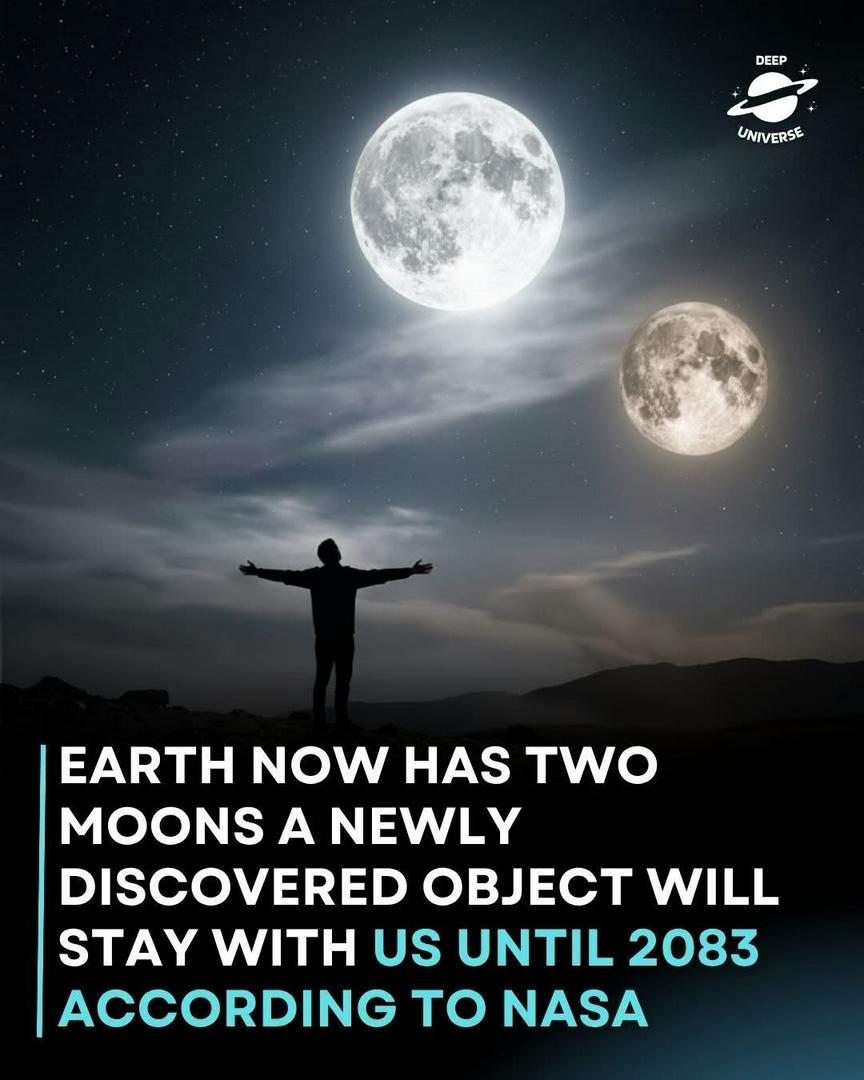
Astronomers have identified a small near-Earth asteroid temporarily captured by Earth’s gravity, creating the rare illusion of a second moon sharing our skies and orbit for a limited period, a finding that has sparked widespread fascination and confusion across science communities and social media. The object, believed to be a few meters to around 10 meters wide, follows a horseshoe-like path influenced by Earth’s gravitational pull and the Sun’s dominant force. Observations from ground-based telescopes and NASA-supported surveys suggest it is not a permanent satellite but a transient visitor, similar to other mini-moon events recorded in recent years across observatories worldwide. Scientists explain that these temporary moons form when small asteroids drift close enough to Earth to be trapped briefly in its gravitational field before escaping back into solar orbit. A key insight from recent studies shows that such captures may be more common than once thought, but most remain undetected due to their small size and faint reflectivity. Beyond the data, the discovery reminds us how dynamic and crowded near-Earth space really is, where invisible objects quietly move alongside our planet for weeks or months without notice. It also highlights how modern astronomy is constantly refining our understanding of what counts as a 'moon' in a universe filled with shifting gravitational relationships. Even as headlines simplify it into a second moon, the reality is more subtle and fleeting, yet no less remarkable. It is a brief companion in Earth’s long journey around the Sun, leaving behind a reminder that the cosmos still holds quiet surprises waiting just beyond routine observation. #DeepUniverse #fblifestyle #SpaceDiscovery #Cosmos #Universe #Science #Astronomy #UnknownPhenomena #NearEarthObjects #SpaceScience

justme

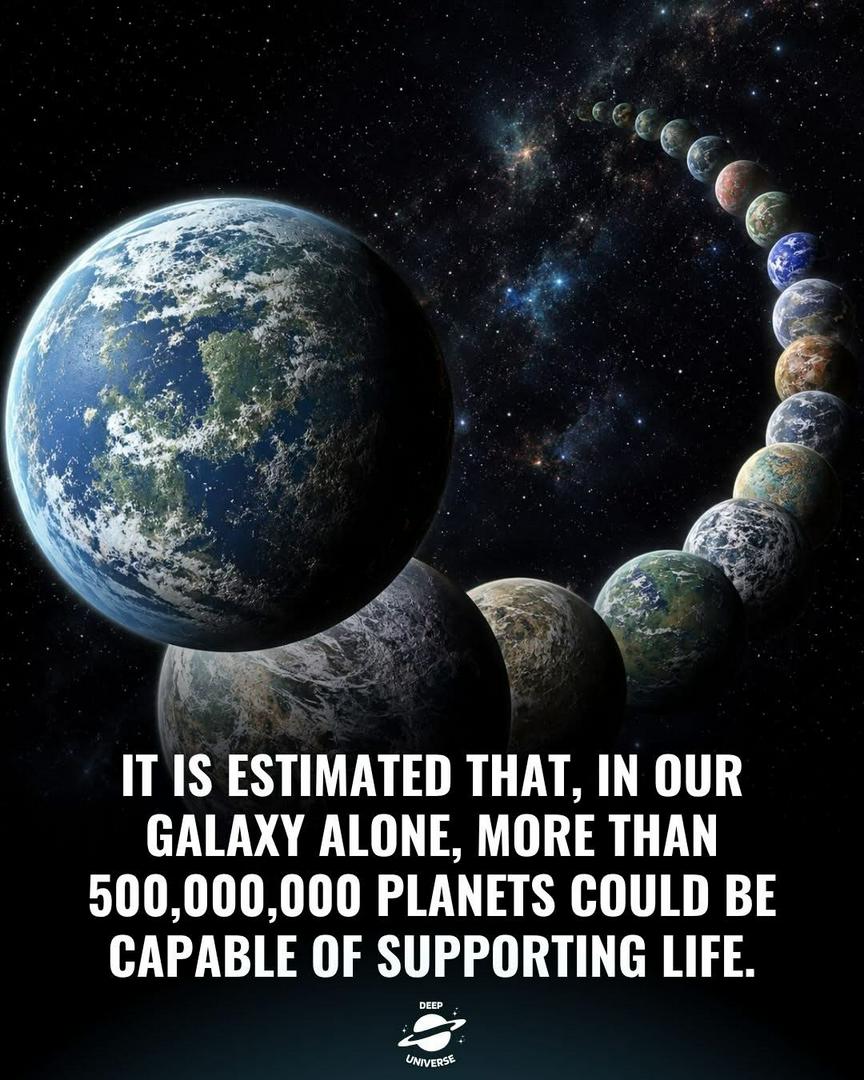
Astronomers estimate that the Milky Way may contain over 500 million planets capable of supporting life, a staggering figure that transforms the galaxy from a quiet star field into a vast landscape of possible living worlds hidden in plain sight. This prediction comes from long term data gathered by missions such as NASA’s Kepler Space Telescope and ESA’s exoplanet surveys, which monitored tiny dips in starlight caused by orbiting planets. By studying thousands of confirmed exoplanets and scaling patterns across billions of stars, scientists began to map how common Earth sized worlds may actually be. Within this research, planets in the so called habitable zone appear surprisingly frequent, especially around red dwarf stars which make up the majority of the Milky Way. Even conservative models suggest that a significant fraction of stars could host rocky planets with conditions where liquid water might exist under the right atmospheric balance and orbital stability. A surprising insight from recent statistical models is that potentially habitable planets are not rare exceptions but may be a repeating outcome of planetary formation. The galaxy seems to naturally produce Earth like environments whenever the right combination of dust, gravity, and time comes together across billions of years of cosmic evolution. Seen in this light, the night sky stops being empty and starts feeling crowded with hidden possibilities. Each point of light may carry its own unseen worlds, some possibly quiet, some active, and some still waiting for the right conditions to begin something that could resemble life, leaving us inside a universe that feels far less alone than it appears. #DeepUniverse #fblifestyle #SpaceDiscovery #Universe #Cosmos #ScienceFacts #Exoplanets #Astronomy #UnknownPhenomena"

You've reached the end!