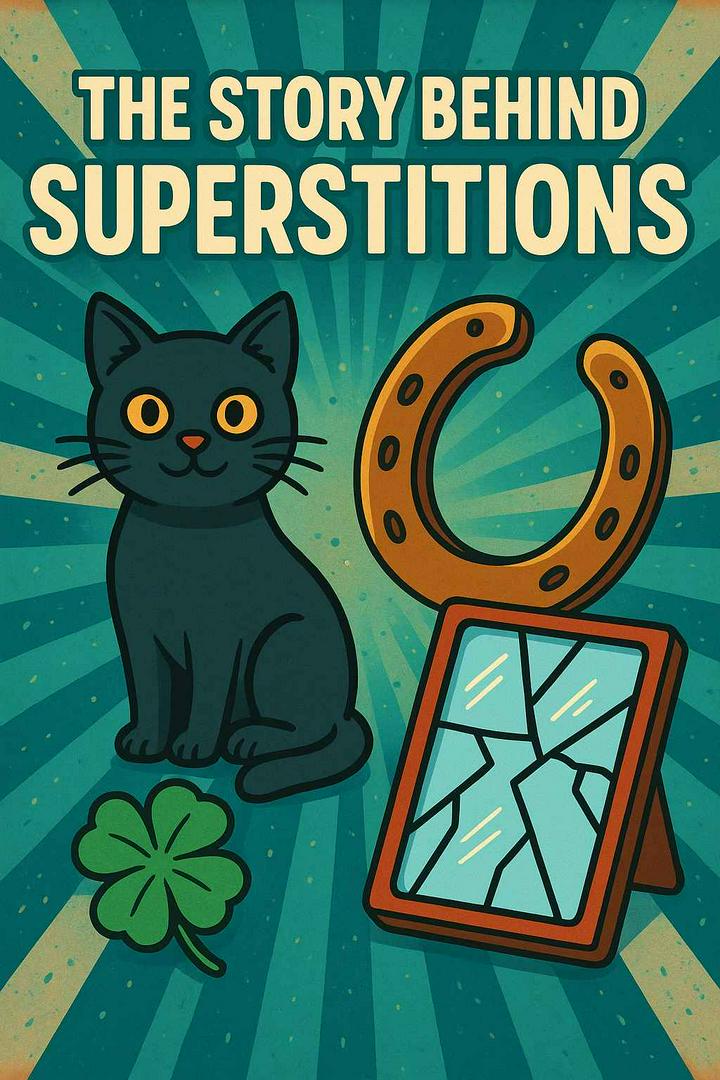
Superstitions didn’t start because people were silly… they started because people were scared. Long before science, humans had no choice but to explain the world the best way they could. If crops failed, storms hit, or someone got sick, people needed a reason. And when you don’t have facts, you make meaning. Superstitions became survival tools — rules to help people feel safe in a world they couldn’t control.
Black cats, broken mirrors, knocking on wood, throwing salt, lucky charms… none of that came from “fun sayings.” These came from fear, religion, rituals, and old beliefs passed down for hundreds or even thousands of years. People thought spirits lived in trees, so knocking on wood asked for protection. Mirrors were once made with metal, and people believed they held your soul — so breaking one meant breaking yourself. Cats were connected to gods in Egypt, witches in Europe, and luck everywhere else.
Over time, superstitions spread through villages, families, and cultures. Some kept people safe — like avoiding ladders (they really are dangerous). Others just comforted people when life was unpredictable. In a harsh world, believing in “signs” and “luck” made the unknown feel a little less scary.
Even today, with all the science in the world, people still follow superstitions without thinking. We say “knock on wood,” avoid the number 13, don’t open umbrellas indoors, won’t walk under ladders, keep good-luck charms, and feel weird when a black cat crosses our path. It’s proof of how deeply human it is to want control… even if it’s just by following a small ritual.
Superstitions survived because fear survived… and comfort survived with it.
#TheStoryBehind #Superstitions #HiddenHistory #LearnSomethingNew