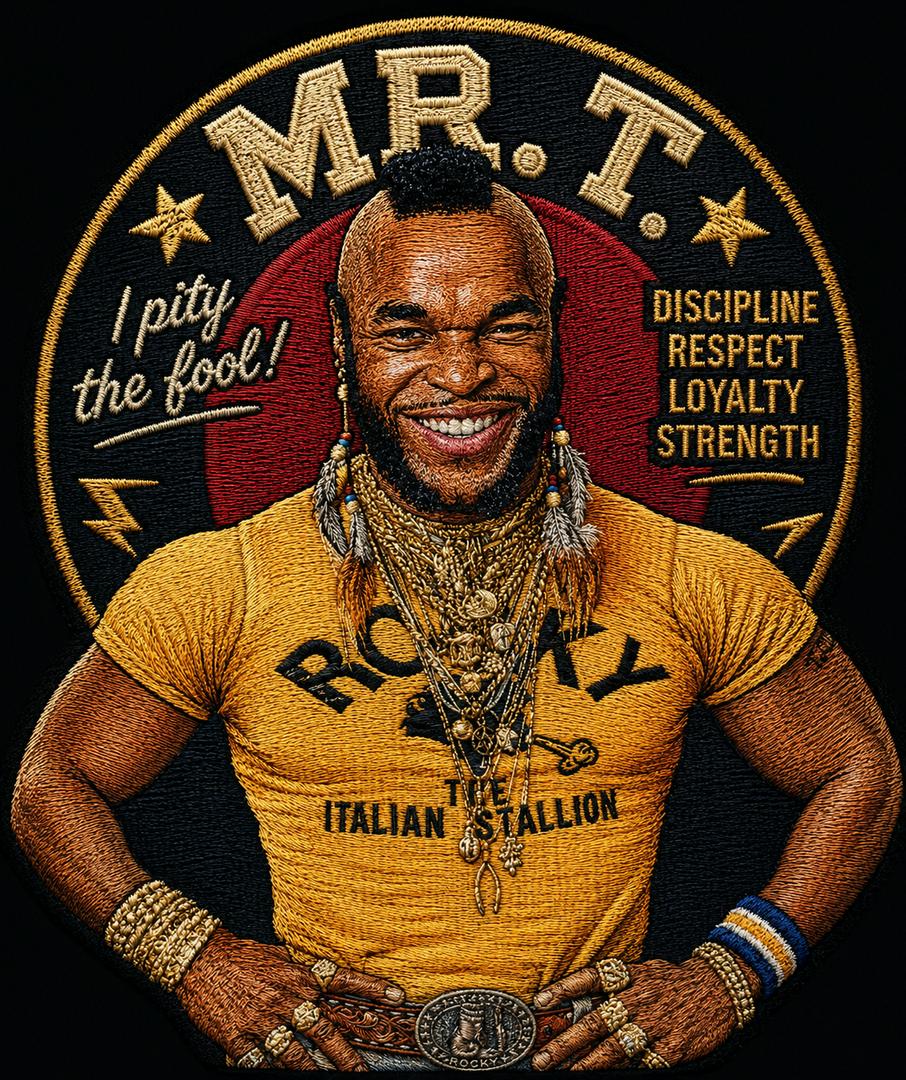
Born May 21, 1952, Mr. T became more than a catchphrase.
Before the gold chains, the mohawk, and “I pity the fool,” he was Laurence Tureaud from Chicago’s South Side.
Born into a family of 12 children, he grew up in the Robert Taylor Homes and became known early for discipline, toughness, and athletic ability. He attended Dunbar Vocational High School, where he played football, wrestled, and studied martial arts. That foundation helped shape the larger-than-life figure America would later recognize.
Before Hollywood, he served in the U.S. Army, worked as a bouncer, and became a bodyguard for major names including Muhammad Ali and Michael Jackson. His bold image was not random. The gold chains became part of his look during his bouncer years, while his hairstyle was inspired by Mandinka warriors. His name, his image, and his presence were tied to respect, identity, and being seen as a man in a world that often denied Black men that basic dignity.
His breakout moment came when Sylvester Stallone cast him as Clubber Lang in Rocky III. From there, Mr. T became a household name. His role as B.A. Baracus on The A-Team turned him into one of the most recognizable stars of the 1980s.
But behind the tough-guy image was also someone who became a role model for children, using television, music, and public appearances to promote discipline, confidence, and staying away from trouble.
Mr. T’s story is not just about fame. It is about a man who built an identity so strong that the world had no choice but to remember it.
From Laurence Tureaud to Mr. T, he turned survival, style, and self-respect into a cultural legacy.
#MrT #BlackHistory #OnThisDay #EntertainmentHistory #ChicagoHistory #TheATeam #RockyIII #BlackExcellence #PopCultureHistory