Tag Page OnThisDay

#OnThisDay
LataraSpeaksTruth

Honoring Booker T. Washington: A Legacy That Still Lifts Us

Let us take a moment to honor the legacy of Booker T. Washington, a man whose life was all grit, vision, and quiet strength. When he passed on November 14th, 1915, the world did not just lose an educator. It lost a builder. A man who carved out hope where the world tried to leave none. As we look back, the Word gives us the perfect lens to see his life through. Psalm 112:6 (CSB) says, “He will never be shaken; the righteous one will be remembered forever.” Washington lived that out. Steady, rooted, and unbothered by storms that tried to pull him down. And here we are, still speaking his name. Proverbs 16:3 (CSB) tells us, “Commit your activities to the Lord, and your plans will be established.” This man committed himself to lifting others through education, discipline, and opportunity. God established that work so deeply that it still stands today. Then we look at Galatians 6:9 (CSB). “Let us not get tired of doing good, for we will reap at the proper time if we do not give up.” That is the blueprint of Washington’s entire life. Do not quit. Do not fold. Keep showing up. And the harvest came. Changed lives. Opened doors. Generations rising higher. So today, as we reflect on his passing, we are reminded of this simple truth. A life committed to God and poured out for others never disappears. It becomes legacy. This is your reflection for the day. Stay grounded, stay faithful, and keep building something that will outlive you. #BookerTWashington #Legacy #HistoryMatters #FaithReflection #ScriptureOfTheDay #Inspiration #EducationHistory #OnThisDay

Honoring Booker T. Washington: A Legacy That Still Lifts Us
LataraSpeaksTruth

Remembering James A. Hood

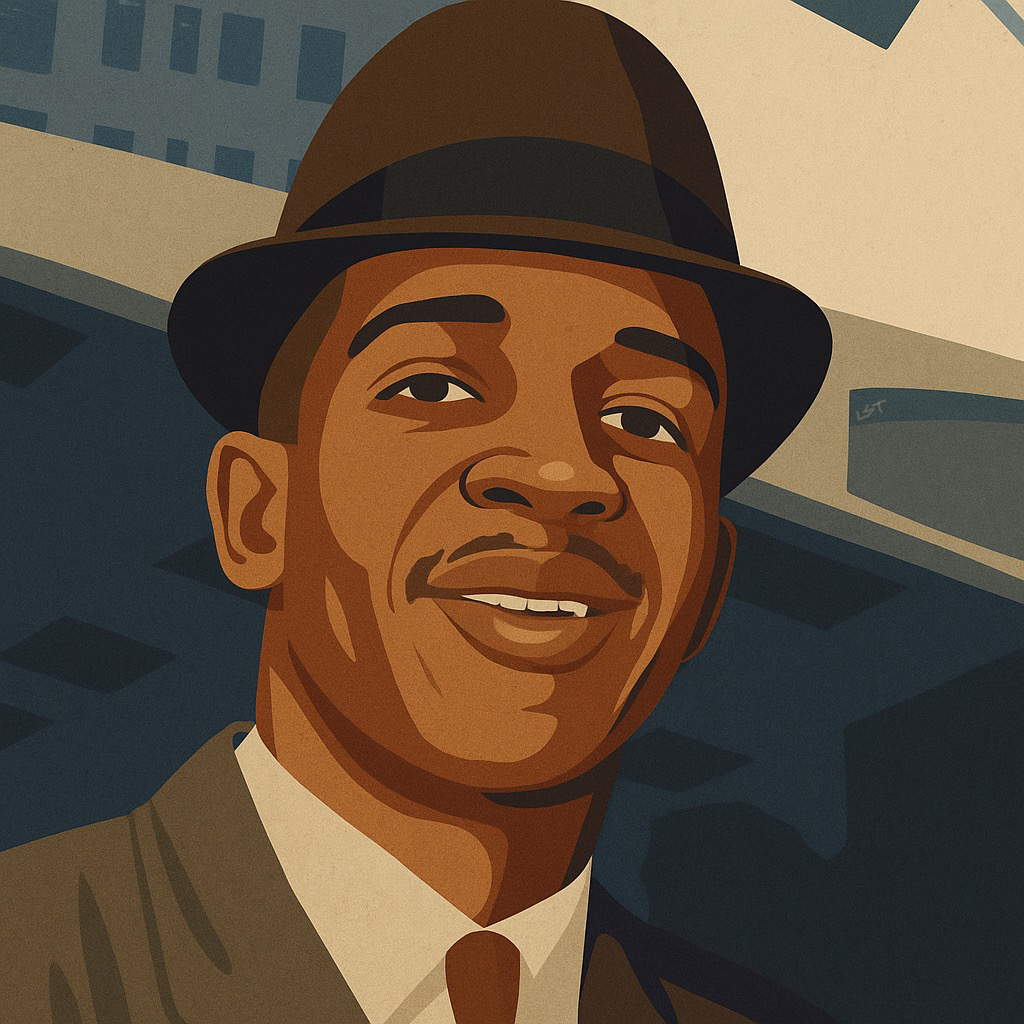
James A. Hood born November 10, 1942, was one of the first two Black students to enroll at the University of Alabama, forcing the nation to confront its deep racial divide. When Governor George Wallace tried to physically block his entry, Hood didn’t back down. He walked forward, calm but determined, making history with each step. After leaving the university for his safety, Hood continued his education and later earned his master’s degree from the same school he once fought to enter. He spent his life working in education and public service, proving that courage doesn’t end with one act of defiance… it becomes a lifelong mission. On his birthday, we remember James A. Hood not just for walking through those doors, but for refusing to let fear or hate stop his journey. His quiet strength still speaks volumes about what true bravery looks like. #JamesHood #OnThisDay #CivilRights #BlackHistory #Legacy #Inspiration

Remembering James A. Hood
LataraSpeaksTruth

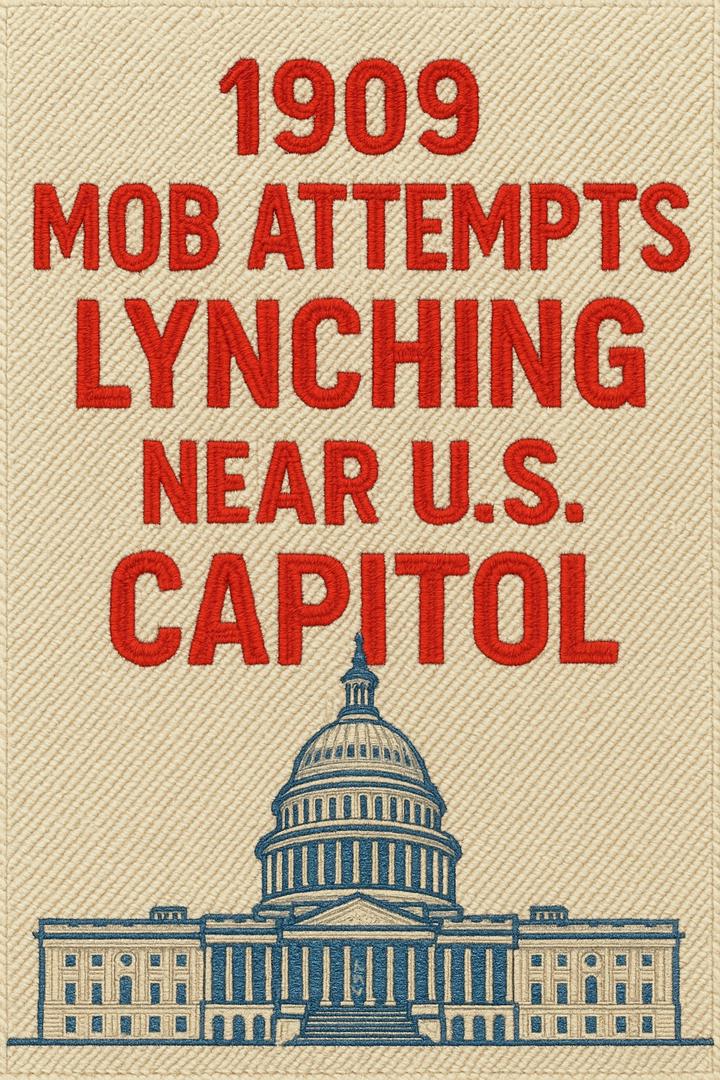
Mob Attempts Lynching Near the U.S. Capitol (1909)

In October 1909, a mob surrounded a Washington, D.C. jail demanding that officers hand over a 26-year-old Black man named Walter Ford, who had been accused of a crime near Landover, Maryland. The mob grew to more than one hundred people and camped outside through the night, armed and ready for violence. Police calmed the situation by promising to turn Ford over in the morning, but when daylight came, the mob had dispersed and Ford was never surrendered. This attempted lynching, just blocks from the U.S. Capitol, revealed how deeply racial violence had spread across the country, even in the nation’s capital. It serves as a reminder that equality under the law was still an unfulfilled promise for many Black Americans at the time. #OnThisDay #BlackHistory #AmericanHistory

Mob Attempts Lynching Near the U.S. Capitol (1909)
LataraSpeaksTruth

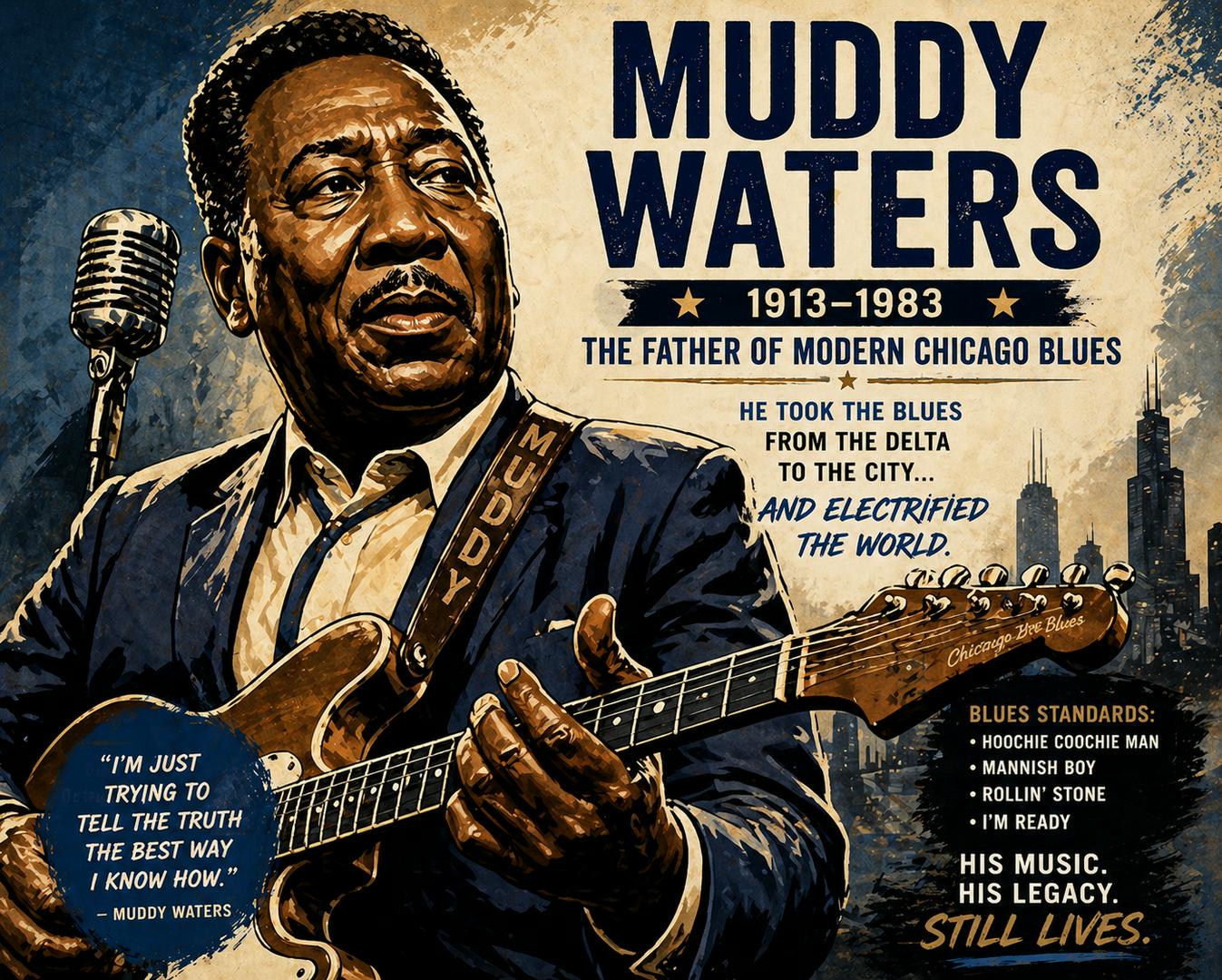
April 30, 1983: The blues lost one of its giants. Muddy Waters, born McKinley Morganfield, died at his home in Westmont, Illinois, at age 70. His death marked the end of a life that helped reshape American music from the ground up. Born in Mississippi in 1913, Waters grew up surrounded by the sounds of the Delta. He learned guitar and harmonica, drawing from the deep, raw style of country blues. But when he moved north to Chicago in the 1940s, he helped turn that sound electric. The city was louder, faster, and harder — and Muddy’s music rose to meet it. With his powerful voice, slide guitar, and commanding stage presence, he became the face of postwar Chicago blues. Songs like “Hoochie Coochie Man,” “Mannish Boy,” “Rollin’ Stone,” and “I’m Ready” became blues standards. His music carried the grit of the Delta into the modern city and gave Chicago blues its muscle. His influence did not stop with blues. Rock and roll owes him a heavy debt. The Rolling Stones took their name from his song “Rollin’ Stone.” Artists across blues, rock, soul, and popular music followed the road he helped pave. Without Muddy Waters, the sound of modern music would be missing one of its deepest roots. He was more than a performer. He was a bridge between old blues traditions and the electric future. That is why he is often called the father of modern Chicago blues — not as a slogan, but because the title fits. Muddy Waters died in 1983, but the sound he built still lives every time a guitar growls, a singer bends a note, or a band reaches back to the blues for truth. #MuddyWaters #BluesHistory #ChicagoBlues #MusicLegends #OnThisDay
LataraSpeaksTruth

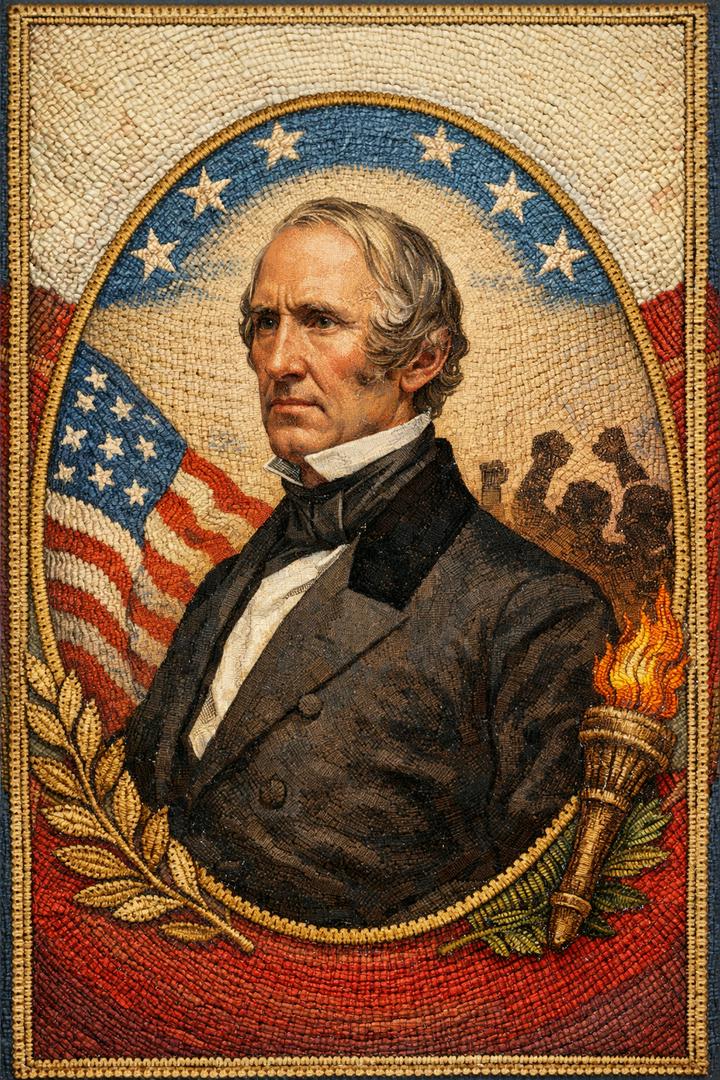
On March 24, 1862, abolitionist speaker Wendell Phillips was shouted down by an angry crowd in Cincinnati, Ohio, while trying to deliver an antislavery lecture. He was not some obscure man speaking on a street corner. Phillips was one of the best-known anti-slavery voices in the country, a Boston reformer, Harvard-educated lawyer, and commanding public speaker so admired that he became known as abolitionism’s “golden trumpet.”  That is what makes the reaction so revealing. The Civil War was already underway, slavery was at the heart of the nation’s crisis, and yet there were still Americans who did not want to hear a direct moral argument against it. Contemporary reporting from Cincinnati said that after Phillips identified himself as an abolitionist, people in the galleries hissed, yelled, and threw eggs and stones at him. History’s summary says he was pelted with rocks and eggs, and that friends rushed him away when the scene broke into a small riot.  This moment matters because it strips away the comforting fantasy that everybody would have stood on the right side of history. People today love to imagine they would have been brave, principled, and clear-eyed in that era. But in real time, even speaking publicly against slavery could bring fury, threats, and mob violence. Telling the truth was dangerous. Saying human beings should not be owned was enough to make some people erupt.  Wendell Phillips spent years using his voice to challenge slavery and, after the war, to press for equal rights more broadly. So this was not just a man getting booed. It was a public collision over whether the country was willing to face its own cruelty. March 24, 1862, reminds us that resistance to justice did not always wear a uniform. Sometimes it sat in the audience, waited for the truth, and then exploded when it heard it.  #OnThisDay #WendellPhillips #USHistory #SlaveryHistory #BlackHistory Sources: History; Encyclopaedia Britannica

AčT/Cæř

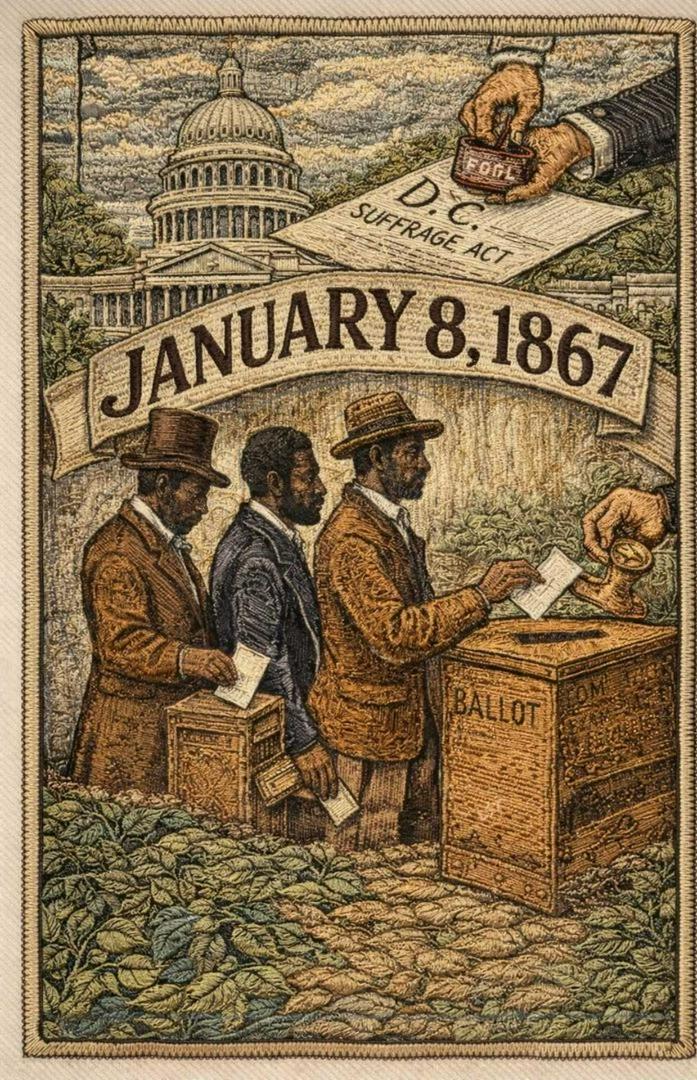
January 8, 1867 marks a turning point in American history that is rarely given the attention it deserves. On this day, Congress passed the District of Columbia Suffrage Act, granting Black men in Washington, D.C the legal right to vote in municipal elections and public referenda. This happened three years before the 1 5th Amendment, at a time wher most of the nation still viewed Black political participation as a danger rather than a riaht. This was not a promise for the future or a symbolic gesture. It was an immediate, enforceable change written directly into law. The decision did not come quietly or without resistance. President Andrew Johnson vetoed the act, arguing that extending votina riahts to Black men was premature and would destabilize the country. Congress reiected that argument and overrode his veto the same day. That override mattered It made clear that Reconstruction was not only about ending slavery on paper but about redistributing political power in real time. Washington, D.C. became a proving ground, showing that Black civic participation could exist and function despite fierce opposition The importance of Januarv 8, 1867 is often overlooked because it does not fit neatly into the simplified version of history many are taught. Voting rights did not suddenly appear with the 15th Amendment. They were demanded, tested, expanded restricted, and attacked repeatedly. This moment captures Black men exercisinc political agency while the nation was still debating whether they deserved it. It reminds us that progress has never required national comfort or unanimous approval. Rights have always moved forward through pressure, confrontation, and refusal to wait. January 8 stands as proof that access was forced open long before the country was ready to admit it #January8 #OnThisDay #BlackHistory #ReconstructionEra #VotinaRichts #DistrictOfColumbia #AmericanHistory #HiddenHistory #CivilRights

LataraSpeaksTruth

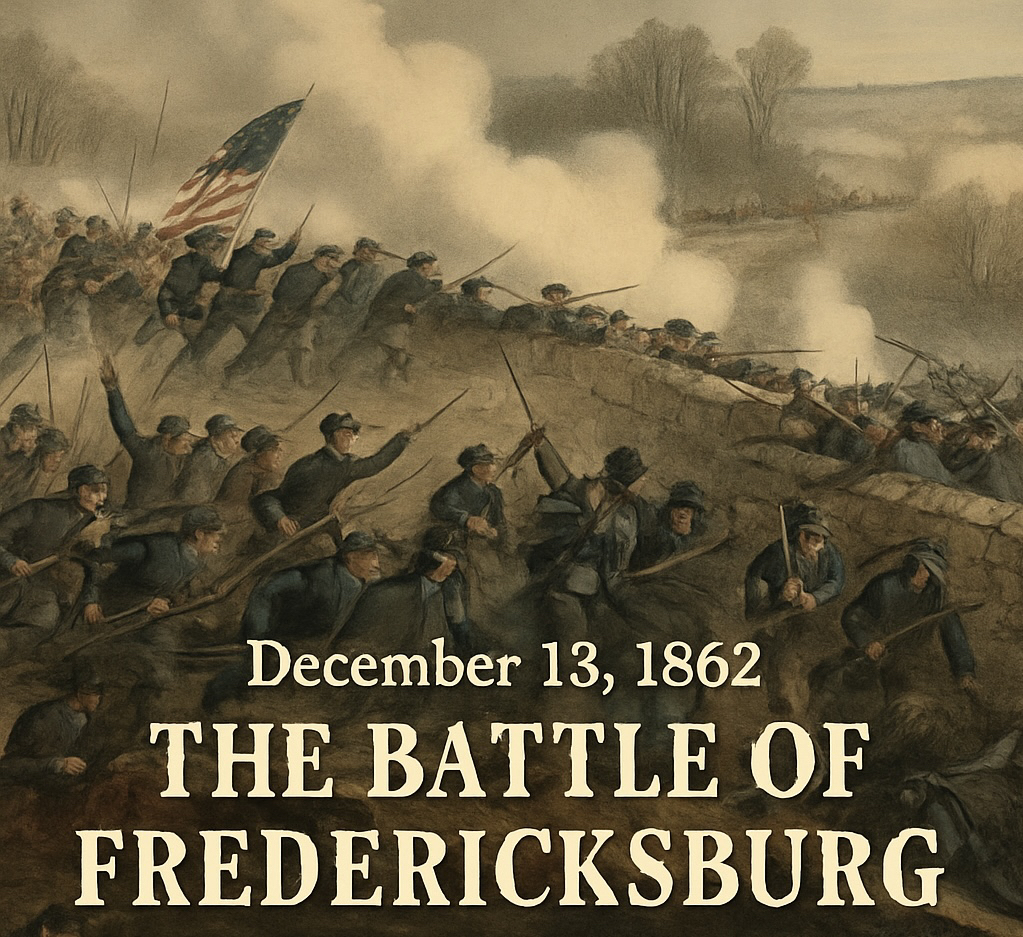
The Battle of Fredericksburg on December 13, 1862 unfolded during one of the most consequential pauses in American history. The Emancipation Proclamation had been announced but would not take effect for another three weeks, placing this battle squarely in the gap between declared freedom and enforced freedom. That timing matters. Although the soldiers fighting at Fredericksburg were overwhelmingly white, the consequences of the Union’s defeat fell heavily on enslaved people. Every failed campaign delayed the collapse of the Confederacy, extending the lifespan of slavery in the South. Union losses did not just cost lives on the battlefield, they prolonged bondage beyond it. Enslaved Black people in Virginia were also directly entangled in this campaign. They were forced to build fortifications, transport supplies, cook, clean, and provide labor for Confederate forces. They were not passive observers of the war. They were coerced infrastructure sustaining it. Fredericksburg’s staggering casualties intensified Northern pressure on Union leadership. Repeated bloodshed made emancipation less of a political abstraction and more of a moral and strategic necessity. That shift helped open the door to Black enlistment in 1863, altering the direction of the war and the meaning of freedom itself. Fredericksburg was not a Black-led battle, but it was part of the chain reaction that led to Black soldiers fighting for their own liberation and the formal destruction of slavery. History is not only about who is visible in the moment, but about who bears the cost while the nation decides who it will become. #December13 #OnThisDay #CivilWarHistory #BattleOfFredericksburg #AmericanHistory #HistoryMatters #UntoldHistory #HiddenHistory #HistoricalContext

LataraSpeaksTruth

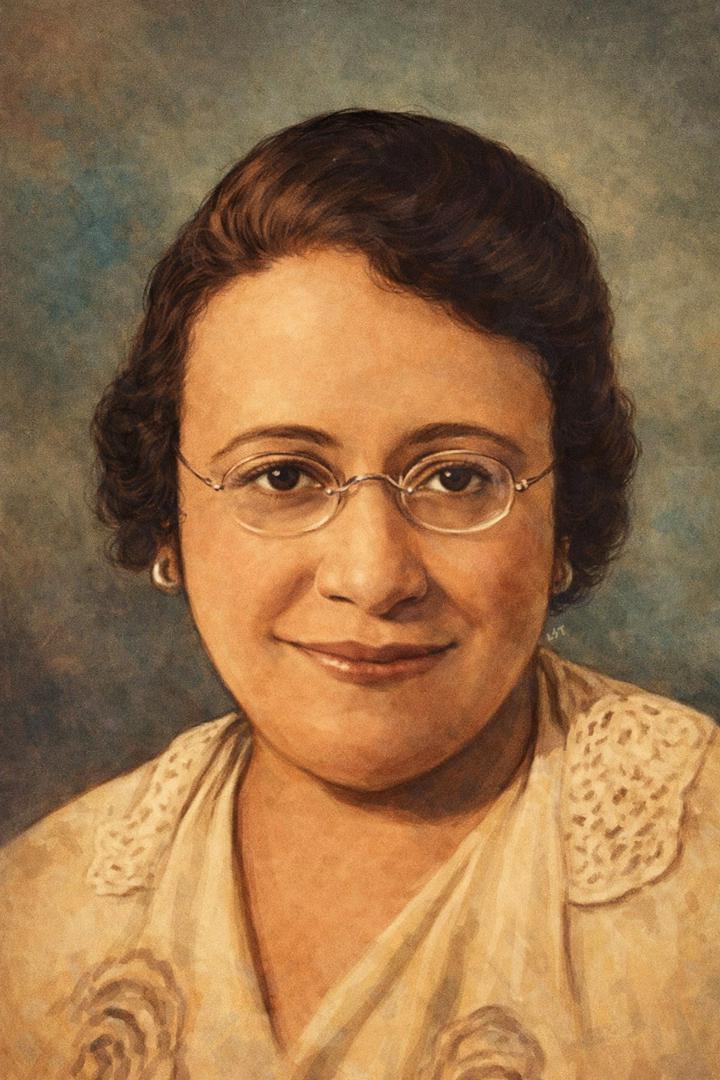
January 29, 1926 marked a quiet but historic turning point in American legal history when Violette Neatley Anderson became the first Black woman admitted to practice before the United States Supreme Court. There were no parades and no banner headlines. Just a woman stepping into a space that had never been designed with her in mind and claiming her right to be there. Born in Chicago in 1882, Anderson built her career during an era when Black women were routinely shut out of higher education, professional licensing, and elite legal institutions. The legal profession was rigid, male dominated, and openly resistant to change. Still, she pushed forward. Anderson earned her law degree from Chicago’s Kent College of Law and in 1919 became the first Black woman licensed to practice law in Illinois. Her admission to the Supreme Court bar did not mean she regularly argued cases before the Court. What it represented was something deeper and more enduring. It established precedent. It confirmed that Black women could meet the highest professional standards in the nation’s legal system, even when the country itself refused to fully recognize their equality. This milestone came decades before the Civil Rights Movement reshaped American law. It came long before desegregation was enforced and long before diversity was treated as a value rather than a threat. Anderson’s achievement reveals a truth history often overlooks. Progress is not always loud. Sometimes it moves through credentials, applications, and doors that open because someone refused to accept exclusion as inevitable. Her name remains absent from too many history books. Yet every January 29, her legacy endures. Violette Neatley Anderson did not simply enter the Supreme Court’s orbit. She expanded it. Every Black woman who has since walked into the nation’s highest courtrooms follows a path she helped carve. #January29 #OnThisDay #LegalHistory #SupremeCourtHistory #WomenInLaw #HiddenFigures #Trailblazers

LataraSpeaksTruth

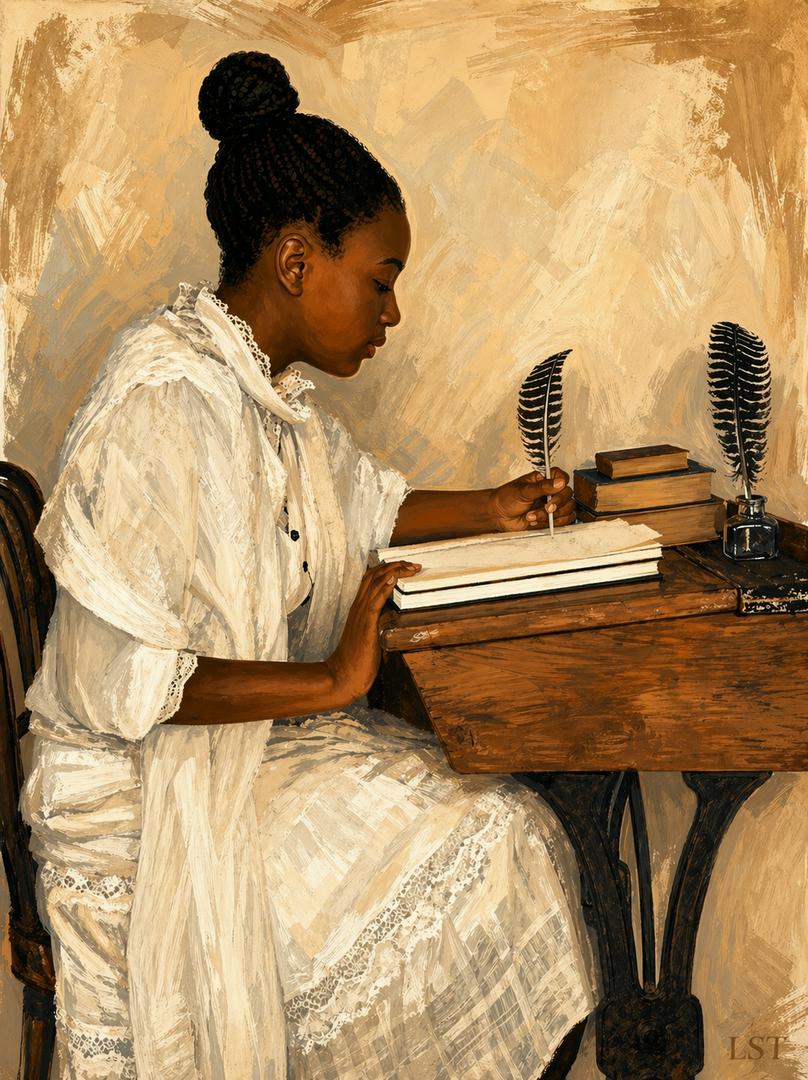
On April 23, 1872, Charlotte E. Ray made history in Washington, D.C. She became the first woman admitted to practice before the Supreme Court of the District of Columbia, helping cement her place as the first Black woman lawyer in the United States. Ray was born in New York City in 1850. Her father, Reverend Charles Bennett Ray, was an abolitionist, minister, and newspaper editor who believed deeply in education. That foundation mattered, because Charlotte stepped into a profession that was not built to welcome women, and especially not Black women. She studied at Howard University School of Law and graduated in 1872. At a time when women were still fighting to be taken seriously in the legal field, Ray broke through two walls at once. She challenged both race barriers and gender barriers. After being admitted to practice law, Ray opened her own law office in Washington, D.C. She worked in commercial law and became known for her legal skill. One of her most recognized cases involved representing a woman seeking divorce from an abusive husband, showing that Ray was not just a symbol of progress. She was a real attorney doing serious legal work. But history should tell the full truth. Charlotte E. Ray had the education, the courage, and the ability. What she did not have was a society willing to fully support a Black woman attorney. Racism and sexism made it difficult for her to keep enough clients to sustain her practice. Eventually, she left law and returned to teaching. That part matters too. Because sometimes the door opens, but the room still refuses to make space. Charlotte E. Ray still walked through it. On April 23, we remember her not just because she was first, but because she stepped into a world that tried to keep her out and left her name in the record anyway. #CharlotteERay #History #WomensHistory #LegalHistory #OnThisDay #HiddenHistory #LataraSpeaksTruth

LataraSpeaksTruth

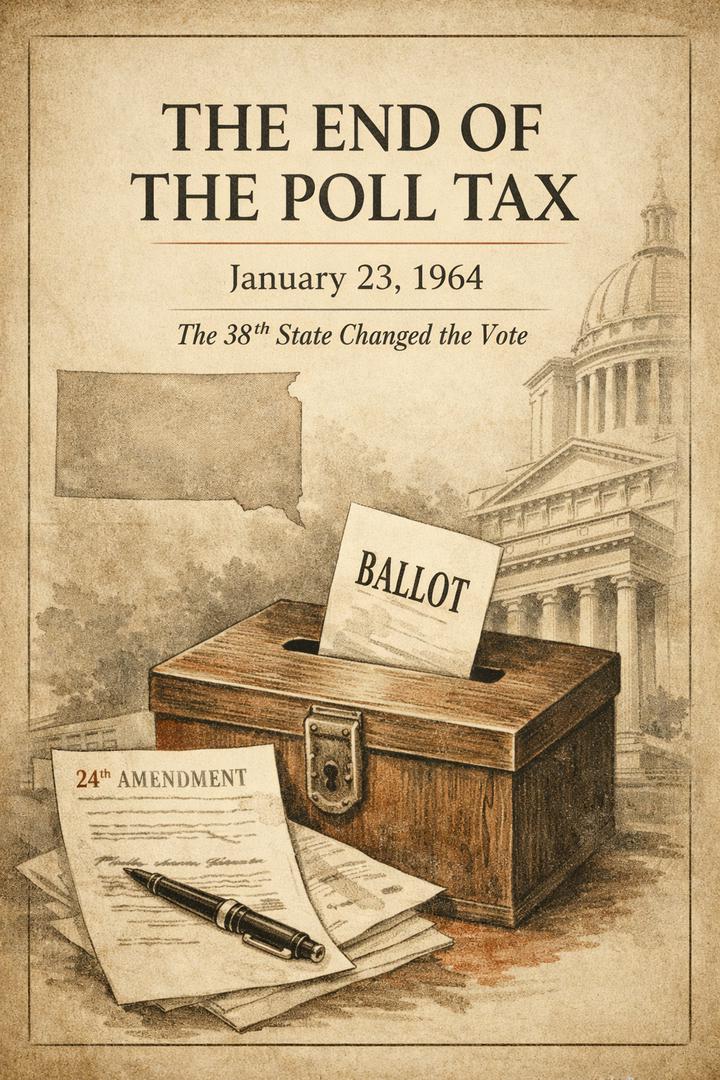
On January 23, 1964, a quiet legislative vote in South Dakota echoed across the entire United States. By becoming the 38th state to ratify the 24th Amendment, South Dakota provided the final “yes” needed to cement a fundamental change in American democracy…the official end of the poll tax in federal elections. For decades, the poll tax had operated as a so-called legal barrier to the ballot box. Framed as a simple administrative fee, it was anything but neutral in practice. In many Southern states, voters were required to pay not only the current tax but accumulated fees for every year they had not voted. This system disproportionately blocked Black Americans and poor white citizens from participating in elections. Combined with literacy tests, intimidation, and economic retaliation, the poll tax ensured political power remained tightly controlled. The road to the 24th Amendment was long and deliberate. Proposed by Congress in 1962, it required approval from three-fourths of the states. As 1964 began, the nation watched the count inch closer to the threshold. When South Dakota’s legislature ratified the amendment on January 23, it crossed the constitutional finish line, making the amendment law. The amendment marked a major victory for voting access by declaring that the right to vote in federal elections could not be conditioned on payment. Still, the work was unfinished. Some states continued to impose poll taxes in state and local elections until the Supreme Court struck them down entirely in 1966. Today, the anniversary of South Dakota’s ratification stands as a reminder that voting rights have never been freely handed over. They have been argued for, organized for, and fought for…often quietly, often against resistance, but always with lasting impact. #OnThisDay #USHIstory #VotingRights #Democracy #24thAmendment #CivilRightsHistory #SouthDakota #HistoryMatters