Tag Page MuhammadAli

#MuhammadAli
LataraSpeaksTruth

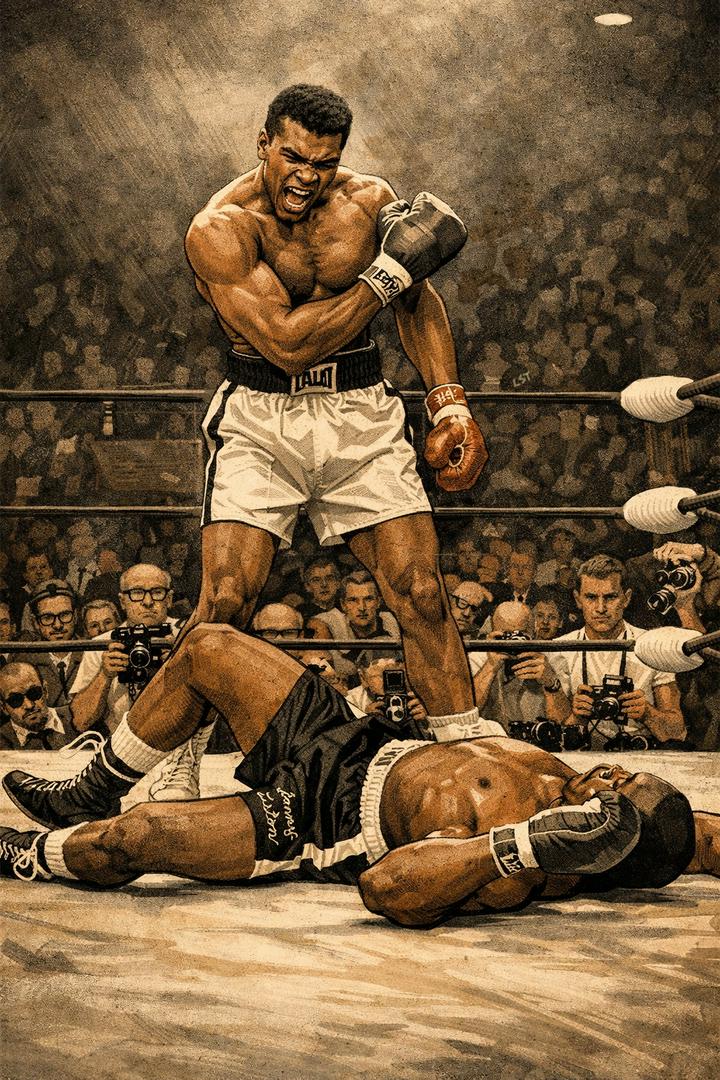
Happy Heavenly Birthday to Muhammad Ali. Born January 17, 1942, in Louisville, Kentucky, Muhammad Ali entered the world as Cassius Marcellus Clay Jr., but he would leave it as something much larger than a champion. He was a man who understood that greatness meant more than titles, belts, or applause. It meant conviction. Inside the ring, Ali redefined what a heavyweight could be. He moved with speed that defied expectation, spoke with confidence that rattled opponents, and fought with a style that changed boxing forever. Three time heavyweight champion. Olympic gold medalist. The numbers alone secure his legacy, but they were never the point. Outside the ring, Ali carried a heavier fight. He spoke openly against racism. He refused to be silent when silence was safer. When he declined military induction during the Vietnam War, he lost his title, his income, and years of his prime. He did not lose his principles. History eventually caught up and understood what he was really saying. Ali showed the world that faith, identity, and self respect were not weaknesses. He showed Black America that confidence was not arrogance when it was rooted in truth. He showed young people that your voice matters even when it costs you something. In later years, Parkinson’s disease slowed his body but never touched his spirit. His quiet strength, humility, and grace became just as powerful as his punches once were. He stood as a symbol of resilience, dignity, and courage until the end. Today, on his birthday, we honor not just the fighter, but the man. The thinker. The believer. The disruptor. The legend. #MuhammadAli #HappyHeavenlyBirthday #TheGreatest #BlackHistory #SportsHistory #CulturalIcon #FaithAndConviction #LouisvilleLegend

Rachel Marie

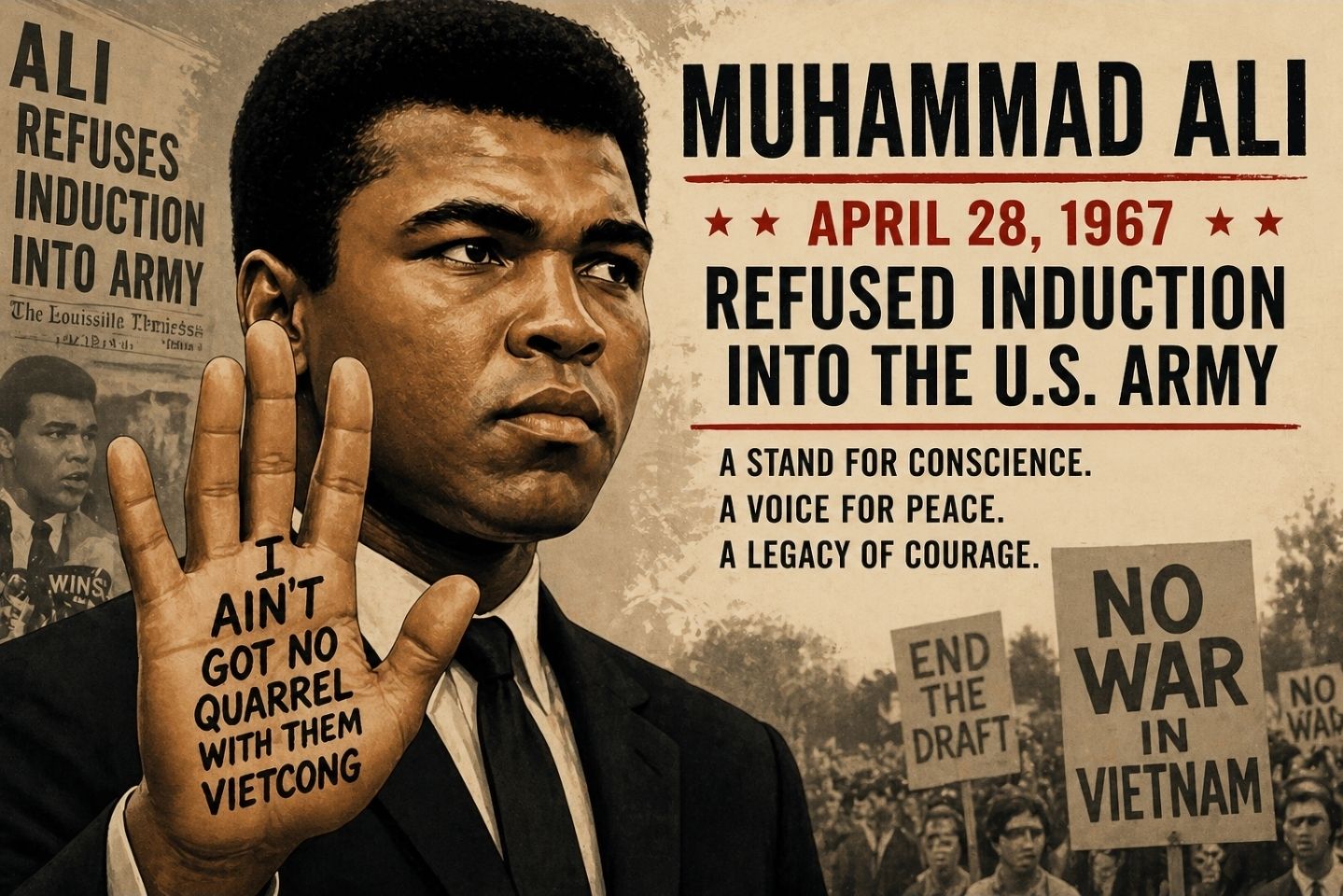
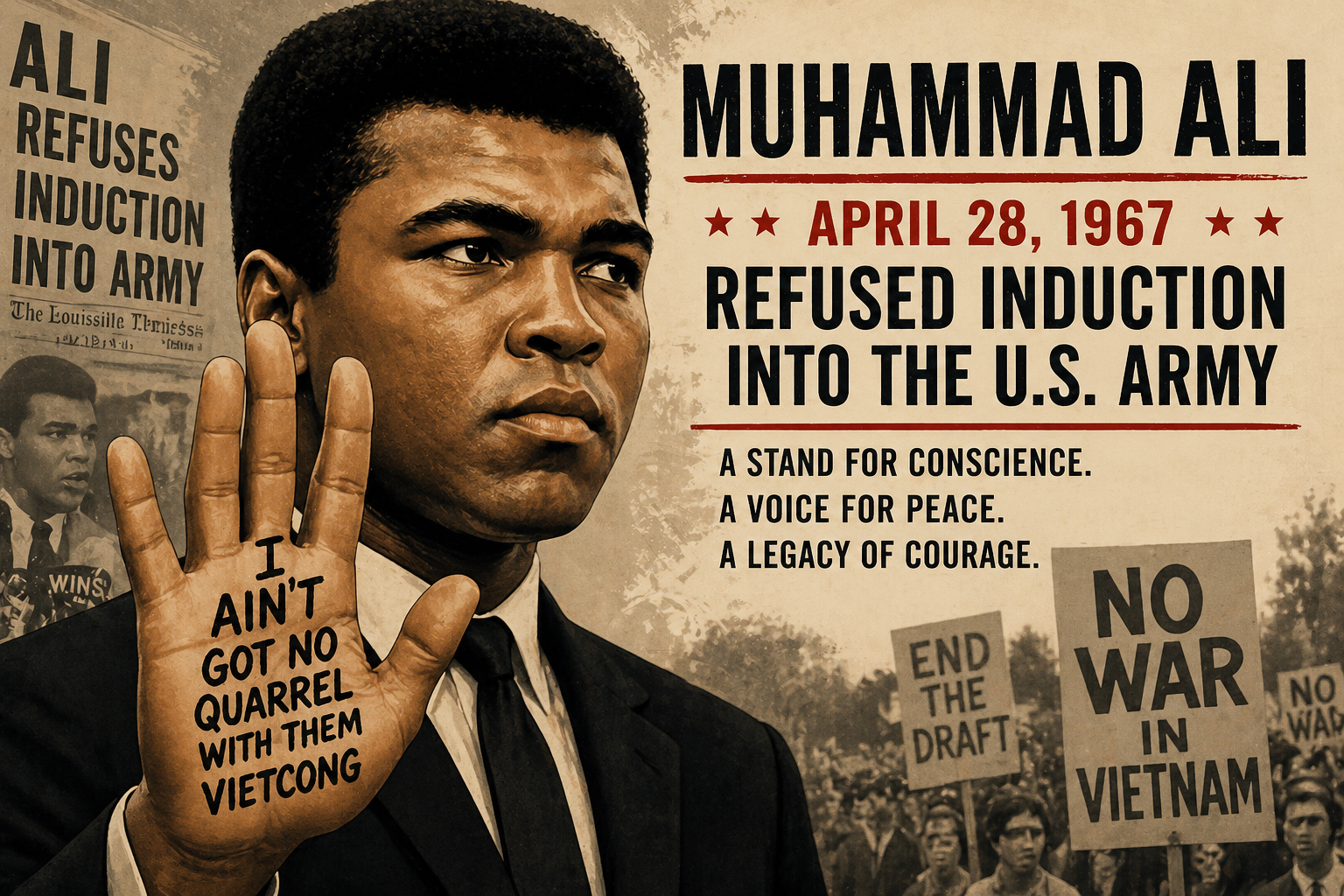
On April 28, 1967, Muhammad Ali stood in Houston and refused induction into the U.S Army during the Vietnam War. His reason was rooted in his Muslim faith and his belief that he was a conscientious obiector. He famously opposed fighting in a war abroad while Black Americans were still fighting for basic riahts at home. Ali was immediatelv stripped of his heavvweight title and boxing license. In June 1967. he was convicted of draft evasion, sentenced to five vears in prison fined $10,000, and banned from boxind during what should have been the peak vears of his career. He staved free while appealing the case, but he lost nearly four vears in the ring The public reaction was fierce. Many called him unpatriotic. Others saw him as brave principled, and ahead of his time. His stand connected sports to faith, conscience, race, politics, and the growing antiwar movement Ali did not iust risk money or fame. He risked his freedom In 1971, the U.S. Supreme Court unanimously overturned his conviction ir Clay v. United States. By then, Ali had become more than a boxing champion. He became a symbol of resistance, sacrifice and the riaht to follow one's conscience, even when the whole country tells you to sit down and be quiet Muhammad Ali's refusal remains one of the most powerful acts of protest in sports history. He lost his title, but he never lost his voice. #MuhammadAli #VietnamWar #SportsHistory #CivilRights #BlackHistory

LataraSpeaksTruth

On April 28, 1967, Muhammad Ali stood in Houston and refused induction into the U.S. Army during the Vietnam War. His reason was rooted in his Muslim faith and his belief that he was a conscientious objector. He famously opposed fighting in a war abroad while Black Americans were still fighting for basic rights at home. Ali was immediately stripped of his heavyweight title and boxing license. In June 1967, he was convicted of draft evasion, sentenced to five years in prison, fined $10,000, and banned from boxing during what should have been the peak years of his career. He stayed free while appealing the case, but he lost nearly four years in the ring. The public reaction was fierce. Many called him unpatriotic. Others saw him as brave, principled, and ahead of his time. His stand connected sports to faith, conscience, race, politics, and the growing antiwar movement. Ali did not just risk money or fame. He risked his freedom. In 1971, the U.S. Supreme Court unanimously overturned his conviction in Clay v. United States. By then, Ali had become more than a boxing champion. He became a symbol of resistance, sacrifice, and the right to follow one’s conscience, even when the whole country tells you to sit down and be quiet. Muhammad Ali’s refusal remains one of the most powerful acts of protest in sports history. He lost his title, but he never lost his voice. #MuhammadAli #VietnamWar #SportsHistory #CivilRights #BlackHistory

You've reached the end!
Tag: MuhammadAli | LocalAll