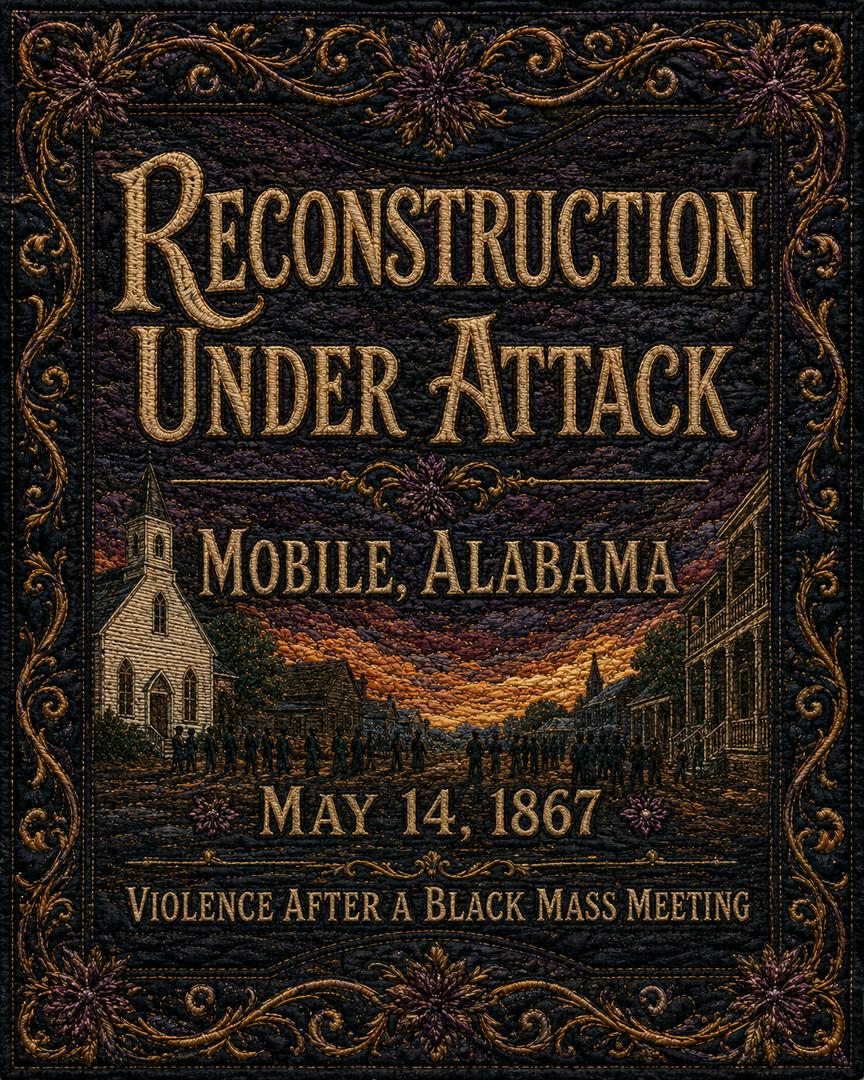
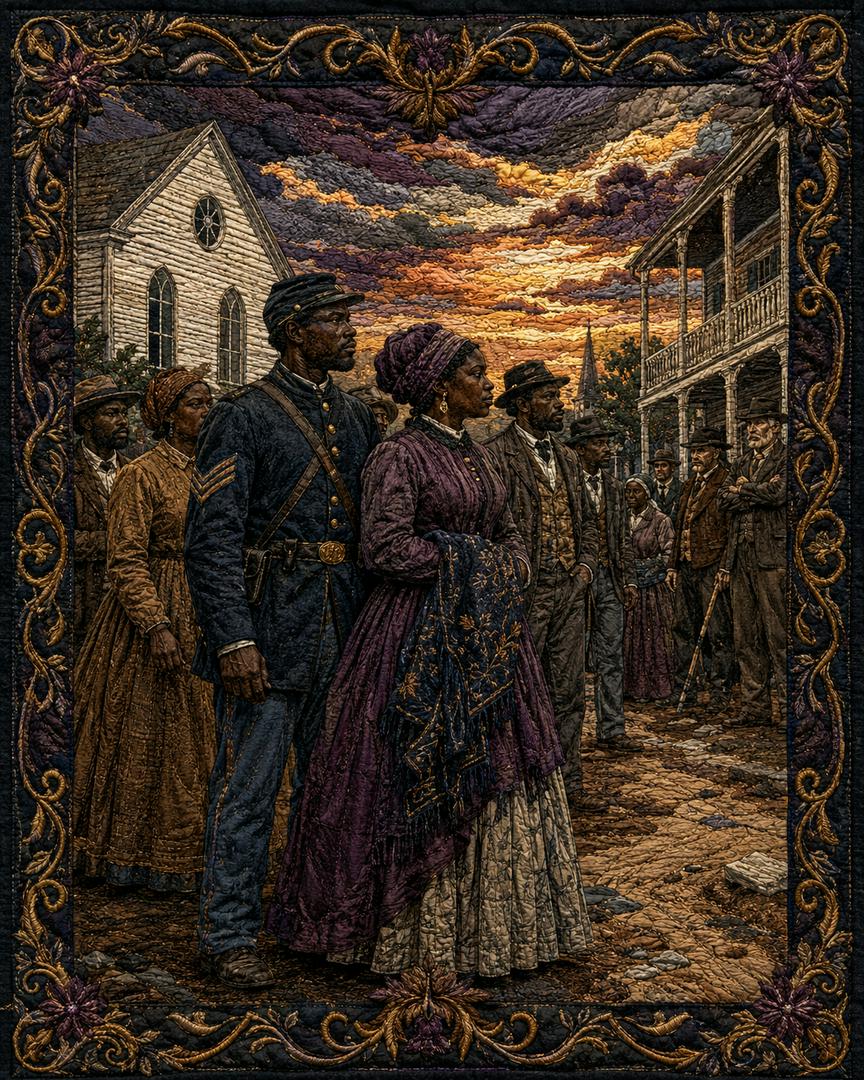
On May 14, 1867, Mobile, Alabama became another Reconstruction-era reminder that freedom on paper did not mean safety in the streets.
That day, deadly violence broke out during a Republican public meeting where Congressman William D. Kelley of Pennsylvania was speaking. Kelley was a Radical Republican, and his visit came during a tense period when formerly enslaved people, Black Union veterans, and Republican organizers were pushing for real political power after the Civil War.
According to House Divided, shots were fired near the edge of the crowd. Two people were killed and several others were wounded. Mobile was already tense, with former Confederates, Black Union veterans, and newly active Black citizens all living through the collision between the old order and the promise of Reconstruction.
This was not just random violence.
Across the South, Black citizens were gathering, organizing, voting, speaking, and demanding a place in public life. In response, white resistance often followed. The goal was not only to disrupt one meeting. The message was bigger: stay away from politics, stay away from the ballot box, and stay in the place the old order had assigned you.
That is why Mobile matters.
The violence of May 14, 1867 shows how Reconstruction was fought not only in Congress or state houses, but in public meetings, city streets, churches, and gathering places where Black people dared to act like free citizens.
They had served in war. They had built communities. They had survived slavery. Now they were demanding a voice.
And the backlash came hard.
History should remember this clearly: the violence was not proof that Black political power was dangerous. It was proof that some people were terrified of Black political power becoming real.
#ReconstructionHistory #BlackHistory #MobileAlabama #VotingRightsHistory #AmericanHistory