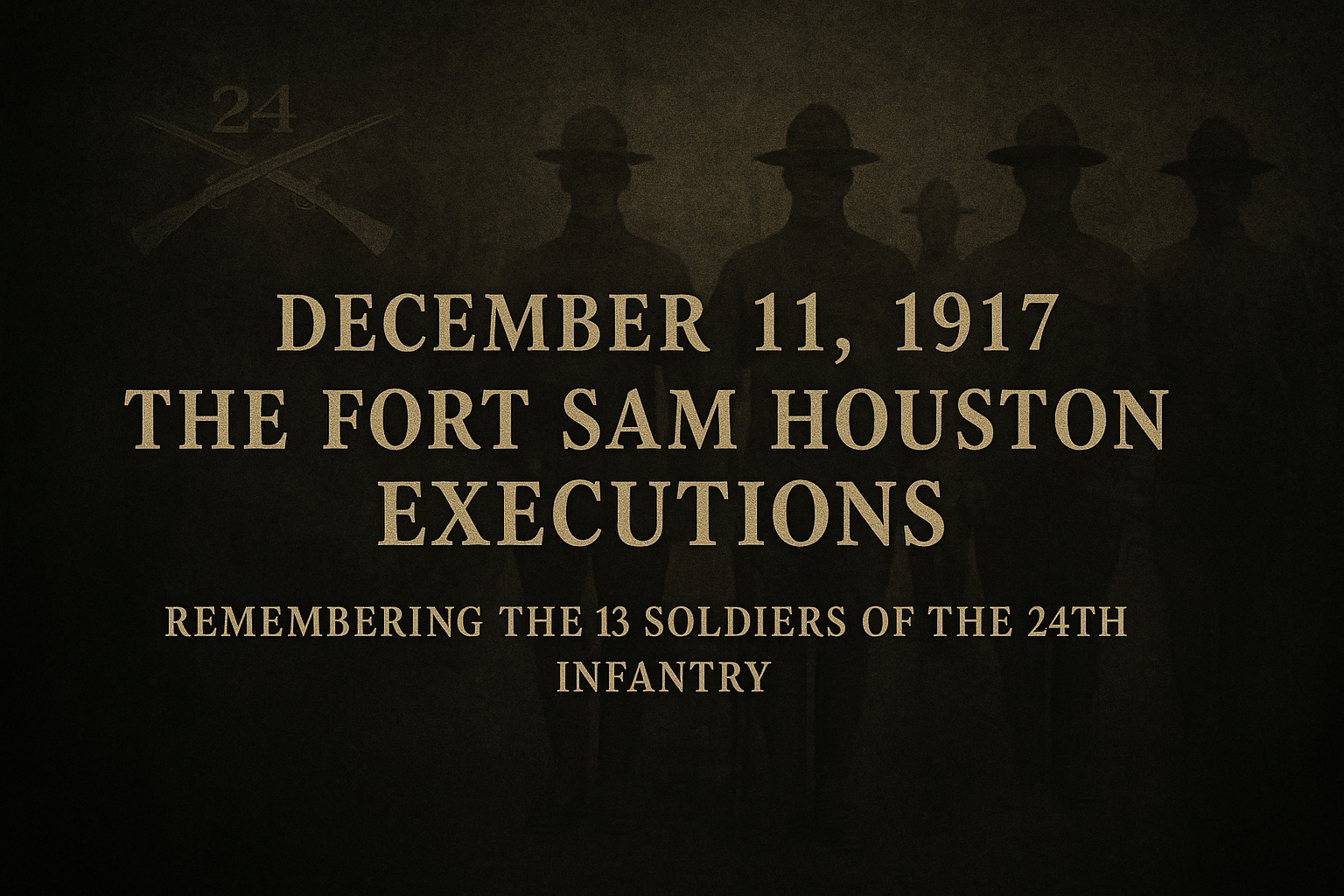
On December 11, 1917, before sunrise, the U.S. Army carried out one of the harshest mass executions in its history. Thirteen Black soldiers of the 3rd Battalion, 24th Infantry Regiment were hanged at Fort Sam Houston after the first court martial linked to the Houston Riot of August 1917. The men had been stationed at Camp Logan in segregated Houston, where Black soldiers faced constant harassment from police and white residents. Tension boiled over after a Black soldier was assaulted and arrested, and confusion inside the camp led many to believe that an armed white mob was on the way. Fear clashed with hostility, violence broke out, and several people were killed.
When the trials began, more than one hundred Black soldiers faced charges in what became the largest court martial in U.S. Army history. Legal counsel was limited, testimony often conflicted, and the system allowed almost no room for appeal. Before dawn on December 11, thirteen men were executed in secret. Their families were not notified, and they had no chance to seek clemency. Their names were James Wheatley, Charles Baltimore, William Brackenridge, Thomas C. Hawkins, Carlos J. Rivers, Jesse Moore, Albert D. Wright, Nels P. Christensen, William C. Nesbit, James Divine, Clyde Sneed, Frank Johnson, and Pat MacWhorter.
Two more court martials followed, bringing the total number of executed soldiers to nineteen. For decades the full story was reduced or distorted, but historians and communities kept pressing for truth. In 2023, the Army finally vacated all the convictions and acknowledged that the trials had been unjust and shaped by racial discrimination.
Remembering this date means facing the reality of what happened and honoring the men whose service was met with unequal justice at home.
#BlackHistory #OnThisDay #HoustonRiot #24thInfantry #MilitaryHistory #AmericanHistory #NewsBreakCommunity