Tag Page MartinLutherKingJr

#MartinLutherKingJr
LataraSpeaksTruth

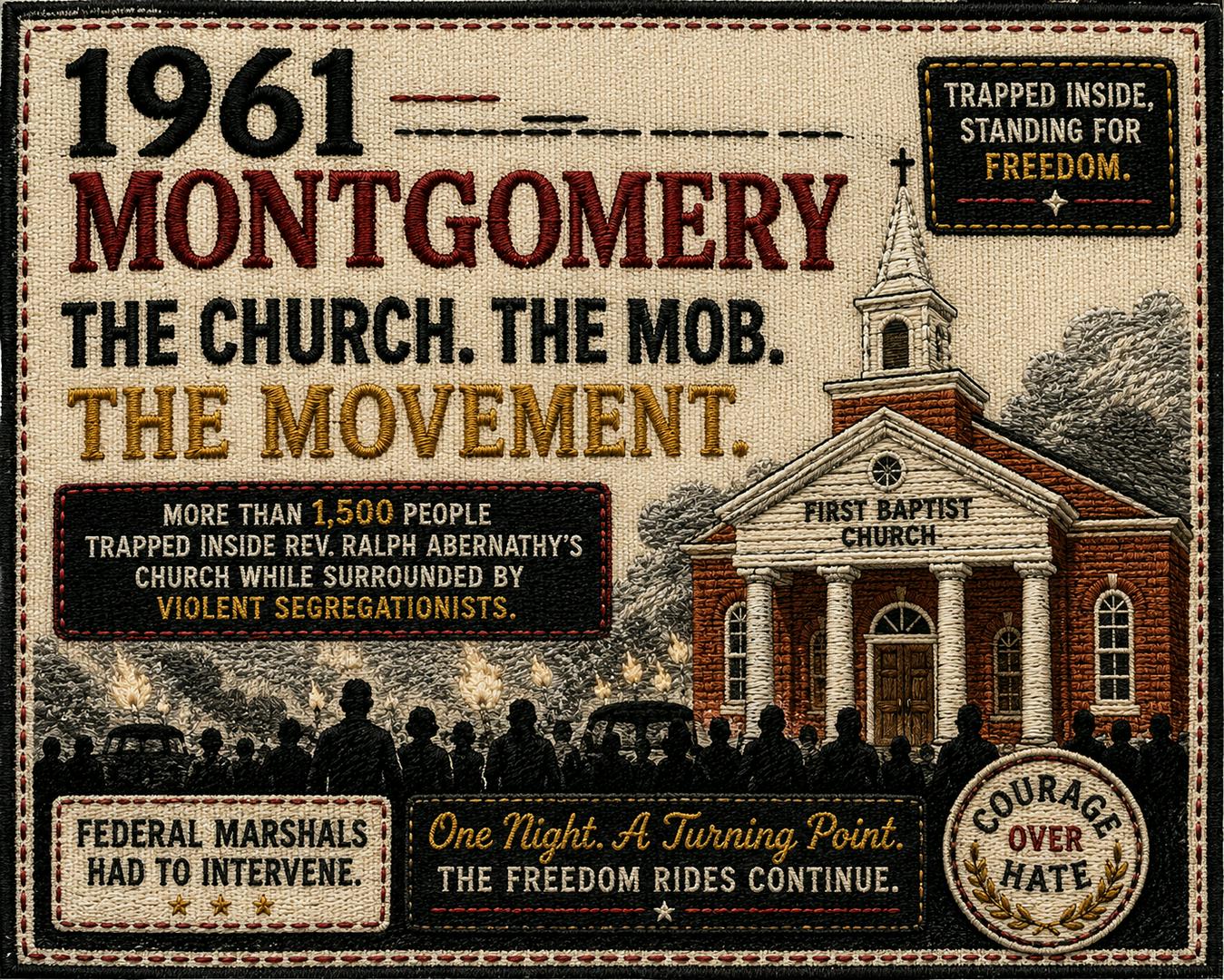
1961: The Night Montgomery Surrounded the Church On May 21, 1961, more than 1,500 people gathered inside First Baptist Church in Montgomery, Alabama, where Reverend Ralph Abernathy hosted a service supporting the Freedom Riders. Inside were Martin Luther King Jr., Fred Shuttlesworth, James Farmer, Diane Nash, and others standing with the riders after the previous day’s brutal attacks at the Montgomery bus station. Outside, a violent white mob surrounded the church. Cars were damaged. Threats were made. Bricks were thrown. The crowd inside was trapped for hours while fear pressed against the walls. This was not just a church service. It became a standoff over whether America would protect citizens demanding rights already promised by law. The Freedom Riders were challenging segregation in interstate travel after Supreme Court rulings said those practices were unconstitutional. But in the Deep South, the law on paper did not always mean safety in real life. From inside the church, King contacted Attorney General Robert F. Kennedy for help. Federal marshals were sent in, but the danger grew so serious that Alabama’s National Guard was eventually brought in to clear the mob and help protect the people inside. That night showed the world the cost of courage. The Freedom Riders were not asking for special treatment. They were testing whether America meant what it said. And Montgomery answered with violence. But the riders did not quit. The movement kept going, and their pressure helped force stronger federal enforcement against segregation in interstate travel. That church became more than a building that night. It became proof that freedom sometimes had to be defended from inside locked doors while hate shouted from outside. #FreedomRides #MartinLutherKingJr #RalphAbernathy #CivilRightsHistory #BlackHistory #MontgomeryAlabama

LataraSpeaksTruth

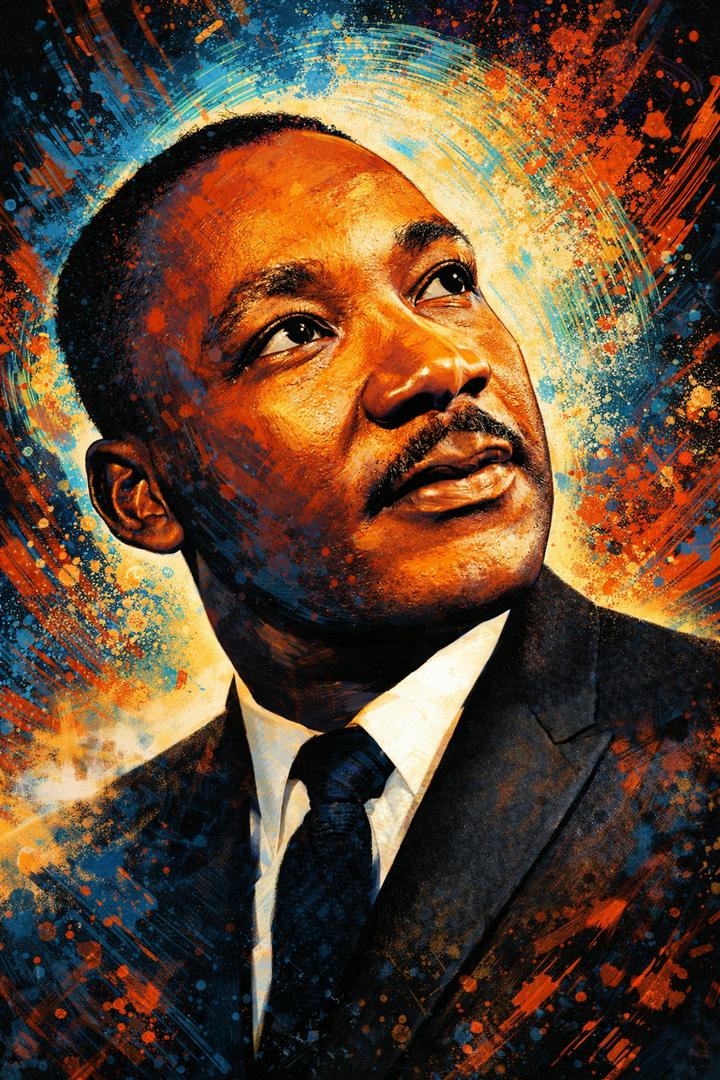
January 15 marks the birth of Martin Luther King Jr., born in 1929. This date is not symbolic fluff. It is a historical anchor. A reminder that disciplined thought, moral clarity, and strategic pressure can destabilize entire systems. Dr. King was not accidental. He was trained. Educated. Deliberate. A Morehouse scholar with a doctorate who understood power, language, timing, and optics. He knew how to force a nation to confront its contradictions without throwing a punch. That restraint made his challenge impossible to ignore. From Montgomery to Birmingham to Selma, his leadership moved civil rights from protest signs into federal law. He did not just inspire conscience. He altered policy. That distinction matters. Movements run on passion. Progress runs on strategy. King mastered both. January 15 is not about a dream stripped of context. It is about intellect, courage, and accountability. It is about a man who understood that justice delayed was not accidental, and that pressure applied intelligently and without apology bends history. Today, we do not soften him. We remember him whole. The thinker. The tactician. The man who knew exactly what he was doing. #MLKDay #MartinLutherKingJr #CivilRights #BlackHistory #SocialJustice

LataraSpeaksTruth

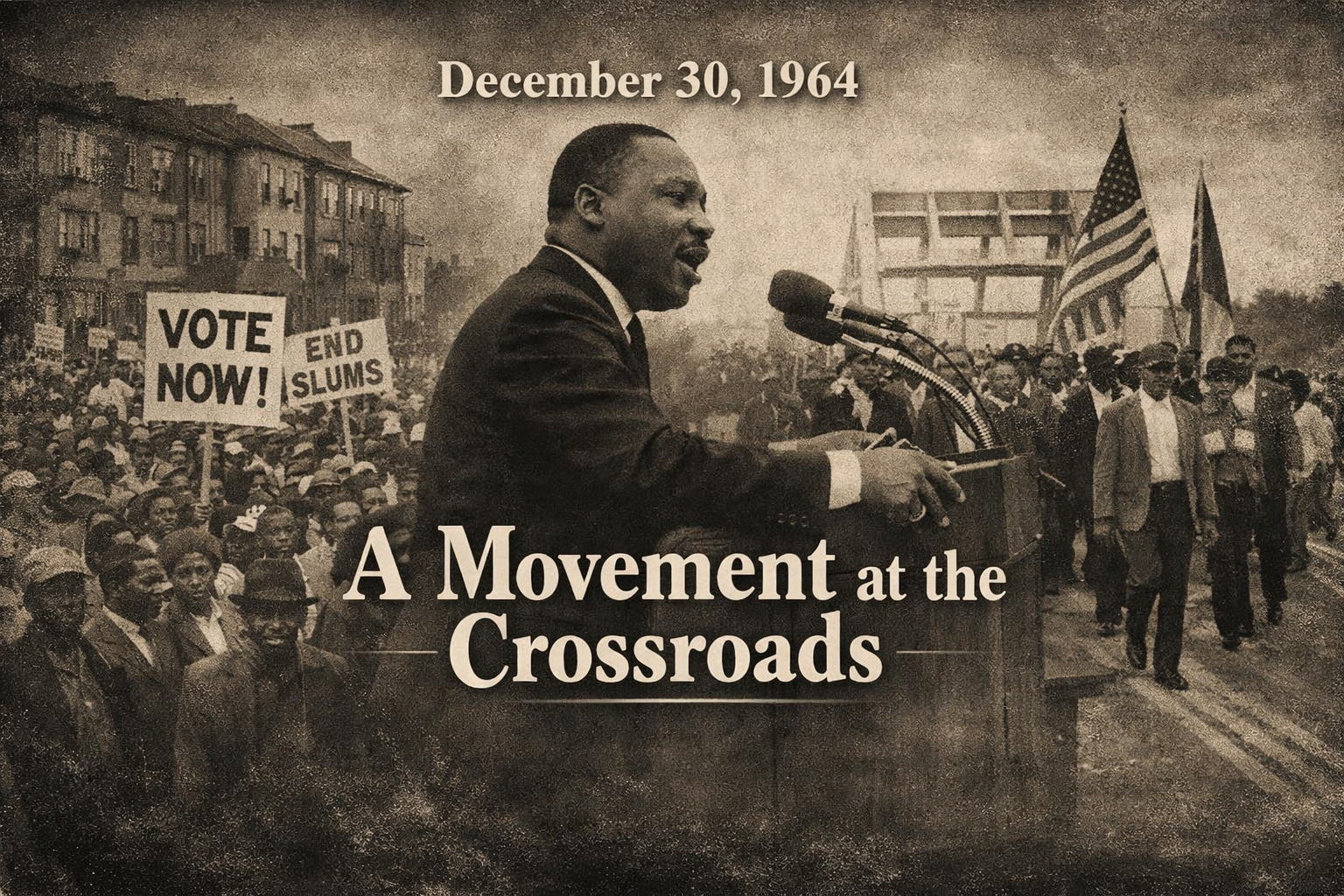
December 30, 1964 marked a moment of transition for the modern civil rights movement. In late December, Martin Luther King Jr. delivered one of his final major public addresses of the year as the movement stood between legislative victory and unresolved reality. The Civil Rights Act had been signed months earlier, yet resistance to enforcement remained widespread, underscoring that legal change had not automatically produced social or economic equality. King used his end of year speeches to signal where the struggle was headed next. While segregation laws had been formally dismantled, economic inequality, barriers to voting access, and entrenched segregation in Northern cities were becoming increasingly visible. He warned that discrimination was no longer confined to the South or expressed solely through explicit statutes, but embedded in housing patterns, employment practices, education systems, and political participation nationwide. By December 1964, King was placing greater emphasis on the connection between racial justice and economic justice. He spoke openly about poverty, unemployment, and the limits of symbolic progress when millions remained excluded from opportunity. Voting rights, still obstructed through intimidation and administrative barriers, emerged as a central priority, setting the stage for the campaigns that would define 1965. This period marked a shift in tone and strategy. The movement was moving beyond confronting visible segregation toward challenging structural inequality, a transition that would intensify public debate and resistance. King’s late December address reflected a movement no longer focused solely on passing laws, but on transforming the deeper conditions shaping American life. #History #USHistory #CivilRightsMovement #MartinLutherKingJr #VotingRights #EconomicJustice #AmericanHistory #SocialChange
You've reached the end!