Tag Page LataraSpeaksTruth

#LataraSpeaksTruth
LataraSpeaksTruth

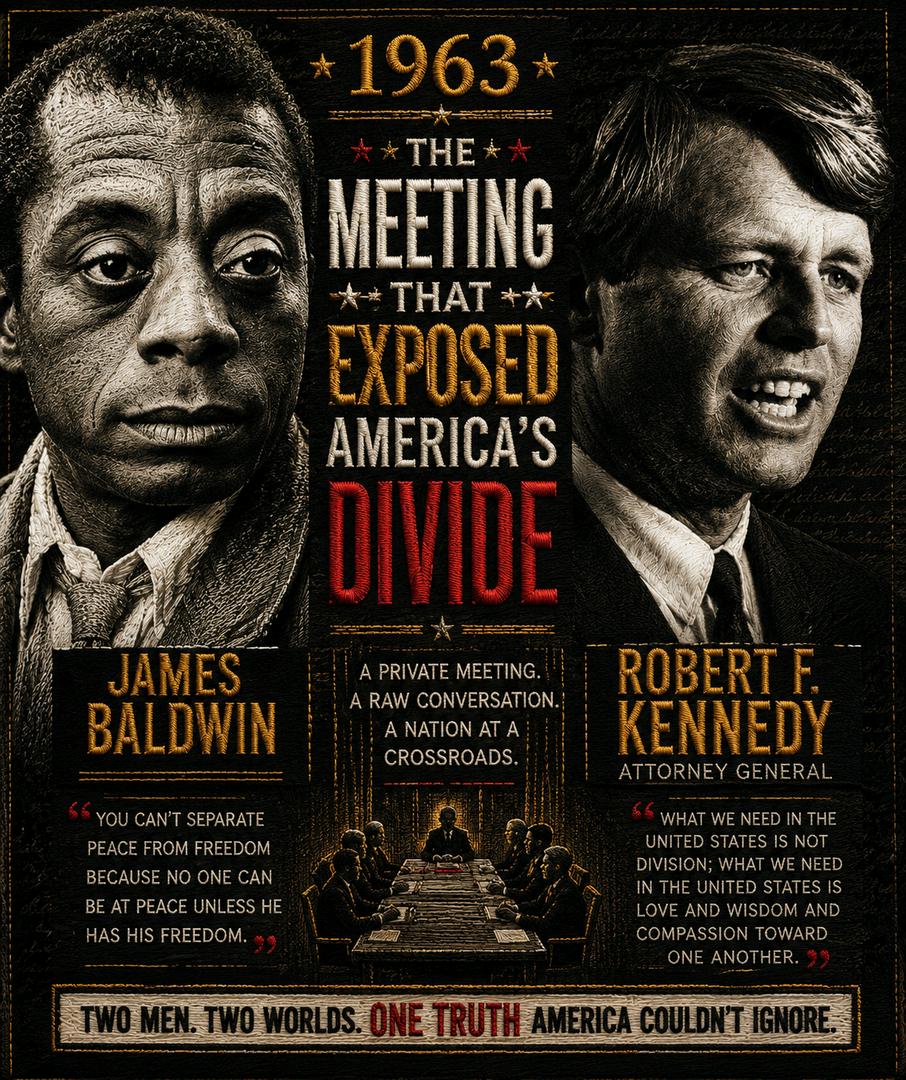
1963 — James Baldwin Meets Robert F. Kennedy On May 24, 1963, James Baldwin walked into a private meeting with Attorney General Robert F. Kennedy, but this was not just a polite conversation between a writer and a politician. Baldwin came carrying the weight of Black America. The meeting happened during a tense moment in the Civil Rights era. Birmingham had shown the nation police dogs, fire hoses, jail cells, and children being punished for demanding basic dignity. Kennedy wanted to understand the rising anger, especially in northern cities. Baldwin helped gather voices who could tell him the truth directly. Among those present were Lorraine Hansberry, Harry Belafonte, Lena Horne, Kenneth Clark, Clarence Jones, and Jerome Smith, a young Freedom Rider who had been beaten and jailed in Mississippi. Smith’s words changed the room. He made it clear that Black activists were tired of watching the federal government take notes while people were brutalized. To him, justice delayed was not patience. It was abandonment. Kennedy reportedly struggled to understand the depth of their anger. He saw progress in legal steps and government action. Baldwin and the others saw people bleeding while the government moved carefully. That disconnect is what made the meeting historic. It exposed the gap between federal power and lived Black reality. The government wanted order. Black activists wanted freedom. Those are not always the same thing. The meeting did not end smoothly, but it mattered. It forced Kennedy to hear what speeches and reports could not fully explain. Less than a month later, President John F. Kennedy gave his major civil rights address, calling civil rights a moral issue. James Baldwin understood something America still struggles with today. You cannot ask people to stay calm while refusing to confront what made them angry. #JamesBaldwin #BlackHistory #CivilRightsHistory #RobertFKennedy #LataraSpeaksTruth

LataraSpeaksTruth

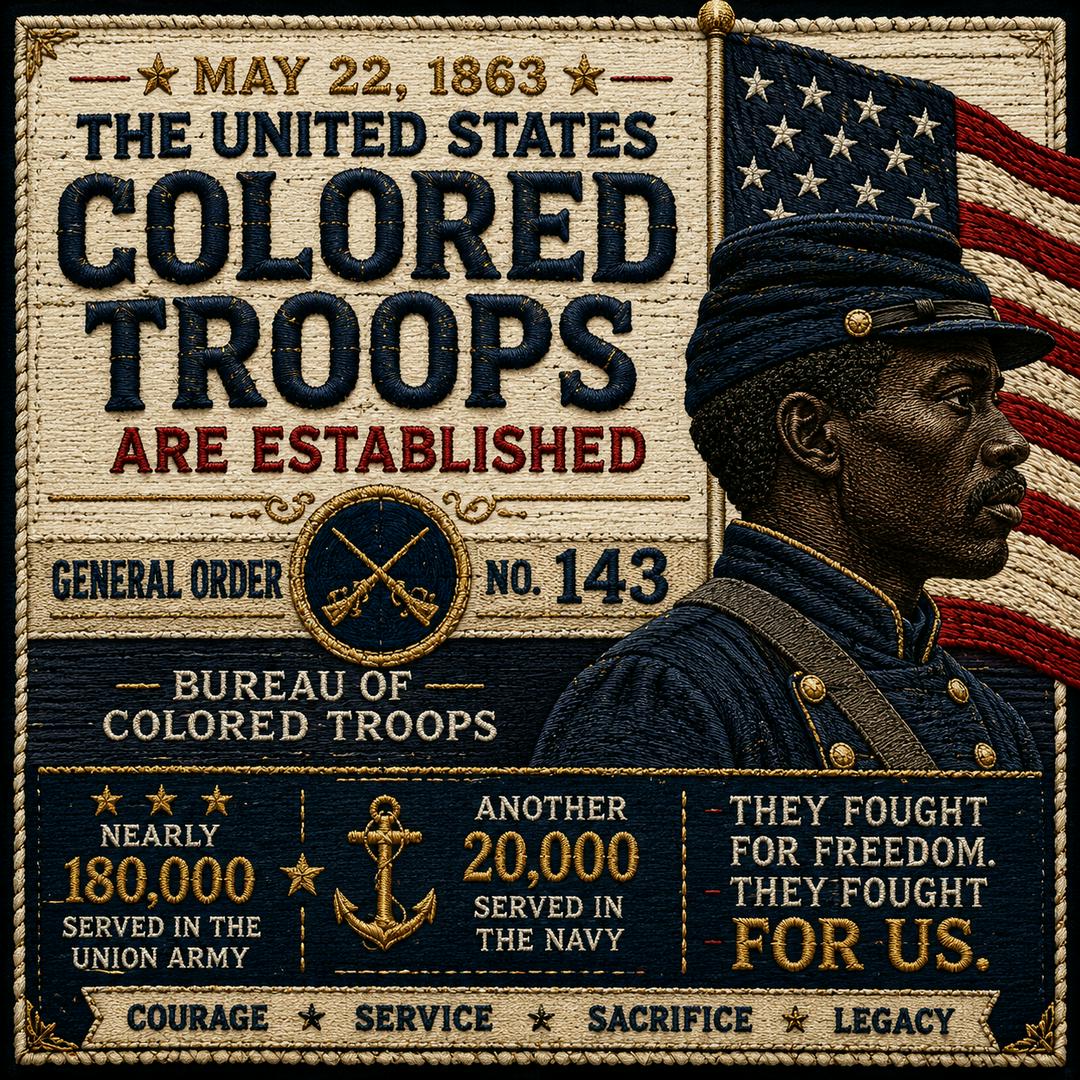
1863: The United States Colored Troops Are Established On May 22, 1863, the War Department issued General Order No. 143, creating the Bureau of Colored Troops. That order officially opened the door for Black men to serve in organized units during the Civil War. By the end of the war, roughly 179,000 Black soldiers had served in the Union Army, with about 19,000 more serving in the Navy. But they were not just fighting battles. They were fighting for freedom, citizenship, dignity, and the right to be seen as men in a nation that had denied their humanity. Many had escaped slavery. Others were free Black men who understood that the outcome of the war would shape the future of their people. Black Union troops and USCT soldiers faced racism, unequal pay, harsher treatment if captured, and doubts from those who questioned their ability to fight. Still, they showed up. They fought in major campaigns and battles including Milliken’s Bend, Petersburg, and New Market Heights. Their courage became part of the record. Their service made one thing impossible to deny… Black men had not waited for freedom to be handed to them. They fought for it. The creation of the United States Colored Troops was more than a military decision. It was a turning point in American history. They wore the uniform of a country that had not fully accepted them, and still helped save it. #BlackHistory #AmericanHistory #CivilWarHistory #USCT #OnThisDay #HistoryMatters #FreedomFighters #LataraSpeaksTruth

LataraSpeaksTruth

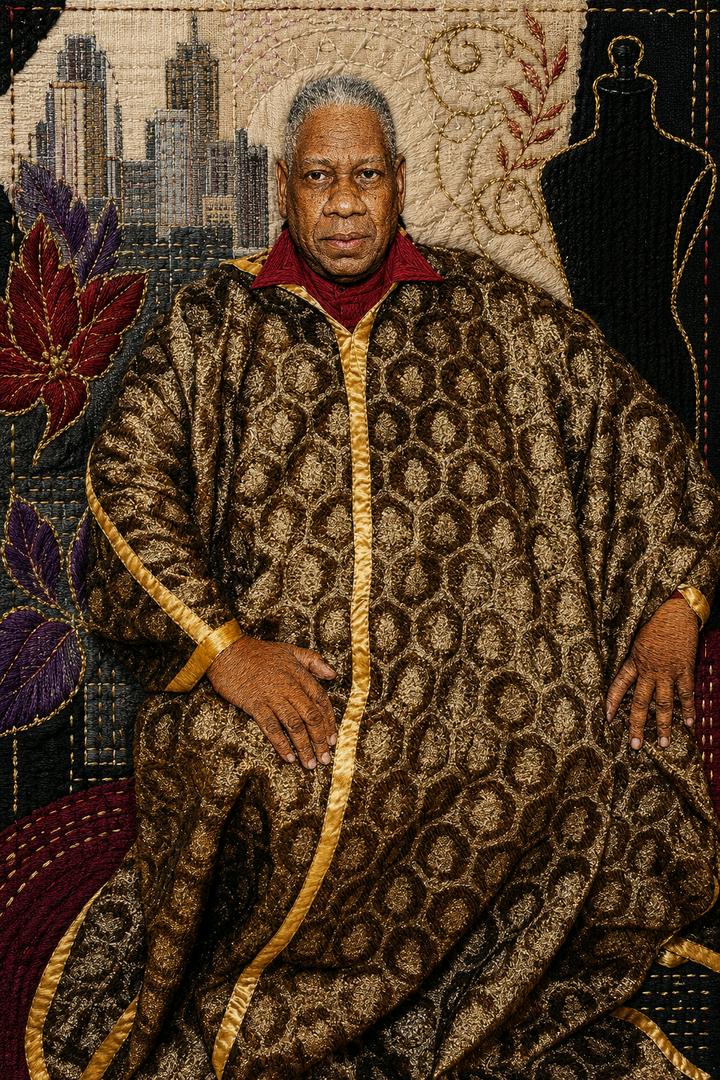
André Leon Talley was not born into fashion’s front row. He was born in Washington, D.C., in 1948 and raised in Durham, North Carolina, by his grandmother, Bennie Frances Davis. That detail matters. Before he became one of the most recognizable voices connected to Vogue, he was a young Black boy in the segregated South, finding beauty in a world that did not always make room for him. Talley studied French literature at North Carolina Central University and later earned a master’s degree from Brown University. His path into fashion was not casual. It was built on intellect, discipline, taste, and a deep understanding of history and culture. He worked with Diana Vreeland, Interview magazine, Women’s Wear Daily, W, and eventually Vogue, where he became fashion news director, creative director, and editor-at-large. In an industry long dominated by white gatekeepers, André Leon Talley stood tall, literally and historically. His capes, robes, and grand entrances became iconic, but the real statement was his mind. Talley understood fashion as more than clothes. He saw it as history, power, identity, class, beauty, and survival. He also used his influence to advocate for more visibility for Black models and Black creativity in spaces that often borrowed from Black culture while shutting Black people out. His legacy is not just that he made it into Vogue. It is that he walked into those rooms as himself. Grand. Brilliant. Southern. Black. Unforgettable. #AndreLeonTalley #BlackHistory #FashionHistory #Vogue #BlackExcellence #CulturalHistory #StyleIcon #LataraSpeaksTruth

LataraSpeaksTruth

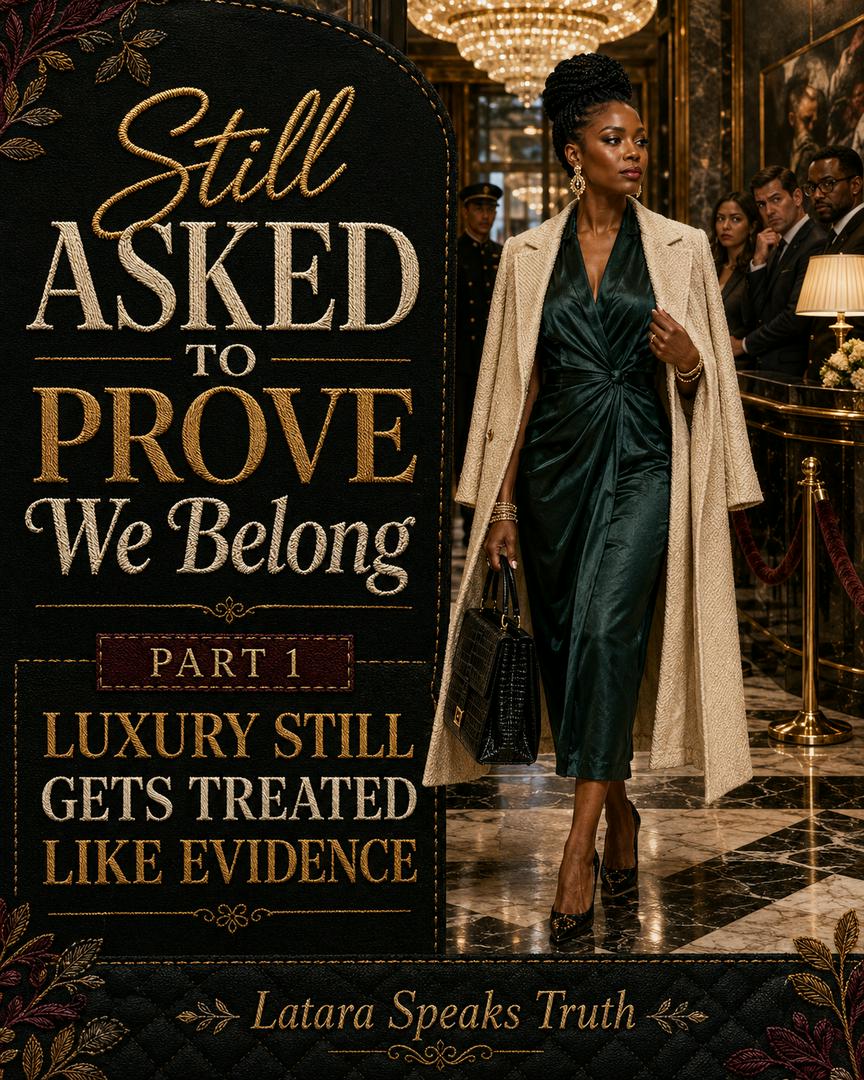
Some people say Black people are not excluded anymore because the doors are technically open. But being allowed inside is not the same as being welcomed. Black people can buy the house, drive the car, book the trip, wear the designer, sit in first class, walk through the lobby, shop in the store, or move into the neighborhood and still be treated like we need to explain how we got there. That is the part people like to skip. Luxury is supposed to be comfort. For us, it can turn into a background check. A Black person with something expensive is too often met with suspicion before respect. Somebody wants to know if it is real. Somebody wants to know who paid for it. Somebody wants to know if we work there, live there, stole it, borrowed it, or somehow got access to something we were not supposed to have. And that reaction tells the truth. The problem was never just about access. It was about belonging. Because the same people who say we are “playing victim” will question us the moment we show up somewhere they did not expect to see us. If we struggle, they call us lazy. If we succeed, they call us suspicious. If we ask for help, they call us entitled. If we build something for ourselves, they call it unfair. So what exactly are we allowed to have without somebody making it a debate? Black luxury should not have to be explained. Black comfort should not have to be defended. Black success should not have to be followed by proof. We do not need permission to enjoy the things we worked for. We do not need to shrink so other people feel comfortable. And we do not need to keep proving we belong in spaces our money, labor, talent, and history helped build. Sometimes the issue is not that the door is closed. Sometimes the issue is that people still act shocked when we walk through it. #StillAskedToProveWeBelong #LataraSpeaksTruth #BlackStoriesMatter #CultureTalk #SocialCommentary

LataraSpeaksTruth

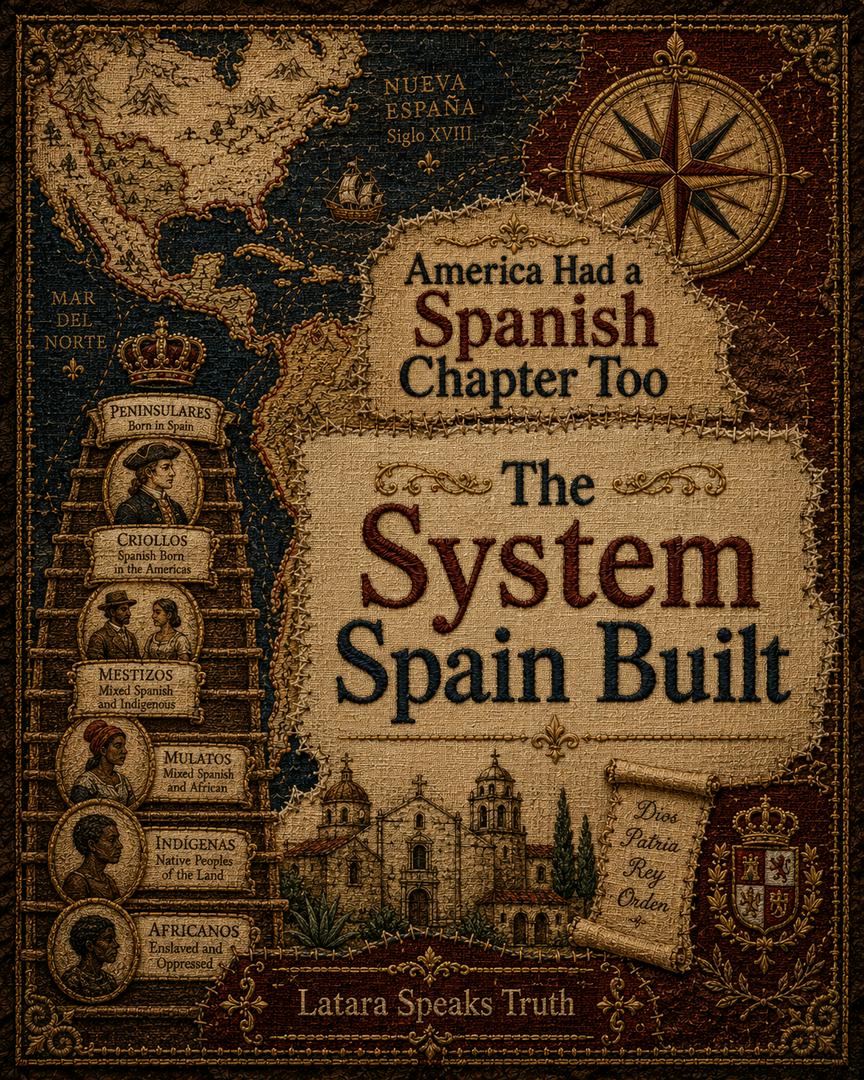
The System Spain Built Before we keep moving forward, we have to look at the system Spain built in the Americas. When Spain expanded its empire, it did not only take land. It built a social order. Spanish colonial society developed a racial hierarchy often called the casta system. At the top were Spaniards born in Spain. Below them were people of Spanish descent born in the Americas. Beneath that were mixed-race groups, Indigenous people, and people of African descent. This was not just prejudice floating in the air. It was structure. The system shaped who had access to power, land, education, church authority, legal protection, and social status. It also shaped who was pushed into forced labor, taxed, controlled, converted, displaced, or treated as less than fully equal. Indigenous people were forced into colonial systems that reshaped their land, labor, language, and spiritual life. African people and their descendants were brought into the Americas through slavery and placed near the bottom of colonial society. Spanish elites gained wealth through land control, plantations, mines, forced labor, and laws that protected their position. The casta system also created labels for mixed-race people, turning ancestry into a ranking system. A person’s background could affect how they were seen, where they fit, and how close they were allowed to stand to power. That is why this history matters. Spanish America was not built only through exploration. It was built through hierarchy. And long before modern debates about race, language, borders, and belonging, Spain had already created a system that taught people where they were supposed to stand. Some were placed close to power. Others were pushed to the bottom. And the effects of that colonial order did not disappear just because empires changed names. #LataraSpeaksTruth #AmericanHistory #LatinoHistory #HispanicHeritage #HiddenHistory
LataraSpeaksTruth

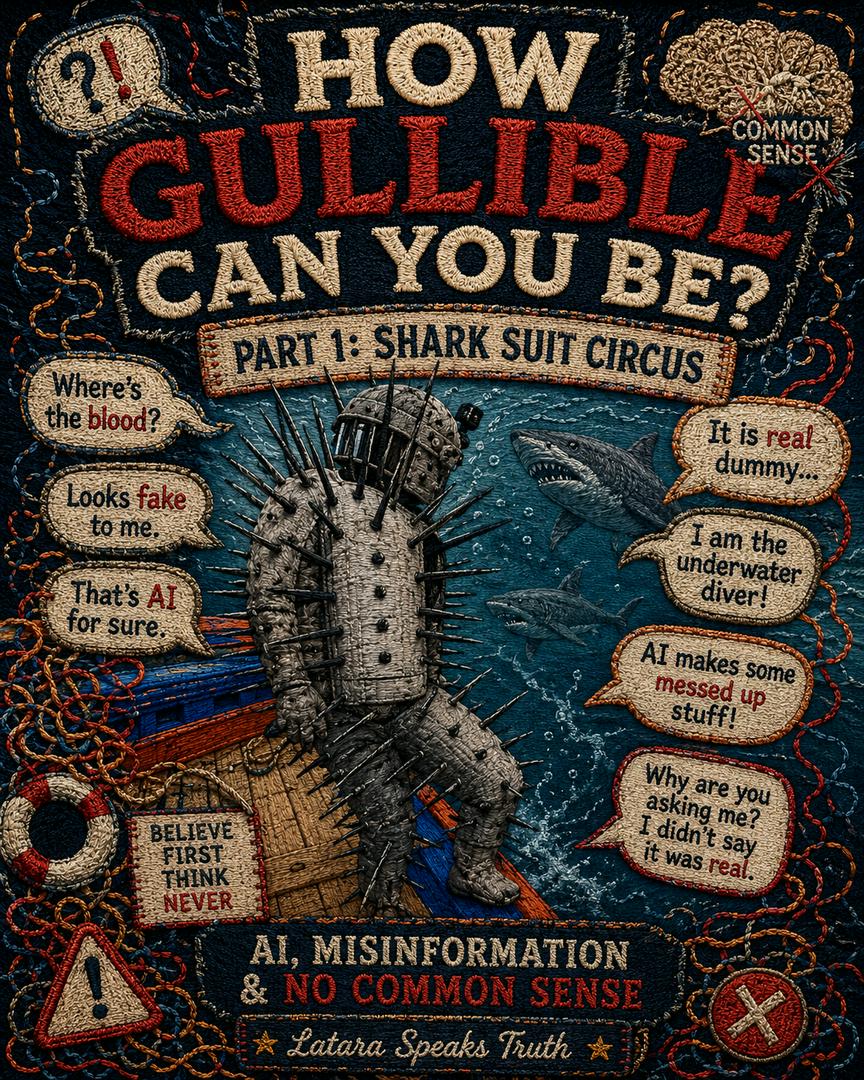
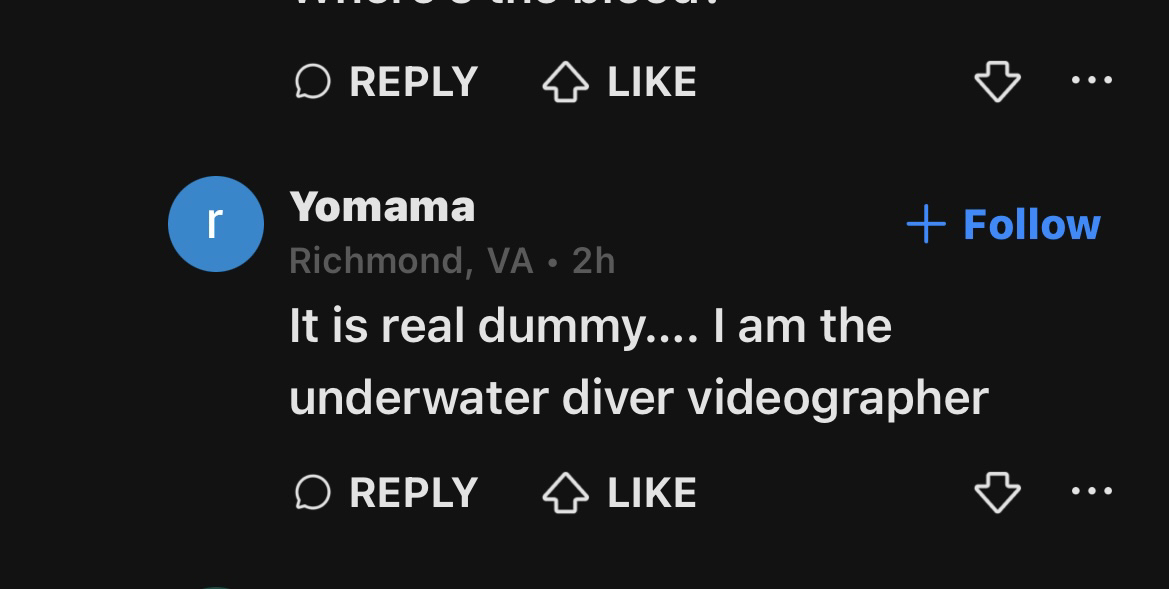
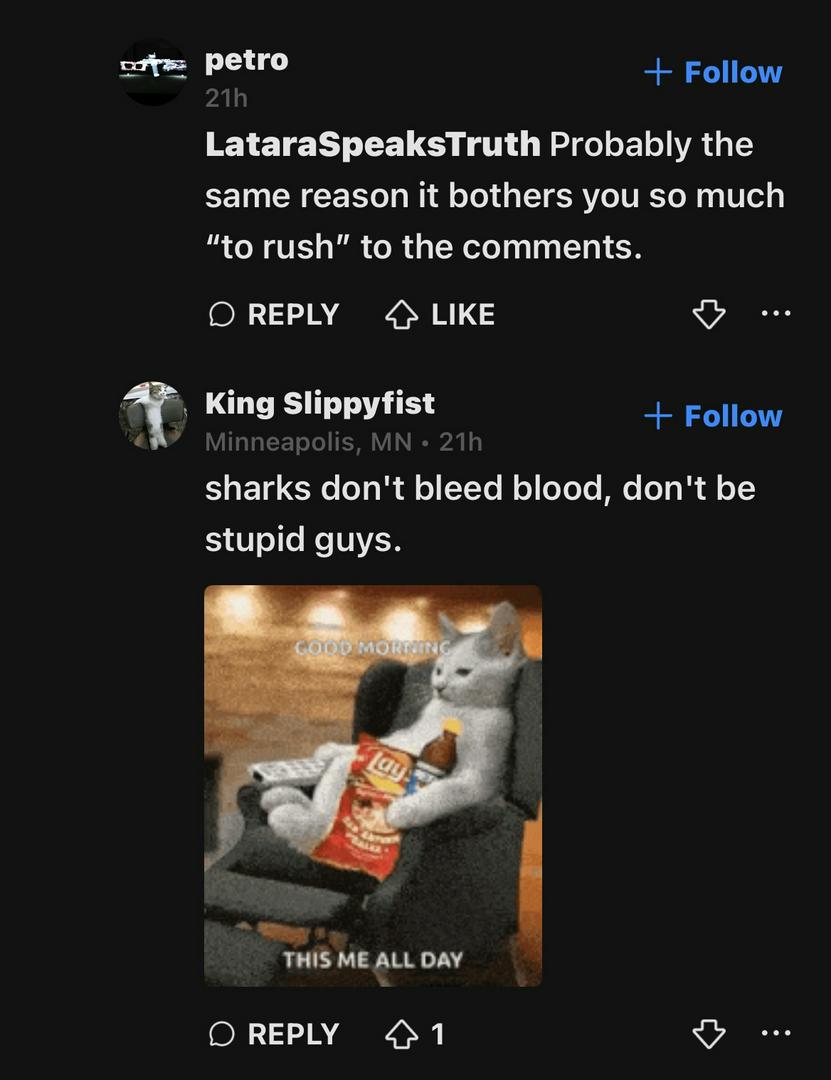
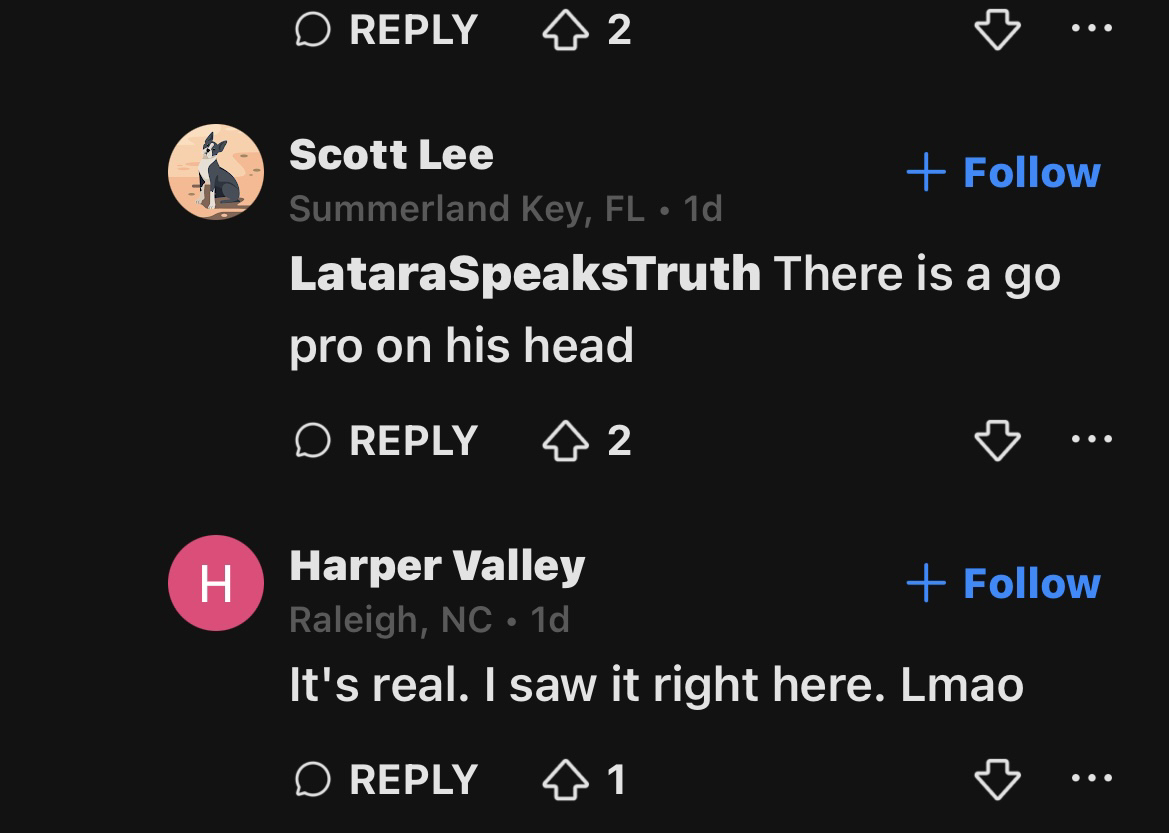
How Gullible Can You Be? Part 1: The Shark Suit Circus This video is not even the craziest part. The craziest part is the comment section. A man is supposedly jumping into shark-infested water wearing a heavy metal-looking suit covered in long spikes, and people really watched it like, “Yep. Looks real to me.” No blood. No real panic. No clear explanation of how that suit is moving like that underwater. No real concern about the weight. No serious question about who is calmly filming this so-called shark frenzy from underwater. But the second somebody says, “This looks like AI,” here come the insults. “Where’s the blood?” was a fair question. “AI makes some messed up stuff” was also fair. But instead of looking at the obvious red flags, somebody jumped straight to, “It is real dummy…I am the underwater diver videographer.” Sir…okay, Mr. SeaWorld Spielberg. That is the part people need to pay attention to. AI is not just creating fake content. It is exposing how gullible people have become. Worse than that, it is exposing how ugly people get when their common sense gets challenged. Some people would rather call somebody dumb than admit they may have believed something ridiculous. That is bigger than one fake shark video. That is how misinformation spreads. Not because every fake thing is perfect, but because too many people stop thinking the moment something entertains them. They do not question the image. They question the person who noticed the lie. That is dangerous. Because if people will defend an obvious shark-suit circus this hard, imagine how easily they can be moved by fake political clips, fake crime stories, fake celebrity posts, fake outrage, and fake “proof” designed to make them angry. AI did not create the gullibility. It just put a spotlight on it. And the comment section proved the point better than the video ever could. So yes, this is a series now. Because some of y’all are not just being fooled. You are being fooled loudl

LataraSpeaksTruth

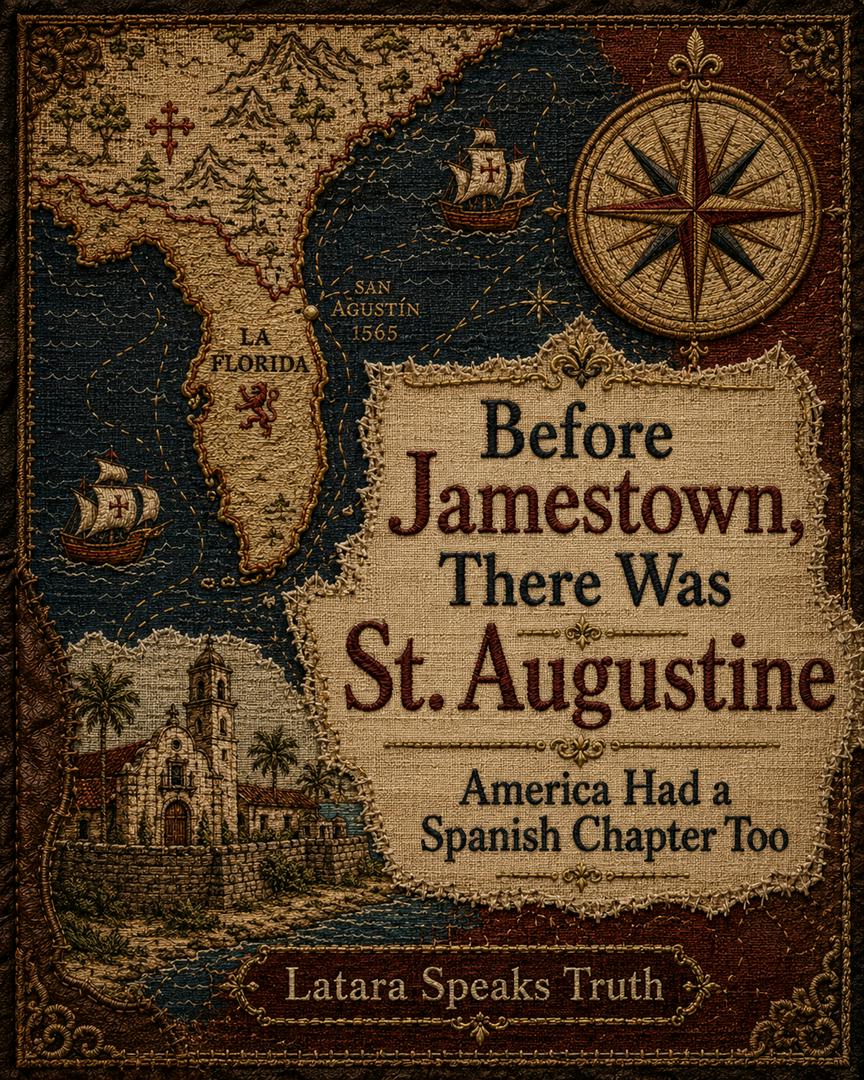
Before Jamestown, There Was St. Augustine Before many Americans learned about Jamestown, Plymouth Rock, or the Pilgrims, Spanish Florida was already part of the story. In 1565, Pedro Menéndez de Avilés founded St. Augustine in what is now Florida. The city is recognized as the oldest continuously occupied settlement of European and African American origin in the United States. It was founded decades before Jamestown and Plymouth. That matters because early American history did not begin only with English settlers. It also included Spanish colonization, Indigenous land, forced labor, African presence, Catholic missions, military outposts, and communities shaped under empire. St. Augustine was built on land where Indigenous people already lived. Spanish colonists first occupied the Timucua village of Seloy, and conflict grew between Spanish settlers and Indigenous communities before the settlement later shifted to the site of modern St. Augustine. African people were also there from the beginning. When people talk about African presence in early America, many start with 1619 in Virginia. That story is important, but it is not the only beginning. In Spanish Florida, free and enslaved Africans were already part of the settlement in the 1500s. That means the Spanish chapter of American history was never only Spanish. It was Indigenous. It was African. It was European. It was forced together through conquest, survival, labor, violence, religion, and resistance. This is why the history matters. Once people understand St. Augustine, they understand that Spanish-speaking history in America did not arrive late. It was already being written before English colonies became the center of the classroom story. This was not a side chapter. It was one of the first chapters. And many people were never taught it that way. #LataraSpeaksTruth #AmericanHistory #LatinoHistory #HispanicHeritage #HiddenHistory
Robblyn

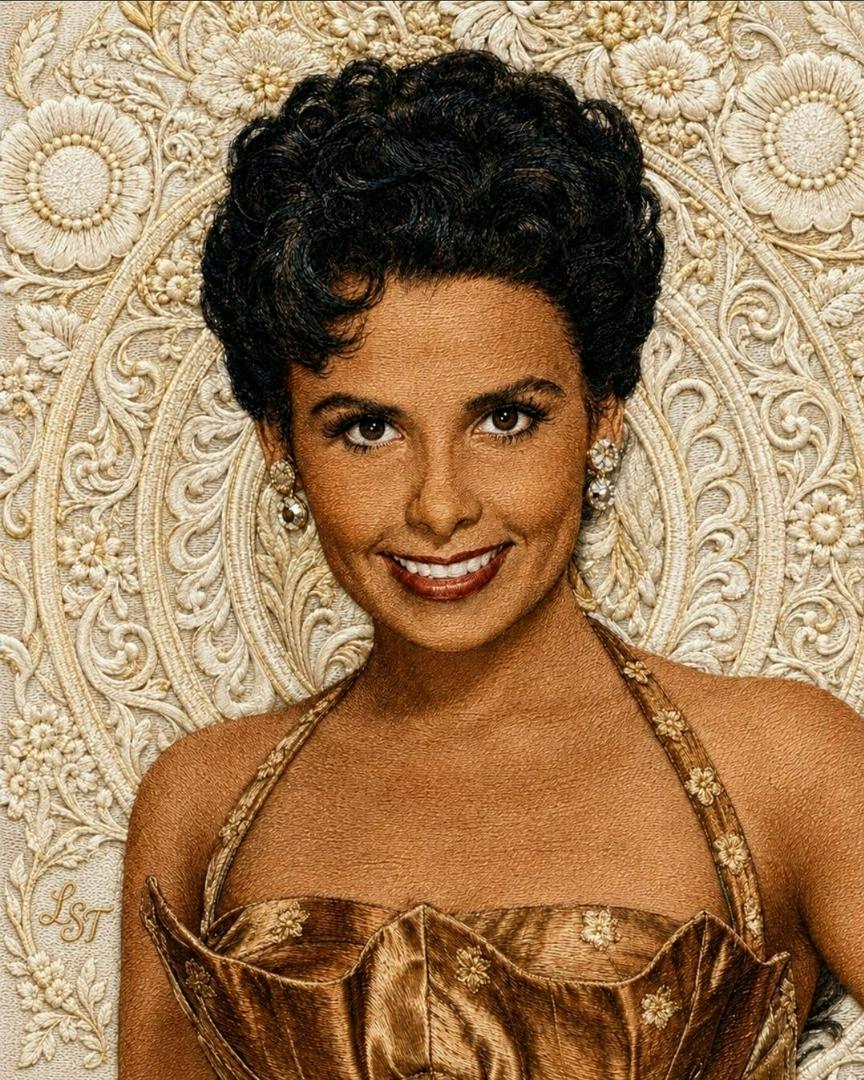
On Mav 9, 2010, Lena Horne died at the age of 92, leaving behind a legacy shaped by beauty, talent, discipline, and quiet defiance She was more than a singer and actress She was a woman who walked into spaces that wanted her image, but not always her full power. Lena Horne became one of the first Black performers to sign a long-term contract with a maior Hollywood studio. That sounded like progress, but Hollywood's version of progress still came with restrictions. Her elegance was celebrated, her voice was admired, and her face was placed on screen, but the industry often limited how much of her presence audiences were allowed to see. Some of her scenes were filmed in ways that made them easier to remove for theaters in segregated areas. That detai says a lot without needing to say much more.But Lena Horne was not someone Hollywood could shrink She carried herself with grace, but grace was not weakness. Her poise had backbone Her beauty had boundaries. Her voice carried more than music, it carried resistance. She spoke against discrimination, supported civil rights, and used her platform in a time when doing so came with real consequences. Her career stretched across film, music television, nightclubs, and Broadway. Later in life, her acclaimed one-woman show, "Lena Horne: The Lady and Her Music;' reminded audiences that her story was not just about glamour. It was about endurance control, and survival in an industry that tried to decide how much brilliance was safe to show. Lena Horne made them look anywayShe left behind more than performances. She left behind proof that elegance can be resistance, silence can be strategy, and dignity can outlast every room that tried ta deny it #LenaHorne #BlackHistory #HollywoodHistory #Lemon8Stories #LataraSpeaksTruth

LataraSpeaksTruth

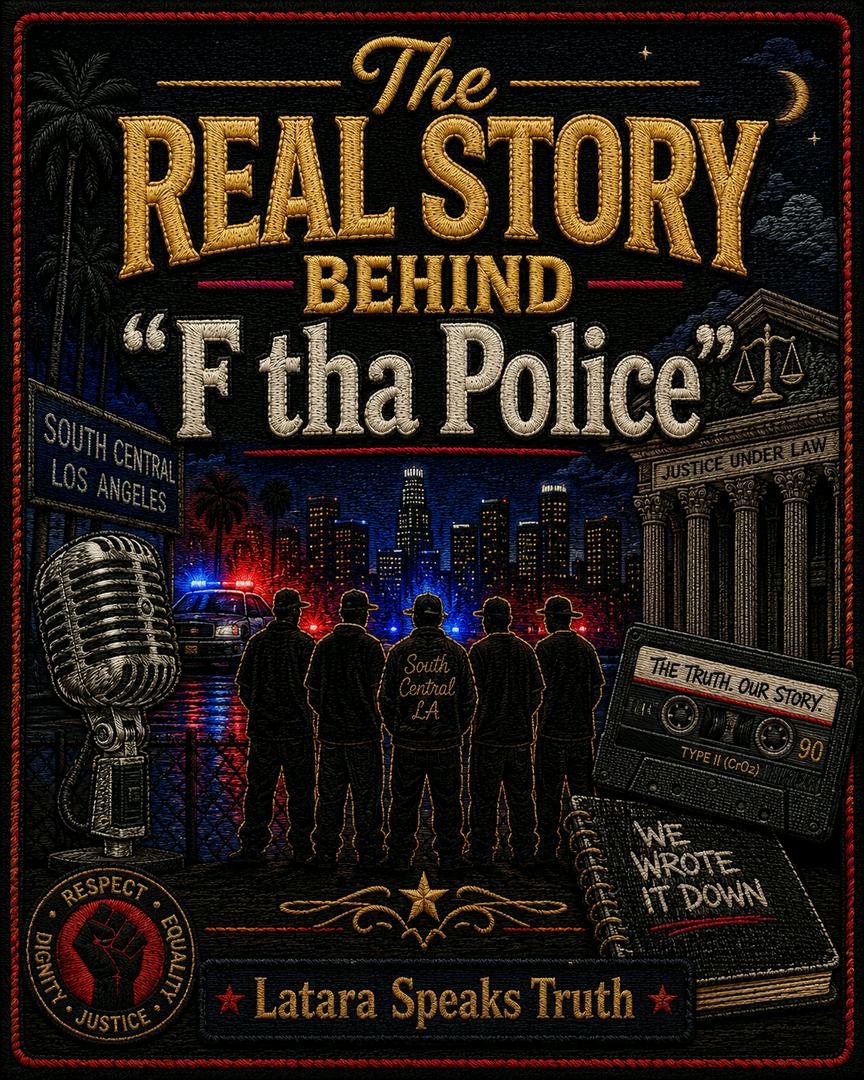
When people talk about N.W.A.’s “F tha Police,” the story usually gets flattened into one word: controversy. But the real story was bigger than a curse word, a hook, or a headline. The song came from a real time and place. In late 1980s Los Angeles, South Central communities were dealing with aggressive policing, racial profiling, poverty, gang enforcement, and years of frustration that did not suddenly appear when a rap group put it on wax. N.W.A. did not package that anger in polite language. They made it raw. Loud. Uncomfortable. That was the point. “F tha Police” was built like a courtroom scene, with young Black men putting law enforcement on trial through music. It was not trying to sound respectable for people who had already decided not to listen. It was trying to sound like what people were saying when no camera or politician was around. The backlash came fast. In 1989, an FBI official sent a letter to Priority Records criticizing the song and saying it encouraged violence and disrespect toward police officers. But instead of burying the record, the letter helped make it more famous. That is the part history loves to flip. A song once treated like a threat later became part of American music history. Straight Outta Compton was added to the National Recording Registry because of its cultural, historical, and artistic significance. That is the real story. A record condemned as dangerous was later preserved as important. You do not have to like every lyric to understand why it mattered. “F tha Police” captured anger many people felt but rarely heard expressed on a national stage. It was not just a rap song. It was a warning flare from a community tired of being watched, stopped, searched, and dismissed. And once history proved those complaints were not imaginary, the song became more than controversy. It became documentation. #NWA #HipHopHistory #MusicHistory #TheRealStoryBehindIt #LataraSpeaksTruth

LataraSpeaksTruth

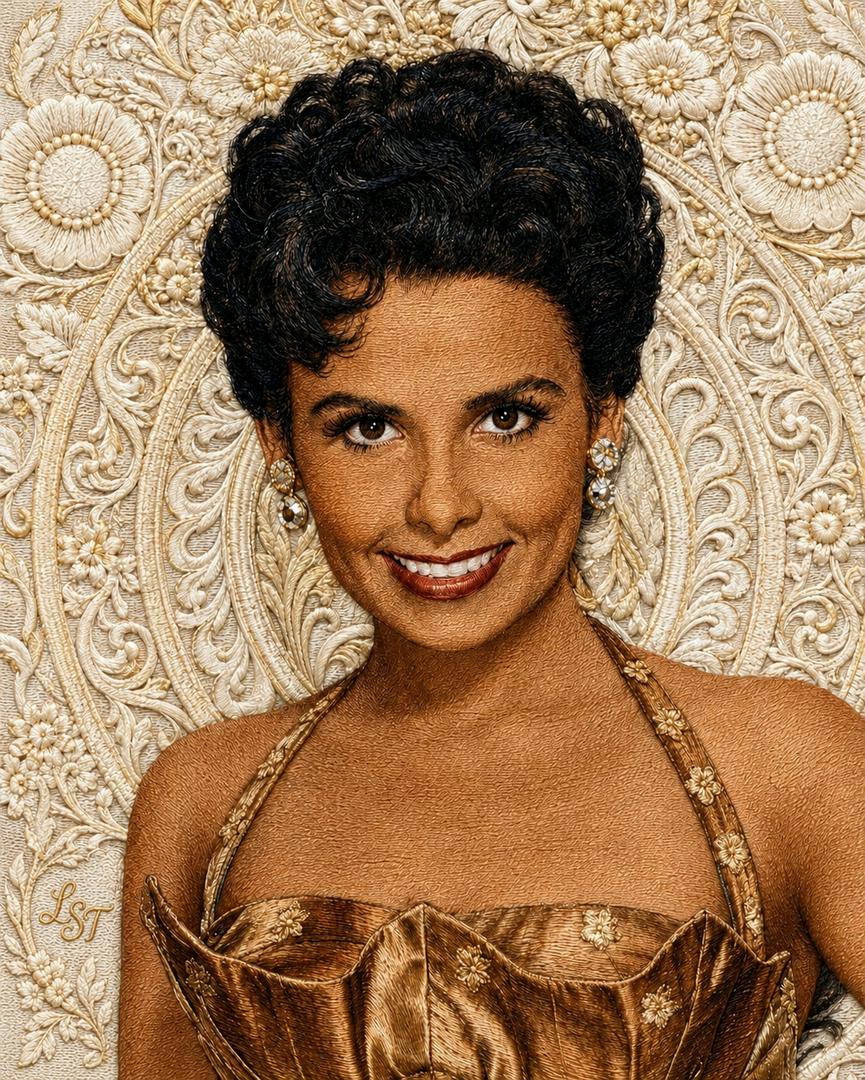
On May 9, 2010, Lena Horne died at the age of 92, leaving behind a legacy shaped by beauty, talent, discipline, and quiet defiance. She was more than a singer and actress. She was a woman who walked into spaces that wanted her image, but not always her full power. Lena Horne became one of the first Black performers to sign a long-term contract with a major Hollywood studio. That sounded like progress, but Hollywood’s version of progress still came with restrictions. Her elegance was celebrated, her voice was admired, and her face was placed on screen, but the industry often limited how much of her presence audiences were allowed to see. Some of her scenes were filmed in ways that made them easier to remove for theaters in segregated areas. That detail says a lot without needing to say much more. But Lena Horne was not someone Hollywood could shrink. She carried herself with grace, but grace was not weakness. Her poise had backbone. Her beauty had boundaries. Her voice carried more than music, it carried resistance. She spoke against discrimination, supported civil rights, and used her platform in a time when doing so came with real consequences. Her career stretched across film, music, television, nightclubs, and Broadway. Later in life, her acclaimed one-woman show, “Lena Horne: The Lady and Her Music,” reminded audiences that her story was not just about glamour. It was about endurance, control, and survival in an industry that tried to decide how much brilliance was safe to show. Lena Horne made them look anyway. She left behind more than performances. She left behind proof that elegance can be resistance, silence can be strategy, and dignity can outlast every room that tried to deny it. #LenaHorne #BlackHistory #HollywoodHistory #Lemon8Stories #LataraSpeaksTruth

Tag: LataraSpeaksTruth - Page 3 | LocalAll