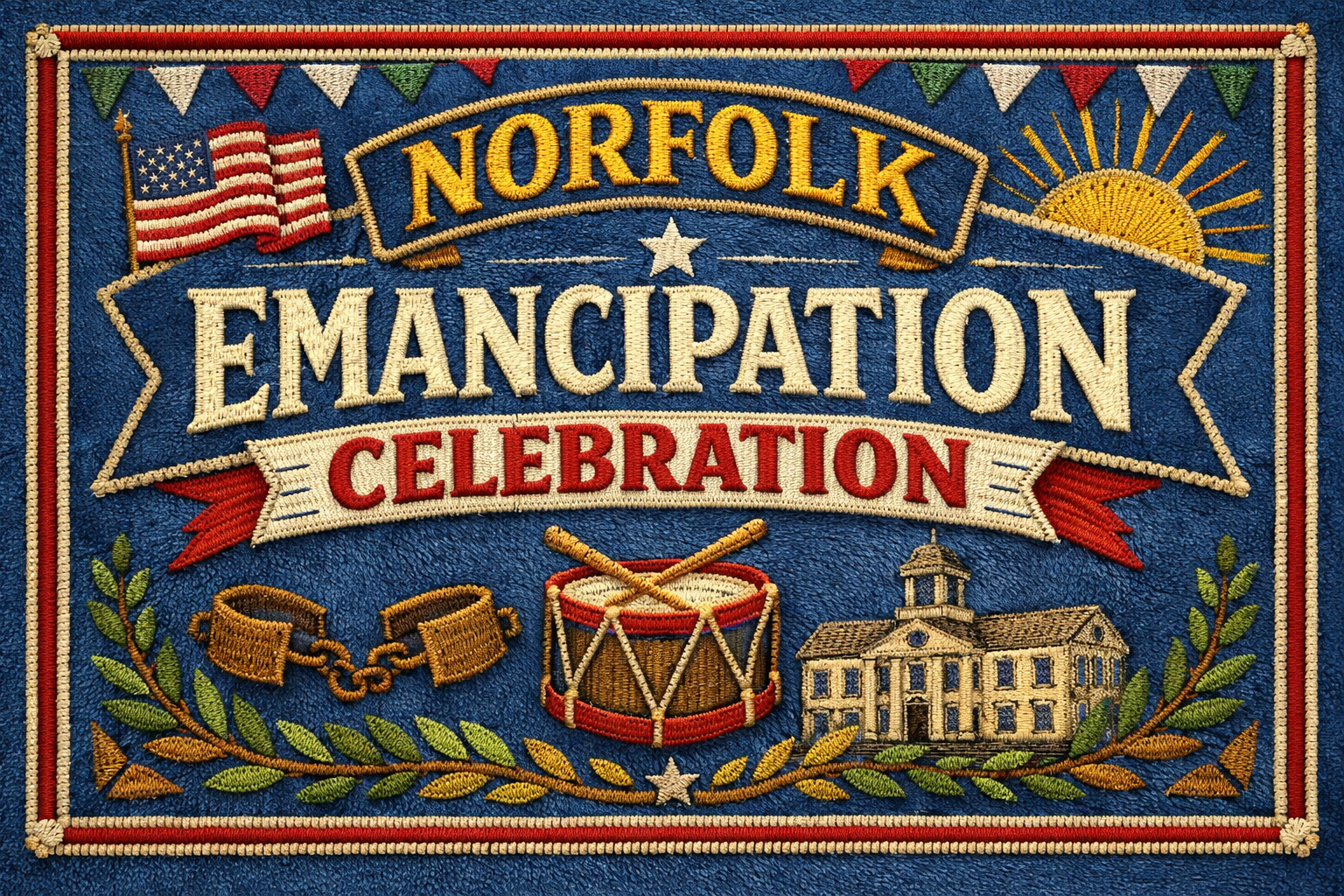
On January 4, 1863, just days after the Emancipation Proclamation took effect, Black residents of Norfolk, Virginia held one of the earliest documented public celebrations of emancipation in the United States. Norfolk had been under Union control since 1862, making it one of the few Southern cities where such a gathering was possible at the time.
A contemporary newspaper dispatch dated January 4, 1863, later reproduced by Encyclopedia Virginia, described a procession of at least 4,000 Black men, women, and children moving through the city. The report noted organized marching, music, banners, and speeches, reflecting both celebration and political awareness. This was not a spontaneous gathering. It was a coordinated public declaration of freedom by people who understood the historical weight of the moment.
The Emancipation Proclamation did not immediately free all enslaved people, nor did it end slavery everywhere. Its reach depended heavily on Union military presence. Norfolk’s status as an occupied city created conditions where freedom could be openly acknowledged and collectively celebrated, even while much of the Confederacy remained untouched by the proclamation’s enforcement.
This January 4 procession stands as an early example of what emancipation looked like in practice rather than on paper. It shows Black communities asserting visibility, dignity, and collective memory at the very start of freedom’s uncertain road. Long before emancipation celebrations became annual traditions, Norfolk’s Black residents marked the moment themselves, in public, and on record.
#January4 #BlackHistory #Emancipation #NorfolkVirginia #ReconstructionEra #CivilWarHistory #AfricanAmericanHistory #USHistory #FreedomStories