Tag Page HistoryMatters

#HistoryMatters
LataraSpeaksTruth

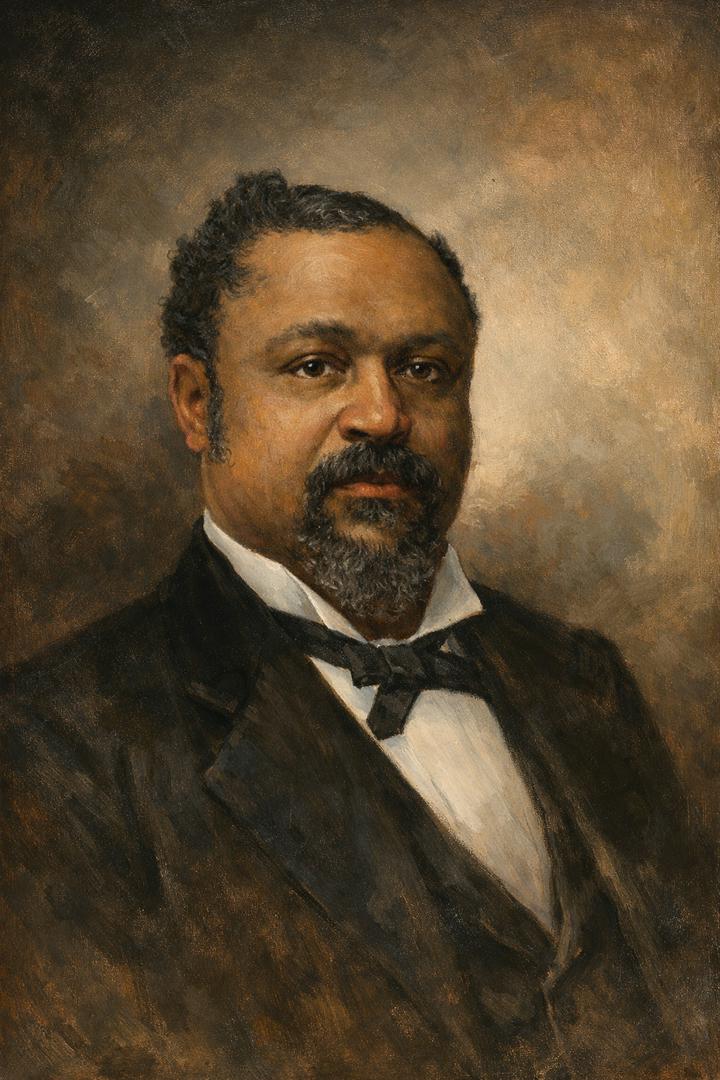
Honoring Booker T. Washington: A Legacy That Still Lifts Us

Let us take a moment to honor the legacy of Booker T. Washington, a man whose life was all grit, vision, and quiet strength. When he passed on November 14th, 1915, the world did not just lose an educator. It lost a builder. A man who carved out hope where the world tried to leave none. As we look back, the Word gives us the perfect lens to see his life through. Psalm 112:6 (CSB) says, “He will never be shaken; the righteous one will be remembered forever.” Washington lived that out. Steady, rooted, and unbothered by storms that tried to pull him down. And here we are, still speaking his name. Proverbs 16:3 (CSB) tells us, “Commit your activities to the Lord, and your plans will be established.” This man committed himself to lifting others through education, discipline, and opportunity. God established that work so deeply that it still stands today. Then we look at Galatians 6:9 (CSB). “Let us not get tired of doing good, for we will reap at the proper time if we do not give up.” That is the blueprint of Washington’s entire life. Do not quit. Do not fold. Keep showing up. And the harvest came. Changed lives. Opened doors. Generations rising higher. So today, as we reflect on his passing, we are reminded of this simple truth. A life committed to God and poured out for others never disappears. It becomes legacy. This is your reflection for the day. Stay grounded, stay faithful, and keep building something that will outlive you. #BookerTWashington #Legacy #HistoryMatters #FaithReflection #ScriptureOfTheDay #Inspiration #EducationHistory #OnThisDay

Honoring Booker T. Washington: A Legacy That Still Lifts Us
LataraSpeaksTruth

Richard Wright. A Voice America Tried Not To Hear

On November 28, 1960, writer Richard Wright passed away in Paris at the age of fifty two. The world lost a man who refused to soften the truth to make anyone comfortable. Wright’s novels Native Son and Black Boy pulled back the curtain on racism in America at a time when the country wanted to pretend it was evolving. His stories were sharp. Unfiltered. They exposed the violence and fear woven into everyday life for Black people in the early twentieth century. His work was uncomfortable on purpose. He wrote so no one could look away. By the time he died, Wright had become one of the most influential Black writers of his era. His words shaped generations of storytellers and helped redefine how Black life was represented in literature. He spent his final years in France seeking the freedom to write without scrutiny. Even overseas, he kept challenging the world with every page. Richard Wright left behind a legacy that still hits like truth spoken out loud at the wrong dinner table. Honest. Brave. Necessary. His voice did not fade. It simply became required reading for anyone trying to understand the American story. #LataraSpeaksTruth #RichardWright #HistoryMatters #AmericanHistory #BlackAuthors #NativeSon #BlackBoy #OnThisDay

Richard Wright. A Voice America Tried Not To Hear
LataraSpeaksTruth

The Wanderer… 1858

On November 28, 1858, one of the last known illegal slave ships to reach the United States secretly landed on Jekyll Island, Georgia. The vessel, called the Wanderer, arrived with more than 400 kidnapped men, women, and children from West and Central Africa… all smuggled in defiance of the federal ban on the transatlantic slave trade that had been in place since 1808. The Wanderer was originally built as a luxury yacht, but was converted into a human trafficking vessel financed by wealthy Southern men determined to profit from an illegal trade. Survivors were quickly dispersed across Georgia and the Deep South, sold into forced labor. Only a fraction of the captives lived long after arrival. Though federal officials investigated, no one was punished. The Wanderer became a symbol of how far traffickers were willing to go to protect their wealth… and how little accountability existed for crimes committed against Africans even after the trade was outlawed. #LataraSpeaksTruth #HistoryMatters #AmericanHistory #UntoldStories #JekyllIsland #Wanderer1858 #LearnThePast

The Wanderer… 1858
LataraSpeaksTruth

Howard Thurman, Born Around This Time In 1899, Became One Of The Quiet Architects Of A Movement

Howard Washington Thurman entered the world in late November of 1899 in Daytona Beach, Florida, during a time when Black spiritual leadership was still fighting for its full voice. He would grow into one of the most influential theologians of the twentieth century, guiding generations through a faith rooted in dignity, nonviolence, and moral clarity. Thurman later served as dean of Rankin Chapel at Howard University and Marsh Chapel at Boston University, using both spaces to shape conversations that reached far beyond religion. His writings on nonviolence became essential reading for young seminarians in the 1950s, including Martin Luther King Jr., who carried Thurman’s work into marches, pulpits, and national debates. Thurman rarely sought headlines, but his influence threaded through the movement like a steady hand. His life reminds us that the people who change history are not always the ones at the microphone. Sometimes they are the thinkers whose words steady the crowd. #HistoryMatters #OnThisDay #CulturalHistory #FaithHistory #CivilRightsLegacy #NewsBreakCommunity #LataraSpeaksTruthp

Howard Thurman, Born Around This Time In 1899, Became One Of The Quiet Architects Of A Movement
LataraSpeaksTruth

George W. Ashburn

George W. Ashburn was a white Radical Republican who openly supported political rights for newly freed Black citizens during Reconstruction. That alone made him a target in Columbus, Georgia, where resistance to racial equality was strong and vocal. On March 31, 1868, Ashburn was assassinated inside a boarding house. Witnesses reported that a masked group forced their way in and shot him, a killing widely attributed to early Ku Klux Klan activity. His murder came just weeks after he backed Georgia’s new constitution, which expanded civil rights for Black residents. Because Georgia was still under military rule, his death did not stay a local matter. Federal authorities moved quickly, and on November 23, 1868, the case became national news when a military tribunal charged dozens of white men, some from prominent families, with participating in the assassination. The investigation exposed the organized backlash against Black political progress. It also showed how far opponents of Reconstruction were willing to go to silence anyone advocating for racial equality. But despite the national attention, the case fell apart. Political pressure, intimidation of witnesses, and Georgia’s push to end military oversight led to the charges being dropped. No one was ever convicted. Ashburn’s murder became a symbol of the violent resistance that shaped the end of Reconstruction, a reminder of the dangers faced not only by Black citizens, but by anyone who stood beside them during one of the most volatile periods in American history. #HistoryMatters #AmericanHistory #ReconstructionEra #GeorgiaHistory #CivilWarLegacy #PostWarSouth #HistoricalRecord #USHistoryStory #OnThisDayHistory

George W. Ashburn
LataraSpeaksTruth

1863… Connecticut Approves a Black Civil War Regiment

On this day in 1863, the Connecticut General Assembly met in a special session to decide whether Black men could serve as front line soldiers in the Union Army. After a day of debate, lawmakers approved the measure, and Governor William Buckingham signed it into law on November 23. This decision opened the door for Black residents in Connecticut to enlist in a state infantry regiment for the first time. Recruiters began organizing almost immediately, and more than one thousand Black volunteers stepped forward in the following months. Their participation formed the 29th Connecticut Colored Infantry Regiment and helped begin a second unit, the 30th Connecticut. The 29th Connecticut mustered into service in early 1864 and later fought in major campaigns near Petersburg and Richmond. They were also among the first Union troops to enter Richmond when the city fell in April 1865. The decision made on November 23, 1863 marked a turning point in Connecticut’s military history and highlighted the essential role Black soldiers played in the Union’s efforts during the Civil War. #BlackHistory #TodayInHistory #CivilWarHistory #ConnecticutHistory #UnionArmy #29thConnecticut #HistoricalFacts #AmericanHistory #OnThisDay #HistoryMatters

1863… Connecticut Approves a Black Civil War Regiment
LataraSpeaksTruth

1941… Death of Henrietta Vinton Davis

Henrietta Vinton Davis, a groundbreaking actress, elocutionist, and international advocate, died on November 23, 1941 in Washington, D.C. Her career blended performance and activism during a period when opportunities for Black artists were limited. Davis became widely known through her stage work and later emerged as a prominent figure in the Universal Negro Improvement Association. She traveled, organized, and spoke publicly on issues related to unity, cultural pride, and global awareness among people of African descent. Her passing marked the end of a career that influenced both the performing arts and early twentieth century Black political life. Davis is now recognized as an important figure whose work reached across borders and generations. #BlackHistory #HenriettaVintonDavis #UNIAHistory #CulturalHistory #OnThisDay #PerformingArtsHistory #HistoricFigures #GlobalHistory #AmericanHistory #HistoryMatters

1941… Death of Henrietta Vinton Davis
LataraSpeaksTruth

1958… The Day Louisiana’s “Anti-Mixing” Sports Law Finally Fell

On November 28, 1958, a federal three-judge court ruled against Louisiana’s attempt to keep sports segregated forever. The case was called Dorsey v. State Athletic Commission, and it targeted the state’s “anti-mixing” law… a rule that tried to stop Black and white athletes from competing against each other. Louisiana used this law to block integrated boxing matches. Promoters were threatened with jail. Black fighters were refused licenses. White fighters were told to stay in their own lane. The whole thing was designed to protect the old order… and punish anyone who dared to break it. The court struck it down. They called it unconstitutional, discriminatory, and flat-out incompatible with the country’s direction. It was one of the quiet wins that chipped away at segregation’s foundation. Not loud. Not flashy. But necessary. This wasn’t just about sports. It was about the state trying to control who could stand toe-to-toe in public. And the court said no… not anymore. #LataraSpeaksTruth #HistoryMatters #AmericanHistory #HiddenHistory #UntoldStories #OnThisDay #CivilRightsEra

1958… The Day Louisiana’s “Anti-Mixing” Sports Law Finally Fell
LataraSpeaksTruth

Rosa Parks Attends the Dexter Avenue Meeting, 1955

1955… Montgomery was already on edge, but that night at Dexter Avenue Baptist Church, things shifted. Rosa Parks walked into a packed mass meeting to hear a talk about Emmett Till… the 14-year-old boy whose brutal murder had shaken the entire country. The church was filled with tension, grief, anger, and a rising sense that silence was no longer an option. Parks sat and listened as speakers talked plainly about the dangers Black families faced across the South. Emmett Till wasn’t a headline to her… he was a warning, a wound, and a reminder of every injustice people tried to swallow just to survive. The stories that night weren’t meant to scare anyone… they were meant to wake everyone up. And Rosa heard all of it… really heard it. She wasn’t some tired seamstress like people love to repeat. She was seasoned, sharp, and fully aware of how dangerous the world around her was. That meeting settled something inside her spirit. It fed the backbone she already had. So when she refused to give up her seat just a few months later, it wasn’t random, it wasn’t sudden, and it definitely wasn’t because she was “just tired.” She was tired of abuse, tired of the disrespect, tired of a system that stole sons like Emmett Till and told mothers to accept it. That night at Dexter wasn’t a footnote… it was fuel. #OnThisDay #HistoryMatters #LataraSpeaksTruth #RosaParks #EmmettTill #Montgomery

Rosa Parks Attends the Dexter Avenue Meeting, 1955
Tag: HistoryMatters - Page 2 | LocalHood