Tag Page HispanicHeritage

#HispanicHeritage
LataraSpeaksTruth

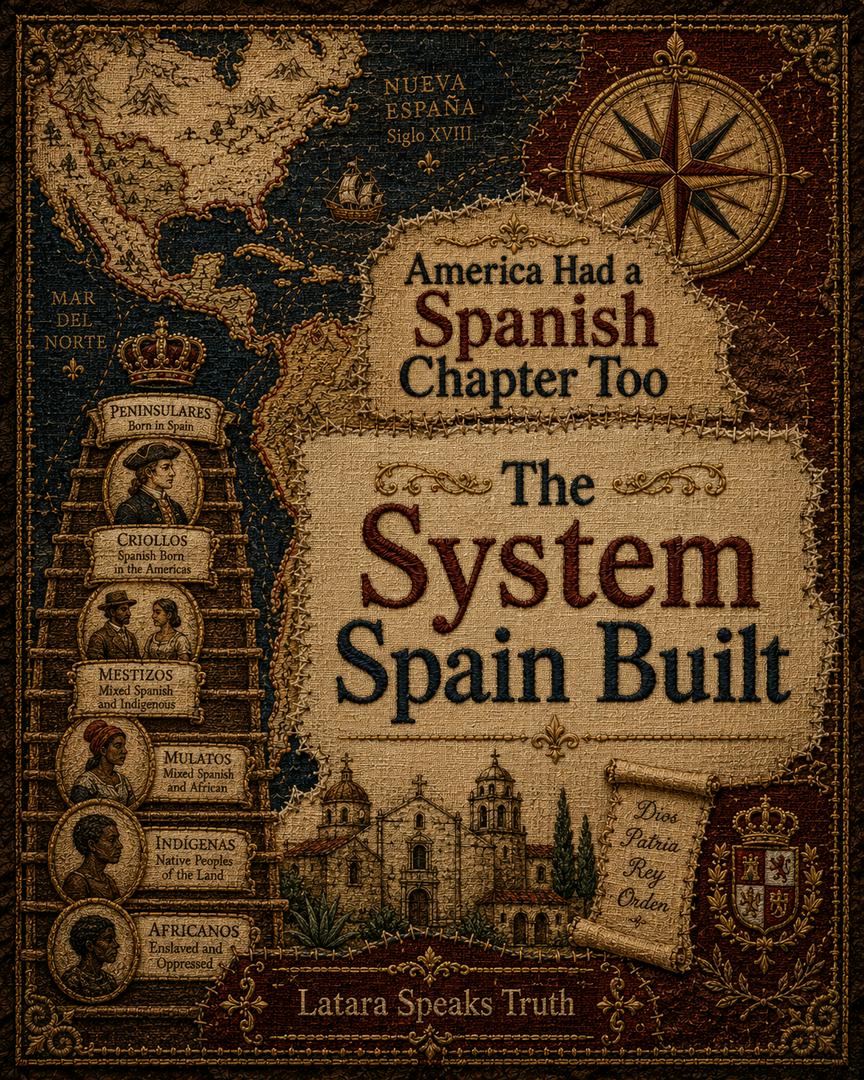
The System Spain Built Before we keep moving forward, we have to look at the system Spain built in the Americas. When Spain expanded its empire, it did not only take land. It built a social order. Spanish colonial society developed a racial hierarchy often called the casta system. At the top were Spaniards born in Spain. Below them were people of Spanish descent born in the Americas. Beneath that were mixed-race groups, Indigenous people, and people of African descent. This was not just prejudice floating in the air. It was structure. The system shaped who had access to power, land, education, church authority, legal protection, and social status. It also shaped who was pushed into forced labor, taxed, controlled, converted, displaced, or treated as less than fully equal. Indigenous people were forced into colonial systems that reshaped their land, labor, language, and spiritual life. African people and their descendants were brought into the Americas through slavery and placed near the bottom of colonial society. Spanish elites gained wealth through land control, plantations, mines, forced labor, and laws that protected their position. The casta system also created labels for mixed-race people, turning ancestry into a ranking system. A person’s background could affect how they were seen, where they fit, and how close they were allowed to stand to power. That is why this history matters. Spanish America was not built only through exploration. It was built through hierarchy. And long before modern debates about race, language, borders, and belonging, Spain had already created a system that taught people where they were supposed to stand. Some were placed close to power. Others were pushed to the bottom. And the effects of that colonial order did not disappear just because empires changed names. #LataraSpeaksTruth #AmericanHistory #LatinoHistory #HispanicHeritage #HiddenHistory
LataraSpeaksTruth

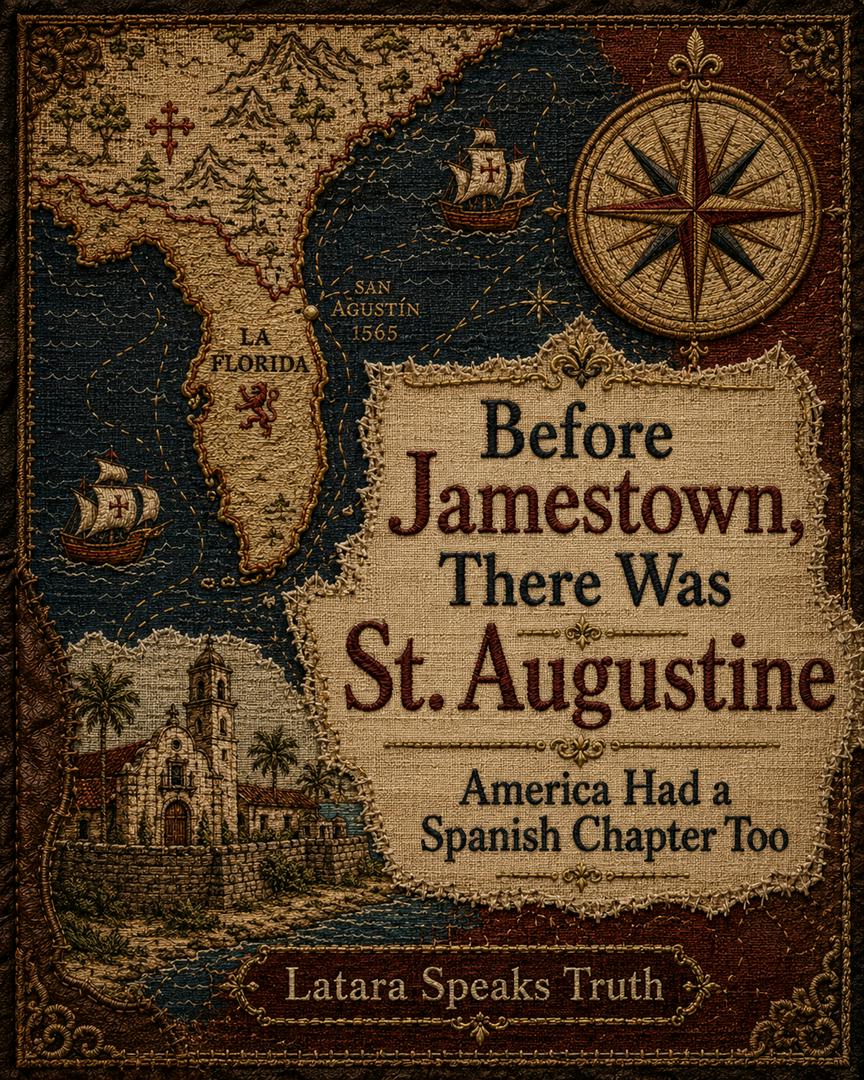
Before Jamestown, There Was St. Augustine Before many Americans learned about Jamestown, Plymouth Rock, or the Pilgrims, Spanish Florida was already part of the story. In 1565, Pedro Menéndez de Avilés founded St. Augustine in what is now Florida. The city is recognized as the oldest continuously occupied settlement of European and African American origin in the United States. It was founded decades before Jamestown and Plymouth. That matters because early American history did not begin only with English settlers. It also included Spanish colonization, Indigenous land, forced labor, African presence, Catholic missions, military outposts, and communities shaped under empire. St. Augustine was built on land where Indigenous people already lived. Spanish colonists first occupied the Timucua village of Seloy, and conflict grew between Spanish settlers and Indigenous communities before the settlement later shifted to the site of modern St. Augustine. African people were also there from the beginning. When people talk about African presence in early America, many start with 1619 in Virginia. That story is important, but it is not the only beginning. In Spanish Florida, free and enslaved Africans were already part of the settlement in the 1500s. That means the Spanish chapter of American history was never only Spanish. It was Indigenous. It was African. It was European. It was forced together through conquest, survival, labor, violence, religion, and resistance. This is why the history matters. Once people understand St. Augustine, they understand that Spanish-speaking history in America did not arrive late. It was already being written before English colonies became the center of the classroom story. This was not a side chapter. It was one of the first chapters. And many people were never taught it that way. #LataraSpeaksTruth #AmericanHistory #LatinoHistory #HispanicHeritage #HiddenHistory
You've reached the end!