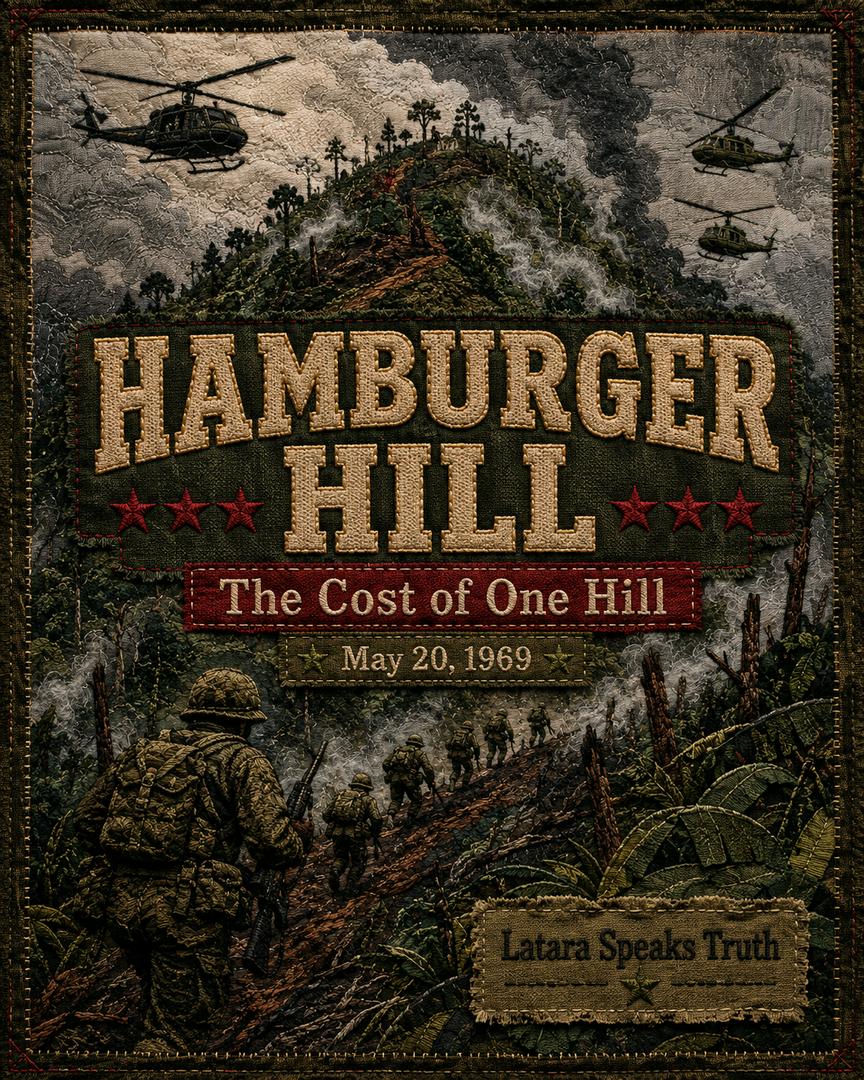
On May 20, 1969, one of the most controversial hill battles of the Vietnam War ended.
The place was Hill 937 in the A Shau Valley of South Vietnam. American troops came to know it by a harsher name: Hamburger Hill.
For days, U.S. and South Vietnamese forces fought North Vietnamese troops dug into the mountain. The terrain was steep. The jungle was thick. Rain, mud, bunkers, artillery, and close combat turned the hill into a nightmare.
The nickname said what official language could not.
Men were being chewed up.
U.S. forces captured the hill, but the victory quickly became controversial. Soon after, American forces abandoned the position. That made people question the cost.
What was the purpose of taking a hill if it was going to be left behind?
Hamburger Hill became more than a battle. It became a symbol of how many Americans were beginning to see the war itself: bloody, costly, confusing, and hard to justify.
There is also a deeper layer.
Black soldiers served in Vietnam while the country they fought for was still fighting over equality at home. In the early years of the war, Black troops carried a disproportionate share of combat risk and fatal casualties. That does not mean every Vietnam battle should be turned into one simple racial story. But it does mean history should remember who was sent, who died, and what they came home to.
Many Black veterans returned to a country that still denied them full respect. They wore the uniform. They risked their lives. And still, they had to fight to be seen as fully American.
Hamburger Hill reminds us that war is not just strategy on a map.
It is men climbing through mud and fire.
It is families waiting for names.
It is a country asking whether the price was worth it.
And for Black soldiers in Vietnam, it was another chapter in a long American pattern: serving a nation that too often failed to serve them back.
#HamburgerHill #VietnamWar #MilitaryHistory #BlackHistory #AmericanHistory