Tag Page Genetics

#Genetics
Dashcamgram

The internet isn’t exaggerating this one — Erykah Badu and her daughter Puma Curry look uncannily alike. From the eyes to the facial structure to the calm, soulful presence, Puma really looks like she stepped straight out of Erykah’s early-era photos. Fans are calling it “copy and paste,” and honestly… it’s hard to argue. What’s making people talk even more is how Puma doesn’t just resemble her mom physically — she carries the same energy. That effortless, artistic, grounded aura that made Erykah iconic seems to have been passed down naturally. Genetics really said blueprint. It’s one of those moments that reminds people how powerful family resemblance can be, especially when culture, creativity, and spirit are all part of the legacy. Some genes don’t just pass looks — they pass presence. What do y’all think… strongest mother-daughter resemblance in music history? #ErykahBadu #PumaCurry #TwinEnergy #CelebrityKids #Genetics #CopyPaste #MusicLegacy #BlackExcellence

Curiosity Corner

Breathless Heights and Endless Depths: How Humans Conquer Extremes Sherpas, native to the Himalayas, thrive above 10,000 feet, where oxygen levels are about 40% lower than at sea level, thanks to genetic adaptations. Variants in EPAS1 and EGLN1, created through mutations and natural selection over thousands of years, alter oxygen-sensing pathways, allowing efficient oxygen delivery without raising hemoglobin, keeping oxygen saturation near 93%. They have larger lungs (up to 20% bigger than lowlanders), higher capillary density, and strong cardiovascular systems, reducing fatigue and risk of altitude sickness. Daily exposure to steep terrain strengthens aerobic capacity, muscular endurance, and metabolic efficiency, enabling Sherpas to climb peaks above 26,000 feet while carrying loads over 100 pounds. Their closest relatives, the Tibetans, share these gene variants, showing thousands of years of adaptation to extreme hypoxia and high-altitude stress. Sherpas also display increased mitochondrial density, enhancing cellular energy production under low oxygen. Interestingly, the Andean highlanders, living at 10,000 to 14,000 feet in the Andes, roughly 7,000 to 8,000 miles away, survive using higher hemoglobin, larger lungs, and cardiovascular adaptations but lack Sherpas’ EPAS1 and EGLN1 variants. These differences illustrate convergent evolution, where separate populations develop distinct strategies to cope with chronic hypoxia. The Bajau people, who live at sea, have enlarged spleens that store oxygenated red blood cells and slower heart rates underwater, enabling dives up to 230 feet. Variants in PDE10A likely arose through mutations selected over generations to support oxygen storage. From a Darwinian perspective, Sherpas, Andeans, and Bajau show how natural selection fine-tunes human physiology, shaping oxygen use, endurance, and metabolic efficiency in extreme environments. #SurvivingExtremes #Science #Genetics #HumanAdaptation #Biology

LataraSpeaksTruth

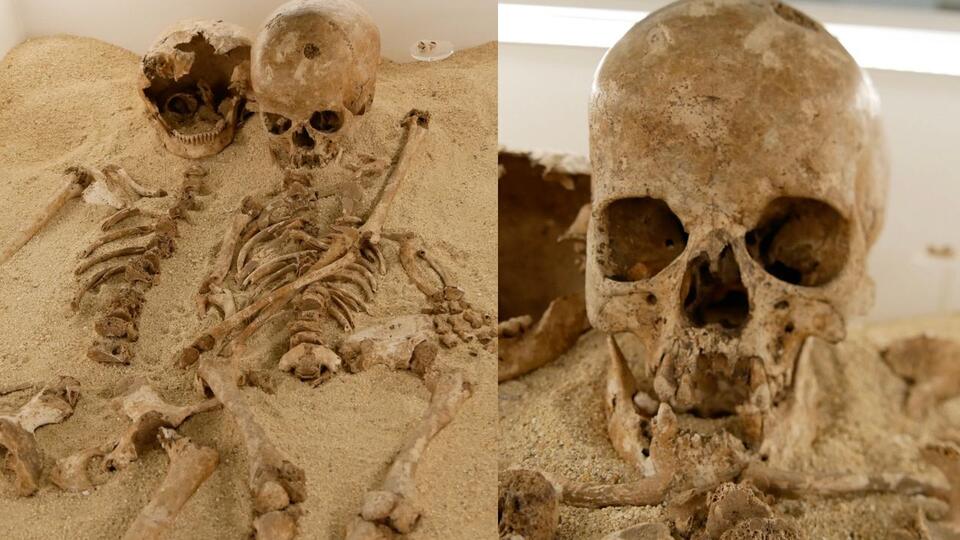
A recent article published on MSN, written by Barrie Davenport and based on peer-reviewed genetic research, is challenging long-held assumptions about early European appearance. According to ancient DNA evidence analyzed from human remains across Europe, darker skin pigmentation was common among early Europeans until roughly 3,000 years ago. Researchers examined genetic markers associated with skin tone and found that lighter pigmentation did not become widespread until the Bronze Age. This shift appears to coincide with major population migrations into Europe, along with changes in diet, environment, and adaptation to lower sunlight levels. In other words, lighter skin was not an original or defining trait of early Europeans, but a relatively recent evolutionary development. The findings also show that early hunter-gatherer populations often carried a mix of traits that may seem unexpected today, including darker skin combined with lighter eye colors such as blue. Scientists note that human appearance has always been fluid, shaped by movement, intermixing, and survival needs rather than fixed categories. This research does not rewrite history for shock value. It simply adds clarity. Human populations have never been static, and physical traits have shifted repeatedly over time. The study reinforces what genetics has consistently shown… modern ideas about race and appearance do not align with how human evolution actually unfolded. Source verification This summary is based on reporting from MSN, referencing peer-reviewed ancient DNA studies and academic genetic research. The article was written by Barrie Davenport and published through MSN’s science and history coverage. #History #Science #Genetics #HumanEvolution #AncientDNA #EuropeanHistory #Anthropology #VerifiedSource #MSN

Tag: Genetics | LocalAll