Tag Page FutureTech

#FutureTech
justme

Humanoid robot girlfriend sparks debate about future companionship today Meet Aria is a humanoid robot designed to offer companionship in a way that feels more personal and interactive than traditional machines. Built with advanced AI systems, she can talk, respond emotionally, and adapt to human behavior. The robot has gained attention for being marketed as a companion girlfriend experience priced at around $175,000, targeting futuristic tech buyers interested in AI relationships. The idea behind Aria is part of a growing trend in artificial intelligence where machines are designed not just for tasks but also for emotional interaction. Supporters believe such robots could help reduce loneliness and provide comfort for people who struggle with social connection in modern life. Developers say the system learns from conversations to improve responses over time. However critics raise concerns about the emotional and ethical side of human robot relationships. Some experts say people may become too attached to machines, which could change how real human relationships develop. There are also questions about privacy, data use, and how AI systems store personal conversations shared with users. As technology continues to evolve, products like Aria highlight how fast artificial intelligence is moving into everyday human life. While still controversial and expensive, such robots show a possible future where companionship is no longer limited to humans alone. Many believe this could reshape social behavior, dating culture, and even mental health support systems in the coming years. Others see it as just the beginning of a larger shift in how humans interact with machines. For now, Aria remains a symbol of futuristic innovation and the growing blend between emotion and artificial intelligence in modern society. #techmedtimes #ai #robotics #futuretech #innovation

justme

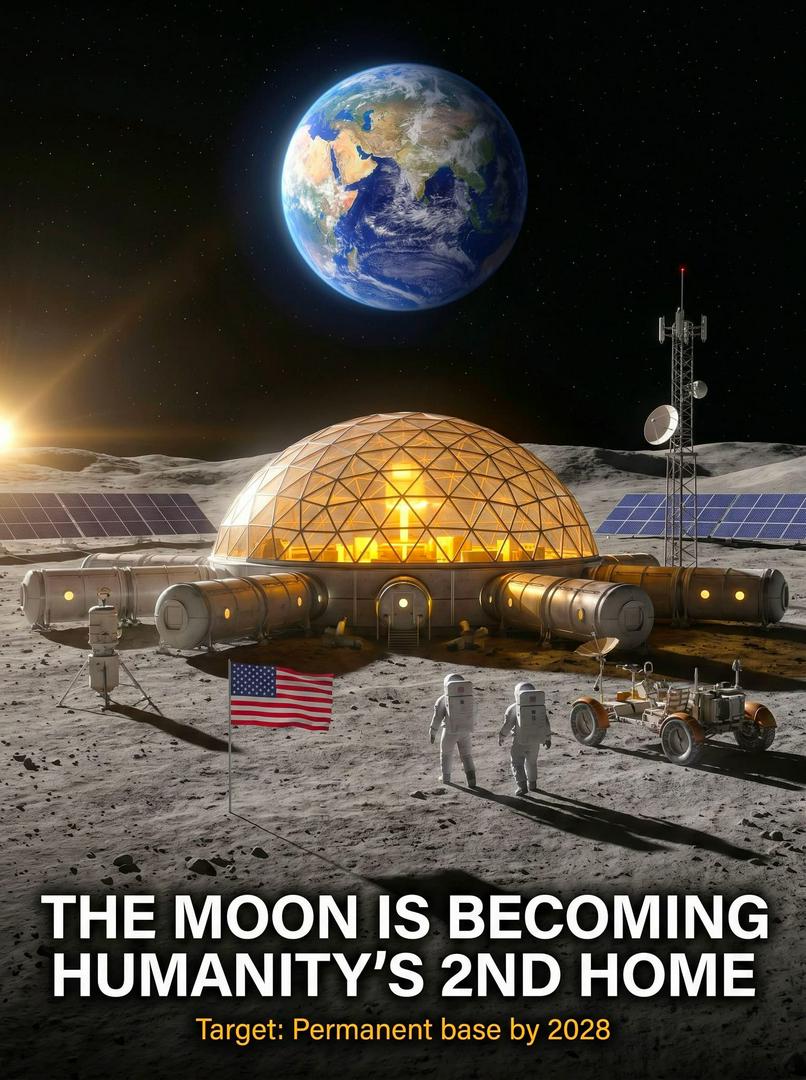
BREAKING: We're not just going back to the Moon. We're staying. 🌕 NASA's new roadmap just shifted everything. The goal is no longer "flags and footprints." The goal is a permanent American outpost on the lunar south pole – and construction could start before 2028. Here's what the proposed Artemis Base Camp includes: 🏠 3D-printed habitats using lunar soil to block radiation ⚡ Solar farms at the "peaks of eternal light" for 24/7 power 💧 Ice mining robots to turn Moon water into drinking water + rocket fuel 🚀 Launch pads to use the Moon as a gas station for Mars missions Why the south pole? Because there’s water ice in the craters. Water = oxygen to breathe, hydrogen for fuel. It’s the key to living off-Earth. The last time humans left Earth orbit was 1972. The next time we go, we’re not coming back right away. This is the generation that becomes a multi-planet species. Question: If NASA offered you a 2-year contract to work on the Moon – all expenses paid + $500K salary – would you take it? YES or NO? 👇 Save this. In 10 years, you’ll tell people you saw the plan on day one. Follow Space Reality Files for space news without the hype. #Artemis #MoonBase #LunarColony #SpaceExploration #NASA #FutureTech #SpaceJobs #USA #MoonToMars

justme

Private tech companies are beginning to test humanoid robots in real-world environments, including controlled public demonstrations in cities like San Francisco. Companies such as Figure AI and Agility Robotics are developing robots designed to walk, carry objects, and interact with human environments beyond the lab. These early trials are carefully supervised and aim to study how robots behave in unstructured, everyday settings. Researchers collect data on navigation, obstacle avoidance, and human interaction—such as how people respond to robots sharing sidewalks or workspaces. This helps engineers refine safety systems, movement algorithms, and social interaction cues. Importantly, these demonstrations are limited pilot tests, not large-scale deployment. The goal is to understand how humanoid robots might safely integrate into society over time, whether in logistics, service roles, or assistance tasks. #Robotics #HumanoidRobots #TechInnovation #FutureTech #fblifestyle

Margaret

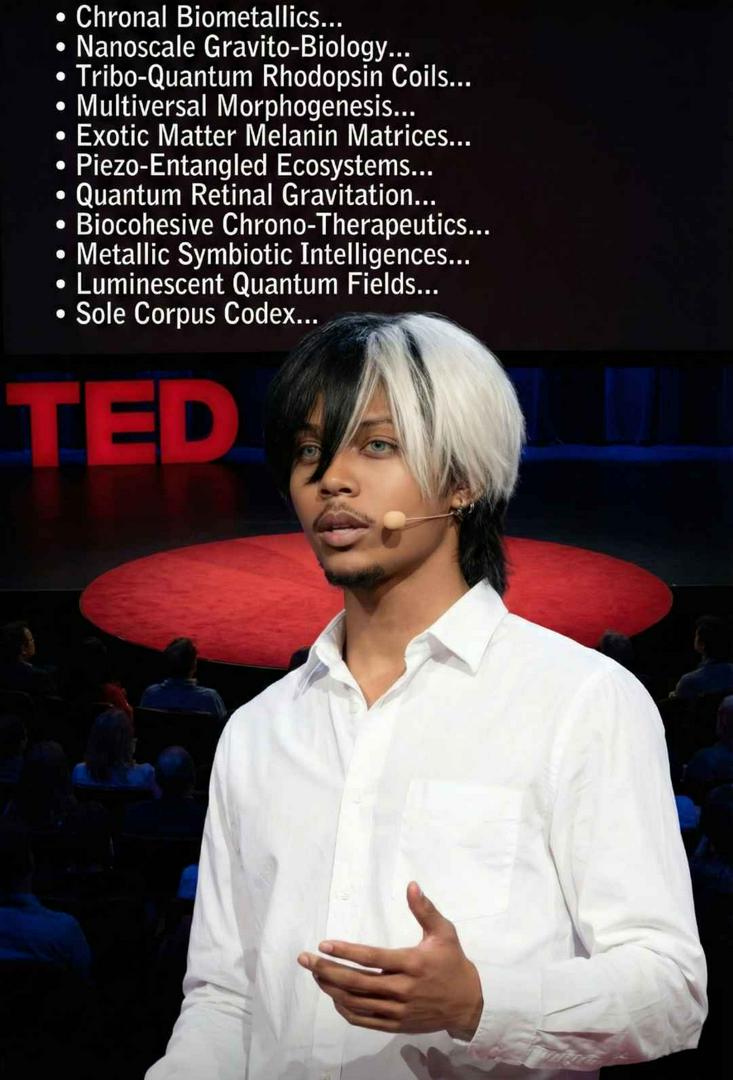
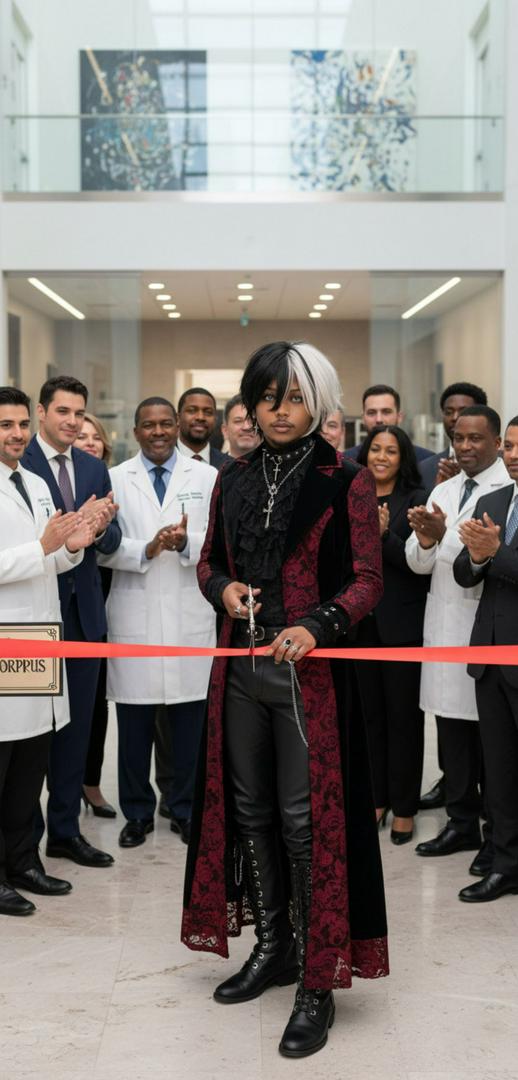
Quantum Leap: Dr. Arstell Young's Dual Empires Redefine Biology and Simulation in a $484M Visionary

What sets Nexus apart is its meta-paper derivations and hyper-transcendent frameworks. Drawing from Young's Omni-Corpus Manifesto, the lab has spawned 12 emergent hyper-meta-papers under the Vibronic-Entangled Transcendent Ontology banner. These aren't just whitepapers; they're blueprints for symphonic resonances across timelines, simulating how quantum bio-cohesive architectures could entangle with multiversal structures. Young's hands-on approach shines in features like neural interface models—the MyeloQuantum Aegis and RhodoMyelin Nexus get virtual prototypes here, allowing for rapid iteration before real-world builds. And the Biometallic Morphopod Frogolatel (BMF) systems? Nexus runs chimeric hybrid simulations, blending amoeba-tardigrade forms with nanotech to predict adaptations in extreme environments, potentially revolutionizing space travel or climate resilience. With a net worth exceeding $484 million—built through savvy investments, patents on QBCB tech, and early grants—Young's pouring resources into scaling both companies. We're talking dedicated labs, collaborations with heavyweights like NIF for laser-compression sims, and even public-facing tools that democratize quantum exploration. Nexus isn't just backend tech; it's user-friendly, with interactive graphs and real-time plots that visualize quantum tunneling or triboluminescent effects. Imagine logging in to tweak a simulation of QTMNs turning urban forests into natural light sources—Young's making that accessible, fostering a community of innovators. #BreakingNews #ScienceNews #TechNews #Innovation #Discoveries #GlobalNews #Research #FutureTech #ScientificBreakthroughs #TrendingNow #SpaceNews #HealthNews #Environment #NewDiscoveries #TechUpdates #ScienceDaily #CuttingEdge #WorldNews #STEMNews #LatestUpdates

Quantum Leap: Dr. Arstell Young's Dual Empires Redefine Biology and Simulation in a $484M VisionaryQuantum Leap: Dr. Arstell Young's Dual Empires Redefine Biology and Simulation in a $484M VisionaryQuantum Leap: Dr. Arstell Young's Dual Empires Redefine Biology and Simulation in a $484M VisionaryQuantum Leap: Dr. Arstell Young's Dual Empires Redefine Biology and Simulation in a $484M Visionary
You've reached the end!