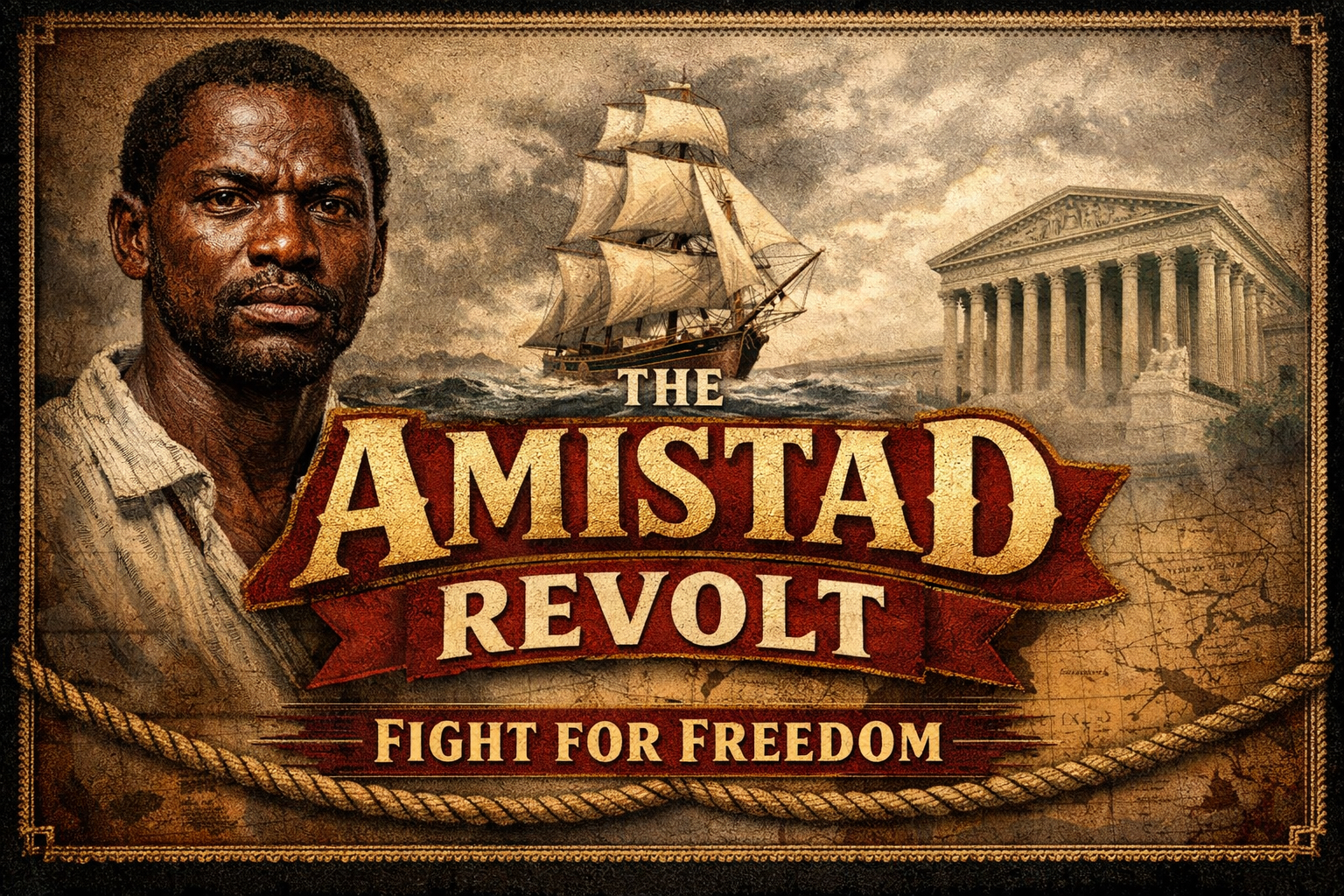
The Amistad case was never just a courtroom story. It was a freedom story written in terror, resistance, and law. In 1839, Africans from what is now Sierra Leone were kidnapped and forced into the illegal slave trade. Taken to Cuba and sold against their will, they were placed aboard La Amistad like cargo. Stripped of home, family, language, and choice, they were expected to submit. They did not.
Sengbe Pieh, often called Cinqué, became the best known leader of the revolt. The captives rose up, seized control of the ship, and demanded to be taken back to Africa. This was not piracy. It was self defense against kidnapping and slavery. But the ship never reached home. The Spaniards aboard deceived them by steering north at night, and the vessel was eventually seized near Long Island.
Once on American soil, the Africans faced another fight in the legal system. Slave interests and government officials tried to classify them as property. Abolitionists fought to prove the truth…that these were free people who had been illegally kidnapped. Former President John Quincy Adams argued before the Supreme Court on their behalf.
On March 9, 1841, the Supreme Court ruled in favor of the surviving Africans. The Court recognized that they had been illegally enslaved and had the right to fight for their freedom. The ruling did not end slavery in America, but it struck a blow against the logic that stolen human beings could be reduced to property under the law.
Amistad still matters because freedom was not handed down from above. It was seized by people who refused to die quietly. Too much history gets buried, softened, or pushed aside like people hope nobody will notice what was done. Amistad reminds us that resistance is part of the record and that truth survives, even when power tries to bury it.
#Amistad #SengbePieh #Cinque #BlackHistory #AfricanResistance #FightForFreedom #SlaveryHistory #HistoricalTruth #OnThisDay #FreedomStruggle #ResistanceHistory #HiddenHistory