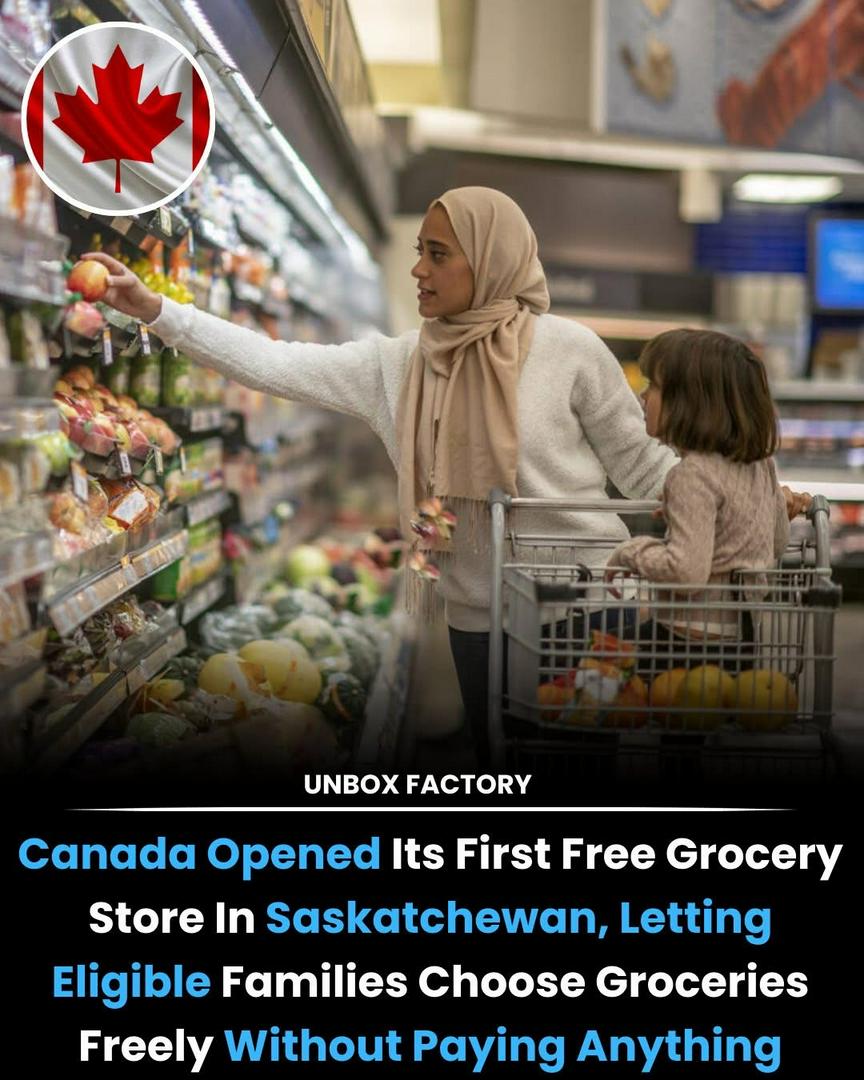
In a groundbreaking move to address rising food insecurity, Canada has opened its first-ever free grocery store in Saskatchewan. Unlike traditional food banks, this store allows eligible families to walk in, browse aisles, and choose groceries freely—without paying anything. The goal is not just to feed people, but to restore dignity and choice.
The store offers fresh produce, dairy, meat, frozen foods, and household essentials. Families select items based on their dietary needs, cultural preferences, and family size, reducing food waste and improving nutrition. This model mirrors a normal shopping experience, helping reduce the stigma often associated with food assistance programs.
Food insecurity in Canada has surged due to inflation, rising housing costs, and stagnant wages. Millions of households now struggle to afford basic groceries, even when employed. Emergency food programs are overwhelmed, making innovative solutions increasingly necessary.
This free grocery store operates through partnerships with food suppliers, charities, and government support, ensuring consistent supply rather than irregular donations. It also collects data to understand consumption patterns, allowing better planning and long-term scalability.
Experts say dignity-based food access improves mental health, family stability, and children’s academic performance. If successful, this model could expand across Canada and beyond, redefining how societies support vulnerable populations—not through charity alone, but through empowerment.
#UnboxFactory #FoodSecurity #SocialInnovation #Canada #HumanDignity